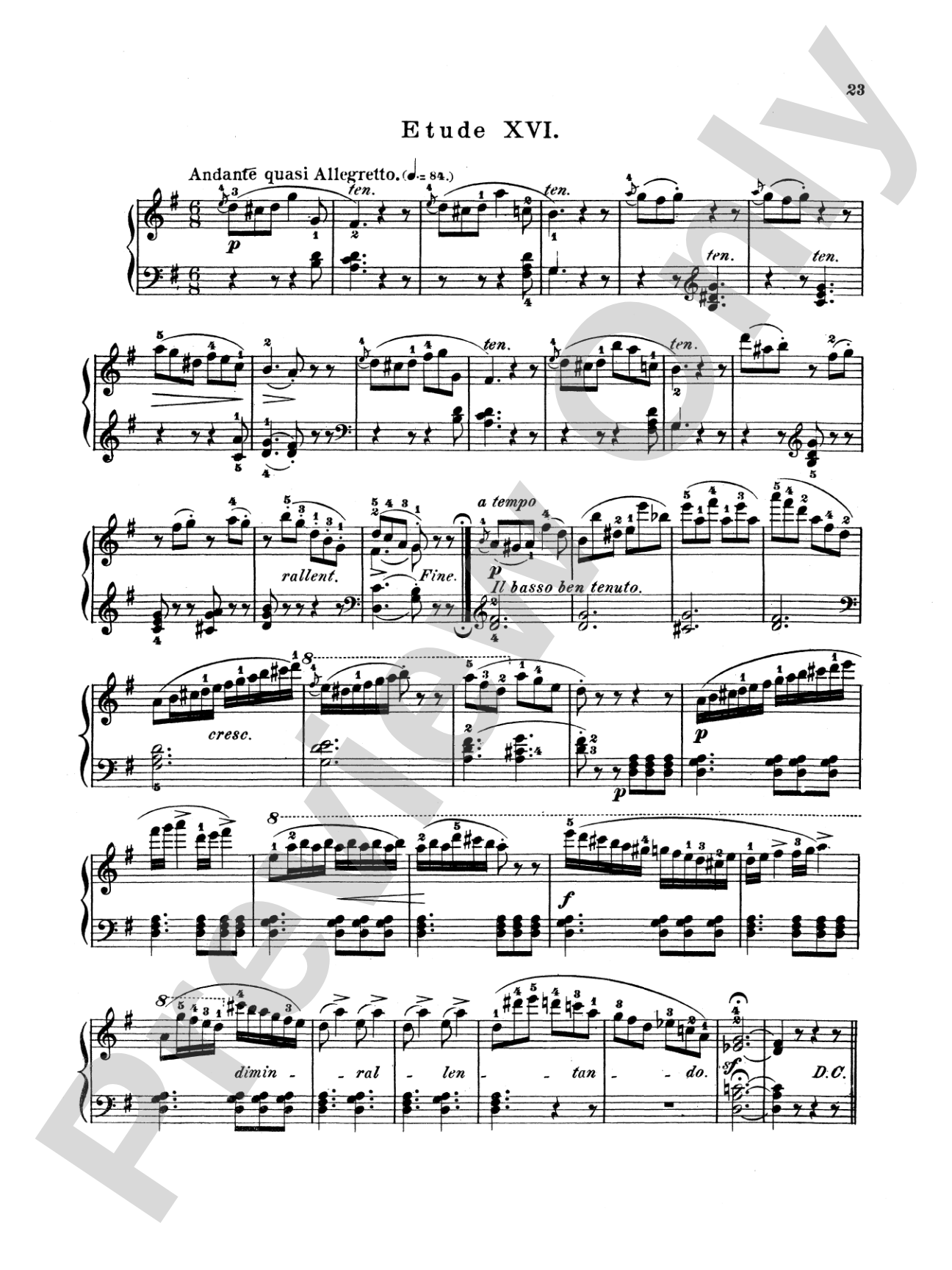
Bertini: Twenty-five Easy Studies, Op. 100 Sheet Music Preview

Bertini: Twenty-five Easy Studies, Op. 100

By Henri Bertini

Item: 00-PC-0005421

Digital Download
$0.99
Description
Henri Jérôme Bertini (1798--1876) was a well-known French classical composer and pianist in his time. This collection, Opus 100, includes 25 short etudes for intermediate level students.

Don't just read it, hear it, play along with it, and watch your students grow with it. In MakeMusic Cloud, Bertini: Twenty-five Easy Studies, Op. 100 comes alive with professional accompaniment, adjustable tempo, and built-in practice tools that turn solo practice into real progress.

Sample Audio
No sample audio found.
Sample Video
Additional Details
Series: Kalmus Edition
Publisher: Alfred Music
Page Count: 36
SKU: 00-PC-0005421

More about this title

About the Composer: Henri Bertini

Henri Jérôme Bertini (1798–1876) was a French pianist and composer whose prolific output shaped the pedagogical landscape of 19th-century keyboard instruction. He composed over 100 works, many of them deliberately crafted for students at various levels of advancement, earning him recognition as both a virtuoso performer and a thoughtful educator who understood the bridge between technical drill and musical expression.

Bertini's etudes occupy a distinctive middle ground in piano literature. Unlike the virtuosic demands of Czerny or the technical intensity of later Romantic works, Bertini's studies prioritize musical satisfaction alongside mechanical development. This philosophy made him influential among conservatory instructors across Europe and contributed to his lasting presence in piano curricula.

Why we love this

Bertini's Op. 100 collection proves that technical discipline and genuine musicality are not opposed. Each study targets specific pianistic concerns—hand independence, scale fluency, arpeggiation, rhythmic clarity—while remaining brief, shapely, and rewarding enough to sustain a student's interest beyond the first page. This is repertoire that builds real skills without feeling like punishment.

What to expect

These studies land between the mechanical world of earlier pedagogical works and the expressive demands of concert literature. They possess a gentle, curious character; Bertini writes in accessible keys and clear phrase structures that invite the student pianist to listen to themselves and shape musical lines without overwhelming complexity.

Who it's for

Intermediate piano students who have mastered fundamental technique and are ready to refine specific skills through focused, musical study. Teachers working with students roughly in the second or third year of lessons will find these 25 pieces an efficient complement to or alternative for standard method book progressions.

How to get the most out of it

  • Identify the primary technical goal of each etude before you play it (finger dexterity, hand position, evenness in passagework) and let that awareness shape your practice priorities rather than defaulting to metronome work.
  • Maintain consistent voicing and pedaling choices across repeated figures; Bertini's studies often return to similar material, and rhythmic or harmonic clarity depends on recognizable execution.
  • Balance clarity with legato; these pieces require clean articulation in rapid passages, but Bertini's phrasing lines reward a singing approach when the texture allows.

How to use it

Assign individual studies as part of a semester's technical routine, rotating through them to address different technical priorities. A single etude or a sequence of three or four can also serve as recital filler pieces for intermediate students, offering legitimate repertoire when a young pianist isn't ready for full sonatas or character pieces.

Skills your students will build

  • finger independence and coordination across hand positions
  • even scale technique and scalar passagework
  • arpeggiation patterns and chord navigation
  • rhythmic clarity in mixed meters and syncopated figures
  • phrasing awareness within short, focused musical units
  • sight-reading fluency in intermediate repertoire

You May Also Like