Bertini: Forty-nine Etudes, Op. 101 & 166
By Henri Bertini
Item: 00-PC-0003220
Pickup currently not available
Description
Don't just read it, hear it, play along with it, and watch your students grow with it. In MakeMusic Cloud, Bertini: Forty-nine Etudes, Op. 101 & 166 comes alive with professional accompaniment, adjustable tempo, and built-in practice tools that turn solo practice into real progress.
Jump straight in and assign it today.
Open this title and explore the full library in minutes.
Sample Audio
Sample Video
Additional Details
More about this title
About the Composer: Henri Bertini
Henri Jérôme Bertini (1798–1876) was a French pianist and composer whose prolific output helped define the pedagogical repertoire of the nineteenth century. Though overshadowed by his more celebrated contemporaries, Bertini earned respect throughout Europe as both a touring virtuoso and a composer of substantial technical studies designed to develop the complete pianist.
Bertini's etudes occupy a unique position in piano literature. They sit comfortably between the mathematical rigor of Czerny and the dramatic intensity of Chopin, making them invaluable for teachers seeking studies that build genuine musicianship alongside technique. His gift for memorable melody within technically demanding frameworks means students rarely feel they are merely drilling exercises.
Why we love this
This collection gives you genuine musical substance across forty-nine pieces without sacrificing pedagogical clarity. Each etude serves a specific technical purpose, yet Bertini refused to let that purpose overshadow the music itself; you'll find pieces worth performing, not just practicing. The variety of keys, tempos, and character types means you can build a coherent curriculum within a single book rather than piecing together fragments from multiple sources.
What to expect
Bertini's writing balances Classical restraint with Romantic expressiveness. Even the most technically demanding etudes maintain an understated elegance, never demanding you sacrifice musicality for display. The miniature forms (arias, nocturnes, dances) breathe with genuine personality, making the collection feel less like a workbook and more like a composer's journal of refined ideas.
Who it's for
This collection serves intermediate to advanced pianists developing independence and interpretive judgment. Teachers use these etudes across multiple years, selecting pieces that match both technical and musical maturity rather than marching through them sequentially.
How to get the most out of it
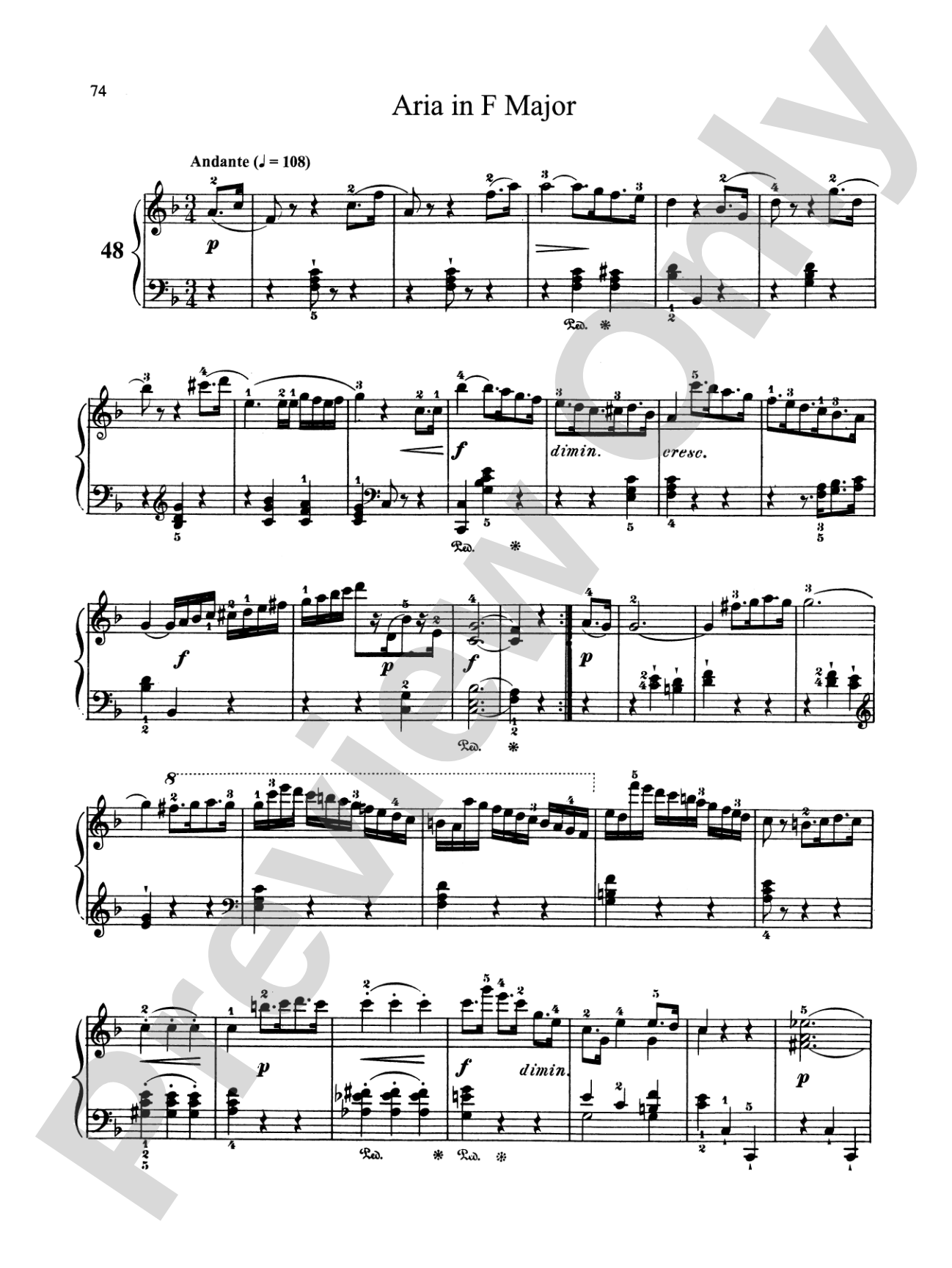
- Approach the lyrical pieces (Nocturno, Romanza, Siciliano, Aria) as opportunities to develop singing tone and long phrasing, even in early etudes where technique might tempt you toward mechanical playing.
- Use the dance forms (Polacca Militaire, Polonaise, Rondo-Valse, Tyrolienne) to explore rhythmic character and style; each has distinct accentuation and articulation demands that live notation alone won't convey.
- When tackling the rapid figuration studies, establish a comfortable tempo first, then gradually increase speed only after the hand finds its natural trajectory; Bertini's patterns reward efficiency, not force.
- Treat the two Tyrolienne variations as a case study in musical development; the second variation deepens what the first establishes, showing how technique serves expressive growth.
How to use it
Draw individual pieces for student recitals rather than performing the etudes as a bloc. A Nocturno or Ballade makes a satisfying standalone concert piece, while the dance forms pair well with character pieces from other Romantic composers. The complete collection becomes your reference point for assigning work across multiple semesters or years.
Skills your students will build
- Finger independence and facility through varied technical figurations
- Sustained tone production and melodic singing on the piano
- Stylistic interpretation across Classical and early Romantic forms
- Sight-reading fluency across multiple keys and time signatures
- Left-hand accompaniment patterns (broken chords, Alberti figures, arpeggios)
- Tempo control and rubato in lyrical contexts
- Reading and executing ornaments (trills, turns, grace notes) with period accuracy