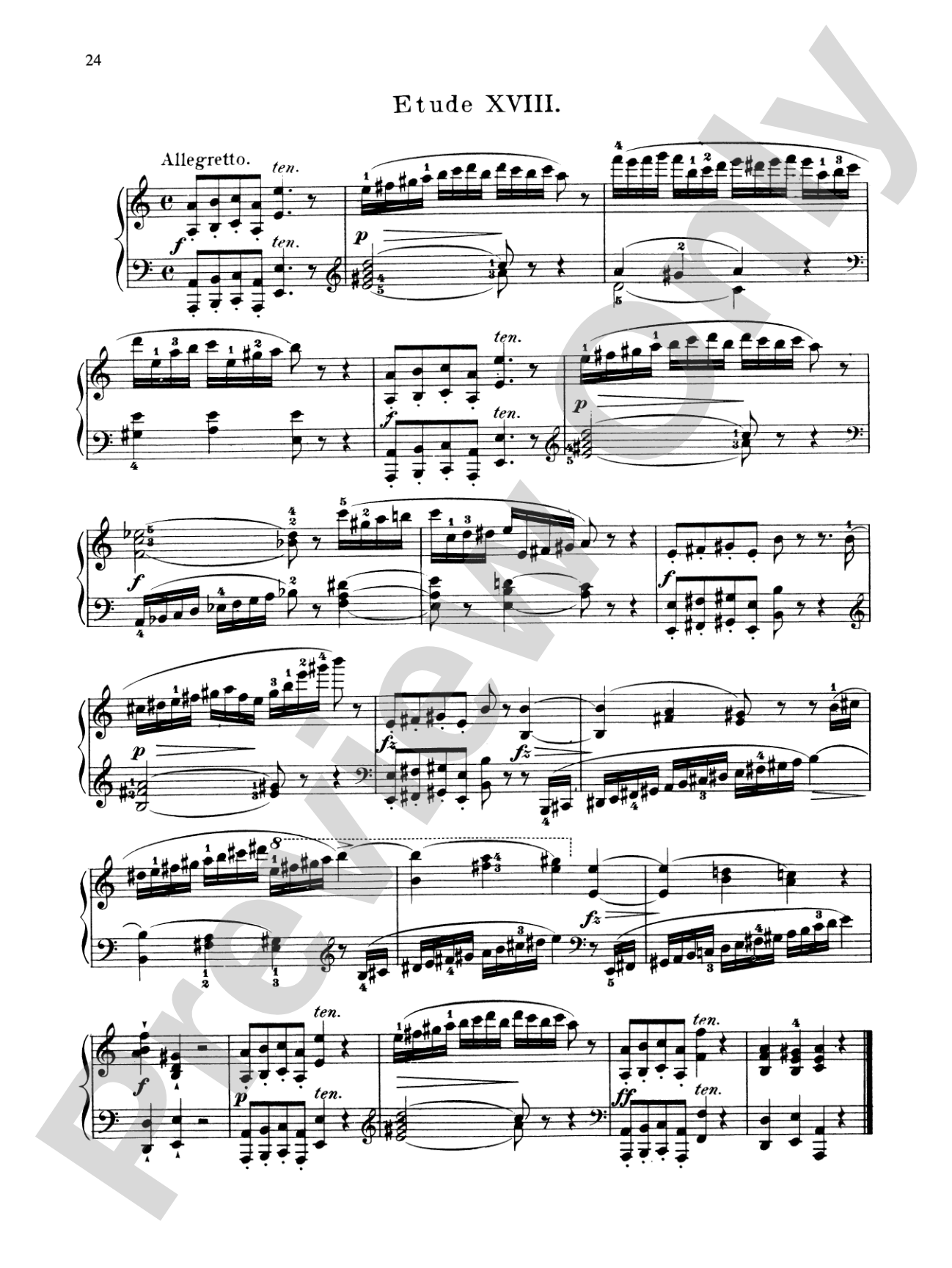
Bertini: Forty-eight Studies, Op. 29 & 32 Sheet Music Preview

Bertini: Forty-eight Studies, Op. 29 & 32

By Henri Bertini

Item: 00-PC-0002963

Digital Download
$0.99
Description
Henri Jérôme Bertini (1798-1876) was a well-known French classical composer and pianist in his time. This collection, Opus 29 and 32, includes 48 short etudes for late intermediate to early advanced level students.

Don't just read it, hear it, play along with it, and watch your students grow with it. In MakeMusic Cloud, Bertini: Forty-eight Studies, Op. 29 & 32 comes alive with professional accompaniment, adjustable tempo, and built-in practice tools that turn solo practice into real progress.

Sample Audio
No sample audio found.
Sample Video
Additional Details
Series: Kalmus Edition
Publisher: Alfred Music
Page Count: 68
SKU: 00-PC-0002963

More about this title

About the Composer: Henri Bertini

Henri Jérôme Bertini (1798–1876) was a prominent French pianist and composer whose virtuosic writing for keyboard instruments shaped the pedagogical repertoire of the nineteenth century. Though less celebrated today than some contemporaries, Bertini earned respect across Europe for his technical facility and his gift for crafting studies that were musically engaging rather than merely mechanical.

Why we love this

These studies occupy a sweet spot between the demands of early advanced work and genuine musical substance. Bertini's voice emerges distinctly here: his textures are pianist-friendly, his melodic writing has personality, and the range of technical challenges keeps students engaged across the full collection without feeling repetitive or formulaic.

What to expect

A brisk walk through Romantic keyboard writing with purpose and elegance. These studies shimmer with period style, clean figuration, and a classical restraint that grounds the more ornamental passages. There's a quiet confidence to Bertini's voice, unmarked by the showiness of some contemporaries.

Who it's for

Late intermediate to early advanced pianists ready to tackle serious technical studies that also offer musical reward. Older students preparing for music theory or composition study benefit especially from the harmonic variety and structural clarity throughout these etudes. Teachers seeking alternatives to Hanon or Czerny will find Bertini a refreshing choice that doesn't sacrifice pedagogy for artistry.

How to get the most out of it

  • Map out the harmonic movement before diving into tempo. Bertini's progressions often reward a clear sense of voice leading, which makes the fingerwork sit more naturally under the hand.
  • Isolate passages with wider intervallic leaps first at half-tempo. This builds security and allows you to maintain musical shape without sacrificing accuracy at performance speed.
  • Listen for the primary melodic line within busier textures and shape it prominently. Bertini often embeds singable material in what might initially read as accompaniment figuration.
  • Attend to the character indicated in each study's head marking. These pieces have distinct moods that extend beyond the purely technical and reward interpretive choices in articulation and voicing.

How to use it

Build a masterclass or student recital around five or six studies from across both opus numbers, pairing them with shorter character pieces to show range within a single composer's output. Alternatively, weave individual studies into a semester-long technique curriculum, using them to reinforce specific skills (hand independence, broken chord articulation, quick passagework) without asking students to abandon musicality in pursuit of mechanics.

Skills your students will build

  • Broken chord patterns and hand independence
  • Quick passagework and note clarity at tempo
  • Reading and executing Romantic-era harmonic progressions
  • Cantabile playing within technically demanding figurations
  • Consistency in repeated figures across both hands
  • Control of dynamic shaping and phrase architecture

You May Also Like