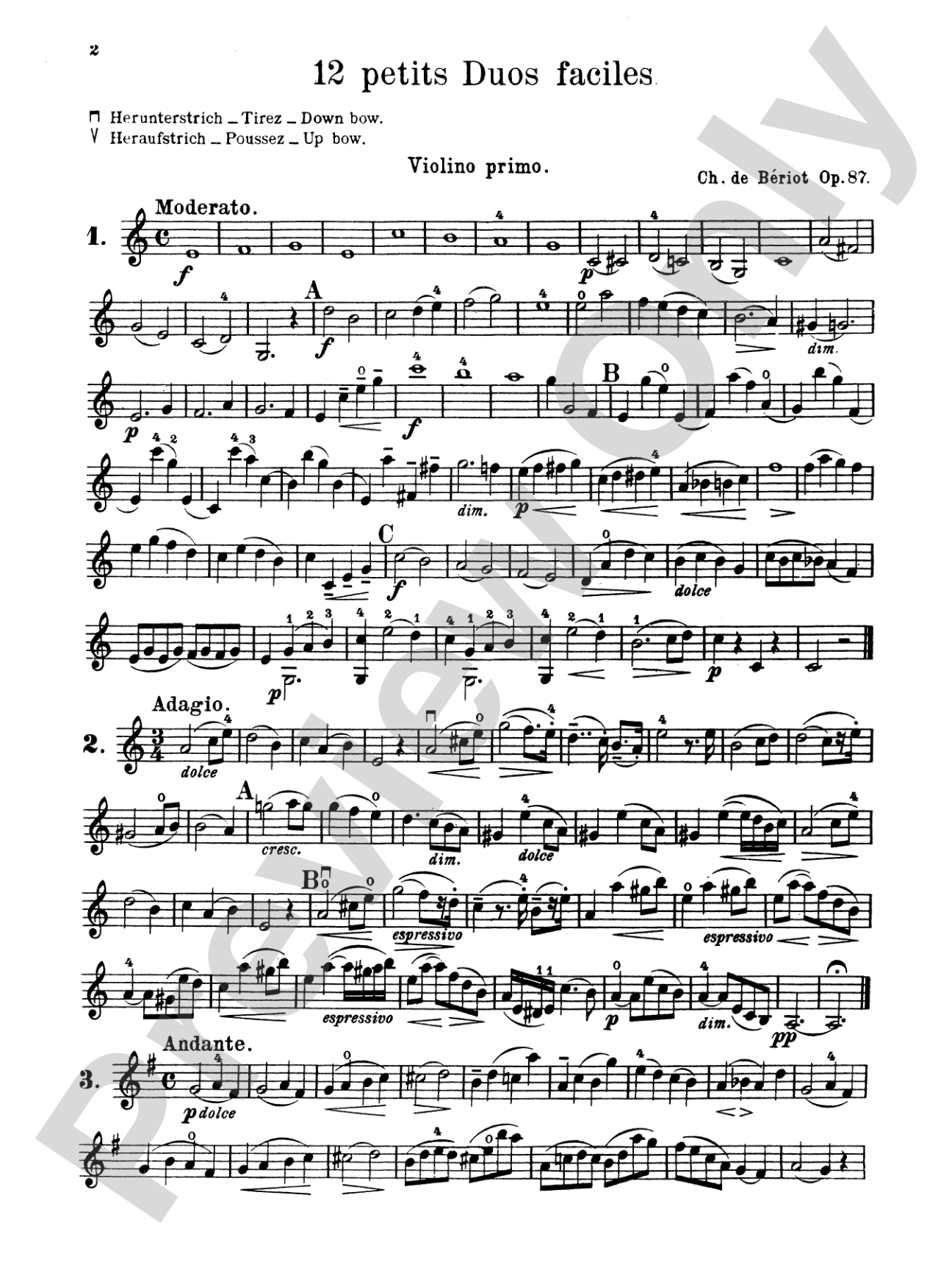
Beriot: Twelve Short Easy Duets, Op. 87 Sheet Music Preview

Beriot: Twelve Short Easy Duets, Op. 87

By Charles de Beriot

Item: 00-PC-0010737

Digital Download
$3.99
Description
A collection of string duets for 2 Violins, composed by Charles de Beriot.

Don't just read it, hear it, play along with it, and watch your students grow with it. In MakeMusic Cloud, Beriot: Twelve Short Easy Duets, Op. 87 comes alive with professional accompaniment, adjustable tempo, and built-in practice tools that turn solo practice into real progress.

Sample Audio
No sample audio found.
Sample Video
Additional Details
Series: Kalmus Edition
Publisher: Alfred Music
Page Count: 16
SKU: 00-PC-0010737

More about this title

About the Composer: Charles de Beriot

Charles de Beriot (1802-1870) was a Belgian violinist and composer whose virtuosic gifts and pedagogical sensibility shaped string literature across Europe. A student of Rodolphe Kreutzer, he built a career as both soloist and teacher, composing works that balanced technical ambition with genuine musicality. His duets and chamber works remain valued for their elegant writing and practical approach to building ensemble skill.

Why we love this

These twelve duets strike a rare balance: they're genuinely musical and interesting to perform, yet they sit perfectly at the early-intermediate level where many string pairs need repertoire. Beriot's writing for two equal voices creates natural dialogue and keeps both players engaged throughout, making them ideal for festivals and student recitals without sacrificing musical substance.

What to expect

Lyrical and conversational, with the graceful sensibility of the nineteenth-century salon. Each duet unfolds through gentle melodies and straightforward harmonic progressions, inviting players into a warm dialogue that feels natural without demanding virtuosic fireworks.

Who it's for

Upper elementary and intermediate string students working toward ensemble fluency and recital readiness. Duet partners of similar ability will find these pieces approachable yet musically rewarding, making them excellent choices for studio lessons, string quartet preparation, or youth orchestra supplementary repertoire.

How to get the most out of it

  • Establish a clear conductor or use counted-off entrance cues to ensure both players start together, especially important in pieces without orchestral accompaniment.
  • Emphasize phrase shaping and vibrato consistency between the two violin lines; matching tonal colors makes the duets sing as a unified whole.
  • Practice separately at a slow tempo to lock in intonation and balance, then gradually add tempo once both parts sit securely.
  • Use dynamic contrast to delineate sections and prevent the duets from becoming static; even modest pieces benefit from thoughtful shaping.

How to use it

Ideal for duet recitals, string ensemble festivals, or studio showcase events where partnerships need polished material. These pieces also serve well as stepping stones between solo repertoire and full chamber ensembles, giving students confidence in collaborative playing before tackling larger groups.

Skills your students will build

  • Listening and matching tone quality with a partner
  • Independent part reading while tracking ensemble balance
  • Intonation adjustment in real-time interaction
  • Musical phrasing and dynamic shaping in dialogue
  • Ensemble entrance cues and rhythmic synchronization

You May Also Like