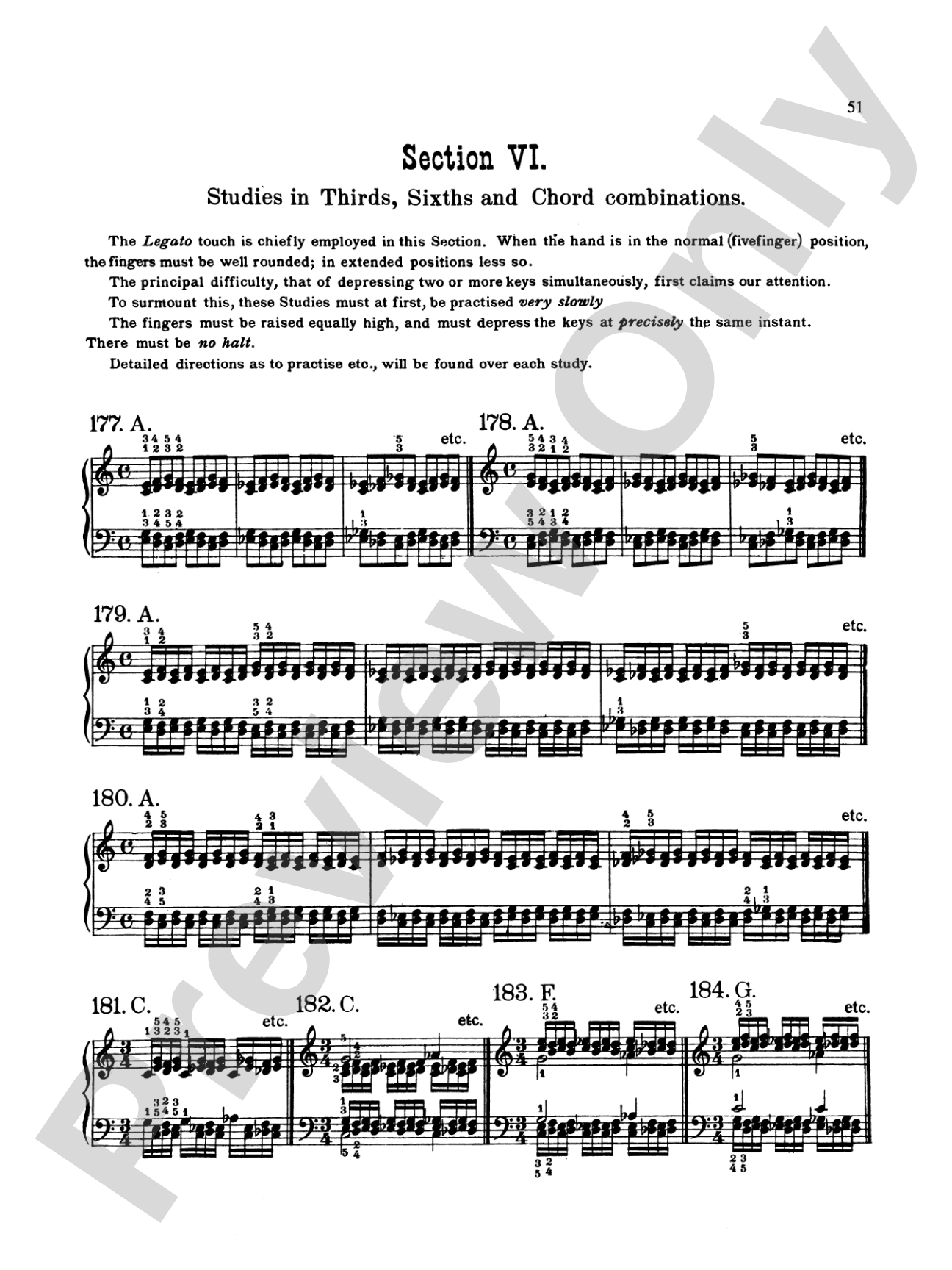
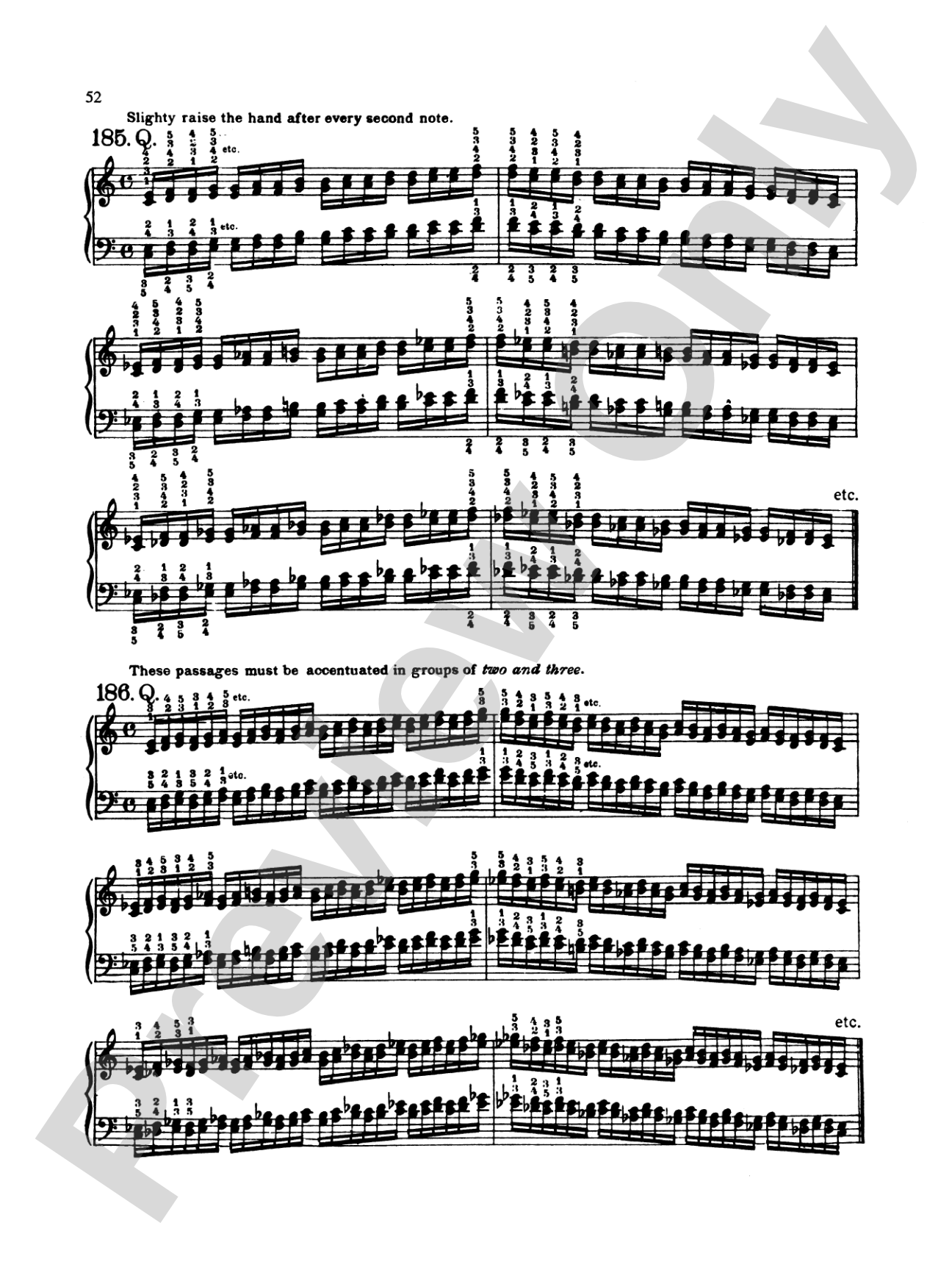
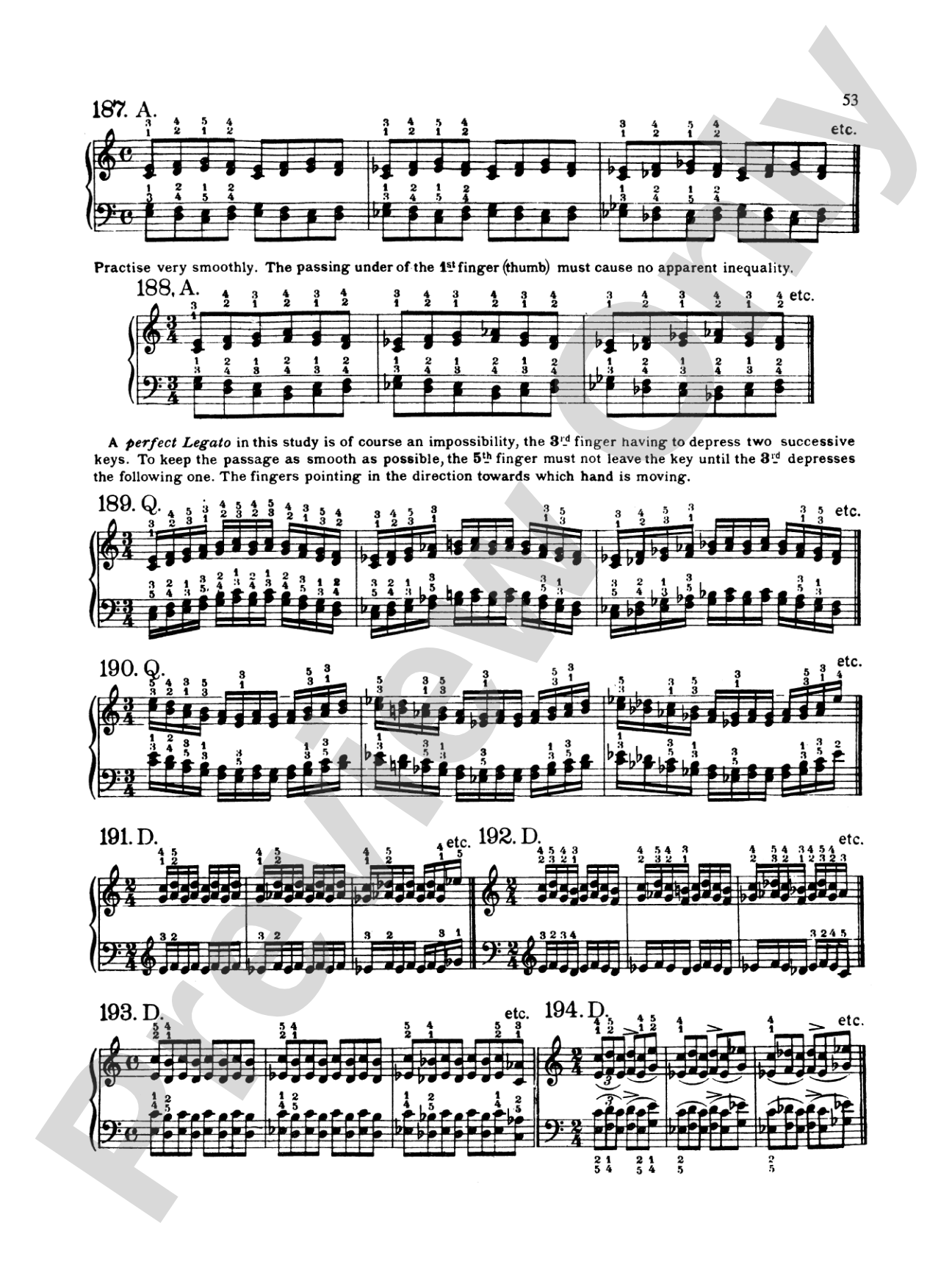
Beringer: Daily Technical Studies for Piano
By Oscar Beringer
Item: 00-PC-0003227
Pickup currently not available
Description
Don't just read it, hear it, play along with it, and watch your students grow with it. In MakeMusic Cloud, Beringer: Daily Technical Studies for Piano comes alive with professional accompaniment, adjustable tempo, and built-in practice tools that turn solo practice into real progress.
Jump straight in and assign it today.
Open this title and explore the full library in minutes.
Sample Audio
Sample Video
Additional Details
More about this title
About the Composer: Oscar Beringer
Oscar Beringer (1844-1922) was a German pianist and pedagogue whose teaching career spanned several decades across Europe and England. He established himself as both a performer and a devoted instructor, publishing numerous technical studies designed to build foundational piano skills in a systematic, progressive manner. His pedagogical writing reflects the 19th-century approach to technique: careful sequencing from simple to complex, isolation of specific mechanical problems, and repetition as a path to mastery.
Beringer's technical studies remain in use because they address real problems pianists encounter. His work bridges the gap between pure finger exercises and actual musical repertoire, offering structured paths through hand position, finger independence, scale work, and hand coordination. Teachers have long valued his clarity of purpose and the logical organization of difficulty.
Why we love this
This book functions as a complete technical curriculum in one resource. Rather than piecing together studies from multiple sources, you have twelve focused sections that move from basic five-finger work through sophisticated hand-crossing and rhythmic independence, plus a full manual of scales and arpeggios. Teachers appreciate the logical scaffolding and the fact that every exercise targets a specific technical problem without asking students to manufacture context or musicality they haven't yet earned.
What to expect
These are purposeful, unadorned exercises. You will not find emotional or narrative content here. Instead, you encounter clean technical problems presented in isolation so your hands can solve them without distraction. The work feels methodical and cumulative; completing a section produces tangible improvement in specific motor skills.
Who it's for
This book suits pianists in their first few years of study through intermediate levels. Students working toward grade 4-6 repertoire and beyond will find focused exercises for every technical challenge they're likely to encounter. Teachers seeking a comprehensive, organized resource for daily technical work will find this more efficient than assembling studies piecemeal from various publishers.
How to get the most out of it
- Work through sections sequentially rather than jumping ahead. The early sections establish hand position and finger independence that later studies depend on.
- Assign 2-3 studies from the same section during a practice week, allowing students to recognize patterns and build confidence before advancing.
- Use the modulatory examples (Section XII) to help students hear how the same technical patterns sound in different keys and harmonic contexts.
- Return to earlier sections periodically as review, especially when students are struggling with advanced material. Revisiting simpler studies often clarifies the mechanical issues blocking progress.
How to use it
Assign studies from this collection as daily technical work supporting whatever repertoire students are learning. If a student is struggling with finger crossings in a sonata, turn to Section IX. If scales are clumsy, the complete manual in Section XI offers systematic practice across all keys. This is not a recital or performance piece; it is a studio resource that makes weekly lessons more focused and efficient.
Skills your students will build
- Five-finger hand position and finger strength
- Independent finger control and isolation
- Scale passages at various speeds and hand positions
- Chord voicing and hand position changes
- Finger substitution on repeated notes
- Thirds, sixths, and interval work
- Octave playing and chord jumping
- Hand extension and reach
- Hand crossing and hand independence
- Rhythmic independence between hands
- Scales and arpeggios across all keys
- Modulation and harmonic awareness