
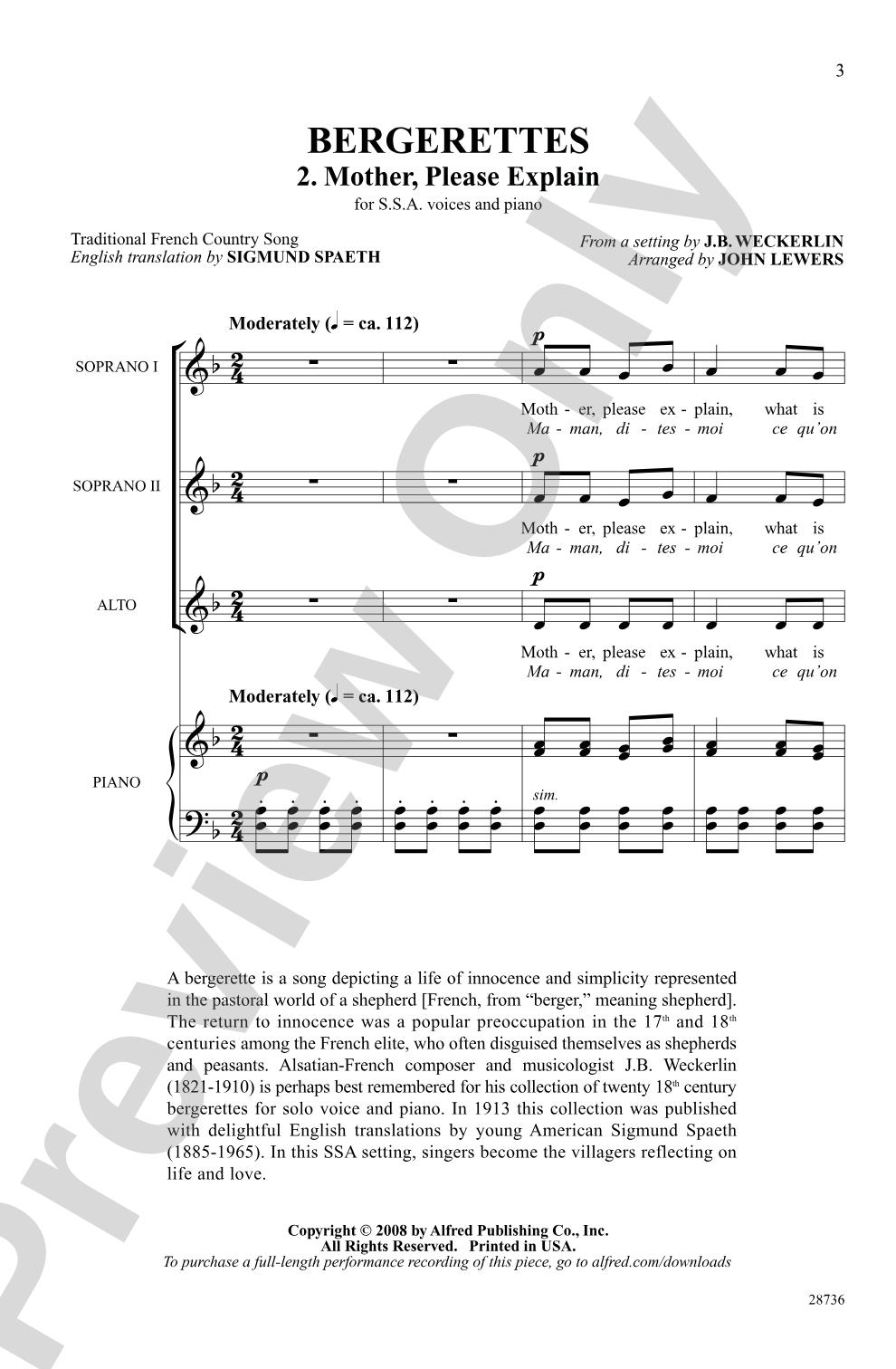

Bergerettes 2: Mother, Please Explain: SSA Choral Octavo
Traditional French Country Song, English translation by Sigmund Spaeth, based on an arrangement by J. B. Weckerlin / arr. John Lewers
Item: 00-PO-0000556
$1.95
Minimum order quantity: 20 copies
Pickup currently not available
Related Items
Bergerettes 2: Mother, Please Explain: SSA Choral Octavo |
$1.95
|
View |
Description
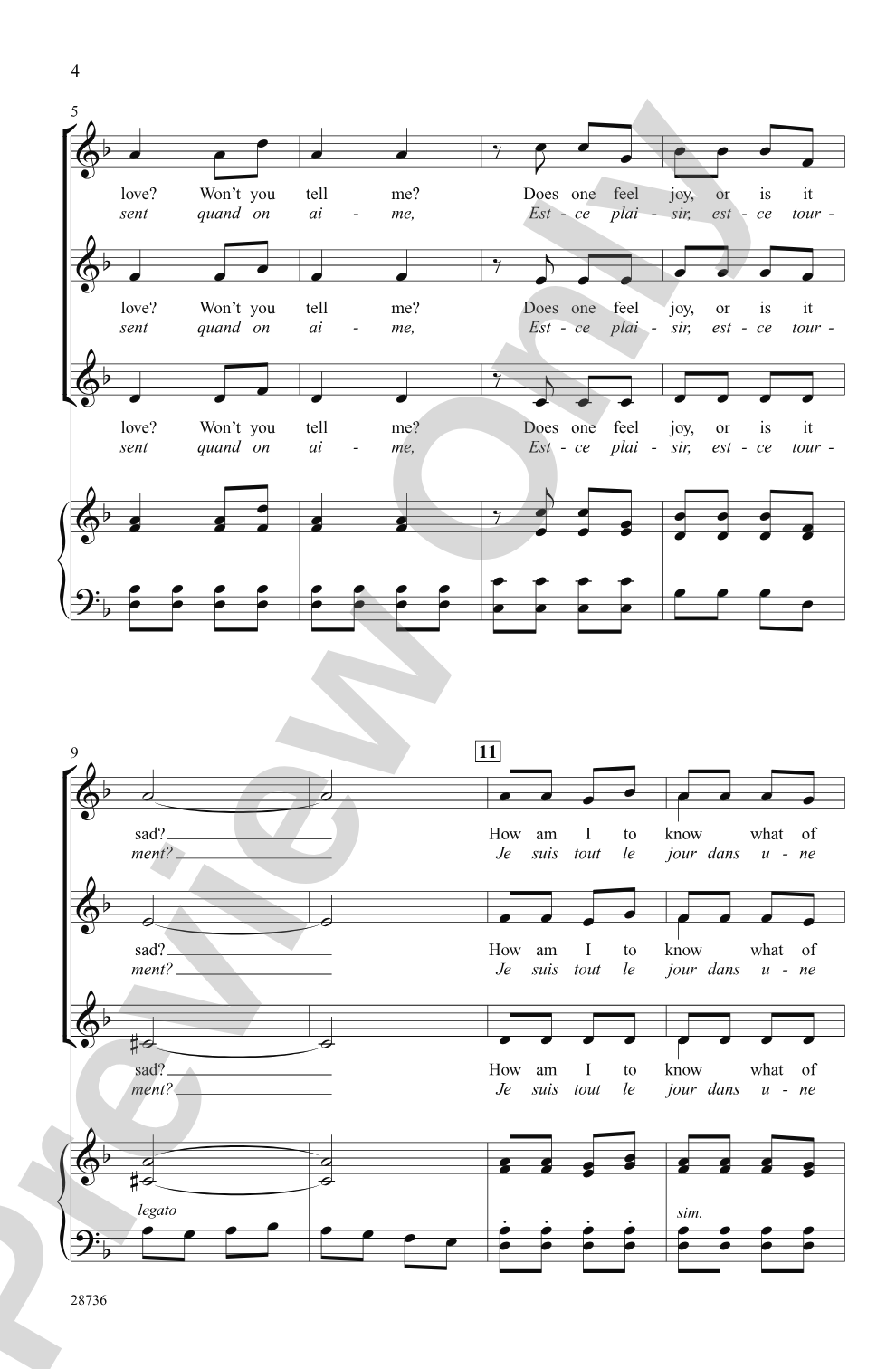
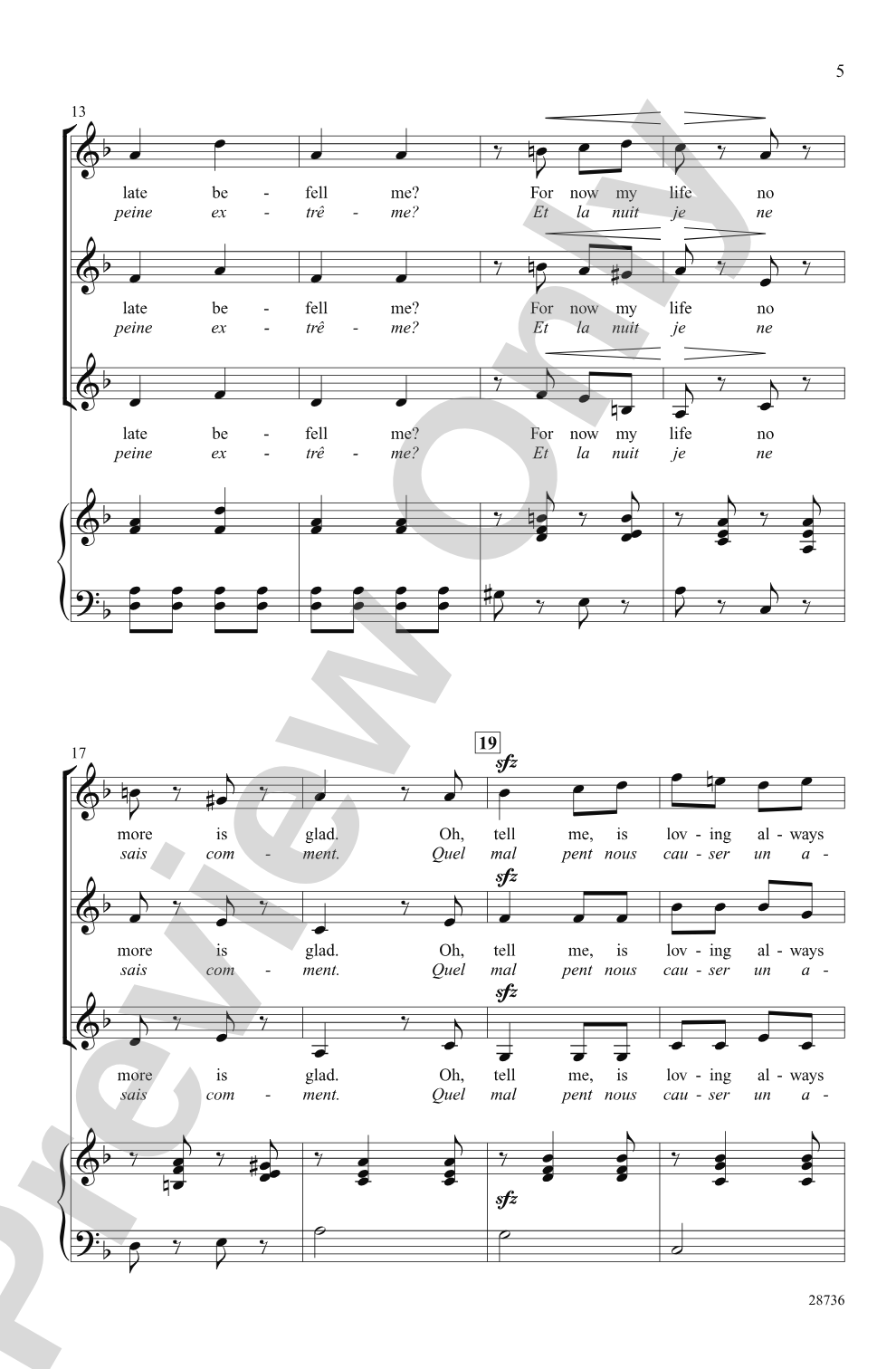
These 18th century French country songs are delightful whether performed as a set or singly. Popularized by J.B. Weckerlin's solo settings in 1913, these new choral arrangements may be sung in either French or English. In both strophic settings, SSA singers become villagers reflecting on life and love.


Bergerettes 2: Mother, Please Explain: SSA Choral Octavo isn't in MakeMusic Cloud just yet...but it could be. Let us know you'd like to see it, and you'll help shape what comes next. In the meantime, start a free trial and dive into thousands of interactive titles your students can play along with today.
Request This Title
Tell us you want it.
Start Your Free Trial
Explore everything that's ready to play right now.
Sample Audio
1
Audio File
--:--
0:00
0:00
Sample Video
No sample videos found.
Additional Details
Series:
Lawson-Gould
Publisher:
Alfred Music
Page Count:
16
SKU:
00-PO-0000556
More about this title
About the Composer: J. B. Weckerlin
Jean-Baptiste Weckerlin (1821-1910) was a French composer and musicologist whose legacy rests largely on his work preserving and arranging European folk music. As director of the Paris Conservatoire's library, he had access to centuries of documents and field collections, which he mined to create accessible arrangements of traditional songs. His 1913 solo settings of bergerettes brought these 18th century French country melodies to concert stages and parlors across Europe, establishing them as repertoire rather than forgotten village songs.
Why we love this
Weckerlin's arrangements carry genuine charm without sacrificing musical substance. The strophic form means singers can focus entirely on tone, diction, and character rather than navigating complex harmonic changes, making it ideal for developing ensemble blend while telling stories that audiences recognize and love. A piece this engaging at a festival performance builds morale for the singers and stays in the audience's memory.
What to expect
Intimate and wry, like eavesdropping on village gossip set to melody. There's a lightness to these bergerettes that comes from centuries of singers passing them mouth to mouth, yet the emotional content (love, confusion, social observation) gives them weight. The SSA texture creates a warm, conversational blend that invites the audience into a shared moment.
Who it's for
SSA choirs seeking repertoire that works equally well in festival competition, concert programming, or community performance. The accessible vocal range and straightforward harmonic language suit developing ensembles while the text and character appeal to experienced singers who appreciate authenticity and historical context.
How to get the most out of it
- Clarify the French or English text early in rehearsal, and commit fully to one language throughout the piece. The vowel sounds and emotional colors shift noticeably between languages, so switching undermines the villager storytelling.
- Shape the phrase endings with a gentle lift rather than a hard stop. These songs invite a conversational, intimate tone even in performance settings.
- Balance the two upper lines carefully in the SSA voicing. The harmony often rests in the alto part, so avoid letting the soprano dominate and flatten the chord quality.
- Let the natural strophic repetition work for you by finding subtle differences in expression across verses. Small changes in vowel color or dynamic shape prevent the repetition from becoming static.
How to use it
Program this as a contrasting item alongside more complex contemporary or classical work, or build a thematic set around French music and folk traditions. The 18th century origins and storytelling nature make these effective as a bridge piece, providing musical substance without demanding the interpretive complexity of concert art songs. At 16 pages, the full arrangement offers enough material for a meaningful program contribution without overwhelming rehearsal time.
Skills your students will build
- Ensemble blend in SSA voicing with equal weight on soprano and alto lines
- Diction and character in both French and English languages
- Phrasing and expression within strophic form across multiple verses
- Historical awareness of French folk traditions and 19th century vocal arrangements