Berceuse: 1st Violin Sheet Music Preview

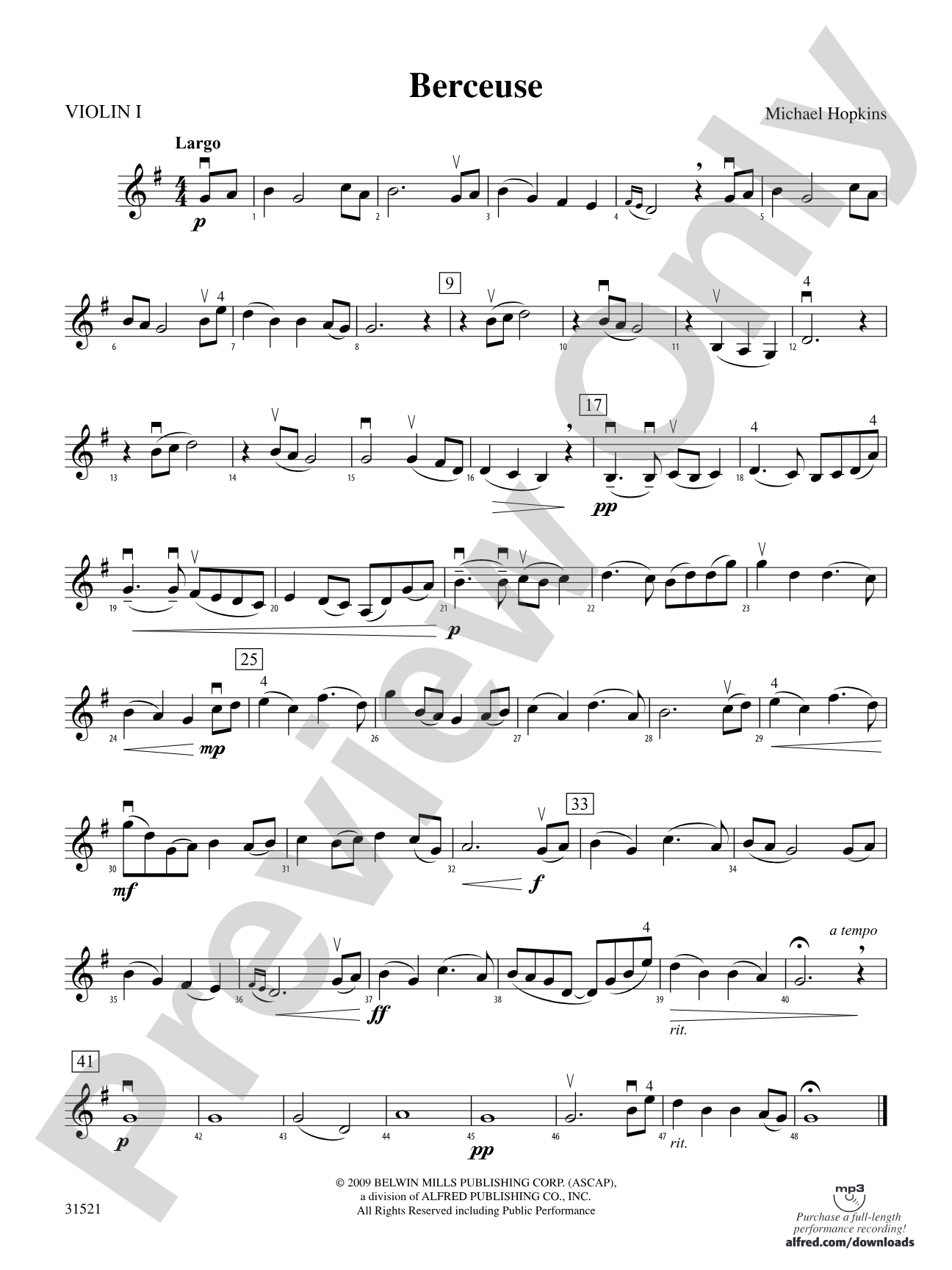
Berceuse: 1st Violin

By Michael Hopkins

Grade: 2

Item: 00-PC-0001714_VN1

Digital Download
$5.99
Description
This beautiful lullaby is a great piece for teaching slurs, bow distribution, bowing variation, grace notes and legato style. A fermata and a ritard near the end are perfect for teaching tempo changes. All parts are playable in first position. An optional piano part is included. This title is available in MakeMusic Cloud.

Don't just read it, hear it, play along with it, and watch your students grow with it. In MakeMusic Cloud, Berceuse: 1st Violin comes alive with professional accompaniment, adjustable tempo, and built-in practice tools that turn solo practice into real progress.

Sample Audio
0:00
0:00
Sample Video
Additional Details
Series: Belwin Beginning String Orchestra
Publisher: Alfred Music
Page Count: 76
SKU: 00-PC-0001714_VN1

More about this title

About the Composer: Michael Hopkins

Michael Hopkins

Michael Hopkins directs the music education program at the University of Michigan, where he specializes in string pedagogy, orchestra methods, and the intersection of music and technology. His background includes conducting university orchestras and leading string programs at the secondary level across multiple states, as well as founding the Burlington Chamber Orchestra.

Hopkins has established himself as a thought leader in string education through presentations at major music education conferences, peer-reviewed publications in journals including the Journal of Research in Music Education and American String Teacher, and his pedagogical resource The Art of String Teaching. His catalog of orchestral compositions and arrangements reflects decades of classroom experience and direct engagement with the needs of student musicians at all levels.

Why we love this

This piece delivers exactly what Grade 2 string students need to understand fundamental bowing concepts without overwhelming them with technical demands. Hopkins writes with the specificity of someone who has taught these skills hundreds of times; the fermata and ritardando aren't decorative flourishes but meaningful teaching moments that help students grasp tempo control in context.

What to expect

A gentle, singing lullaby that invites students into the expressive world of string playing. The piece unfolds with a natural warmth, its lyrical phrases encouraging instrumentalists to think of themselves as singers, while subtle compositional details like grace notes and the contemplative fermata create moments of quiet sophistication.

Who it's for

String orchestras at the Grade 2 level who are ready to move beyond basic bow technique into more refined articulation and stylistic control. Directors working with students who have solid first-position reading skills and need targeted work on slurs, legato style, and dynamic shaping.

How to get the most out of it

  • Shape the slurs by having students gradually increase bow weight through the phrase and release slightly at the end, maintaining even tone throughout.
  • Balance the optional piano part as a reinforcement tool during rehearsal, then consider removing it for performance to let the string texture speak independently.
  • Establish consistent bow distribution across the ensemble before addressing individual expressive details; this unified approach makes the grace notes and legato passages land together.
  • Prepare the fermata by conducting a clear preparatory gesture and allowing students a split second to observe the hold before releasing together with a unified gesture.

How to use it

Program this early in a concert to establish an intimate, engaging opening that showcases your ensemble's musicality. It also works beautifully as a standalone festival or contest piece that allows judges to assess fundamental string technique without the demands of more complex repertoire.

Skills your students will build

  • Slurring across multiple notes with consistent tone quality
  • Bow distribution and weight management within phrases
  • Grace note execution and articulation
  • Legato style and singing tone production
  • Responding to fermatas and ritardandos as tempo control markers
  • First-position reading with coordination across the ensemble

You May Also Like