
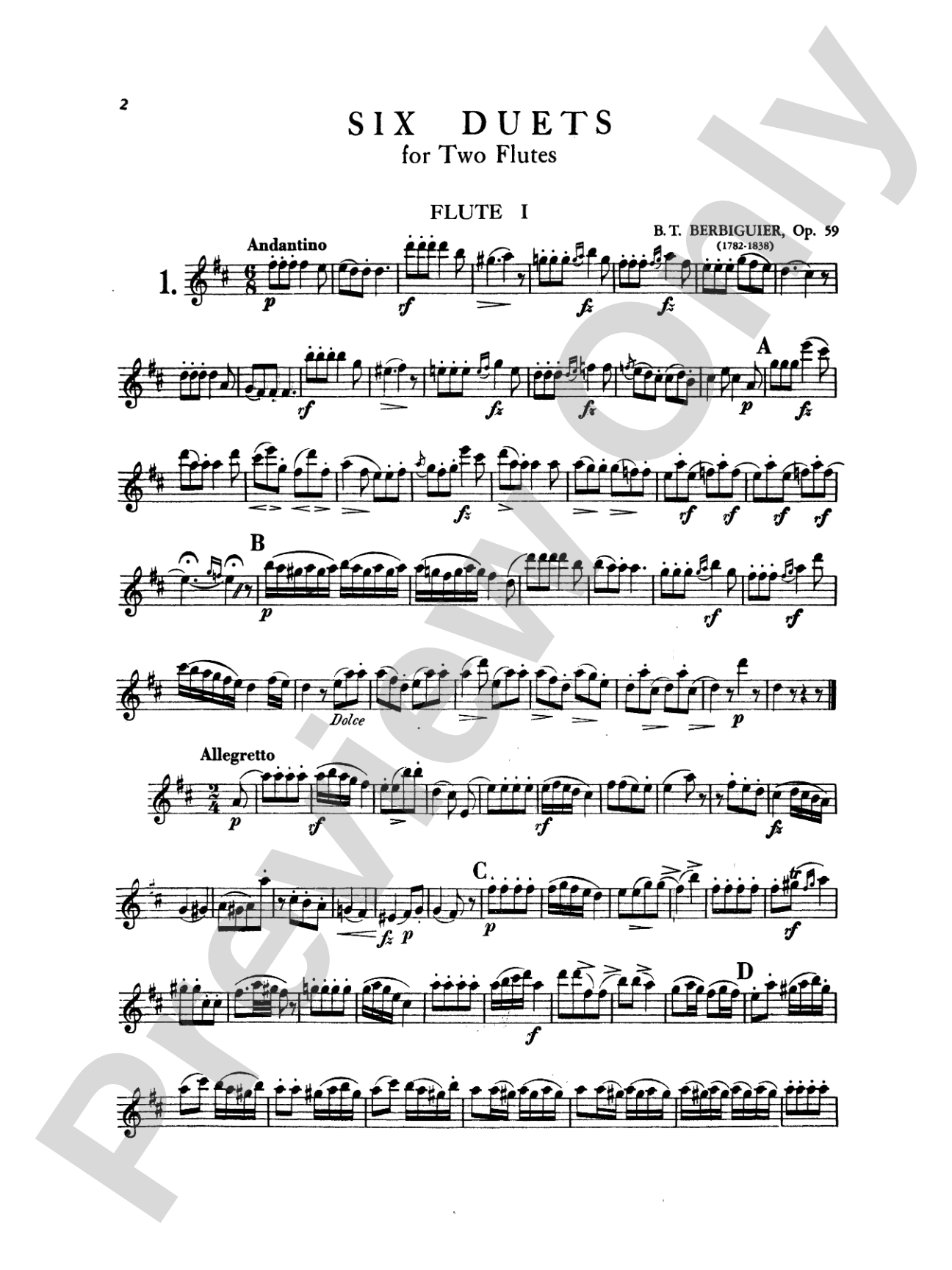
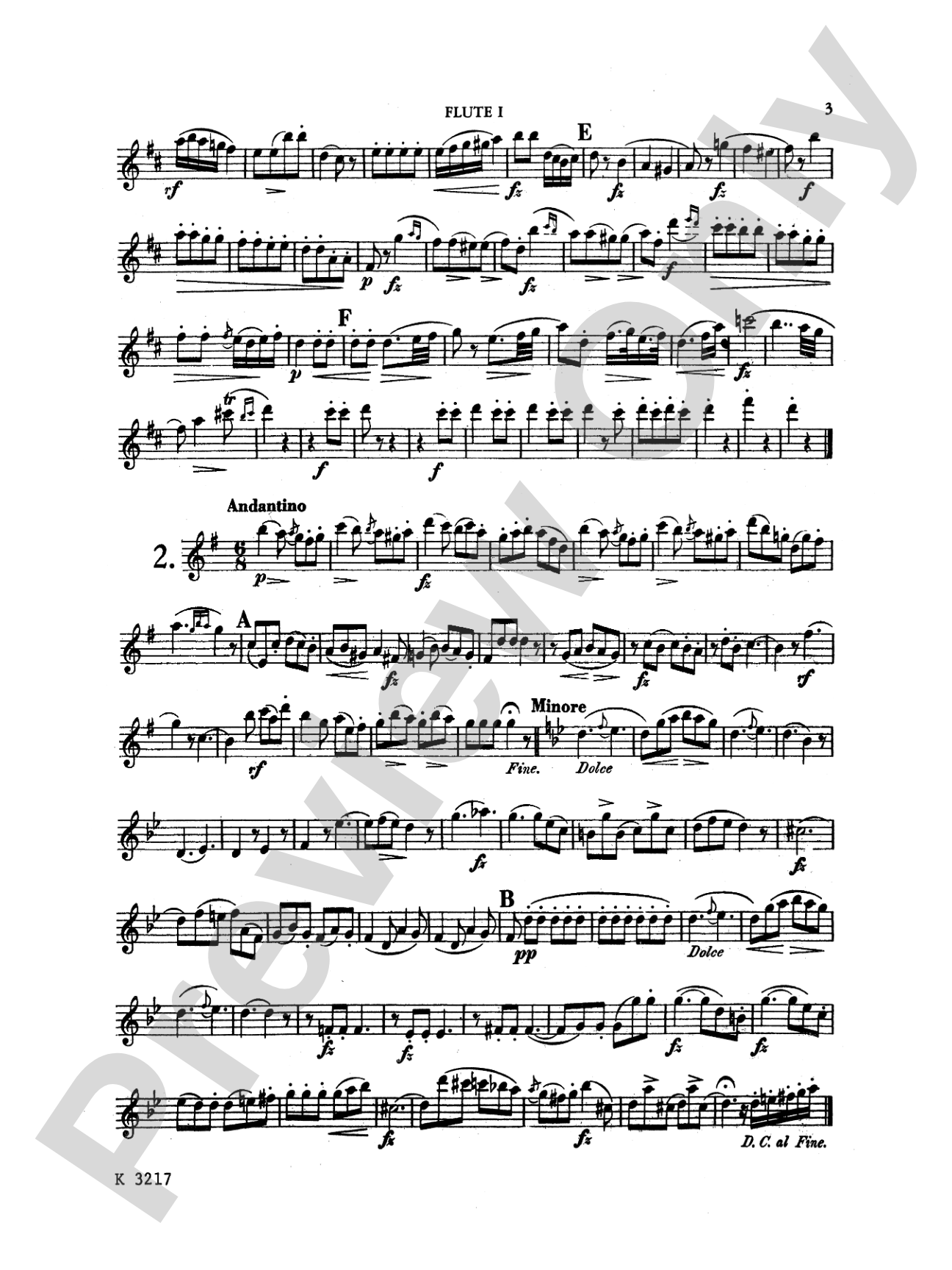

Berbiguier: Six Duets, Op. 59: Flute Book
By Antoine Benoit Tranquille Berbiguier
Item: 00-PK-0002947

$8.99
Pickup currently not available
Buy Extra Parts (Digital PDF Download)
| Product | Price | Quantity |
|---|---|---|
| Berbiguier: Six Duets, Op. 59 | $0.99 | |
| Berbiguier: Six Duets, Op. 59 | $0.99 | |
| Berbiguier: Six Duets, Op. 59 | $0.99 | |
| Berbiguier: Six Duets, Op. 59 | $0.99 | |
| Berbiguier: Six Duets, Op. 59 | $0.99 | |
| Berbiguier: Six Duets, Op. 59 | $0.99 |
Parts Added to Cart!
Related Items
Six Duets, Opus 59: Flute Book |
$8.95
|
View |
Description
A collection of duets, for Flute, composed by T.B. Berbiguier.


Don't just read it, hear it, play along with it, and watch your students grow with it. In MakeMusic Cloud, Berbiguier: Six Duets, Op. 59: Flute Book comes alive with professional accompaniment, adjustable tempo, and built-in practice tools that turn solo practice into real progress.
Open in the Player
Jump straight in and assign it today.
Start Your Free Trial
Open this title and explore the full library in minutes.
Sample Audio
No sample audio found.
Sample Video
No sample videos found.
Additional Details
Series:
Kalmus Edition
Publisher:
Alfred Music
Page Count:
20
SKU:
00-PK-0002947
More about this title
About the Composer: T.B. Berbiguier
Théodore Berbiguier (1782, 1838) was a French flute virtuoso and pedagogue whose prolific output shaped flute repertoire throughout the 19th century. His six opus numbers of duets remain cornerstones of flute chamber music, valued equally for their elegant writing and their capacity to develop ensemble musicianship between players of modest to intermediate ability.
Why we love this
These duets sit at the sweet spot between technical study and genuine musical substance. The writing respects the flute's singing voice while building ensemble discipline through equal partnership, and the Romantic idiom gives students repertoire that actually sounds like something worth performing, not just a exercise.
What to expect
These duets breathe with the transparency and elegance of the early 1800s, full of cantabile lines that feel natural under the fingers and sing without affectation. The harmonic language is warm and forward-looking, never precious, giving players the sense they're making real music rather than working through etudes.
Who it's for
Intermediate to advanced flutists working on ensemble skills and early Romantic style. Flute duos preparing for recitals, student competitions, or chamber programming will find accessible yet substantial material that develops listening and collaboration.
How to get the most out of it
- Balance the melody between both flutes by listening for phrase contour rather than volume; one flute leads while the other supports, and this responsibility shifts naturally through each movement.
- Shape longer lines by feeling the harmonic motion underneath. Berbiguier's voice leading is logical and purposeful, so letting the harmony guide your breath and phrasing creates coherence without forcing.
- Work intonation first without vibrato, then layer vibrato as a musical choice rather than compensation. These duets demand pristine unison and intervals, and vibrato should enhance a centered pitch, not mask it.
- Establish a steady pulse together before you add expression. Once both flutes breathe and move as one rhythmically, the rubato and rubato possibilities become expressive choices rather than indulgences.
How to use it
Pair these duets as chamber music offerings in a recital or student showcase, or use them as the foundation of a flute ensemble class focused on Romantic repertoire. They also work well as concert openers or transitions between heavier solo works.
Skills your students will build
- Balanced duet listening and ensemble intonation
- Phrasing continuity across register breaks
- Early Romantic stylistic convention and ornamentation
- Collaborative interpretation and leadership switching
- Lyrical tone production at varied dynamics