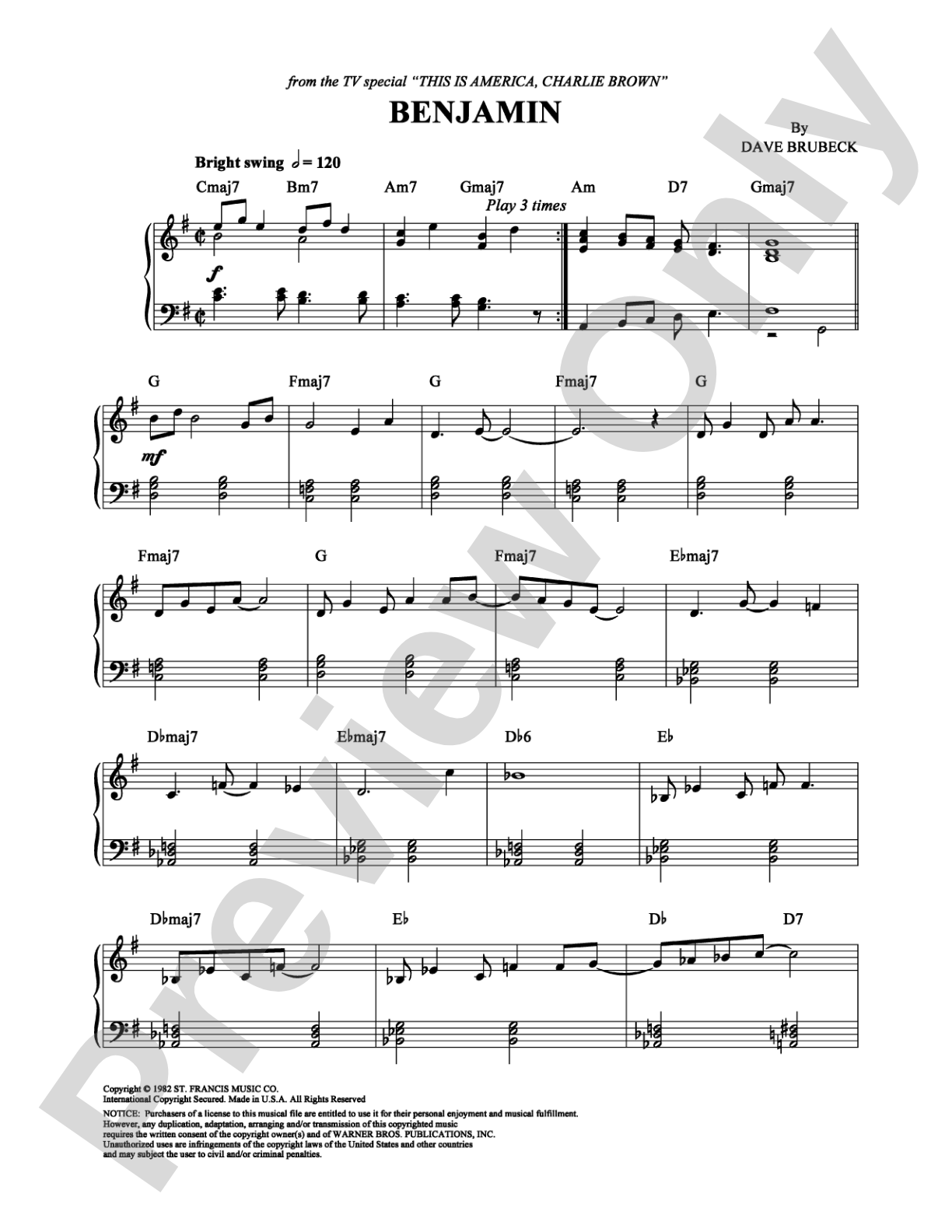
Benjamin: Piano Digital Sheet Music

Benjamin: Piano Digital Sheet Music

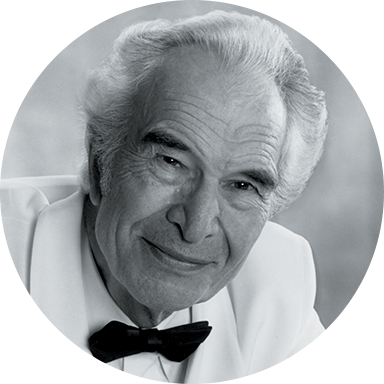
Dave Brubeck

Item: 00-PS-0000808

Digital Download
$3.99
Description

Benjamin: Piano Digital Sheet Music isn't in MakeMusic Cloud just yet...but it could be. Let us know you'd like to see it, and you'll help shape what comes next. In the meantime, start a free trial and dive into thousands of interactive titles your students can play along with today.

Sample Audio
No sample audio found.
Sample Video
Additional Details
SKU: 00-PS-0000808

More about this title

About the Artist: Dave Brubeck

Dave Brubeck

Dave Brubeck established himself as one of jazz's most distinctive voices through his work as both pianist and composer. His formal training under Darius Milhaud at Mills College gave him a foundation in classical composition that he wove throughout his jazz practice, resulting in a catalog that spans orchestral works, chamber pieces, choral compositions, and large-scale oratorios alongside his improvisational recordings. He received the Grammy Lifetime Achievement Award for his contributions to jazz and was elected to the American Classical Music Hall of Fame in 2003.

Beyond his musical innovations, Brubeck was instrumental in advancing racial integration in American jazz during the mid-20th century. His album "Time Out" became the first jazz recording to sell over a million copies, introducing audiences worldwide to complex time signatures and compositional sophistication. Among his most enduring works is the standard "Take Five," though his broader legacy encompasses sacred music, ballet suites, and a string quartet that have been performed and recorded by orchestras including the London Symphony Orchestra.

Why we love this

Brubeck's "Benjamin" gives pianists access to a work from one of jazz's most inventive minds, combining accessible melody with the harmonic sophistication that defined his approach. The piece captures his gift for writing fully notated compositions that feel both crafted and improvisational. It's a valuable addition to recital programming when you want to bridge classical technique with jazz language.

What to expect

"Benjamin" unfolds with the warmth and directness that characterizes Brubeck's lyrical writing. The piece balances accessible melodic appeal with harmonic depth, creating an intimate quality that draws the listener in without requiring extensive jazz background to appreciate.

Who it's for

Pianists with solid classical technique who are developing jazz vocabulary will find this piece immediately rewarding. It works equally well for advanced students exploring how great jazz composers notate their ideas and for pianists building a recital that includes 20th-century American repertoire.

How to get the most out of it

  • Treat the harmonic content as a conversation between melody and accompaniment; Brubeck's voicings reward attention to both the foreground and the colors supporting it.
  • Pay close attention to dynamic shadings and articulation markings to reveal the structural logic beneath what might initially sound casual.
  • Balance the written notation with subtle rhythmic flexibility in phrasing; Brubeck composed for players who understand both strict time and expressive variation.

How to use it

This piece sits comfortably in a recital program that mixes classical and contemporary American works, offering audiences a genuine introduction to composed jazz alongside traditional repertoire. It also serves pianists developing a jazz recital program as a bridge between standards and original compositions.

Skills your students will build

  • Reading and interpreting jazz harmonic notation and chord voicings
  • Balancing rhythmic precision with the expressive qualities of jazz phrasing
  • Understanding how a composed melody interacts with jazz-informed accompaniment figures

You May Also Like