

Benedictus (from Missa Sancti Hieronymi, MH 254): SATB Choral Octavo
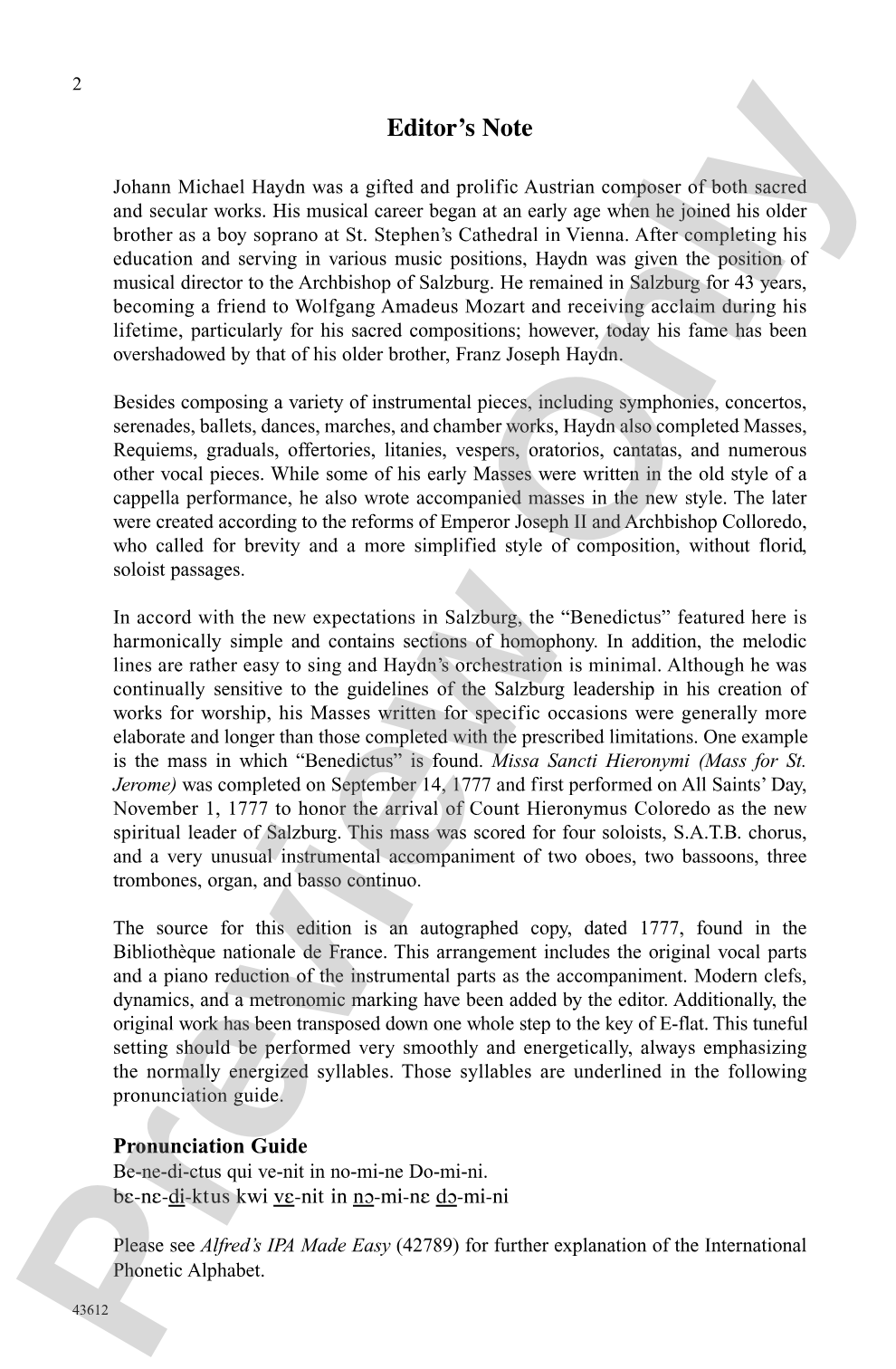
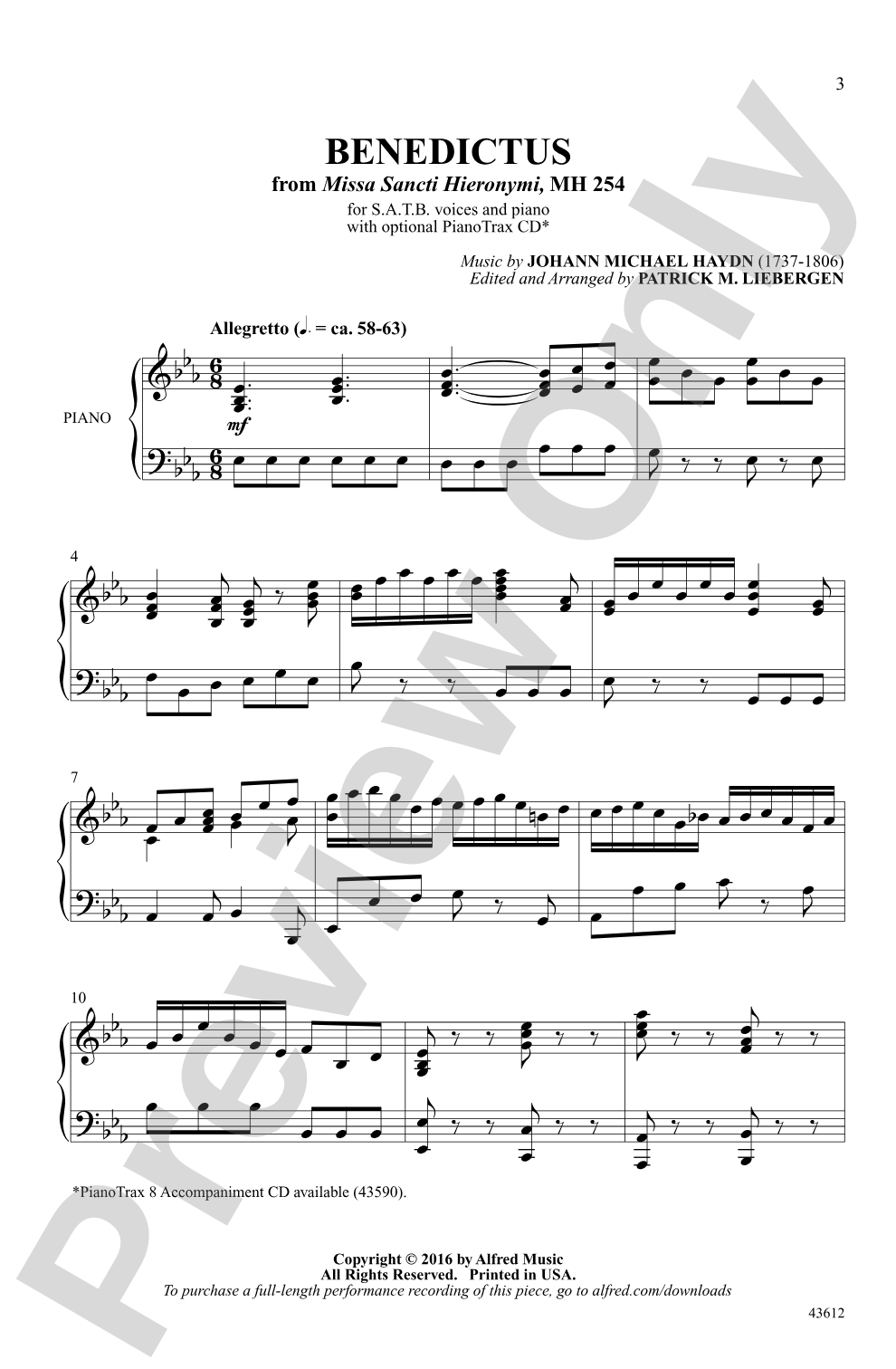
Music by Johann Michael Haydn / ed. and arr. Patrick M. Liebergen
Item: 00-PO-0003584
$1.90
Minimum order quantity: 20 copies
Pickup currently not available
Related Items
Benedictus (from Missa Sancti Hieronymi, MH 254): SATB Choral Octavo |
$1.90
|
View |
Description
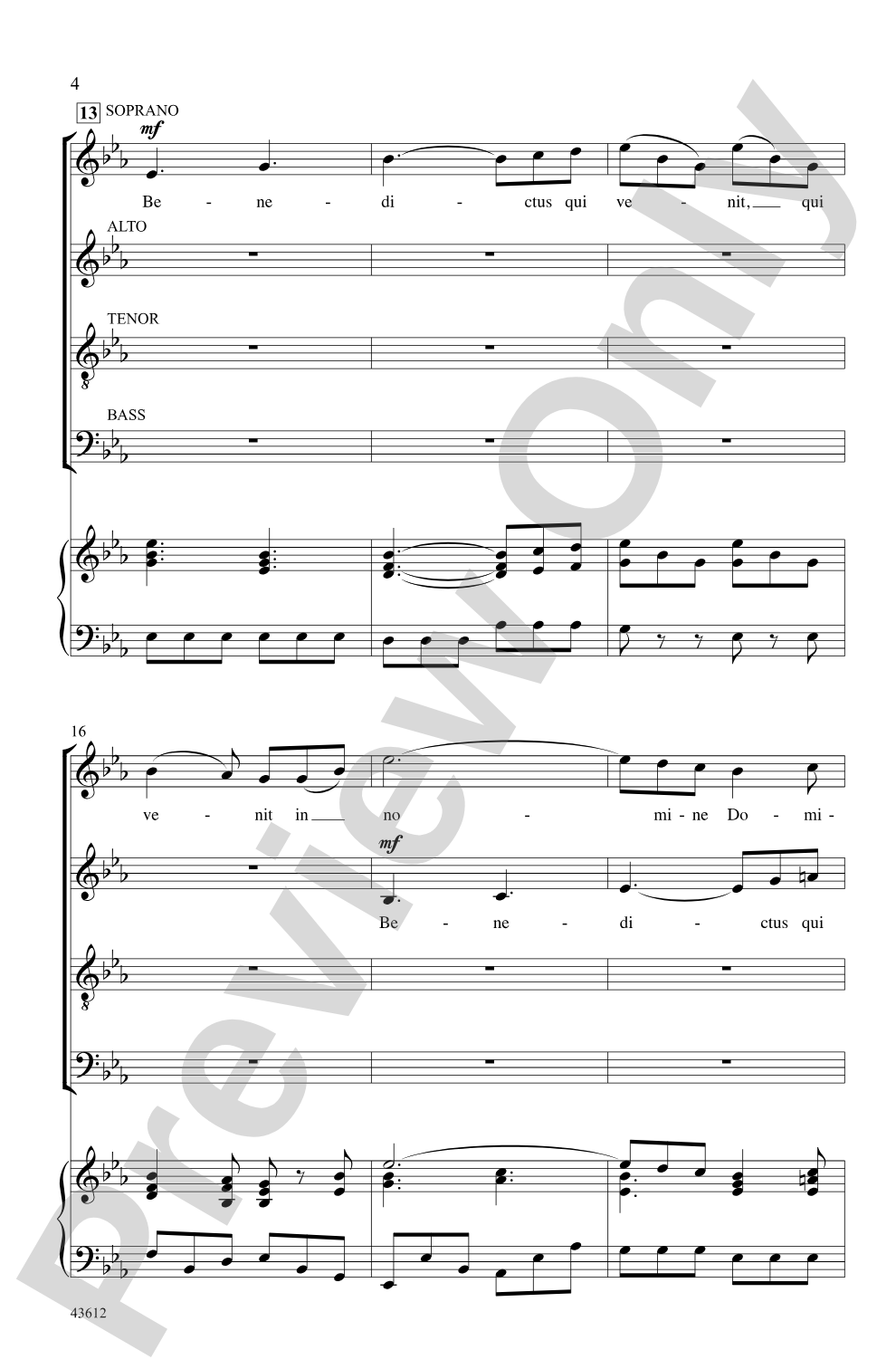
Composed by Johann Michael Haydn (younger brother of composer Joseph Haydn), this classical work features brilliant melismatic lines and a well-crafted piano reduction of the original orchestral score. An opening triadic motive in the sopranos is repeated and developed through the lower voices in imitative fashion, before coming to a homophonic section, then a stately close.


Benedictus (from Missa Sancti Hieronymi, MH 254): SATB Choral Octavo isn't in MakeMusic Cloud just yet...but it could be. Let us know you'd like to see it, and you'll help shape what comes next. In the meantime, start a free trial and dive into thousands of interactive titles your students can play along with today.
Request This Title
Tell us you want it.
Start Your Free Trial
Explore everything that's ready to play right now.
Sample Audio
1
Audio File
--:--
0:00
0:00
Sample Video
Additional Details
Series:
Alfred Choral Designs
Publisher:
Alfred Music
Page Count:
12
SKU:
00-PO-0003584
More about this title
About the Composer: Johann Michael Haydn
Johann Michael Haydn (1737-1806) spent his career in the shadow of his older brother Joseph, yet he was a prolific and respected composer in his own right. As Kapellmeister at the Salzburg Cathedral for most of his adult life, he wrote over 40 masses, numerous motets, and sacred works that earned him recognition throughout Europe. His sacred music balances Classical clarity with genuine spiritual depth, and his liturgical works remain staples of choral repertoire because they are musically substantial and genuinely singable.
Why we love this
Liebergen's arrangement gives choirs access to a Missa Sancti Hieronymi movement that feels both architecturally smart and emotionally grounded. The Benedictus showcases that distinctly Haydn family gift for combining linear, imitative writing with moments of luminous homophony, all contained in a score that's rewarding without being technically punishing.
What to expect
There's an architectural elegance here. The opening feels almost austere, with the sopranos stating their triadic idea before the other voices join in like stones being carefully placed. When the texture broadens into homophony, it settles into a kind of serenity, and the closing measures suggest both reverence and Classical restraint.
Who it's for
This octavo works for intermediate to advanced high school choirs and collegiate ensembles comfortable with four-part writing and willing to invest in intonation during imitative sections. The 12-page length and Classical idiom make it suitable for singers who are building facility with eighteenth-century choral literature, whether for festival competition or concert programming.
How to get the most out of it
- Shape the opening sopranol triadic motive with clear articulation and gentle crescendo so it lands with definition when the lower voices enter imitatively. The clarity of this exchange sets up everything that follows.
- Make the transition to homophony a genuine shift in texture and energy. After the imitative work, the chordal passage should feel like the voices are finally singing together as a unified body.
- Balance the piano reduction carefully during imitative passages so the choir's lines emerge without the accompaniment obscuring the counterpoint.
- Approach the stately close with unhurried tempi and careful attention to phrase shape. This is where the architecture of the movement reveals itself most fully.
How to use it
Program this as a festival or contest entry where Classical sacred music is valued, or pair it with other Haydn or Mozart liturgical works to create a thematic program exploring the Classical church music tradition. It also serves well as an anchor piece in a concert exploring the relationship between Joseph and Michael Haydn's compositional approaches.
Skills your students will build
- Navigating imitative counterpoint across four voice parts
- Maintaining blend and intonation during sustained homophonic passages in Classical style
- Interpreting phrase shape and textural contrast in eighteenth-century sacred music
- Balancing individual line clarity with ensemble unity