
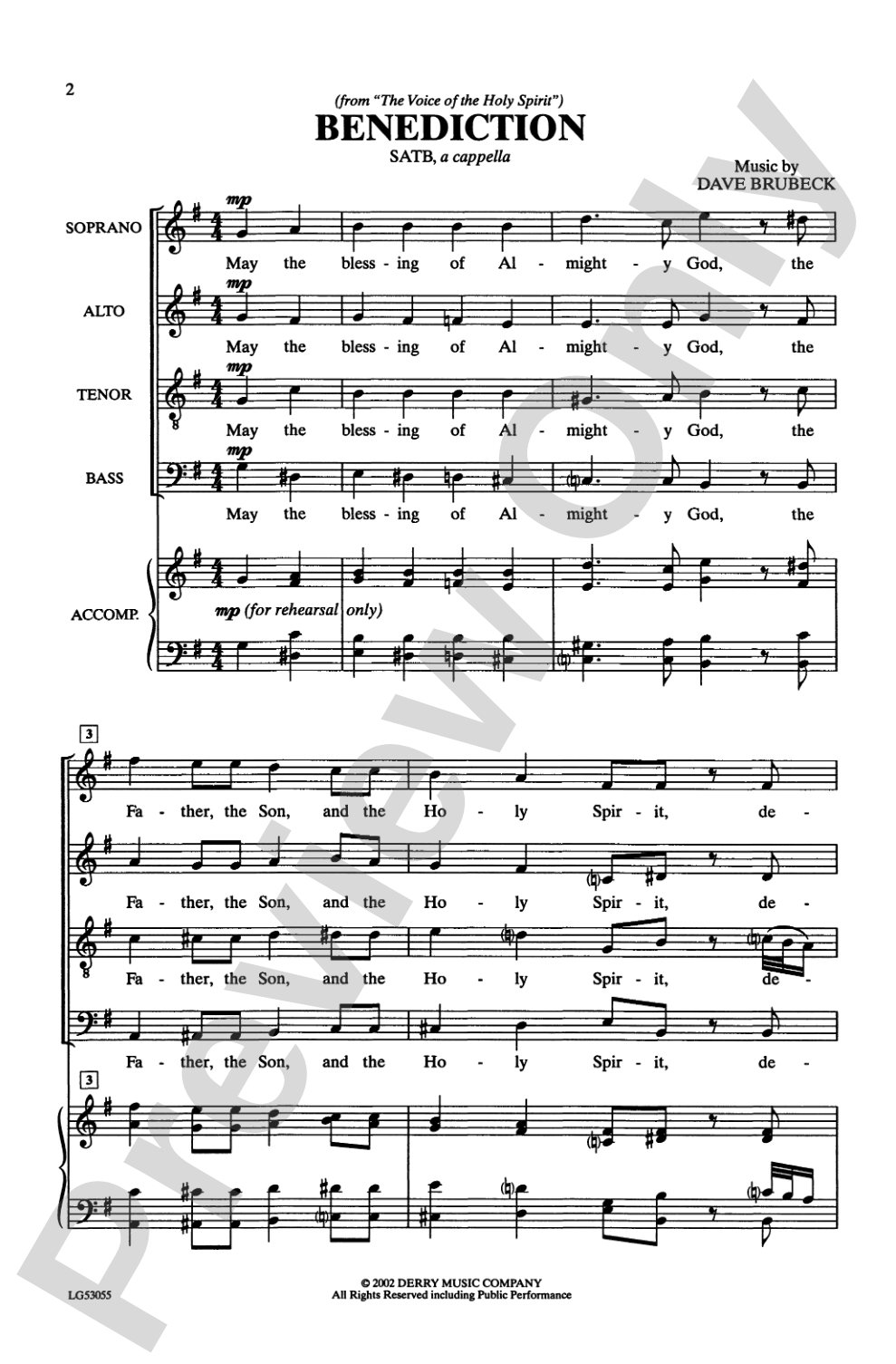

Benediction: SATB, a cappella Choral Octavo
Music by Dave Brubeck
Level: Moderately Difficult
Item: 00-PO-0005111
$2.25
Minimum order quantity: 20 copies
Pickup currently not available
Description


Benediction: SATB, a cappella Choral Octavo isn't in MakeMusic Cloud just yet...but it could be. Let us know you'd like to see it, and you'll help shape what comes next. In the meantime, start a free trial and dive into thousands of interactive titles your students can play along with today.
Request This Title
Tell us you want it.
Start Your Free Trial
Explore everything that's ready to play right now.
Sample Audio
1
Audio File
--:--
0:00
0:00
Sample Video
No sample videos found.
Additional Details
Series:
Alfred Archive Edition: Lawson-Gould Music Publishers
Publisher:
Alfred Music
Page Count:
4
SKU:
00-PO-0005111
More about this title
About the Composer: Dave Brubeck
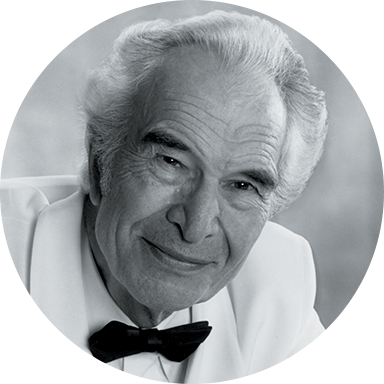
Dave Brubeck stands as one of jazz's most influential figures, equally accomplished as an improviser and a disciplined classical composer. His catalog spans choral works, hymns, orchestral compositions, chamber music, and large-scale pieces for chorus and orchestra. After earning his bachelor of music degree from College of the Pacific in 1942, he studied with French composer Darius Milhaud at Mills College following his Army service in World War II. Milhaud encouraged him to fuse the languages of jazz and classical music, a synthesis that defined Brubeck's artistic vision.
Beyond "Take Five" and the groundbreaking album "Time Out," Brubeck used his platform to challenge racial barriers during the mid-20th century. His sacred works, including the mass To Hope! and oratorios such as The Voice of the Holy Spirit and Beloved Son, have been performed and recorded internationally. Brubeck received the Grammy Lifetime Achievement Award, the Presidential Medal of the Arts, and was elected into the American Classical Music Hall of Fame in 2003.
Why we love this
Brubeck brings the sophisticated harmonic language and rhythmic precision of his classical training to sacred choral writing, creating music that feels both reverent and intellectually engaging. A cappella settings demand clear voice leading and careful balance, and this piece rewards singers who listen actively to the harmonic architecture surrounding their own line. Conductors appreciate Brubeck's notational clarity and the way the piece sits naturally for mixed voices without requiring instrumental support.
What to expect
Benediction radiates quiet contemplation and dignity. The a cappella texture allows Brubeck's harmonic colors to emerge with crystalline clarity, and the sacred character invites singers and listeners into a reflective space. There is nothing austere about it; instead, the piece balances reverence with the warm, sophisticated harmonic language that defines Brubeck's compositional voice.
Who it's for
This octavo suits advanced high school choirs and collegiate ensembles with solid sightreading skills and the maturity to sustain long phrases. The moderately difficult harmonic language requires singers who can think vertically and lock into complex chord structures without instrumental reinforcement. It also works well for choral festivals, chamber choirs, and experienced community ensembles seeking sacred literature with substance.
How to get the most out of it
- Balance the voicing carefully during sustained harmonic progressions by having singers track the overall chord color rather than singing in isolation. Brubeck's harmonies shift subtly, and ensemble blend depends on each voice hearing the voices around them.
- Allow rehearsal time for independent part security before blending; this piece's harmonic language may not be immediately intuitive, so singers need confidence in their own lines before worrying about blend and balance.
- Shape phrases through gentle dynamic swells rather than dramatic crescendos; the sacred context calls for restraint, and the piece's complexity can overwhelm if attacked with too much force.
- Attend to text clarity without sacrificing legit singing. Diction should serve the meaning of the benediction while maintaining the long, sustained lines that make the harmonic movement audible.
How to use it
Pair this with other contemporary sacred works for a concert devoted to 20th-century choral literature, or position it as an interlude piece that allows your ensemble to demonstrate blend and sophisticated musicianship without accompaniment. It also serves beautifully as a benediction itself, closing a concert or service with unmistakable grace and harmonic richness.
Skills your students will build
- Singing complex jazz-influenced harmonies in four-part texture
- Maintaining independent lines in a cappella writing while listening for balance
- Sustaining long phrases and managing breath in choral voicing
- Responding to subtle harmonic movement and harmonic color
- Reading and performing contemporary sacred choral literature