Ben's Blues: 1st Trombone Sheet Music Preview

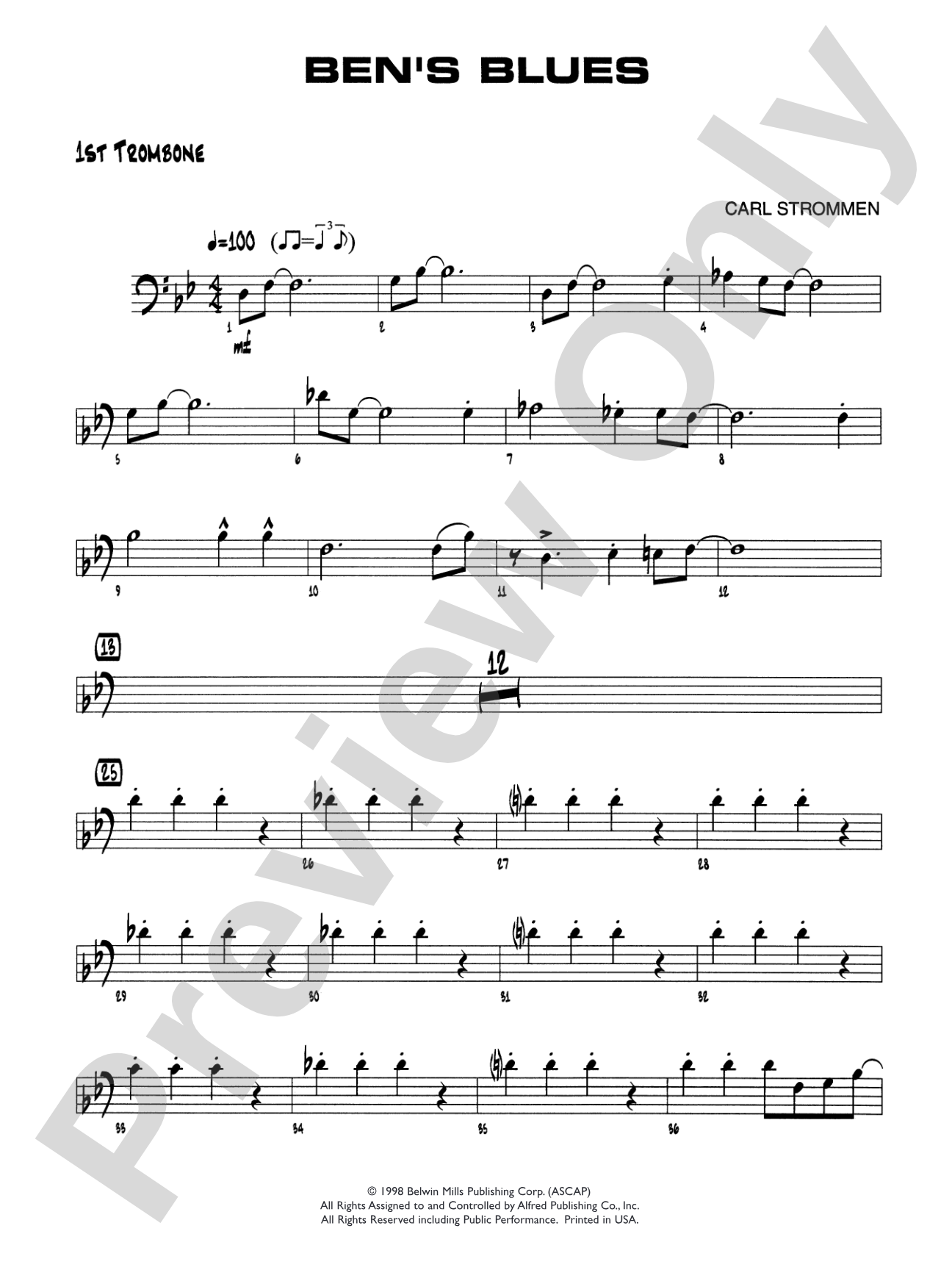
Ben's Blues: 1st Trombone

By Carl Strommen

Grade: 1 (Easy)

Item: 00-PC-0002407_TN1

Digital Download
$3.00
Description
Directors everywhere have come to expect wonderfully tuneful and fun jazz music from Carl Strommen. Carl is the writer everyone turns to year after year when they need quality teaching material. In our easiest series, BEN'S BLUES is a delightful new piece that will prove to be a perfect way for your developing young jazz ensemble to 'get the blues.' It's an exceptional chart! (3:29)

Don't just read it, hear it, play along with it, and watch your students grow with it. In MakeMusic Cloud, Ben's Blues: 1st Trombone comes alive with professional accompaniment, adjustable tempo, and built-in practice tools that turn solo practice into real progress.

Sample Audio
No sample audio found.
Sample Video
Additional Details
Series: First Year Charts for Jazz Ensemble
Publisher: Alfred Music
Page Count: 72
SKU: 00-PC-0002407_TN1

More about this title

About the Composer: Carl Strommen

Carl Strommen

Carl Strommen has established himself as one of today's most widely performed composer-arrangers across band, orchestra, jazz ensemble, and choral settings. His music appears regularly in concert halls, on television, and in film; he maintains an active schedule as both a clinician and commission writer, and has been honored annually with the ASCAP Standard Writers Award throughout his career.

A graduate of the City College of New York, Strommen has maintained deep ties to music education as an adjunct professor of orchestration and composition at C.W. Post Campus of Long Island University in Brookville, New York. He and his family divide their time between Long Island and Colorado.

Why we love this

Strommen's reputation for writing accessible, musically intelligent material without sacrificing craft makes him the go-to choice for programs building their jazz curriculum. This chart delivers genuine blues vocabulary and ensemble cohesion in a package beginners can actually accomplish, which means your students sound and feel like a real jazz band from the first rehearsal.

What to expect

A confident, toe-tapping blues that swings with clarity and joy. The piece breathes warmth and accessibility while maintaining the authentic character that makes jazz rewarding to play, never feeling like a watered-down version of the real thing.

Who it's for

First-year and developing jazz ensembles looking for music that teaches the language of blues and swing without overwhelming players still building their jazz vocabulary. Directors seeking contest or festival material that combines pedagogical value with genuine musicality will find this an ideal choice for groups at the Grade 1 level.

How to get the most out of it

  • Establish the blues feel early by locking the rhythm section into a relaxed swing pulse; the groove sets the foundation for all the section writing that follows.
  • Balance the melody against the background parts so the tune remains clear even as the harmony thickens; younger players often bury the lead without explicit sectional reminders.
  • Let the ensemble breathe at the written phrase endings rather than pushing through them; Strommen's phrasing is intentional, and respecting it gives the music shape.
  • Take time in early rehearsals to isolate the jazz articulation and phrasing in each section so the whole ensemble sounds unified in style, not just in notes.

How to use it

Program this early in the jazz ensemble season to establish foundational blues and swing concepts, or use it as a confident opener for a jazz concert that will build audience and ensemble energy before moving into more complex charts. Its three-and-a-half-minute runtime makes it ideal for festival rotation, giving students the experience of performing complete, well-crafted pieces under adjudication.

Skills your students will build

  • Reading and performing jazz articulation and phrasing
  • Swing eighth-note feel and rhythmic precision
  • Blues harmony and chord progression recognition
  • Ensemble balance between melody and supporting voices
  • Jazz style consistency across a full ensemble

You May Also Like