Bells: Lead Sheet Digital Sheet Music

Bells: Lead Sheet Digital Sheet Music

Neal Hefti, Harry James

Item: 00-PS-0009219

Digital Download
$1.99
Description

Bells: Lead Sheet Digital Sheet Music isn't in MakeMusic Cloud just yet...but it could be. Let us know you'd like to see it, and you'll help shape what comes next. In the meantime, start a free trial and dive into thousands of interactive titles your students can play along with today.

Sample Audio
No sample audio found.
Sample Video
Additional Details
SKU: 00-PS-0009219

More about this title

About the Artist: Harry James

Harry James (1916-1983) was an American jazz trumpeter and bandleader whose virtuosic playing and charismatic stage presence made him one of the most commercially successful jazz musicians of the mid-twentieth century. Known for his brilliant high-register work and lyrical ballad playing, James led one of the most popular big bands of the swing era and recorded prolifically across jazz, pop, and film soundtrack work.

James's impact on jazz trumpet playing extended far beyond his own recordings. His fearless approach to the upper register and his ability to balance technical display with genuine musicality influenced generations of players. For educators, his arrangements and compositions remain accessible entry points into swing-era jazz vocabulary and the standards repertoire.

Why we love this

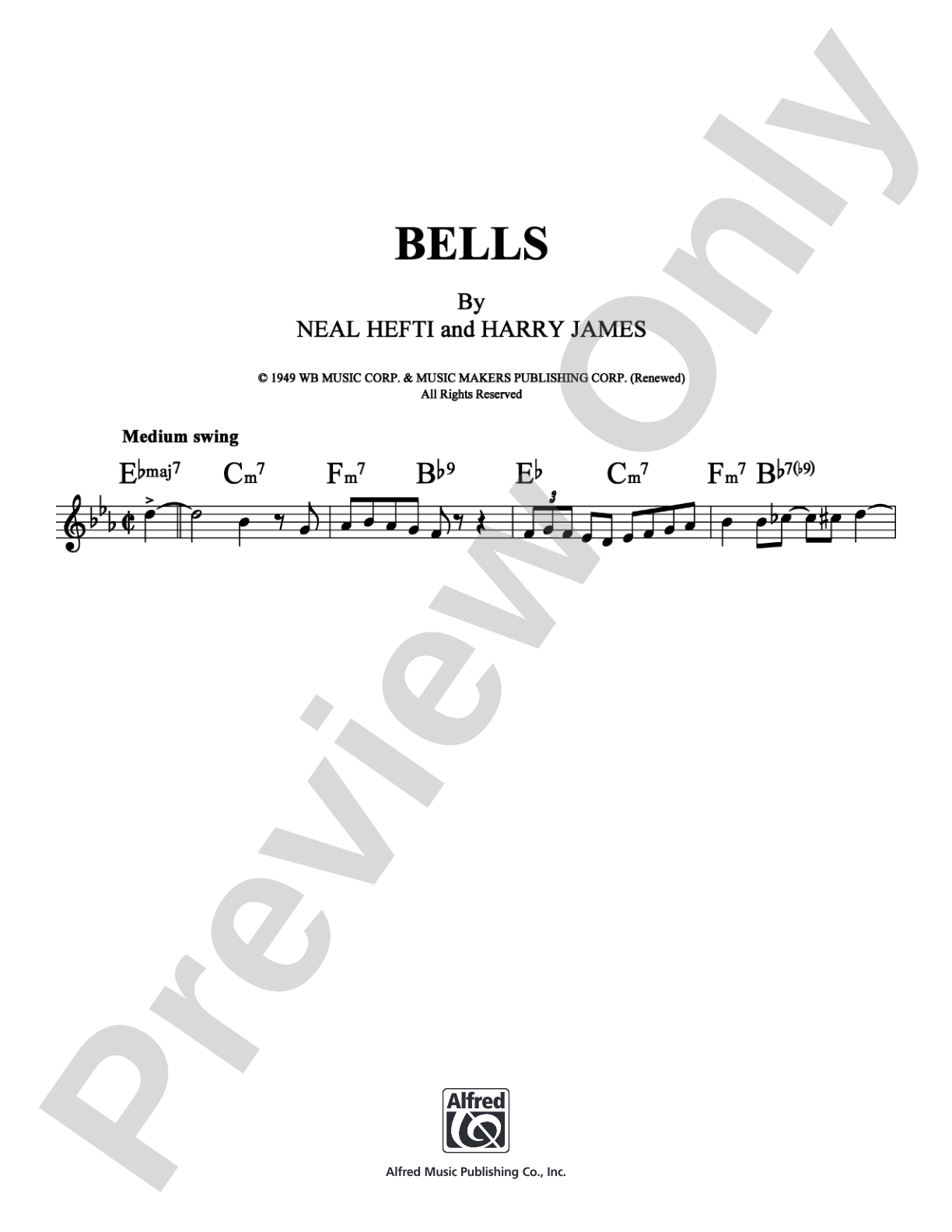
This lead sheet captures the swagger and melodic sophistication that defined James's compositional voice. Arrangers and jazz ensemble directors value it because the melody sits naturally under the fingers, the harmonic movement is logical enough for students to follow yet interesting enough to sustain repeated listening, and the tune itself practically demands the kind of warm, singing tone that makes a trumpet section shine.

What to expect

Bells combines the brightness and optimism of swing-era composition with an underlying sophistication in its harmonic movement. The melody has the kind of natural buoyancy that made it a crowd favorite, yet the changes suggest harmonic territory worth exploring both for comping and for improvisation.

Who it's for

Jazz composers, arrangers, and lead sheet readers working in small ensemble or big band settings will find this a valuable reference for understanding how James constructed a singable, memorable line within swing-era chord changes. It works well for intermediate to advanced jazz students preparing to study improvisation over standards, or for any player building familiarity with the core jazz repertoire.

How to get the most out of it

  • Approach the melody with the legato phrasing James himself favored; connect phrases through the bar line rather than isolating each measure. The tune benefits from breathing at logical phrase boundaries, not at every rest.
  • Balance clarity with smoothness in the higher passages. James was known for brilliant high notes, but they always served the melody, never overwhelmed it.
  • Listen to recordings of James performing this tune if available. Studying his rhythmic placement and interpretation of the melody will inform your own phrasing choices far more than notation alone can convey.
  • Check the changes carefully over a comping instrument or recorded accompaniment. The harmonic rhythm shifts in places where the ear expects uniformity, and staying locked with the changes ensures the melody lands correctly.

How to use it

Feature this as part of a jazz concert celebrating swing-era composers and arrangers, or use it to introduce students to the standards that form the foundation of jazz repertoire. In a classroom or rehearsal setting, the lead sheet works beautifully as a study tool for understanding how jazz melody and harmony interact.

Skills your students will build

  • Reading jazz lead sheet notation and interpreting chord symbols
  • Articulation and phrasing appropriate to swing idiom
  • Harmonic awareness through melody-chord relationship
  • Stylistic interpretation of jazz melody with period-appropriate ornamentation

You May Also Like