Bellissima Mirtilla Sheet Music Preview

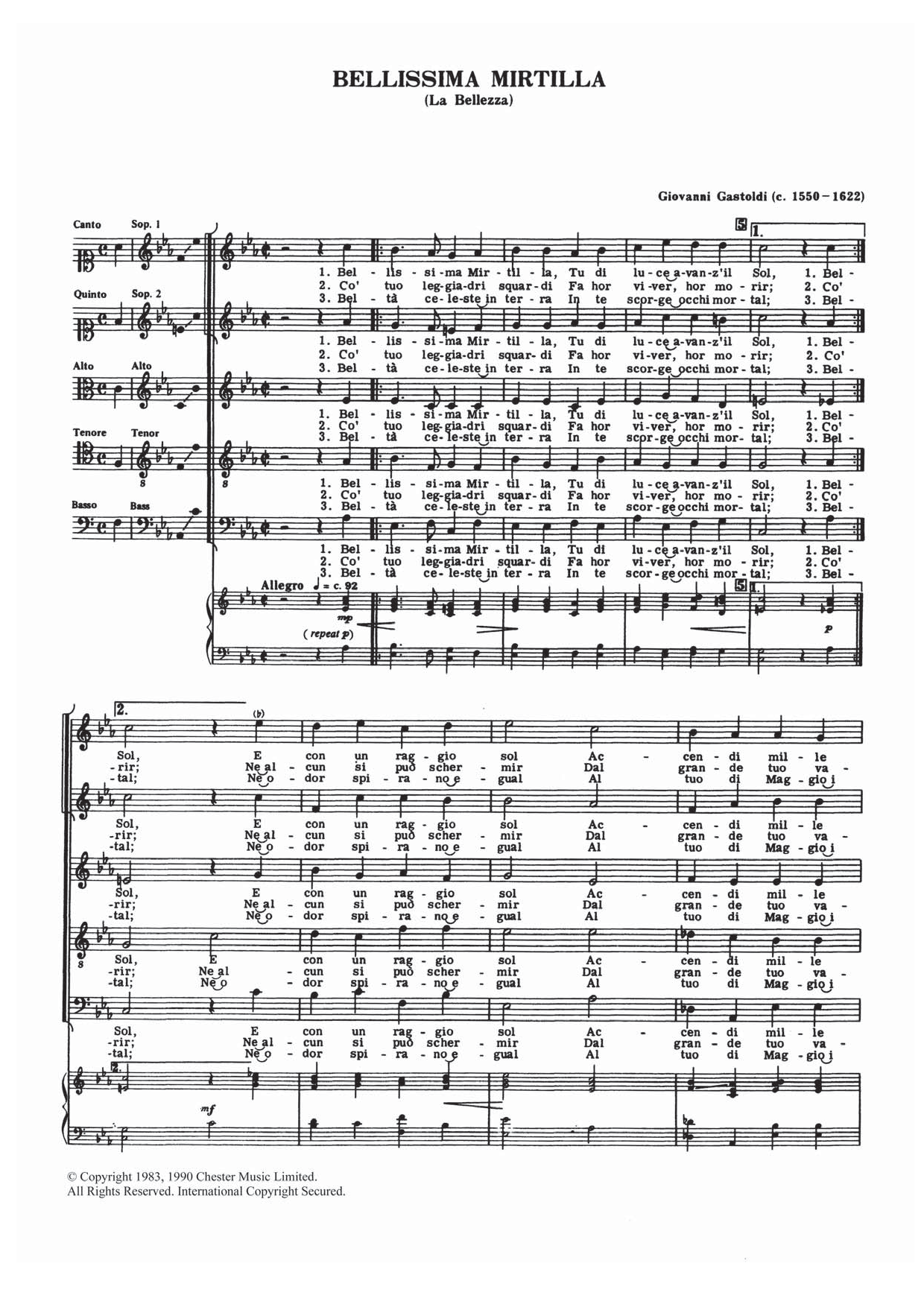
Bellissima Mirtilla: Choral Octavo

As performed by Giovanni Giacomo Gastoldi / Arranged by Anthony Petti

Item: 35-DS00338526

Digital Download
$2.99
Description

Bellissima Mirtilla: Choral Octavo isn't in MakeMusic Cloud just yet...but it could be. Let us know you'd like to see it, and you'll help shape what comes next. In the meantime, start a free trial and dive into thousands of interactive titles your students can play along with today.

Sample Audio
No sample audio found.
Sample Video
Additional Details
Publisher: Hal Leonard
Page Count: 2
SKU: 35-DS00338526

More about this title

About the Artist: Giovanni Giacomo Gastoldi

Giovanni Giacomo Gastoldi (c. 1554-1609) was an Italian Renaissance composer and maestro di cappella at the court of Mantua. He is best remembered for his balletti, a genre of secular vocal music designed for both singing and dancing, which combined accessibility with genuine musical sophistication. His works circulated widely across Europe and profoundly influenced the development of lighter choral forms during the late Renaissance.

Why we love this

Gastoldi's balletti sit at the sweet spot between technical accessibility and genuine musical interest. The form naturally accommodates ensemble singers at varying levels while still rewarding careful attention to text declamation and harmonic clarity.

What to expect

Elegant and buoyant, with the charm of music written for courtly enjoyment rather than liturgical formality. The familiar fa-la refrains create moments of playful lightness within a fundamentally refined harmonic language.

Who it's for

Choirs seeking accessible Renaissance repertoire that still engages singers musically. Works well for groups with intermediate sight-reading skills and interest in exploring secular vocal forms beyond traditional madrigals.

How to get the most out of it

  • Shape the melodic phrases with light articulation; the text should dance rather than declaim.
  • Let the fa-la refrains breathe naturally and encourage rhythmic precision from the ensemble so those sections land with clarity.
  • Balance the inner voices carefully so the harmonic motion supports rather than muddies the top line.

How to use it

Pair this with other balletti or madrigals to build a Renaissance choral set, or use it as an accessible entry point into secular vocal music for ensembles not yet ready for more complex polyphony. The compact two-page format makes it practical for spring concerts or informal performances.

Skills your students will build

  • Clarity of diction in Italian text
  • Light, sustained tone quality appropriate to Renaissance style
  • Awareness of harmonic function in tonal contexts
  • Ensemble balance in pieces without dominant soloists

You May Also Like