
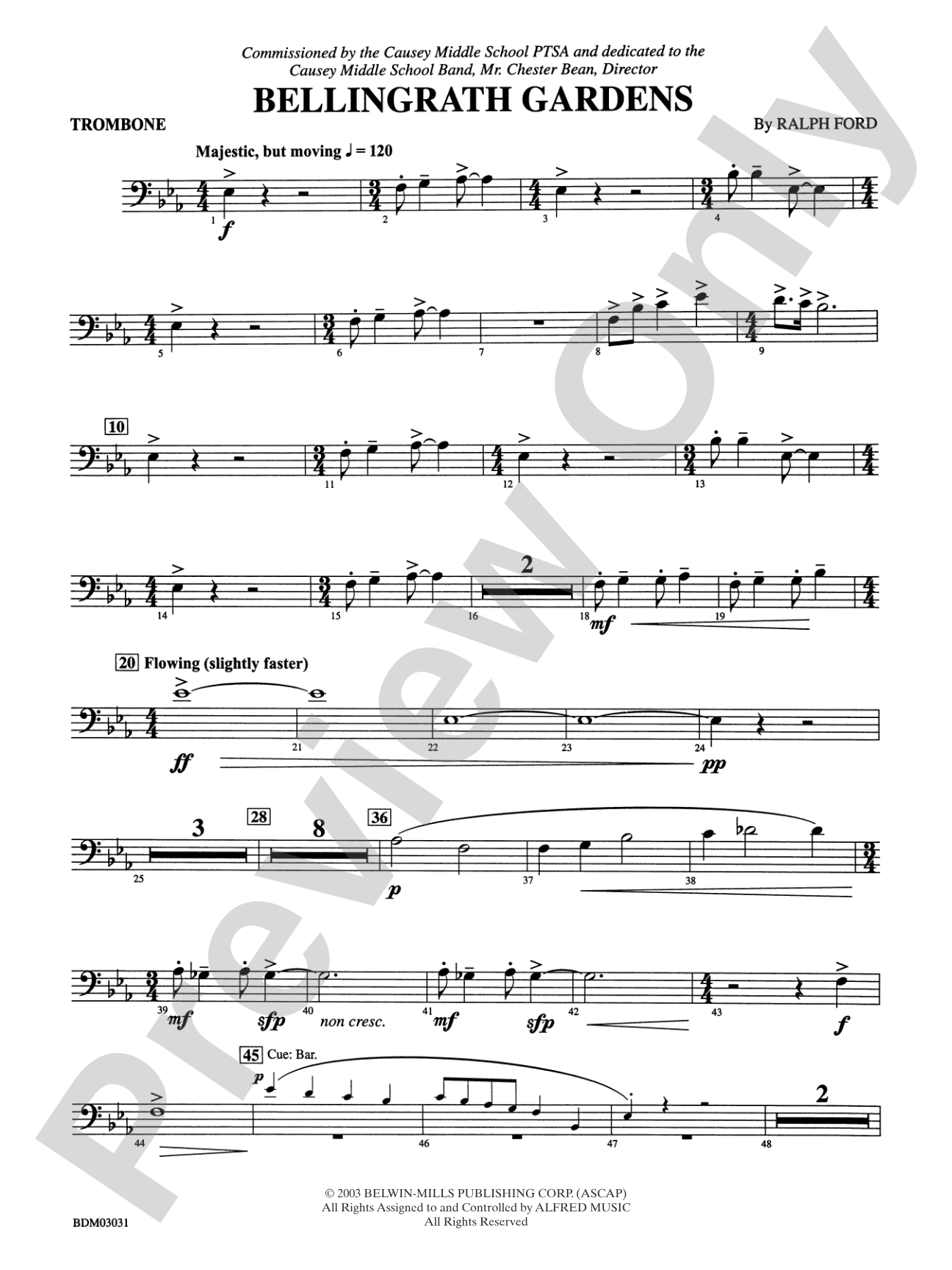

Bellingrath Gardens: 1st Trombone
By Ralph Ford
Grade: 2 (Easy)
Item: 00-PC-0017499_TN1
$3.00
Pickup currently not available
Description
With this stunning overture for young band, your students will sound glorious while nothing is musically out of reach. A magnificent fanfare sets the stage for the beautiful woodwind melody, interrupted by driving percussion and brass flourishes. This one's perfect for contest or competition and will complete any performance need. (2:42)


Don't just read it, hear it, play along with it, and watch your students grow with it. In MakeMusic Cloud, Bellingrath Gardens: 1st Trombone comes alive with professional accompaniment, adjustable tempo, and built-in practice tools that turn solo practice into real progress.
Open in the Player
Jump straight in and assign it today.
Start Your Free Trial
Open this title and explore the full library in minutes.
Sample Audio
1
Audio File
--:--
0:00
0:00
Sample Video
No sample videos found.
Additional Details
Series:
Belwin Young Band
Publisher:
Alfred Music
Page Count:
252
SKU:
00-PC-0017499_TN1
More about this title
About the Composer: Ralph Ford

Ralph Ford brings three decades of professional experience across composition, arranging, conducting, and education. After earning his Master of Science degree from Troy State University in 1988, where he served as staff arranger and faculty member, Ford moved into media and broadcast work, composing everything from national news packages to award-winning commercial jingles. Since 1999, he has maintained an exclusive publishing relationship with the Belwin division of Alfred Music, producing over 250 titles for orchestra, concert band, jazz ensemble, and marching band that have been performed by university, military, professional, and school ensembles worldwide.
Ford's work as an arranger began at age fifteen in Panama City, Florida, and deepened during his undergraduate years at Troy State, where he directed the Jazz Ensemble I program for fifteen years while also serving as staff arranger for the university band. His compositions for young and developing ensembles reflect his intimate understanding of what student musicians can achieve when given music that is both accessible and genuinely rewarding to perform.
Why we love this
Ford writes for young bands with respect for both their capabilities and their aspirations. This overture opens with real orchestral sophistication, a fanfare that announces your ensemble's readiness without requiring advanced technique, then gifts your woodwinds a genuinely beautiful melody to voice rather than a functional line to execute. The balance between accessibility and musical substance makes this piece one that students remember long after the contest ends.
What to expect
The piece unfolds like a garden tour at sunrise: a bright, commanding opening announces arrival, then the tempo softens into intimate natural beauty before bursts of color and movement remind you the world is alive and full of energy. It's music that feels complete and purposeful, never patronizing.
Who it's for
This piece serves Grade 2 bands preparing for contest or concert performance, where directors need music that sounds polished without overwhelming developing musicians. It works equally well for ensembles seeking an opening number that projects confidence and musical maturity.
How to get the most out of it
- Shape the opening fanfare with clear harmonic rhythm in the brass; the scoring suggests a unified sound, but conductors should still feel the underlying pulse to help younger players find their entry points.
- Give the woodwind melody time to breathe and sing through its contour. Young musicians often rush beautiful lines, so encourage them to feel the shape of the phrase rather than counting relentlessly.
- Let the percussion interjections punctuate rather than overwhelm. These moments should feel energetic but not chaotic; the band needs to stay together through the textural shifts.
How to use it
Program this as the opening number of a concert to establish that your ensemble is serious musicians with refined taste, or place it early in a contest set to build momentum and confidence. At 2:42, it fits neatly into any festival schedule while leaving room for contrasting repertoire.
Skills your students will build
- Balancing melody and accompaniment across four distinct musical sections
- Executing fanfare rhythms with precision and unified articulation
- Sustaining lyrical phrasing under moderate breath demand
- Responding to clear textural shifts (woodwind-centered to brass-driven sections)
- Playing at dynamic levels from soft sustained tones to bright fortissimo passages