Bellefonte Overture: E-flat Baritone Saxophone Sheet Music Preview

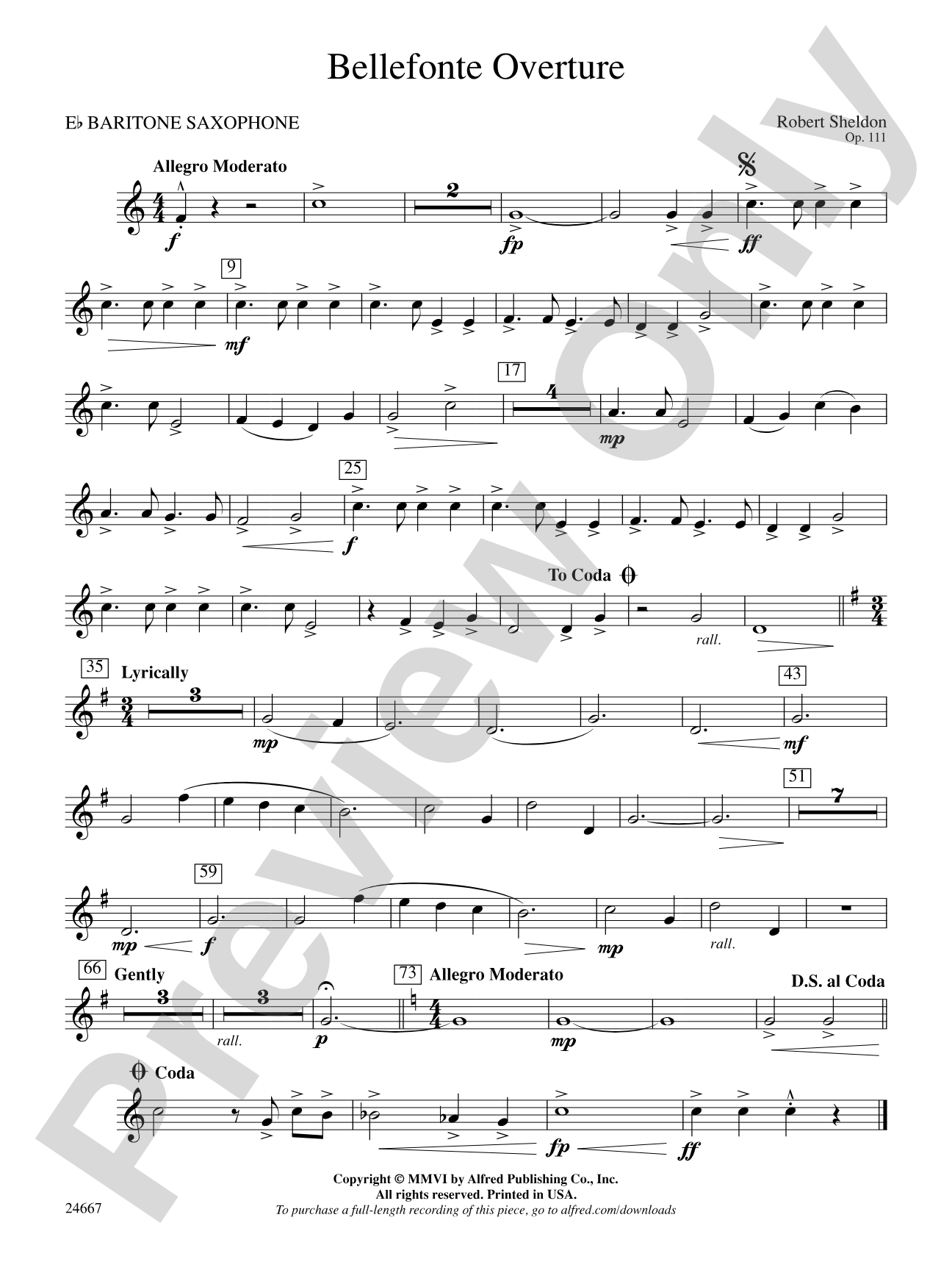
Bellefonte Overture: E-flat Baritone Saxophone

By Robert Sheldon

Grade: 2.5 (Medium Easy)

Item: 00-PC-0000835_BTX

Digital Download
$3.00
Description
Written for the Bellefonte Community Band, this piece captures the spirit and complexion of this delightful village in central Pennsylvania, including the lovely Victorian homes as well as the bubbling spring for which the town was named. This title is available in MakeMusic Cloud.

Don't just read it, hear it, play along with it, and watch your students grow with it. In MakeMusic Cloud, Bellefonte Overture: E-flat Baritone Saxophone comes alive with professional accompaniment, adjustable tempo, and built-in practice tools that turn solo practice into real progress.

Sample Audio
0:00
0:00
Sample Video
Additional Details
Series: Young Symphonic
Publisher: Alfred Music
Page Count: 194
SKU: 00-PC-0000835_BTX

More about this title

About the Composer: Robert Sheldon

Robert Sheldon

Robert Sheldon stands among the most frequently performed composers of concert band repertoire globally. His works appear regularly on festival and contest programs, and his compositions have been performed at Carnegie Hall, Orchestra Hall, the Kennedy Center, and the Sydney Opera House. Sheldon is the lead author of Sound Innovations for Concert Band and has received numerous accolades from the American School Band Director's Association, Phi Beta Mu, and ASCAP, reflecting the expressive depth that defines his writing.

As a guest conductor and clinician, Sheldon maintains an active schedule across the United States and internationally, including appearances in Japan, Canada, Italy, Germany, Australia, and China. He regularly accepts commissions for new works and produces substantial publication output each year. VanderCook College of Music honored him with a doctorate in 2020.

Why we love this

Sheldon's gift for local storytelling makes Bellefonte Overture engaging without overshooting your band's technical capacity. At Grade 2.5, it delivers genuine musical substance (Victorian elegance, flowing water imagery) while keeping the mechanics accessible. This is the kind of piece that stays in students' memories and reminds audiences why band concerts matter.

What to expect

Bellefonte Overture unfolds with the charm and grace of a small-town landmark. Victorian refinement mingles with the gentle gurgle of natural springs, creating a warm and welcoming sound world that feels both nostalgic and alive. The piece invites listeners into a specific place and moment, wrapped in accessible yet genuinely expressive writing.

Who it's for

Concert bands working at the Grade 2 to 3 level, especially those preparing for contest or festival settings. Directors seeking a piece that combines straightforward technical demands with genuine artistic storytelling will find this title rewarding for both ensemble development and audience engagement.

How to get the most out of it

  • Balance the melodic voices against accompaniment textures; let the primary theme sing without drowning out the harmonic counterpoint beneath it.
  • Pay attention to dynamic shaping within each phrase rather than treating whole sections as static. The overture's descriptive nature rewards subtle rises and falls.
  • Ensure the ensemble understands the programmatic intent (Victorian architecture, the spring, the town's character). This context helps musicians commit to tone color and phrasing choices.
  • Lock the woodwind articulation and rhythmic precision in the faster sections; clarity at this grade level prevents the piece from feeling muddled.

How to use it

Program this as a confident opening piece at a contest or festival concert, where it can establish a sophisticated tone early in your program. It also serves well as a spring or early-season selection when your ensemble is developing confidence but not yet ready for the heaviest Grade 4 repertoire.

Skills your students will build

  • Balancing melodic and accompanimental voices
  • Dynamic shaping within phrases
  • Coordinated articulation in woodwind sections
  • Connecting musical imagery to performance choices
  • Playing with stylistic consistency in moderate tempos

You May Also Like