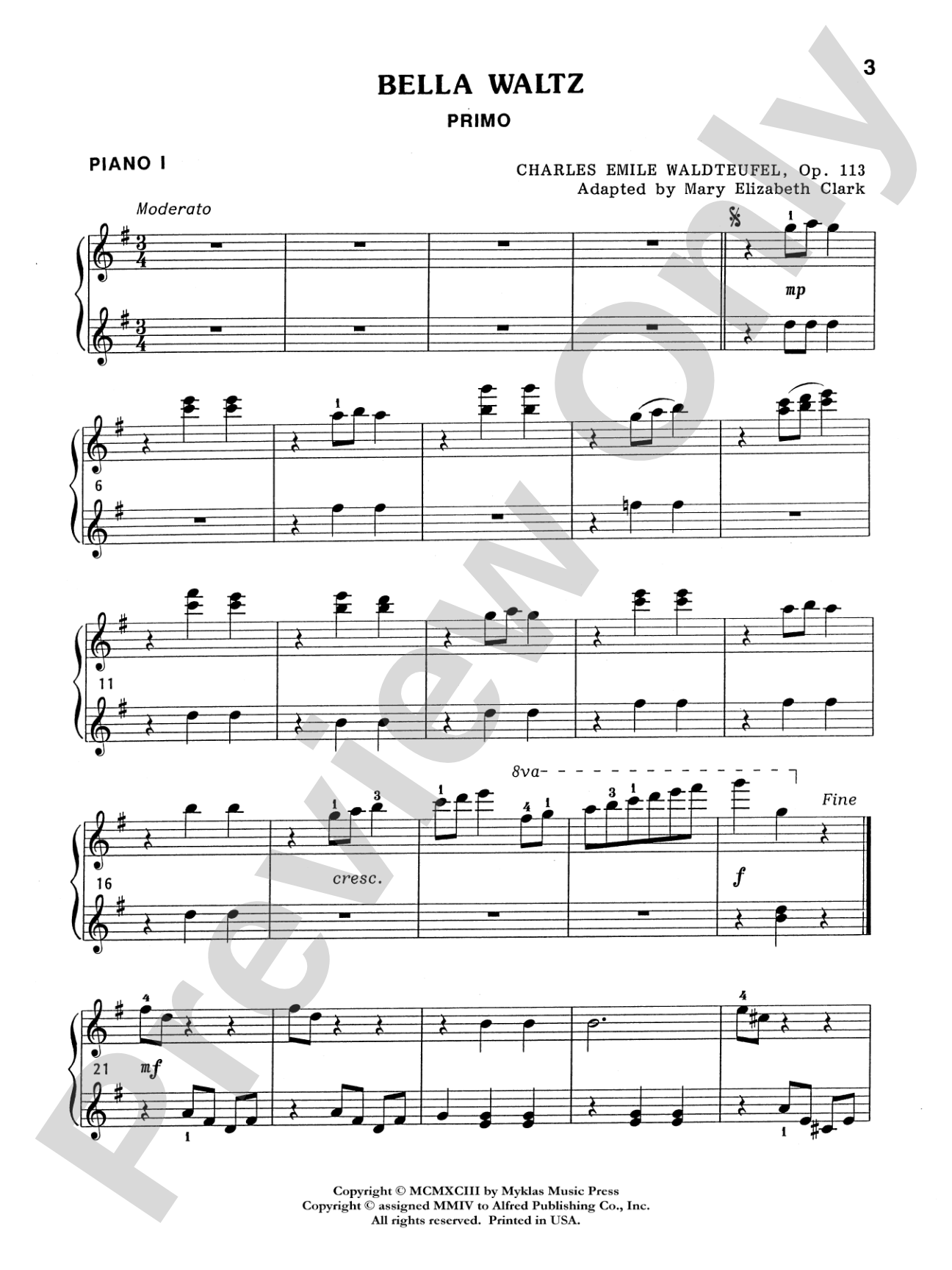
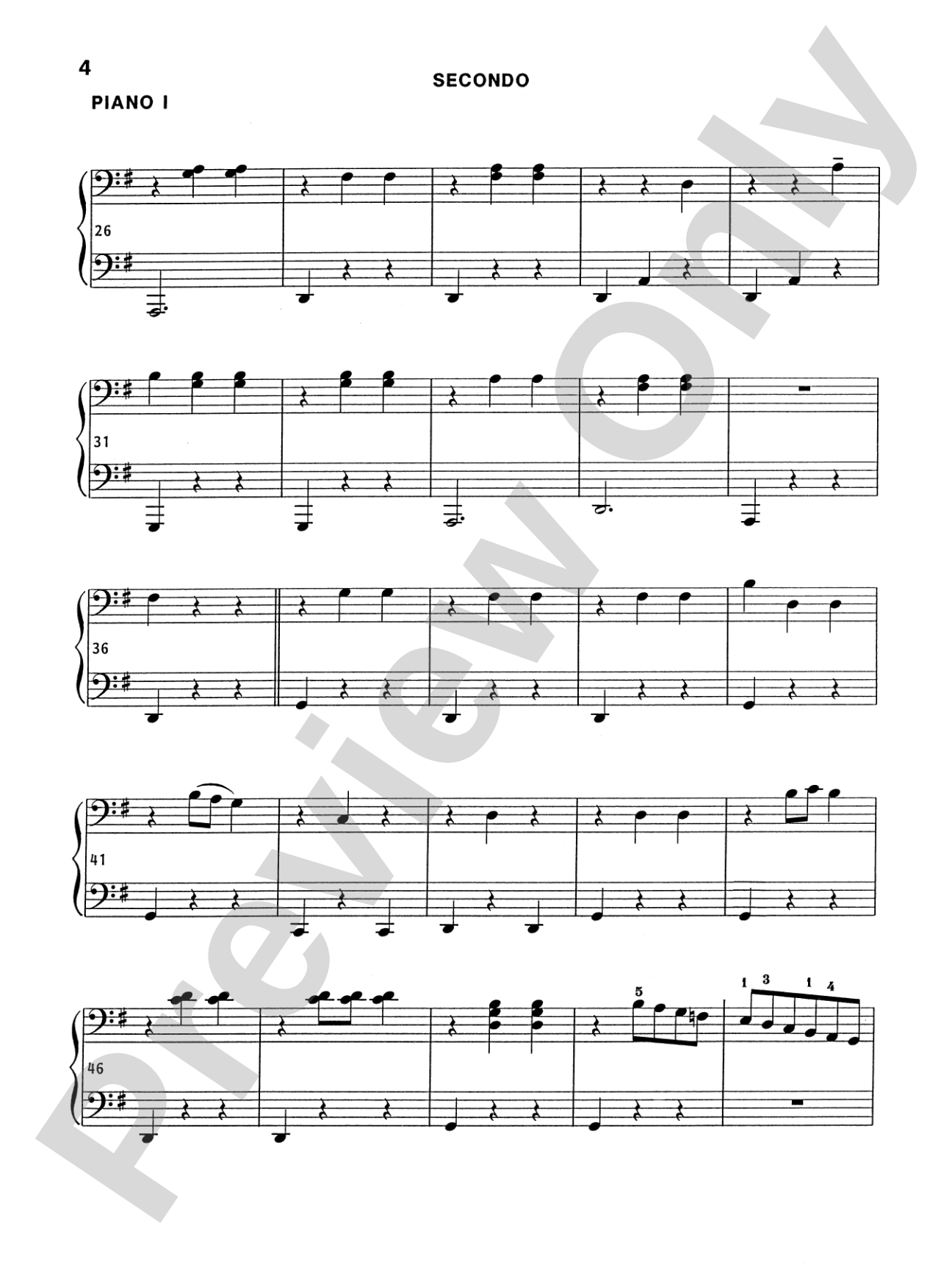
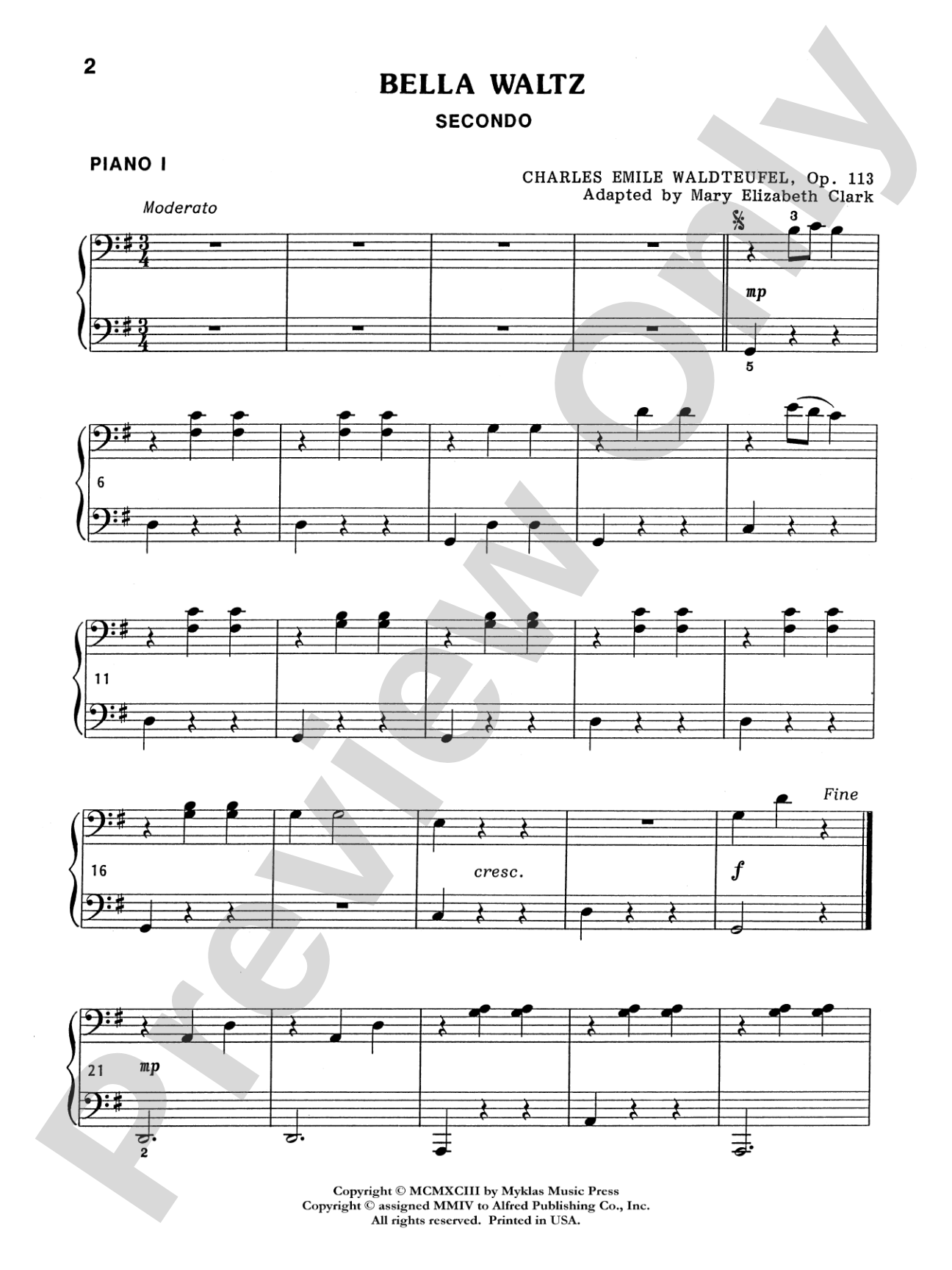
Bella Waltz - Piano Quartet (2 Pianos, 8 Hands) Sheet Music Preview

Bella Waltz - Piano Quartet (2 Pianos, 8 Hands): Piano

By Emile Waldteufel / arr. Mary Elizabeth Clark

Level: Early Intermediate

Item: 00-PB-0000697

Digital Download
$8.95
Description
A Federation Festivals 2024-2028 selection.

Bella Waltz - Piano Quartet (2 Pianos, 8 Hands): Piano isn't in MakeMusic Cloud just yet...but it could be. Let us know you'd like to see it, and you'll help shape what comes next. In the meantime, start a free trial and dive into thousands of interactive titles your students can play along with today.

Sample Audio
No sample audio found.
Sample Video
Additional Details
Publisher: Alfred Music
Page Count: 16
SKU: 00-PB-0000697

More about this title

About the Composer: Emile Waldteufel

Emile Waldteufel (1837-1915) was a French composer and conductor whose waltzes defined the lighter side of Romantic salon music. Working in the shadow of the Strauss family, Waldteufel carved out his own reputation with melodies of genuine charm and orchestrations that sparkled in both concert halls and ballrooms across Europe. His gift for crafting elegant, memorable tunes made his works favorites among performers and audiences for generations.

Waldteufel's output was prolific: over 250 compositions including waltzes, polkas, mazurkas, and marches. Unlike some contemporaries, his writing remained accessible without sacrificing musical substance, making his pieces ideal for both amateur and professional musicians. The Bella Waltz exemplifies his straightforward approach to melody and harmony, qualities that have kept his work relevant in music education and performance contexts well into the twenty-first century.

Why we love this

This arrangement gives four pianists a legitimate chamber music experience at a time when genuinely playable ensemble repertoire at the early intermediate level remains scarce. Clark's setting respects Waldteufel's original melodic gift while distributing the musical interest across both pianos, so every player stays engaged throughout. The Federation Festivals selection adds both credibility and programming urgency.

What to expect

Graceful and buoyant, with the characteristic rise and fall of a waltz that feels less like dance hall exuberance and more like a refined drawing room entertainment. The writing unfolds with Romantic-era charm, moving between lyrical phrases and moments of gentle brilliance that reward careful listening.

Who it's for

Four pianists at the early intermediate level who want to explore ensemble playing without tackling concerto-level difficulty. Teachers seeking Festival repertoire that allows multiple students to perform together, or pianists preparing for competitions or recitals that value chamber music.

How to get the most out of it

  • Balance the melody line between the two pianos so neither part overshadows the other; this is a true quartet, not a solo with accompaniment. Listen to how the two pianos trade phrases and support each other.
  • Establish a steady, graceful tempo before rehearsal begins. Waldteufel's waltzes live or die by their natural lilt, so avoid rushing or dragging even in faster passages.
  • Pay attention to the pedal markings in both piano parts. Romantic-era waltzes gain warmth from judicious pedal use, but coordinate between the two pianos so the harmonic wash reads clearly rather than muddying.
  • Schedule shared rehearsals between the two pairs of hands on each piano. These pianists need to hear each other's parts and understand how their lines interlock, not just play their own books in isolation.

How to use it

Pair this with other early intermediate chamber works to highlight an ensemble recital or studio performance. Its Federation Festivals standing makes it a strong choice for a spring or competition season program. The approachable idiom also works well on community piano festivals or studio showcases where mixed-level groups are performing.

Skills your students will build

  • Balancing melody and accompaniment across two pianos
  • Coordinating pedal technique between independent players
  • Ensemble listening and phrasing in chamber settings
  • Sight-reading coordination across multiple parts
  • Performing rubato and expressive timing in dialogue with other musicians

You May Also Like