

Bella Ciao: TTB Choral Octavo
Italian Folk Song / arr. Ruth Morris Gray
Item: 00-PO-0007301
$2.40
Minimum order quantity: 20 copies
Pickup currently not available
Description
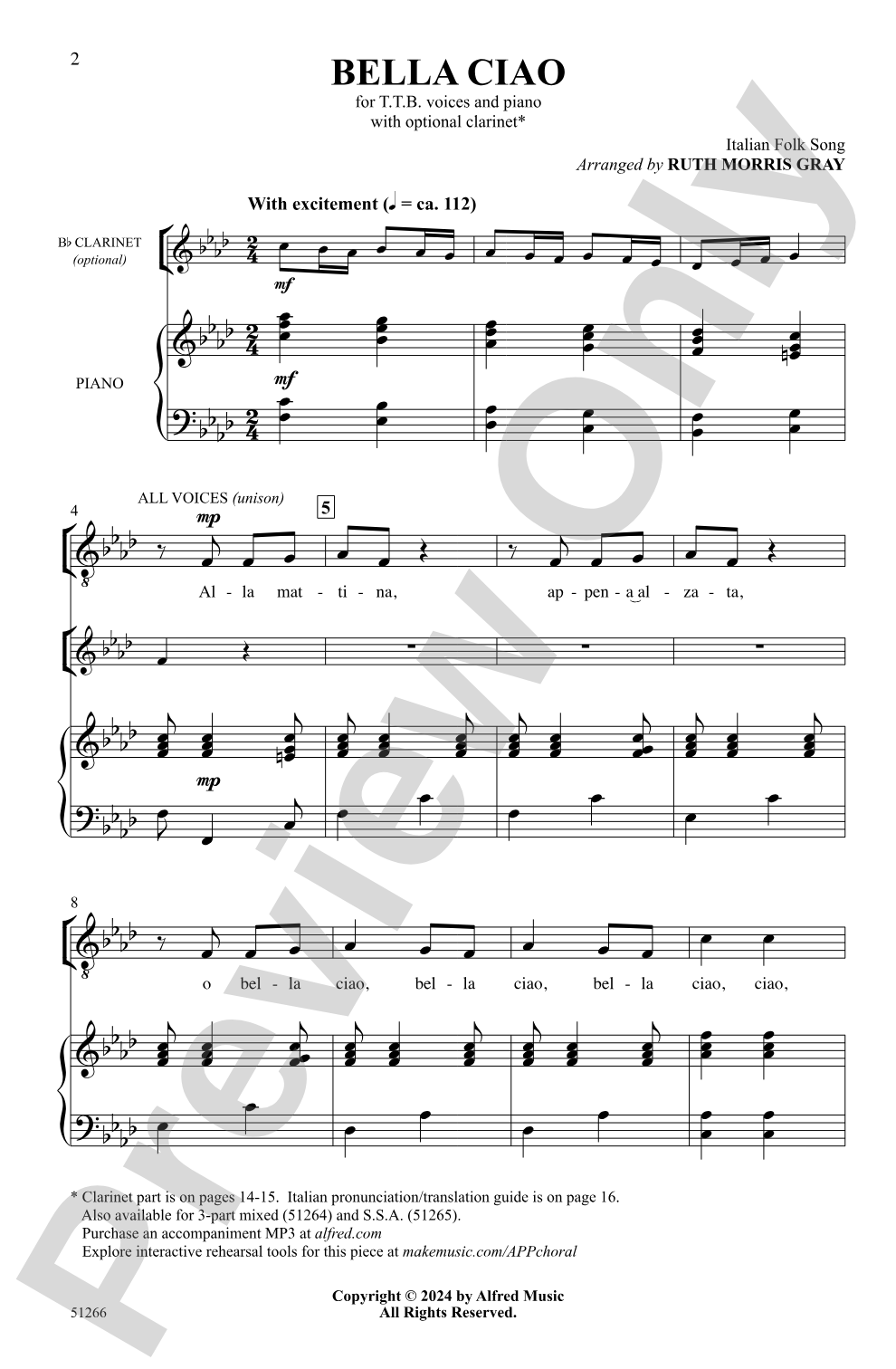
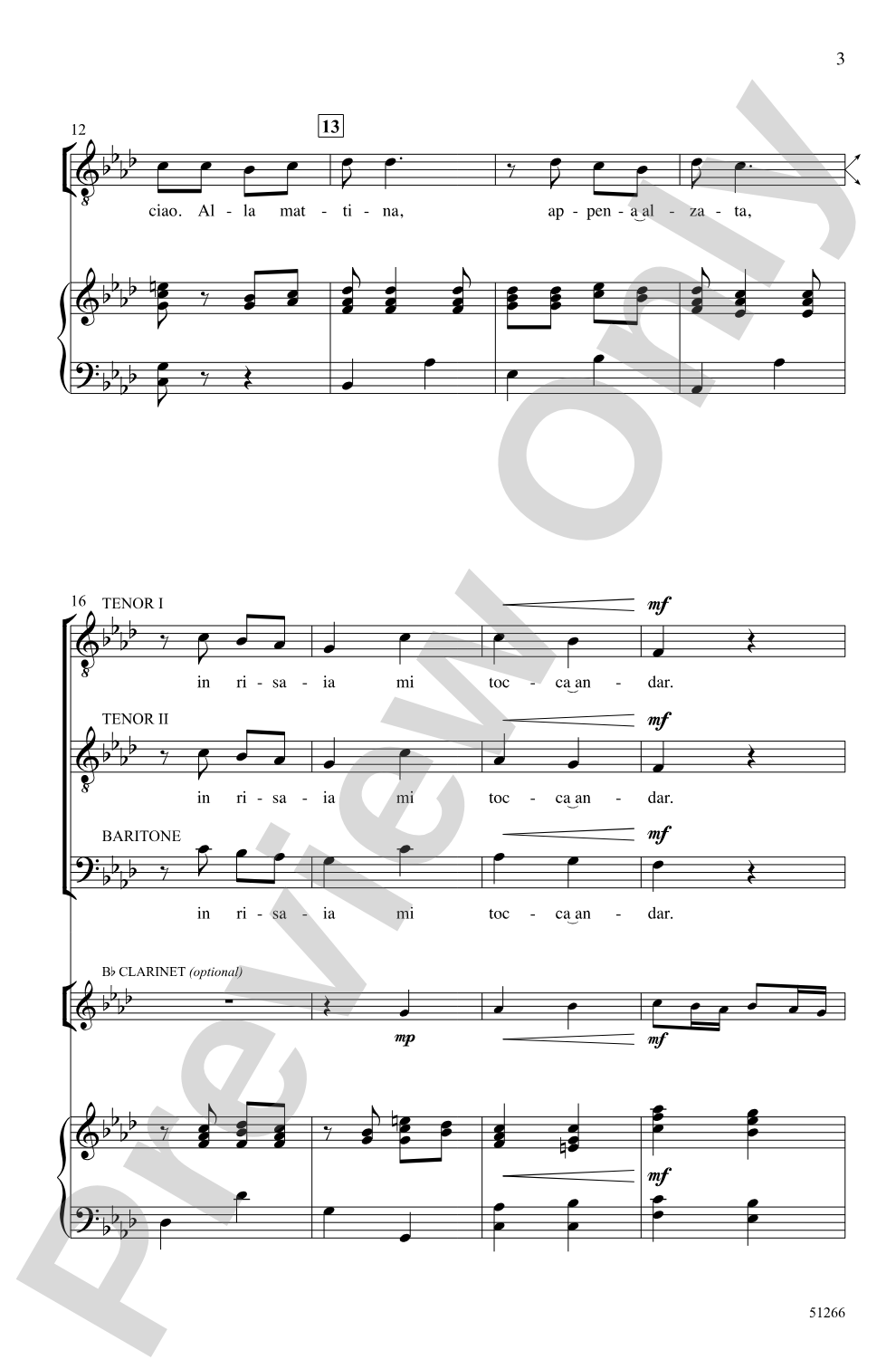
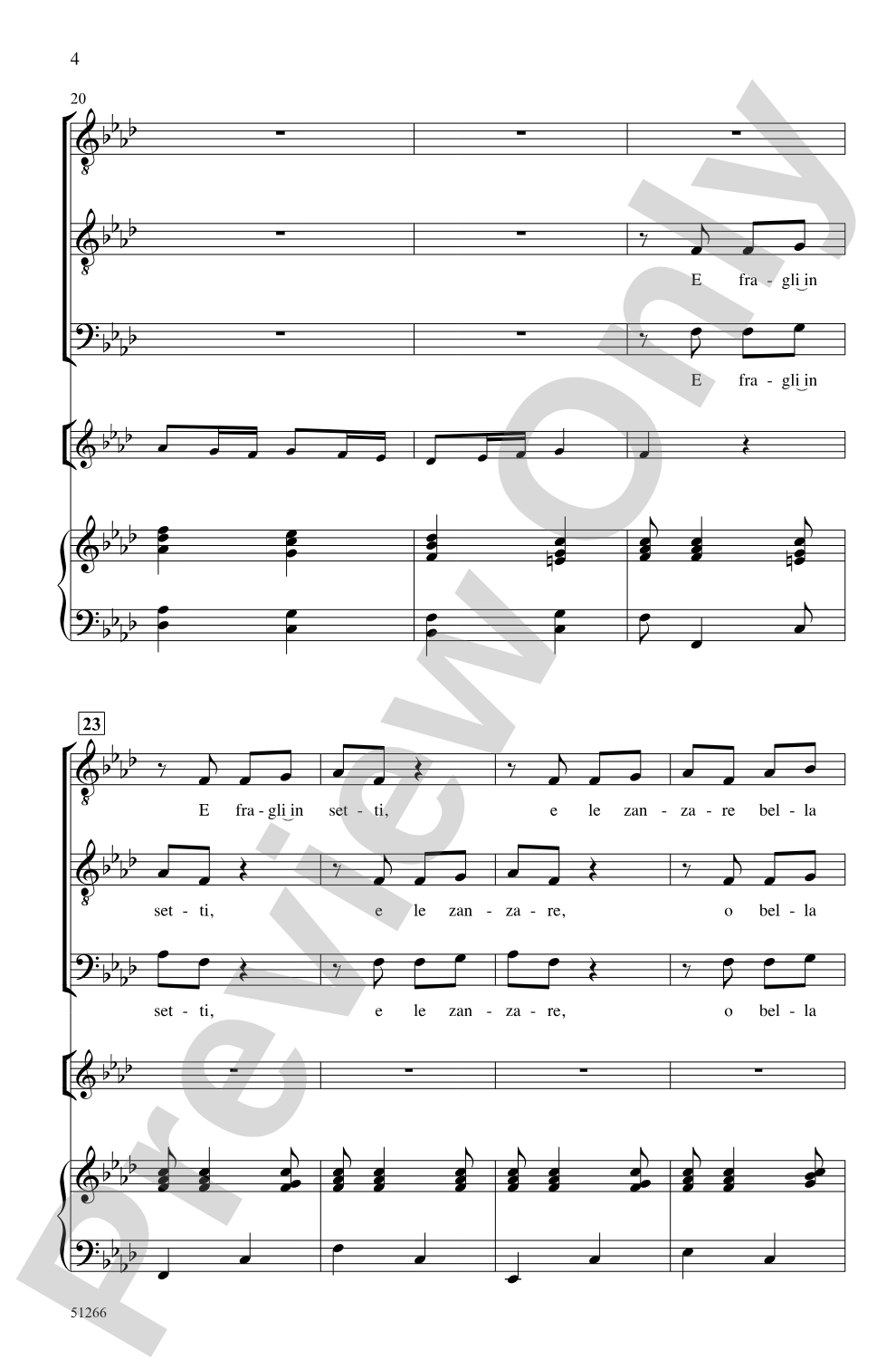
Well suited to choirs in three parts, this Italian folk song includes a dance-like clarinet obbligato appropriate for a student player. A complete pronunciation guide and video are included.
The PerformancePlus+ series is an innovative addition to the ever-expanding MakeMusic Cloud interactive library. These engaging selections are presented with educational resources designed to enrich the rehearsal process and create outstanding performances. Including:


The PerformancePlus+ series is an innovative addition to the ever-expanding MakeMusic Cloud interactive library. These engaging selections are presented with educational resources designed to enrich the rehearsal process and create outstanding performances. Including:
- Assignment, recording, and assessment tools within MakeMusic Cloud
- Part-predominant and accompaniment tracks
- Printable sheet music (with a standard MakeMusic Cloud subscription)
- Correlated rehearsal guides and performance notes
- Rights to perform in a live or virtual setting
Bella Ciao: TTB Choral Octavo isn't in MakeMusic Cloud just yet...but it could be. Let us know you'd like to see it, and you'll help shape what comes next. In the meantime, start a free trial and dive into thousands of interactive titles your students can play along with today.
Request This Title
Tell us you want it.
Start Your Free Trial
Explore everything that's ready to play right now.
Sample Audio
1
Audio File
--:--
0:00
0:00
Sample Video
1 / 2
Additional Details
Series:
Alfred Choral - PerformancePlus+
Page Count:
16
SKU:
00-PO-0007301
More about this title
About the Arranger: Ruth Morris Gray

Ruth Morris Gray directs choirs at Rosemead High School in California, where she has shaped the program since 2004. She holds degrees in piano performance and composition from Biola University and a master's degree in composition from UC Santa Barbara, bringing serious training in both performance and writing to her work as an educator.
With over 100 published choral compositions to her name, Gray demonstrates a sustained commitment to expanding the repertoire available to student ensembles. Beyond the classroom and rehearsal hall, she remains an active musician and composer, balancing her creative output with the demands of directing a high school choir program.
Why we love this
Gray's arrangement respects the folk song's character while building in genuine musical interest for all three voices. The clarinet obbligato adds textural variety without overloading the instrumental parts, and the inclusion of a complete pronunciation guide signals real attention to how singers will engage with the material authentically.
What to expect
Bella Ciao carries the spirit of a folk celebration, full of energy and movement. The clarinet's dance-like accompaniment lifts the voices into something both traditionally rooted and lightly playful, creating an arrangement that feels lived-in rather than precious.
Who it's for
TTB choirs at the high school level and above will find this accessible yet rewarding. The arrangement works equally well for festival competition, concert programming, and classroom performance, making it flexible enough to fit various performance contexts without requiring extensive rehearsal time.
How to get the most out of it
- Let the clarinet line breathe independently during its obbligato sections; resist the urge to have singers match its rhythmic subdivisions too closely. The independence creates the dance quality the arrangement intends.
- Use the video pronunciation guide in sectional rehearsals before you combine voices. Singers are far more willing to commit to foreign language text when they've heard and practiced the sounds in isolation first.
- Balance the TTB voicing by checking that tenors aren't buried beneath the treble line. These three parts work best when each part carries its own melodic integrity rather than serving as mere harmonic filler.
- Reference the recorded accompaniment during early rehearsals to establish tempo and style, then gradually move toward independence so the choir can own the performance.
How to use it
Pair this with other world music selections to build a cohesive concert set around global folk traditions, or use it as a high-energy closer that leaves audiences smiling. Its modest technical demands make it ideal for early in the school year when you're still solidifying your ensemble sound.
Skills your students will build
- Singing in a foreign language with accurate pronunciation and authentic phrasing
- Maintaining independent lines within a three-part texture
- Ensemble balance across different voice parts
- Responding to instrumental accompaniment and obbligato lines
- Developing rhythmic independence from the accompaniment track