
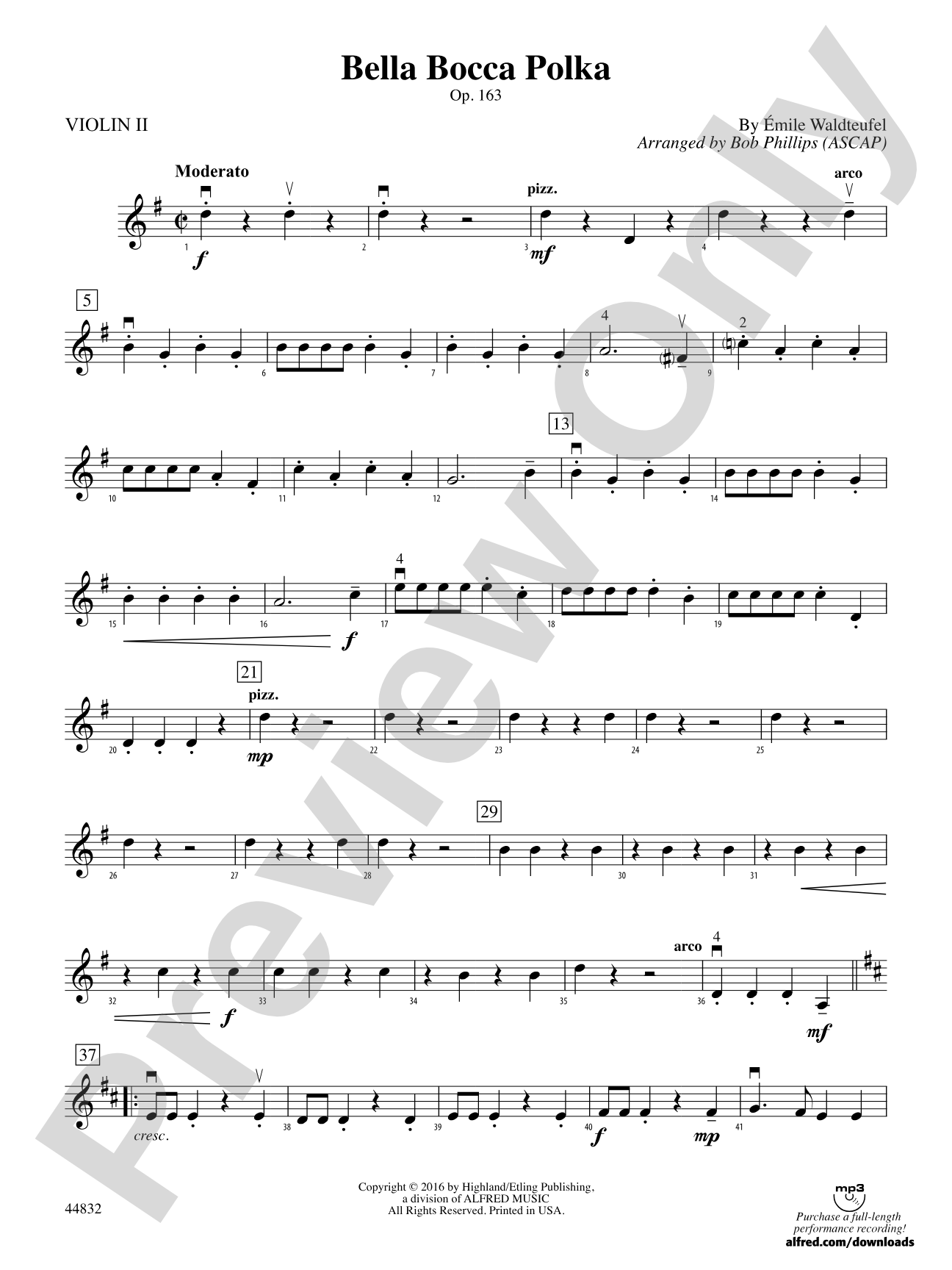

Bella Bocca Polka: 2nd Violin
Op. 163
By Émile Waldteufel / arr. Bob Phillips
Grade: 1.5
Item: 00-PC-0017349_VN2
$5.99
Pickup currently not available
Description
This charming piece is a perfect choice for a first festival experience and will help any group sound more mature. Written by Émil Waldteufel and arranged by Bob Phillips, the melody moves around to all sections in this setting. Written in first position in the keys of G and D, it is a great piece to work on lo and hi 2s in the upper strings as well as stopped bows in the entire string section. All rhythms are very easy, using mostly quarters and paired eighths. (2:40)


Don't just read it, hear it, play along with it, and watch your students grow with it. In MakeMusic Cloud, Bella Bocca Polka: 2nd Violin comes alive with professional accompaniment, adjustable tempo, and built-in practice tools that turn solo practice into real progress.
Open in the Player
Jump straight in and assign it today.
Start Your Free Trial
Open this title and explore the full library in minutes.
Sample Audio
1
Audio File
--:--
0:00
0:00
Sample Video
Additional Details
Series:
Highland/Etling String Explorer
Publisher:
Alfred Music
Page Count:
140
SKU:
00-PC-0017349_VN2
More about this title
About the Composer: Émile Waldteufel
Émile Waldteufel (1837-1915) was an Alsatian composer and conductor who became one of the most celebrated waltz and polka composers of the Romantic era. His prolific output of light orchestral works earned him international recognition, and his pieces remain staples of string orchestra and band repertoires because of their melodic accessibility and careful orchestration that works across ensemble levels.
Waldteufel's gift for writing memorable, singable melodies combined with straightforward harmonic progressions made his compositions ideal teaching tools. Directors return to his works repeatedly because they sit comfortably in intermediate ensembles while maintaining the sophistication and charm that audiences expect from Romantic-era masterworks.
Why we love this
Bob Phillips's arrangement preserves Waldteufel's infectious melodic charm while building in exactly the technical work your young string players need. The rotating melodic lines keep all sections engaged, and the focus on first-position double stops and stopped bows gives you clear, measurable objectives without overwhelming players reading at this level.
What to expect
Bella Bocca sparkles with the light, dancing character of a European salon; the melodic line bounces playfully across the ensemble like a conversation where different voices take turns sharing a witty remark. The overall effect is charming and warm, never demanding but always engaging.
Who it's for
This arrangement suits a young string orchestra preparing for its first festival appearance or looking for a dependable piece that combines musical maturity with technical accessibility. Grade 1.5 ensembles will find the part-writing supportive, and players reading in first position will develop confidence without struggling with advanced technique.
How to get the most out of it
- Isolate the low 2 and high 2 passages in the upper strings during sectionals; even a few rehearsals focused on intonation here will reward you with noticeably cleaner unison lines across your violins.
- Experiment with stopped bow articulation before moving to open strings in sections requiring that technique. Mark the shift visually in parts so players anticipate the color change.
- Balance the melody as it passes between sections by cueing the incoming line lightly two measures before the transfer. This prevents any drop in musical shape when leadership changes.
- Take the opening tempo slightly easier in early rehearsals to establish secure rhythmic foundation; the quarter-and-eighth note patterns will feel more confident when the pulse is rock-solid.
How to use it
Pair this with another Waldteufel work or a contrasting Romantic-era piece to create a themed concert segment. Its approachable character and confident sound make it an excellent opener for a festival or spring concert, or a satisfying closer to a program that includes more challenging repertoire.
Skills your students will build
- Playing in first position across G and D major keys
- Intonation of low 2 and high 2 double stops in upper strings
- Stopped bow technique across all string sections
- Melodic awareness through rotating section-to-section phrasing
- Rhythmic security with quarter notes and paired eighth notes
- Ensemble balance and listening as the musical lead shifts between parts