Believer (arr. Hans Reintjes) Sheet Music Preview

Believer (arr. Hans Reintjes): SSATB Choral Octavo

As performed by Imagine Dragons / Arranged by Hans Reintjes

Item: 35-DS00489327

Digital Download
$2.99
Description

Believer (arr. Hans Reintjes): SSATB Choral Octavo isn't in MakeMusic Cloud just yet...but it could be. Let us know you'd like to see it, and you'll help shape what comes next. In the meantime, start a free trial and dive into thousands of interactive titles your students can play along with today.

Sample Audio
No sample audio found.
Sample Video
Additional Details
Publisher: Hal Leonard
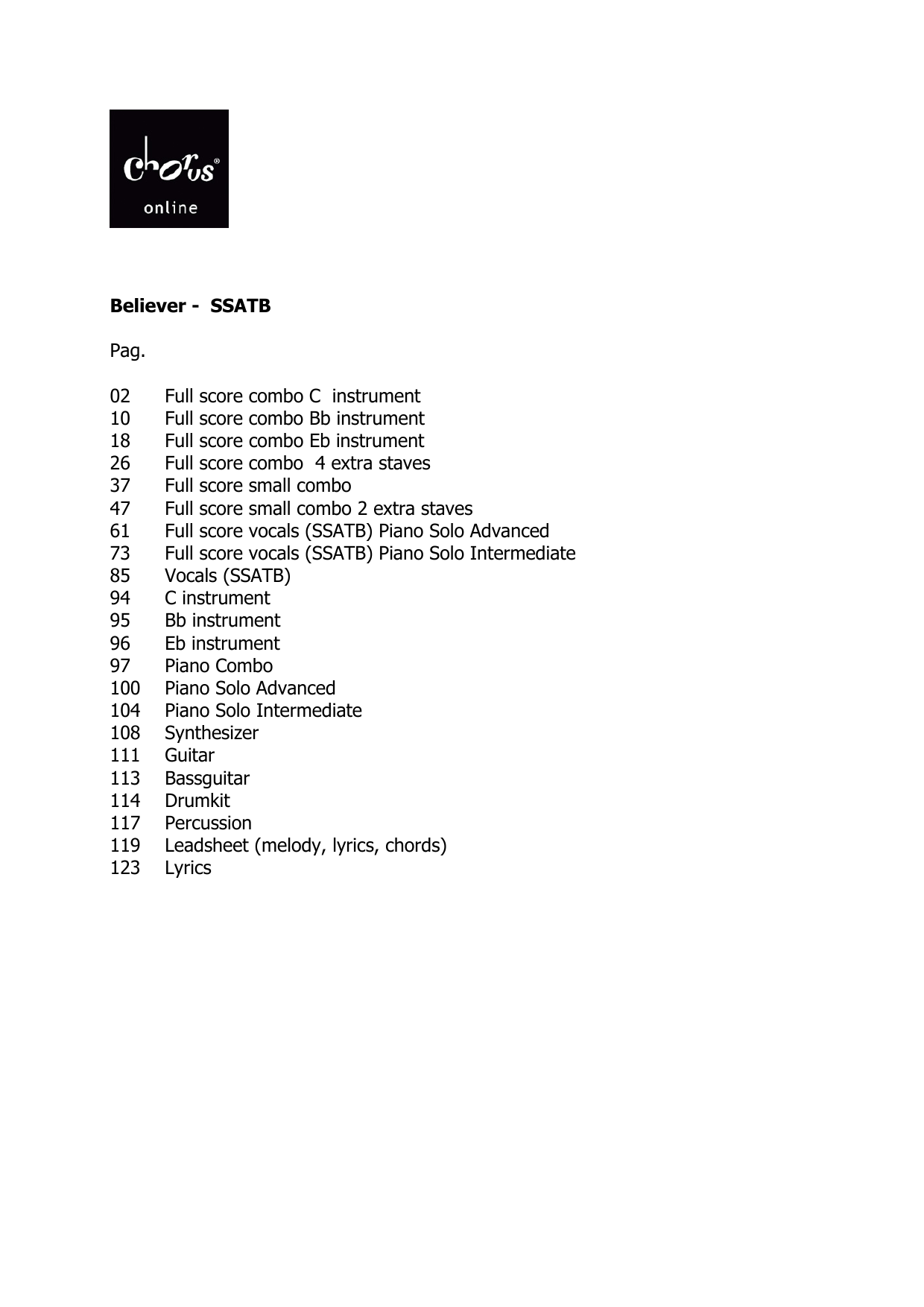
Page Count: 124
SKU: 35-DS00489327

More about this title

About the Artist: Imagine Dragons

Imagine Dragons emerged from Las Vegas in 2008 to become one of the most successful rock bands of the 2010s. Their anthemic sound combines electronic elements, soaring melodies, and introspective lyrics that resonate across generations. In the classroom, their music offers contemporary material that engages students while presenting genuine compositional craft and emotional depth.

The band's appeal to young musicians lies in their accessibility paired with sophisticated production. Songs like "Believer" showcase dynamic range, layered harmonies, and lyrical themes of resilience that translate effectively to choral settings. For educators seeking repertoire that speaks to modern singers, Imagine Dragons provides a bridge between popular music and serious vocal work.

Why we love this

Hans Reintjes has crafted an arrangement that respects the song's driving energy while creating genuine choral writing. The SSA/SSAA voicing opens this piece to mixed and treble choirs alike, making it accessible without sacrificing the intensity of the original. Young singers connect immediately to this material, and the arrangement rewards both the ensemble singers and your advanced performers.

What to expect

The piece pulses with relentless energy, built on a foundation of rhythm and repetition that propels singers forward. Moments of vulnerability emerge beneath the surface, offering textural contrast before the ensemble reasserts the powerful main theme. There's defiance in this music, but also an underlying hopefulness that makes it resonant rather than aggressive.

Who it's for

This arrangement welcomes both SSA and SSAA choirs of intermediate to advanced ability. It works equally well for treble ensembles seeking contemporary material that doesn't condescend and mixed choirs wanting to expand their pop repertoire. Directors programming concerts that blend styles will find this piece bridges the gap between classical and popular idioms effectively.

How to get the most out of it

  • Anchor the rhythm section with precise articulation on the driving beat. The percussion figures in the original arrangement create the song's identity, so make certain your ensemble understands where that pulse lives in the texture.
  • Balance the melodic layers carefully so that the main hook emerges clearly without drowning out the harmonic foundation. This piece rewards clarity over volume.
  • Approach the dynamic contrasts as dramatic statements rather than gradual transitions. The shifts between sections should feel intentional and purposeful, mirroring the original's production choices.
  • Lean into the emotional content during the softer moments. The arrangement includes spaces for introspection that heighten the impact when intensity returns.

How to use it

Pair this with other contemporary arrangements to anchor a modern music set, or use it as a finale that sends audiences out energized. The 124 pages suggest this is a substantial arrangement with multiple sections and key moments, making it substantial enough to carry an entire concert segment. This piece also serves well in spring or end-of-year concerts where the emotional core and audience familiarity create meaningful connections.

Skills your students will build

  • Rhythmic precision in driving contemporary pop idioms
  • Layered harmonic awareness in multi-part textures
  • Dynamic control across a wide range of intensities
  • Vocal stamina during extended passages with minimal rests
  • Stylistic distinction between pop production techniques and choral fundamentals
  • Balance between soloistic moments and ensemble unity

You May Also Like