
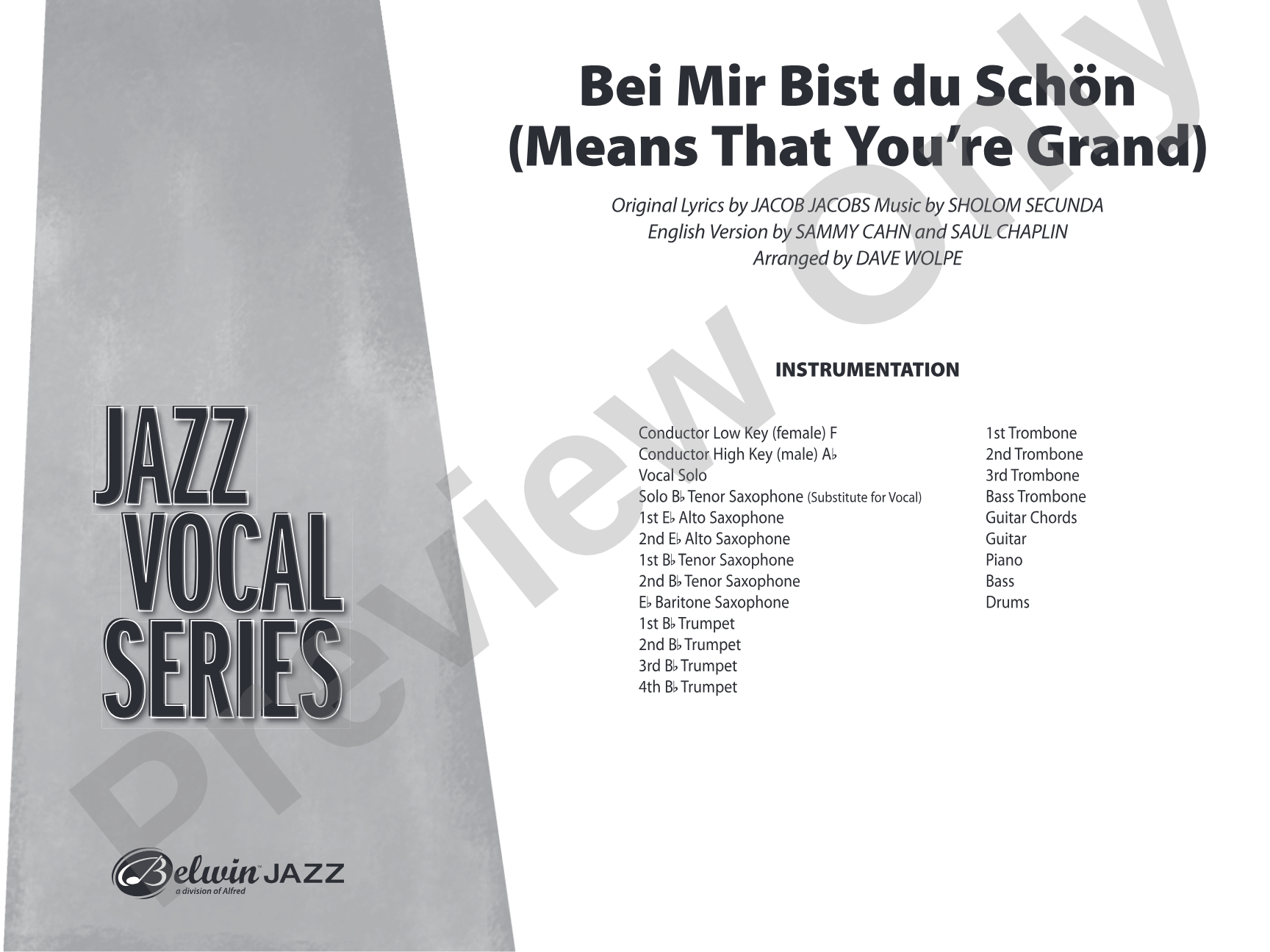
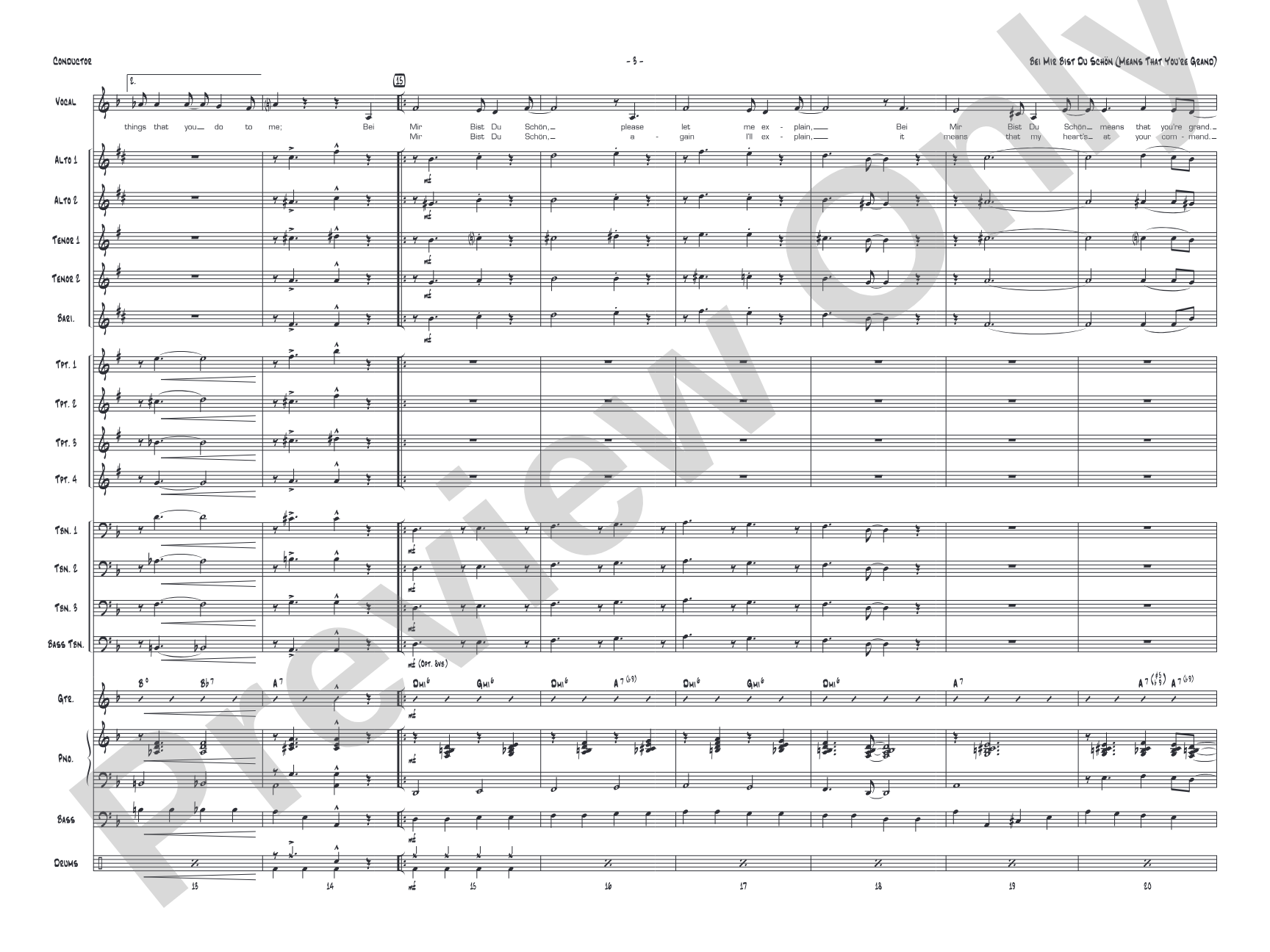
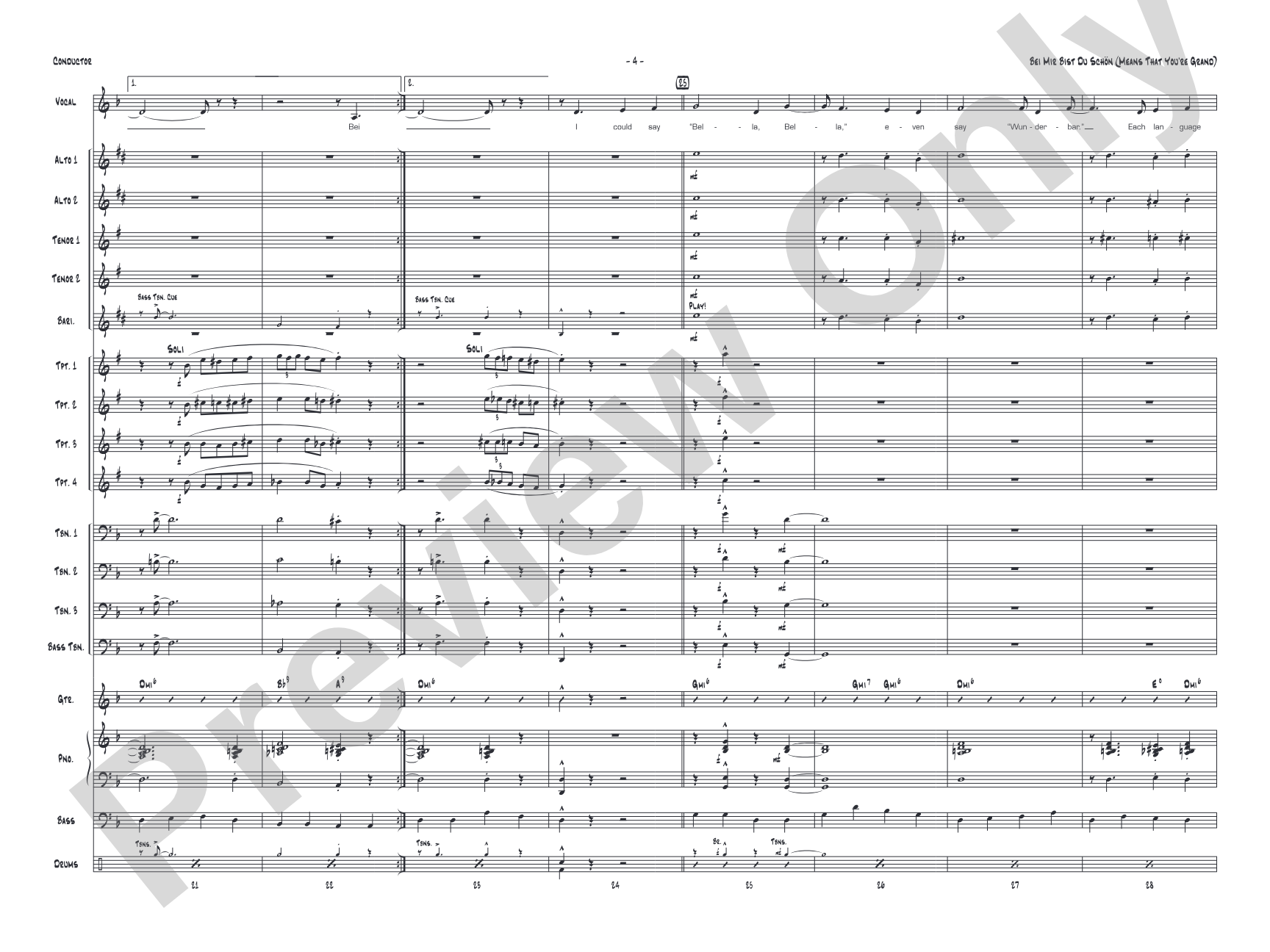
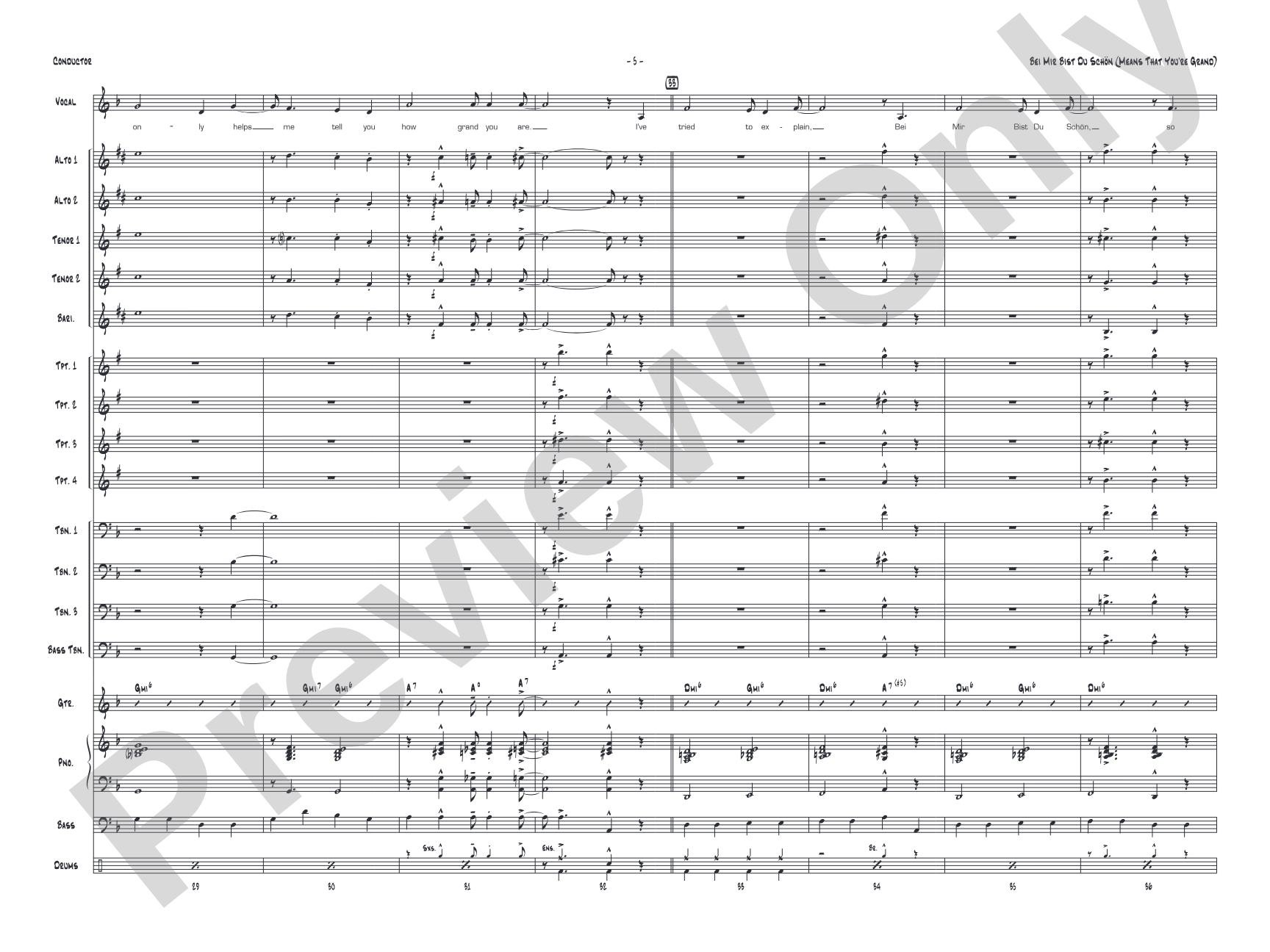
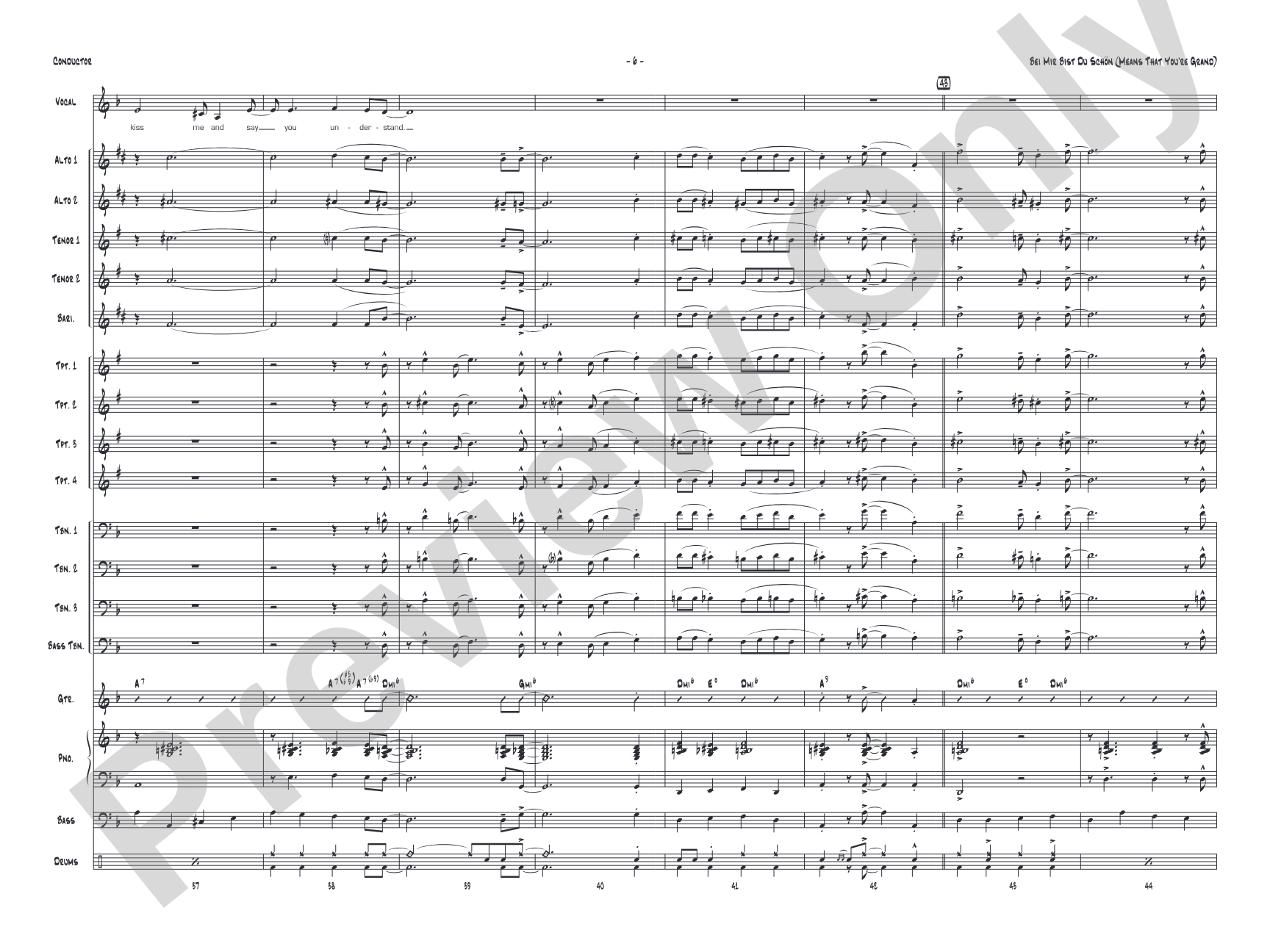
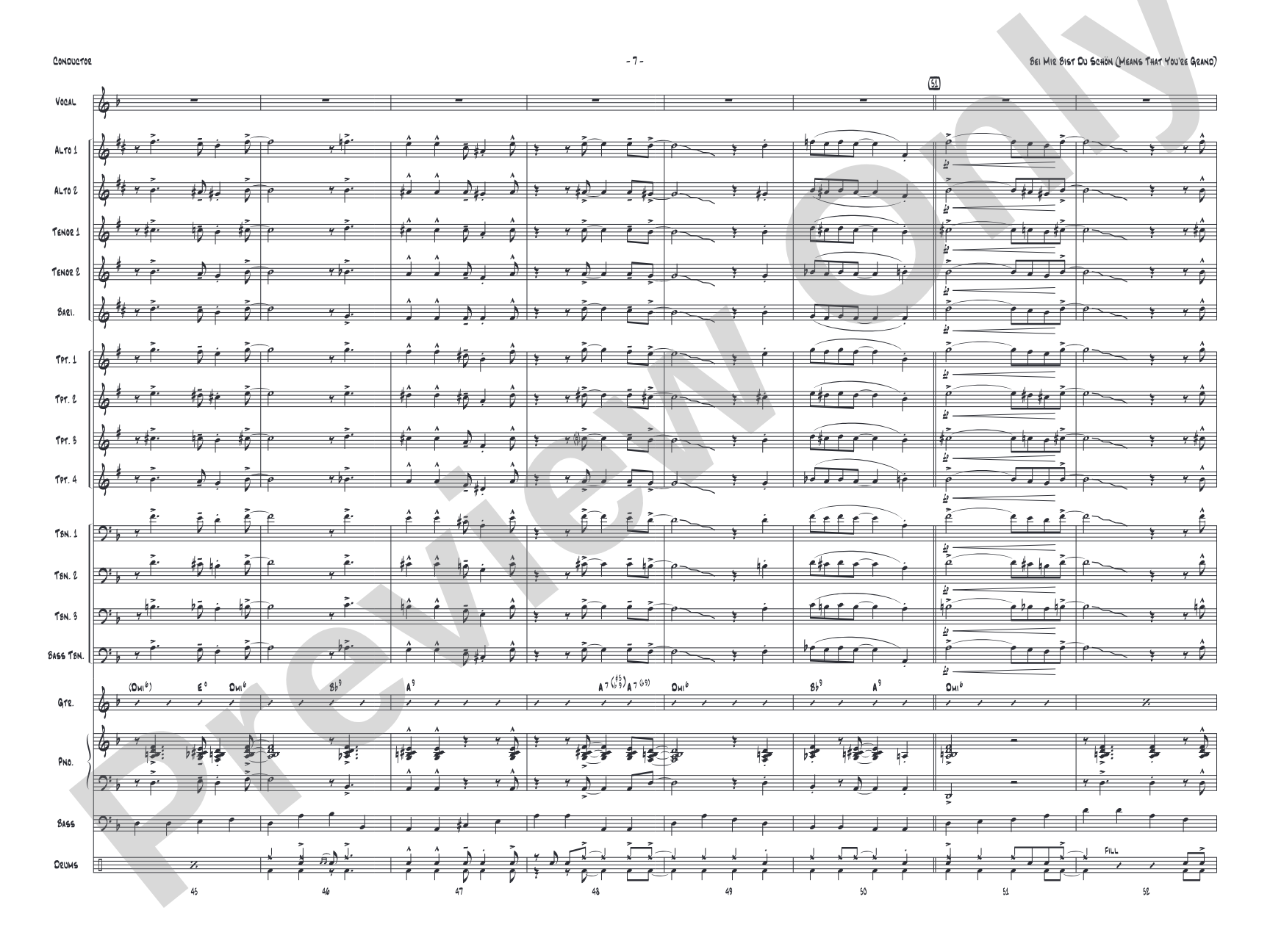
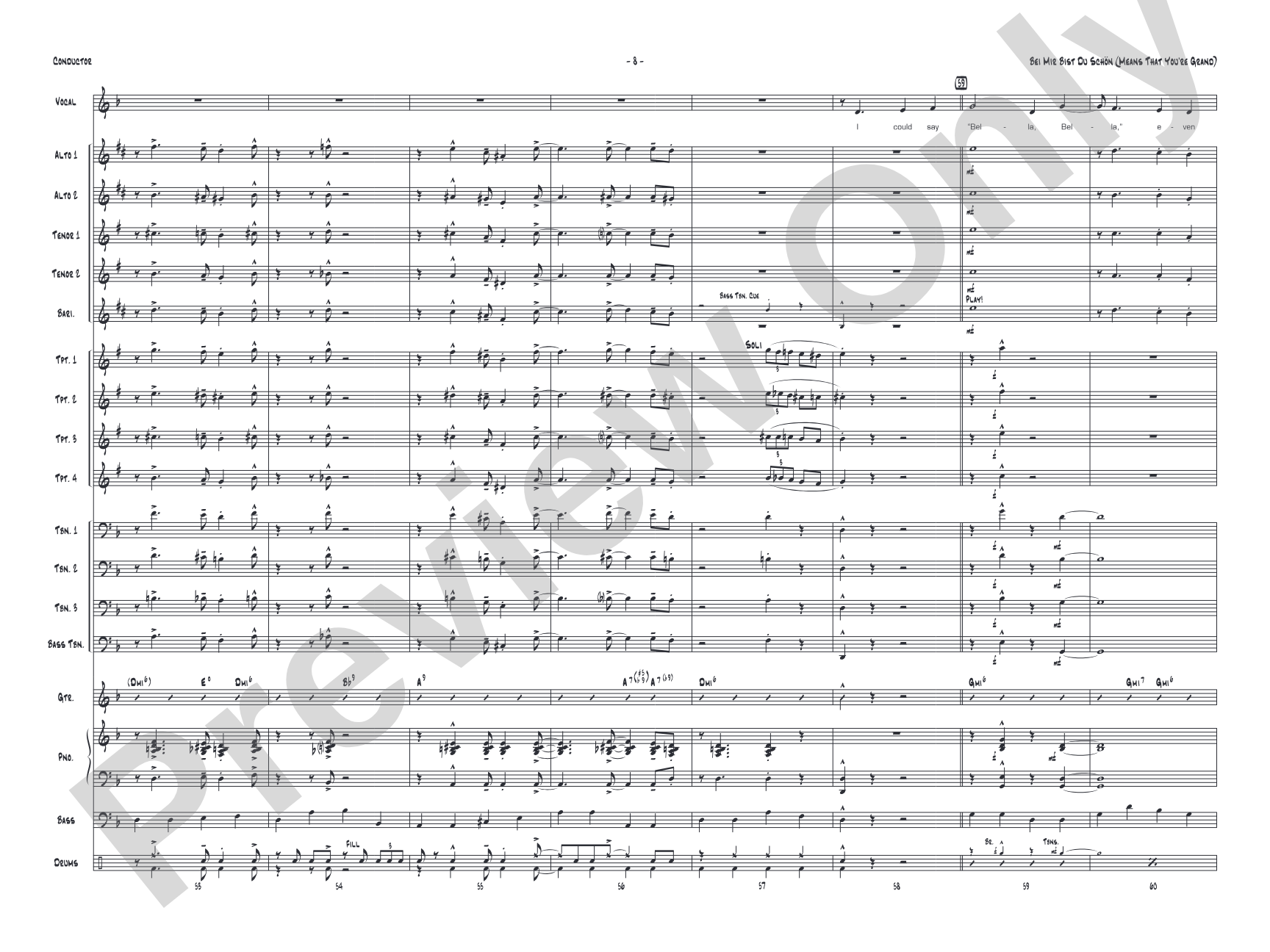
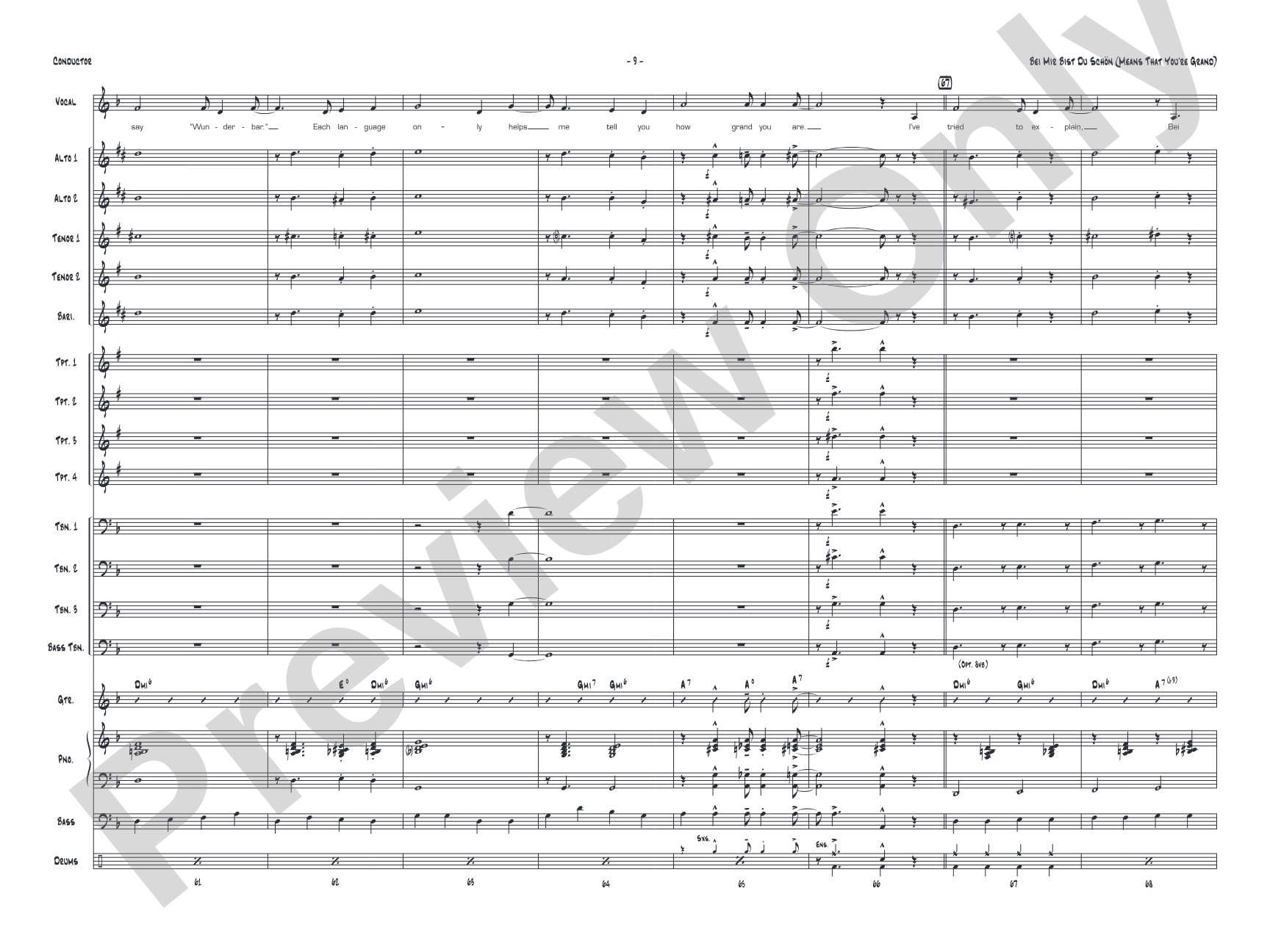
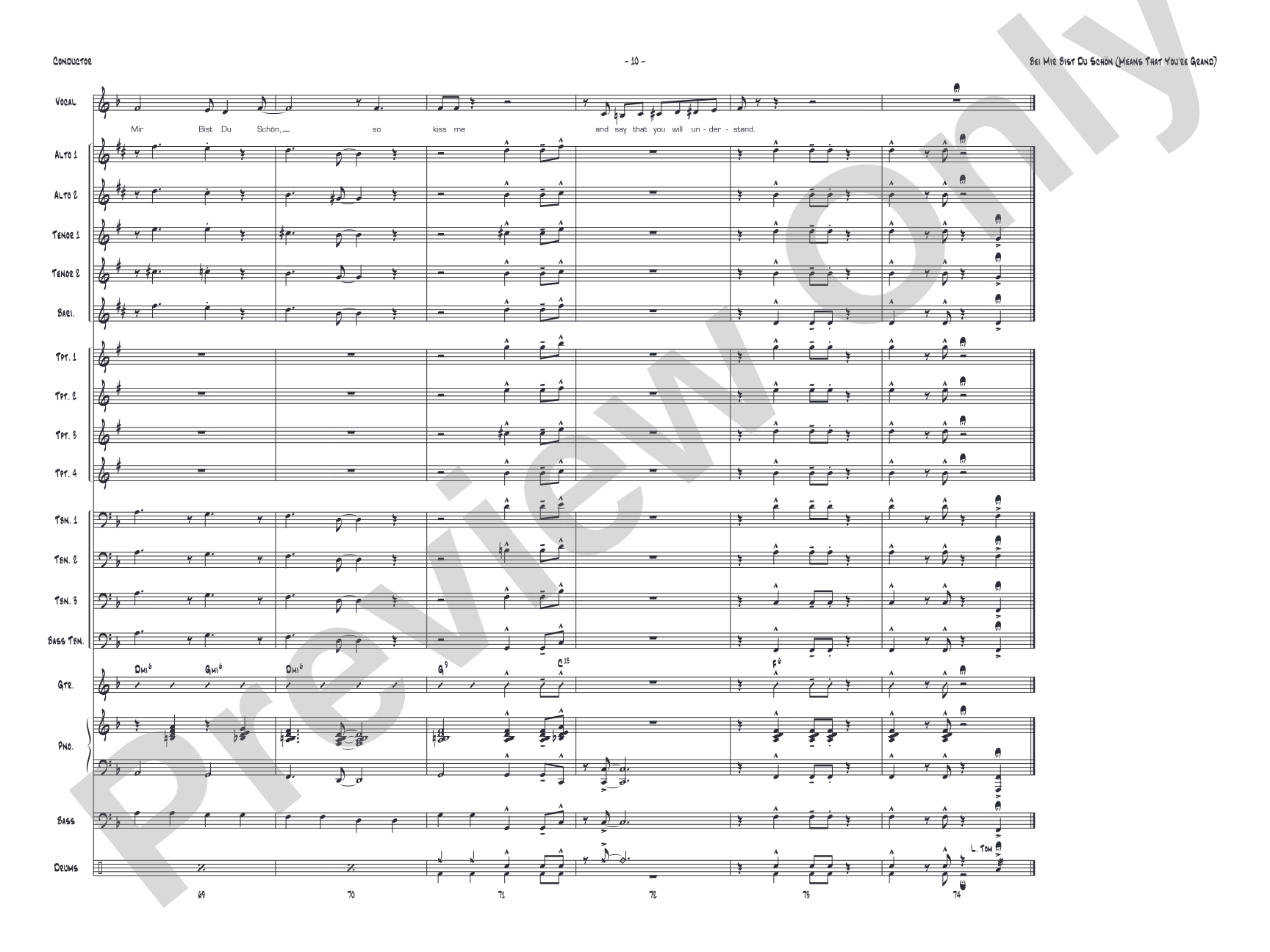
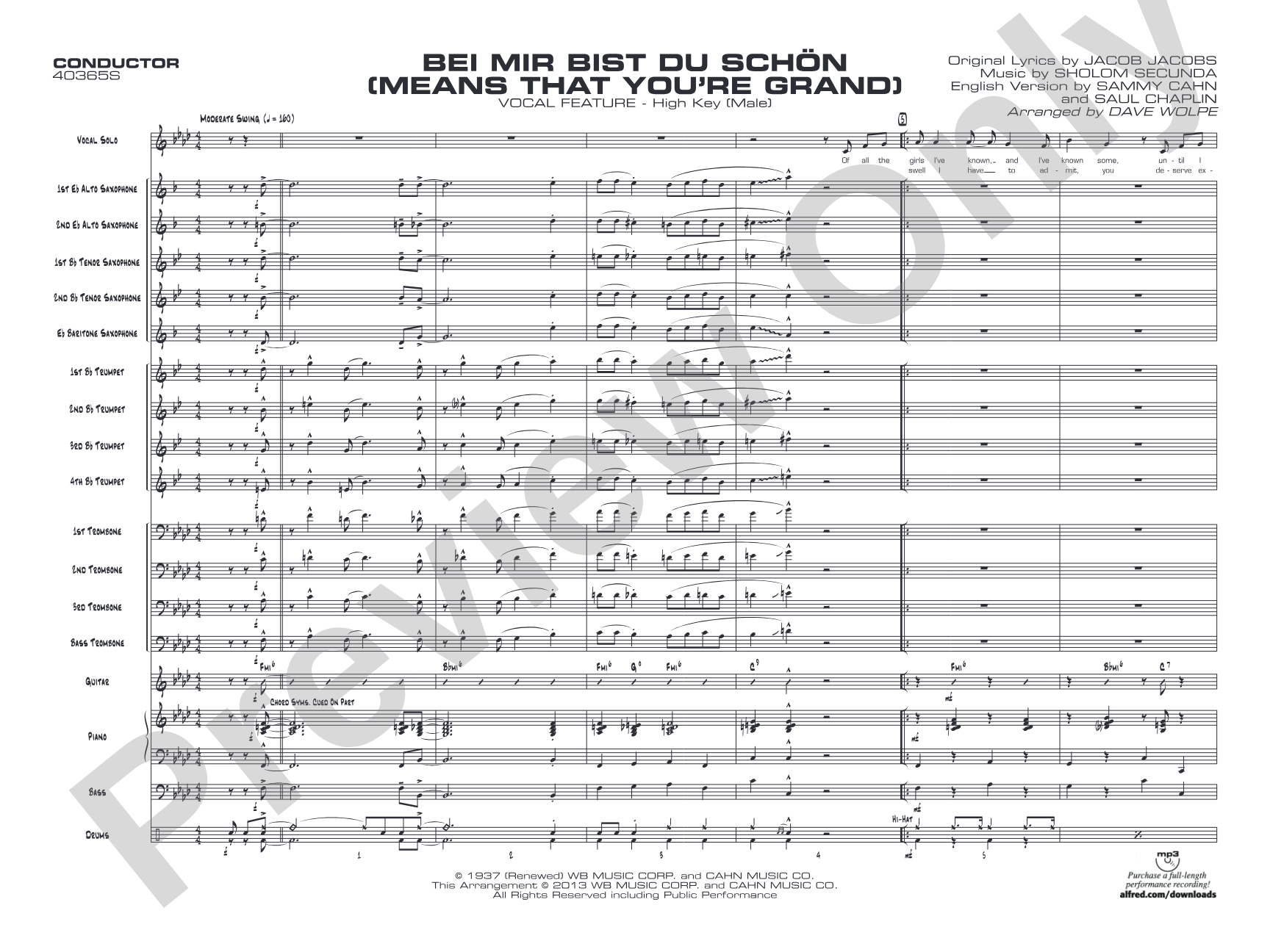
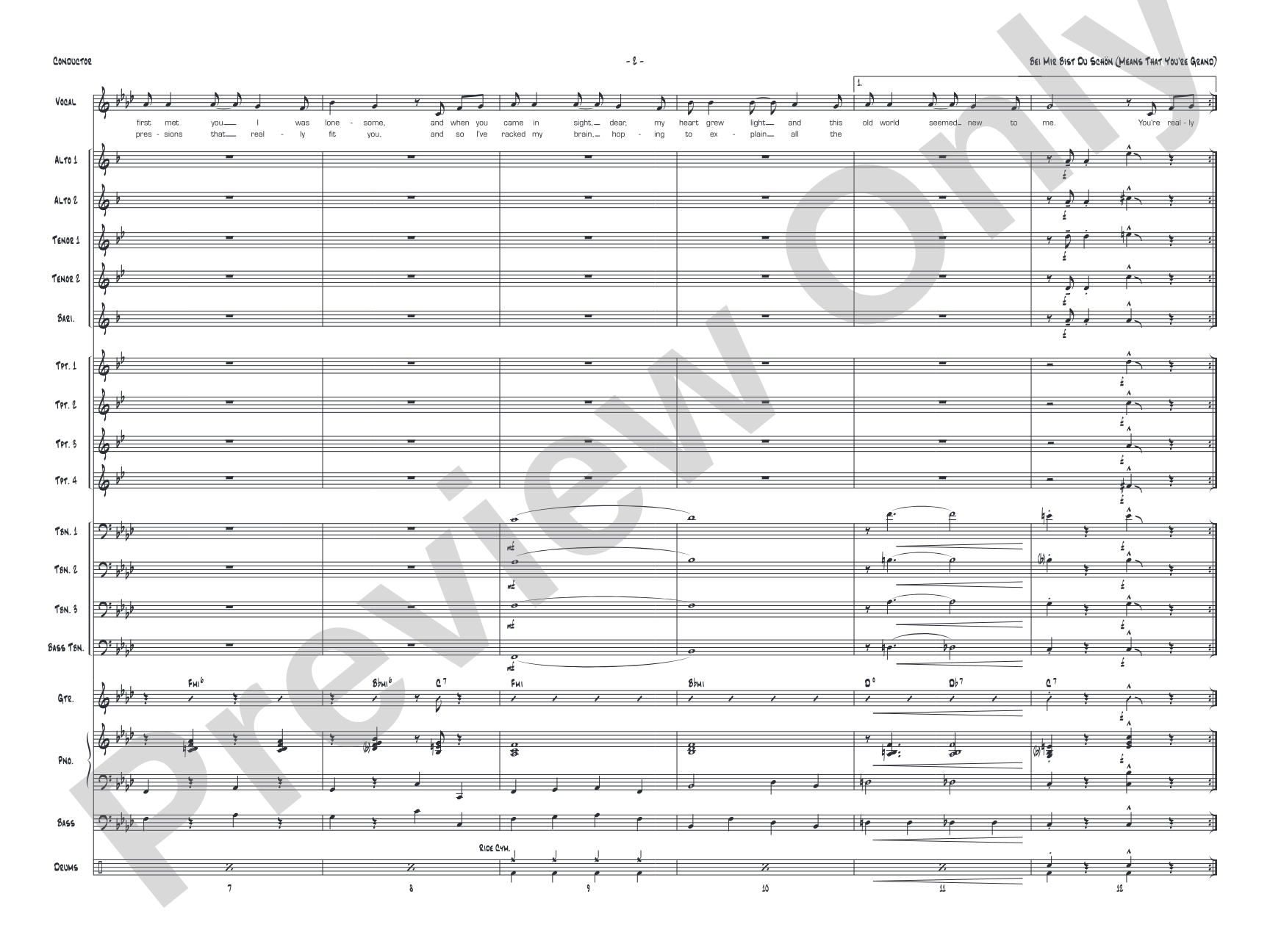
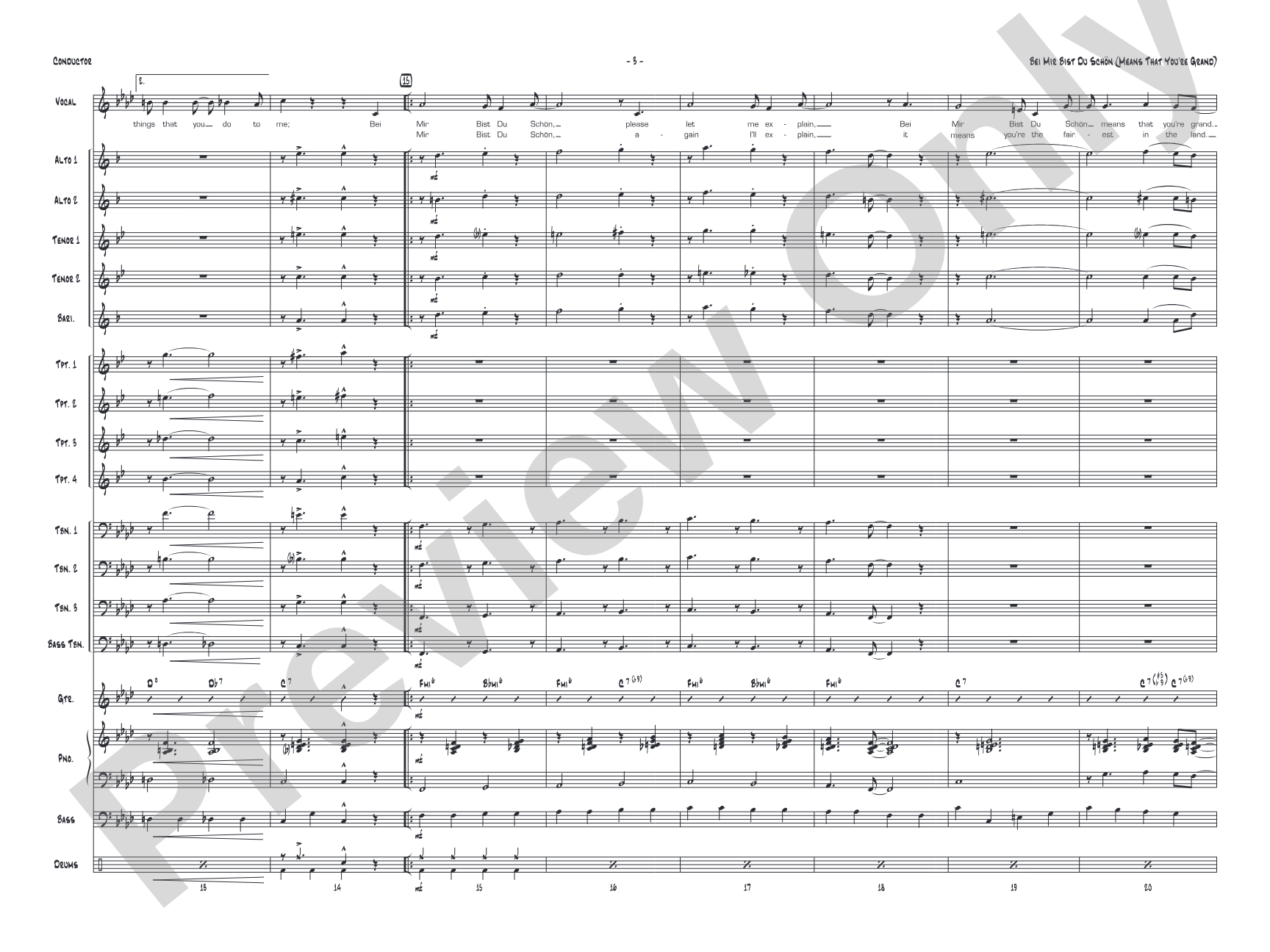
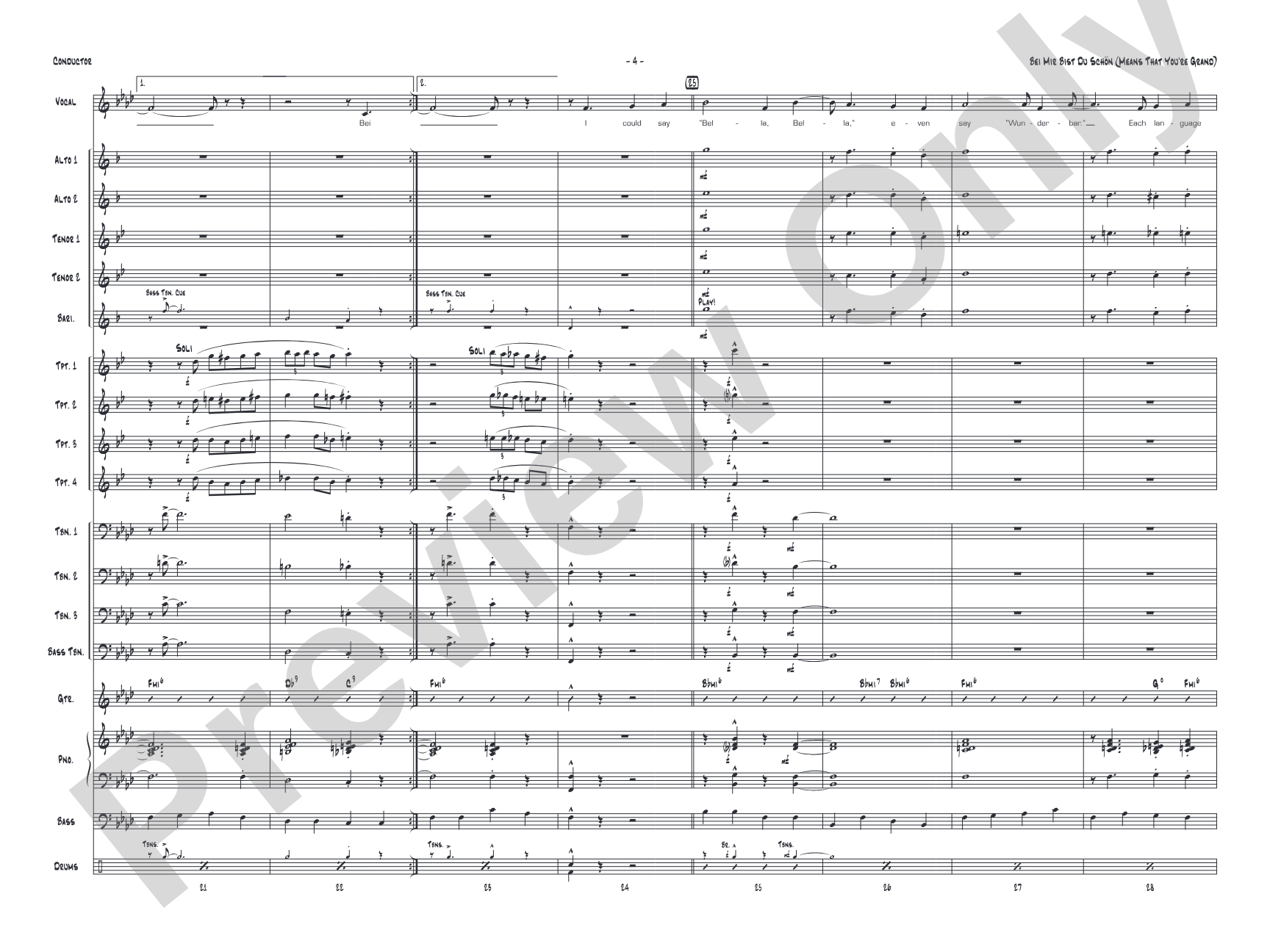
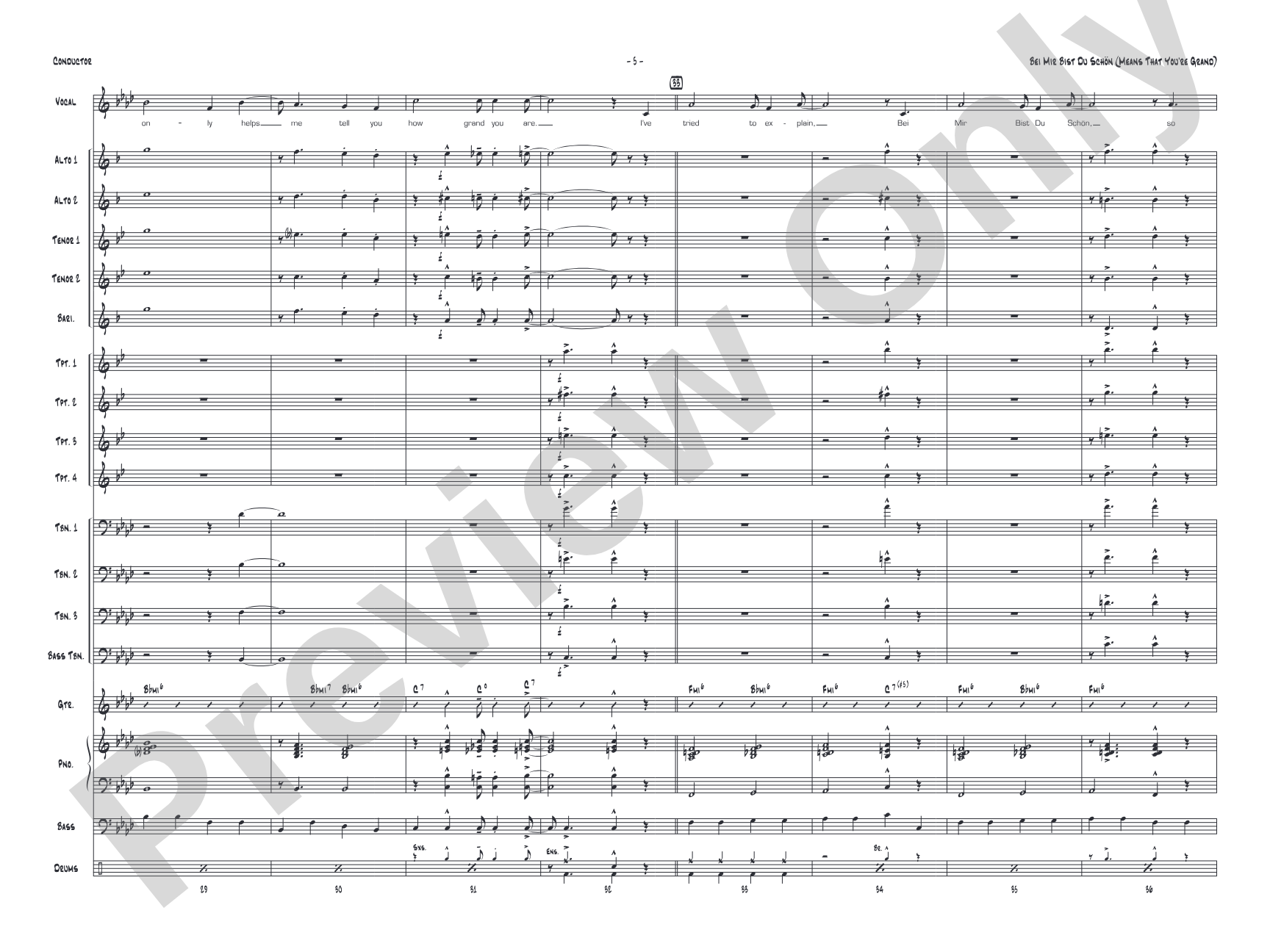
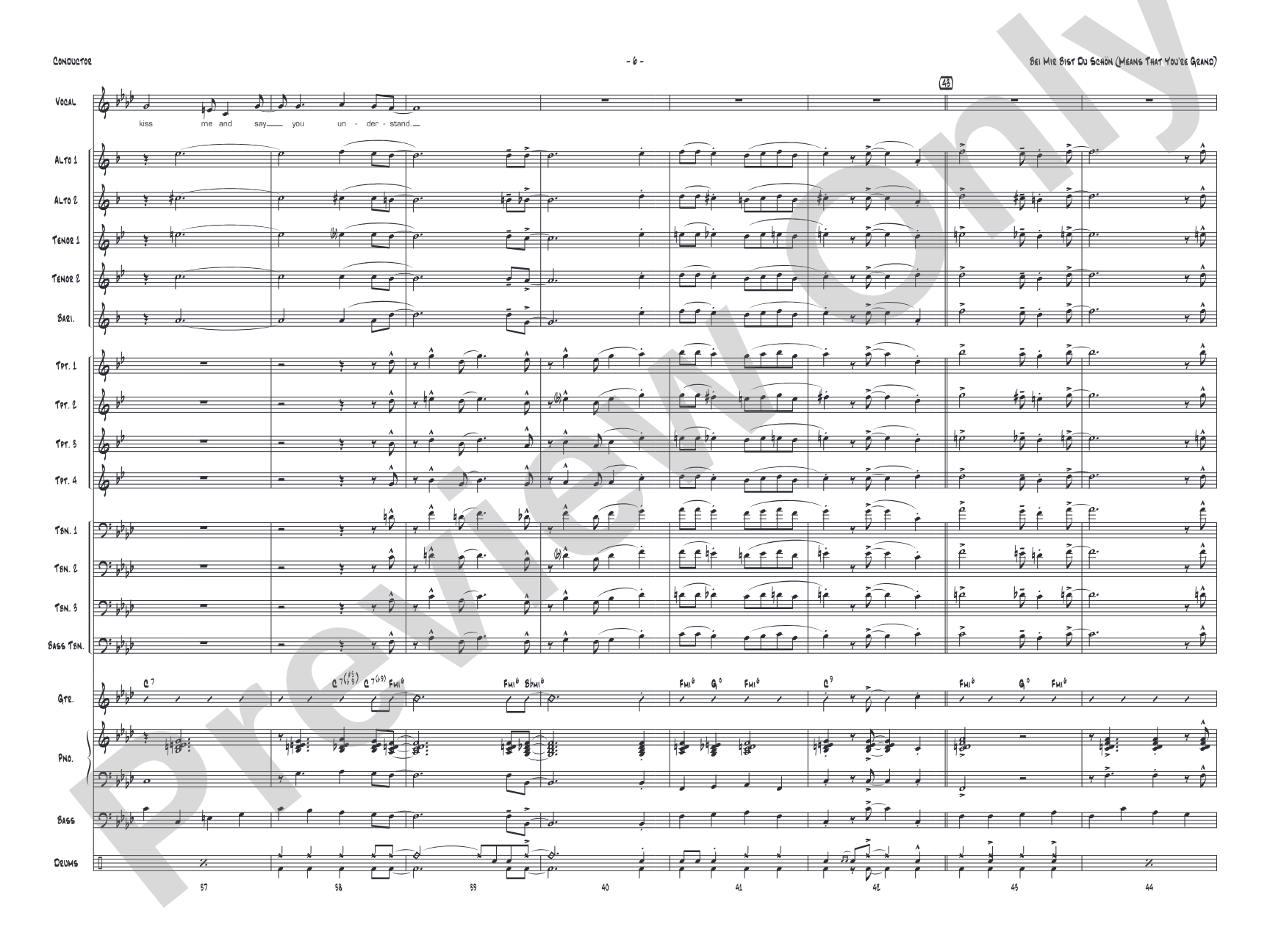
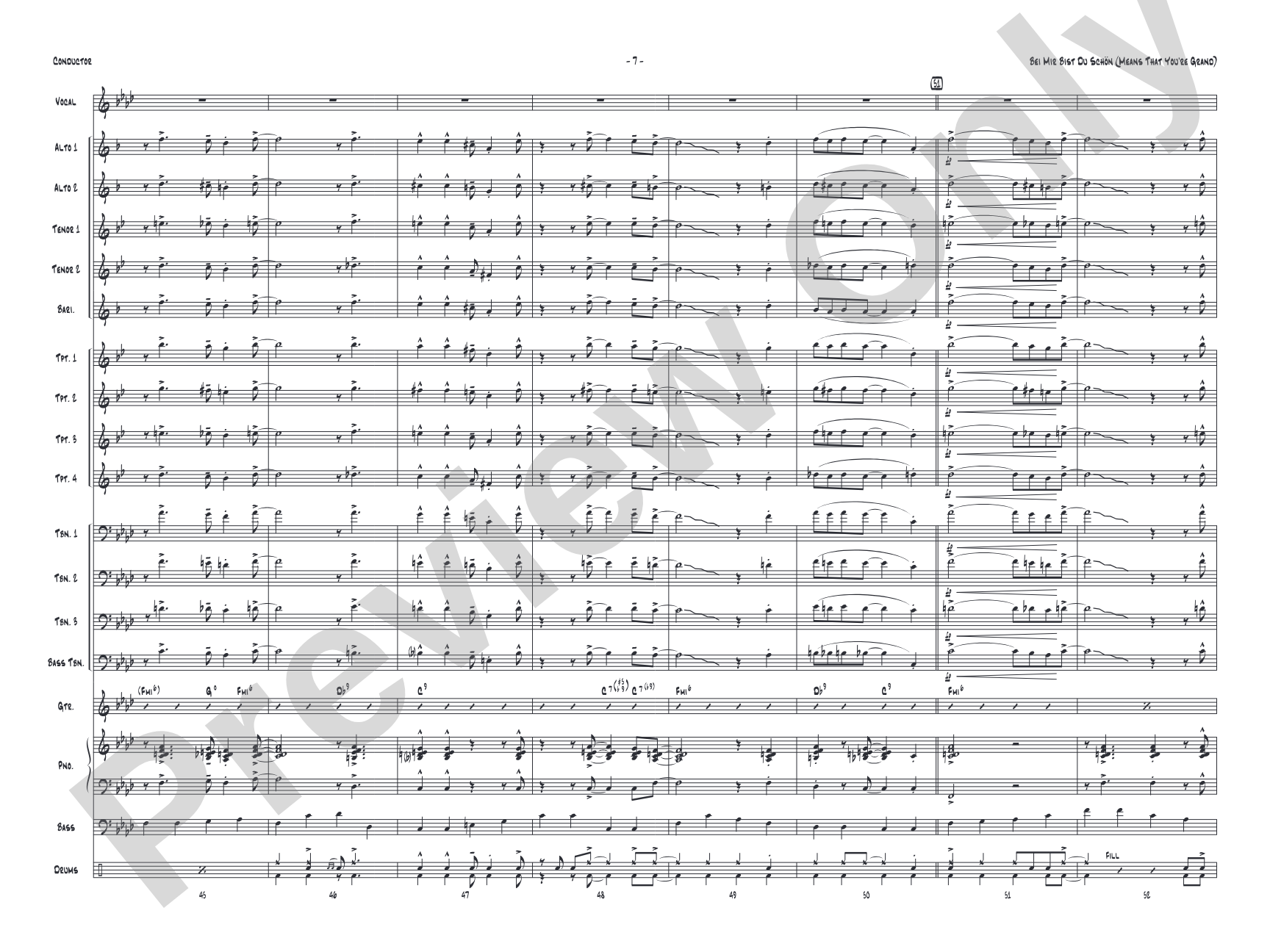
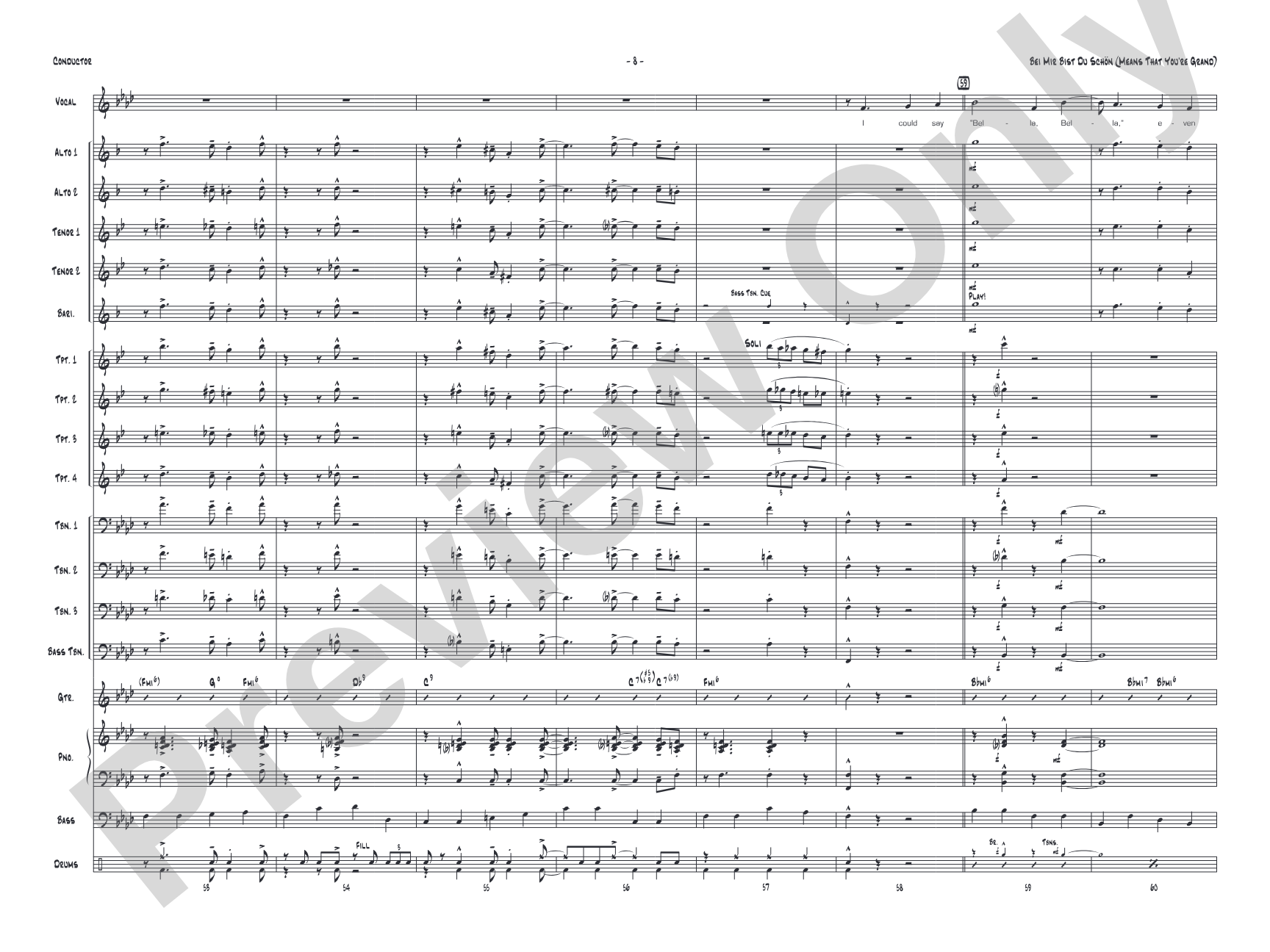
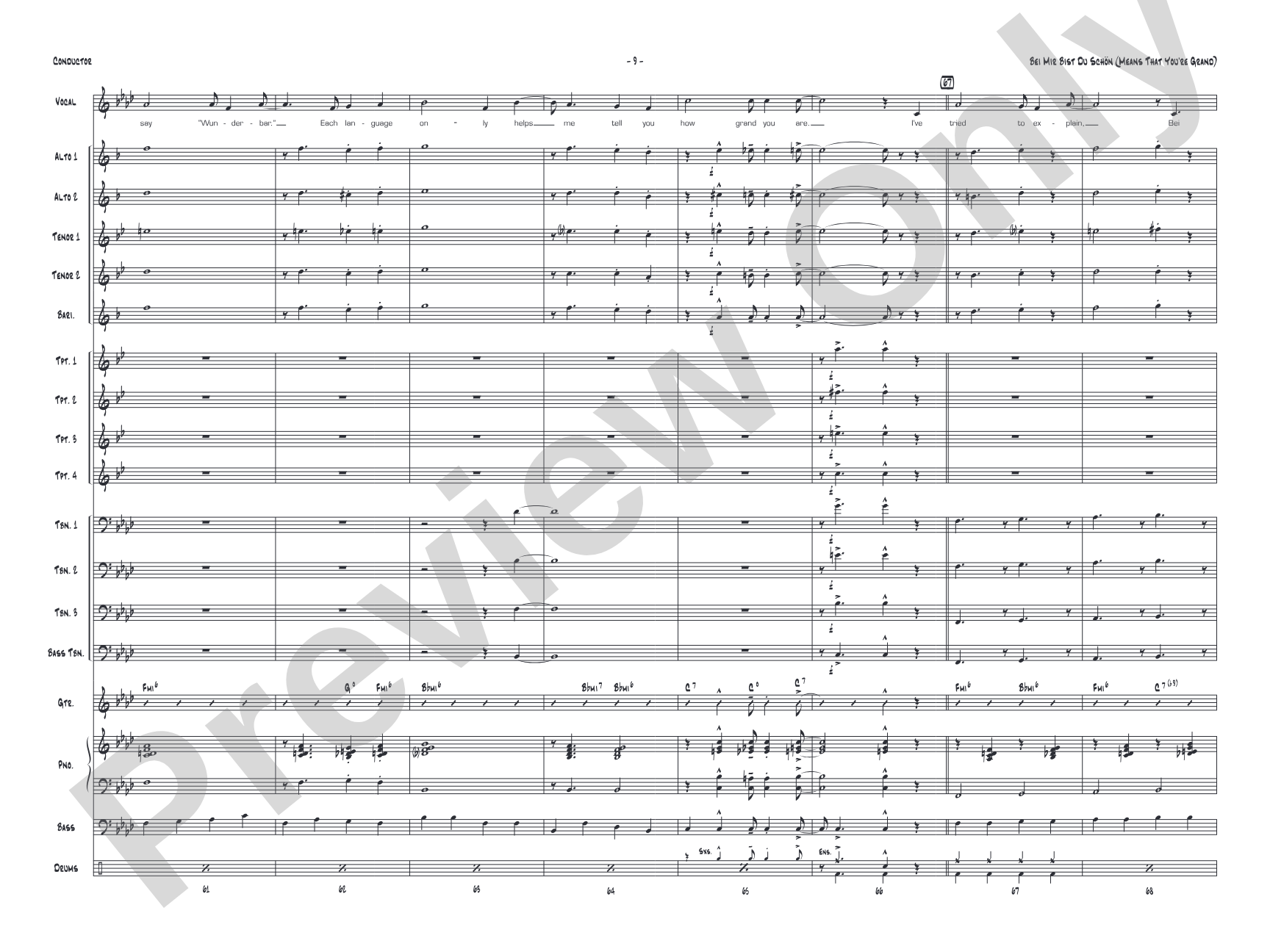
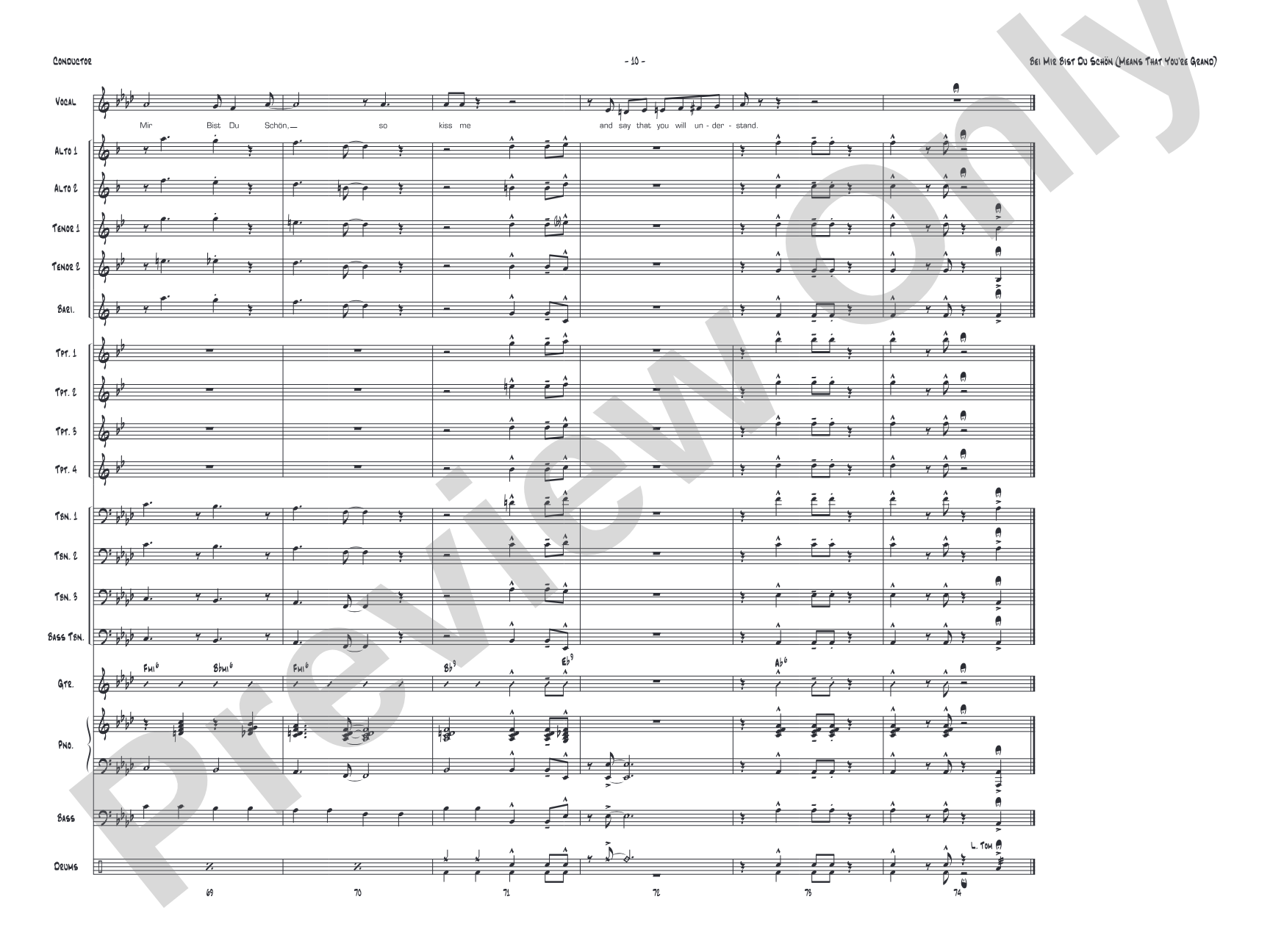

Bei Mir Bist Du Schon (Means That You're Grand): Vocal Solo with Jazz Ensemble Conductor Score & Parts
Original lyrics by Jacob Jacobs, music by Sholom Secunda, English Version by Sammy Cahn and Saul Chaplin / arr. Dave Wolpe
Grade: 3.5 (Medium)
Item: 00-PK-0007014

$62.00
Pickup currently not available
Buy Extra Parts (Digital PDF Download)
Parts Added to Cart!
Description
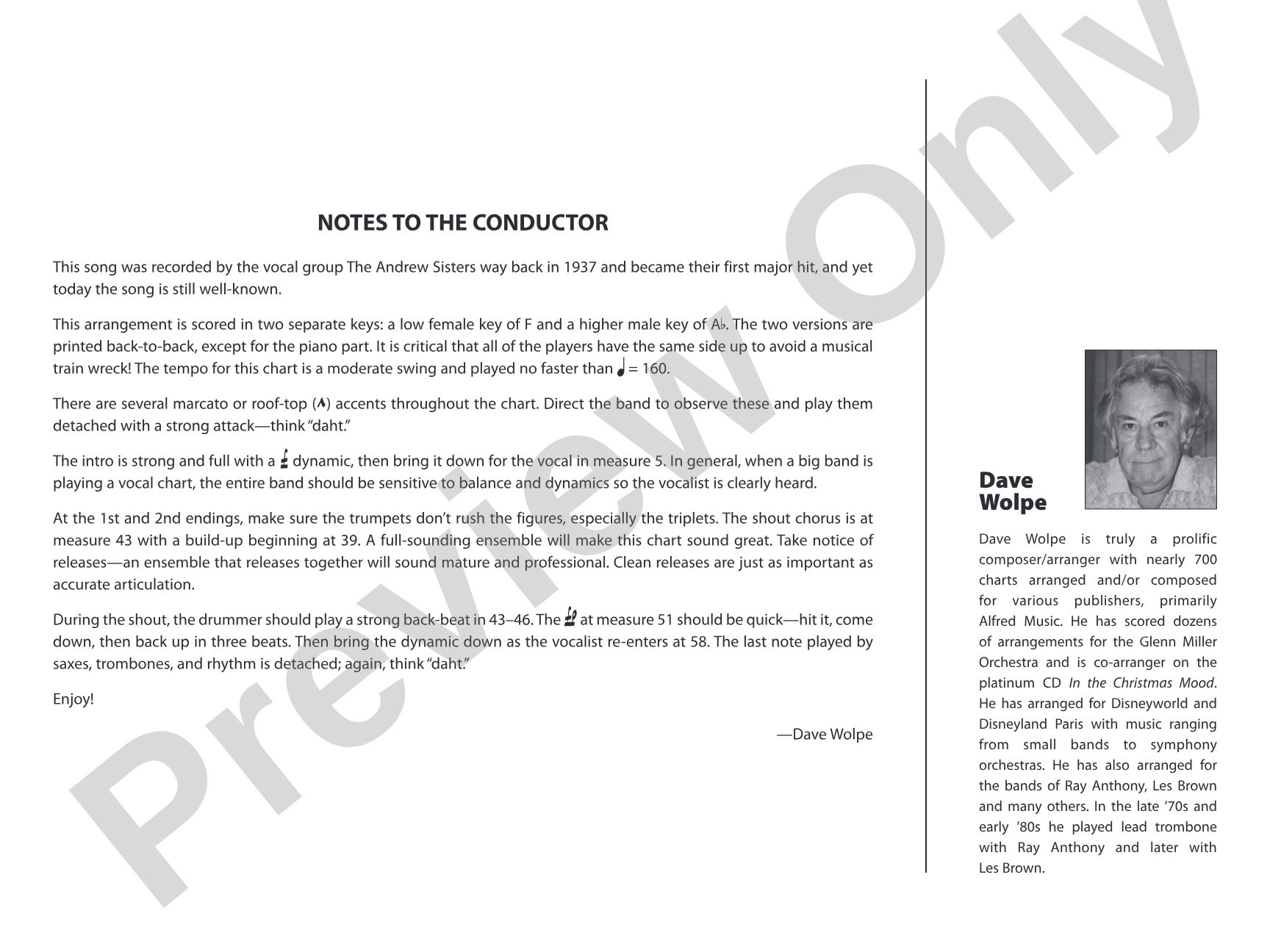
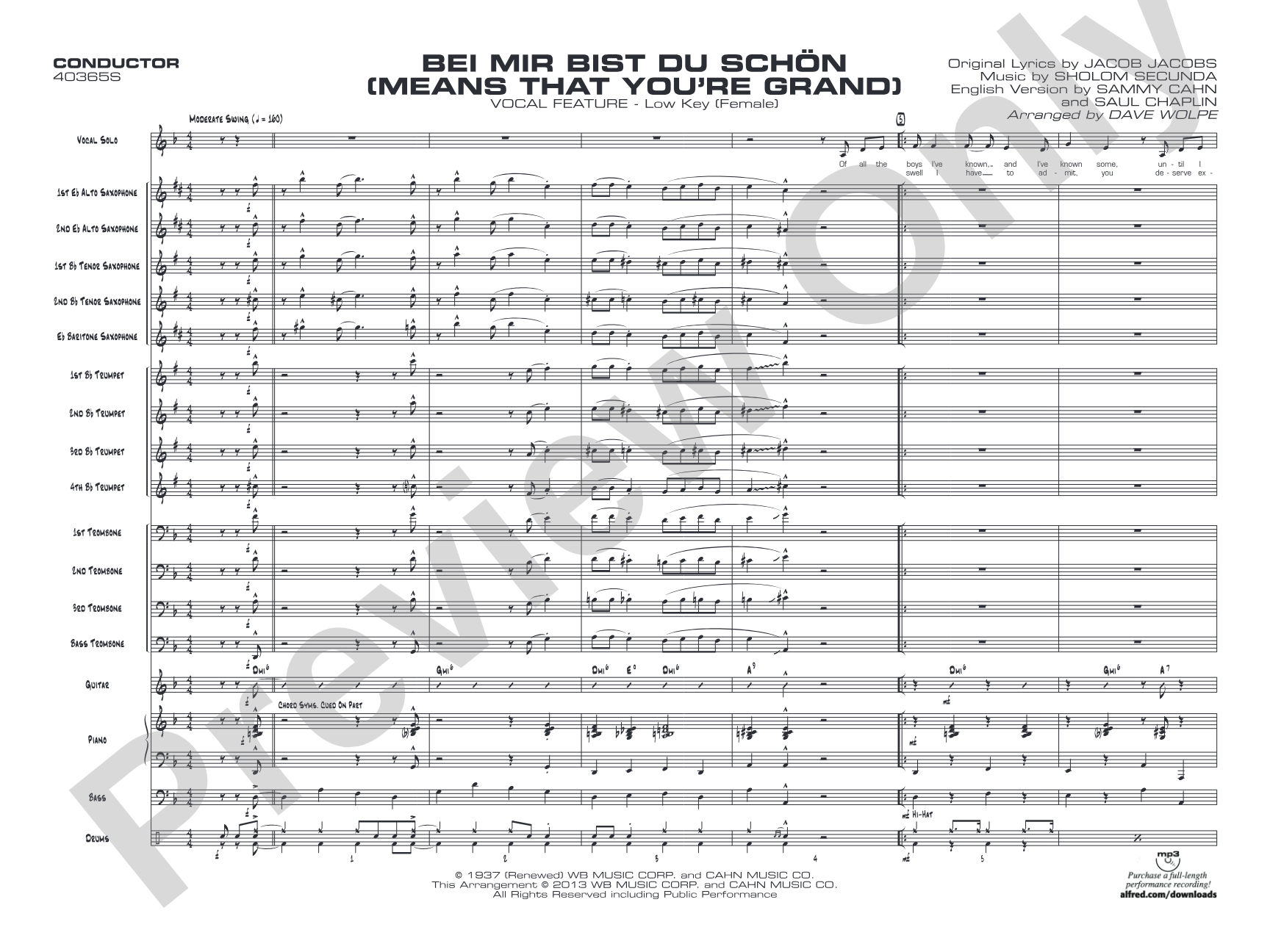
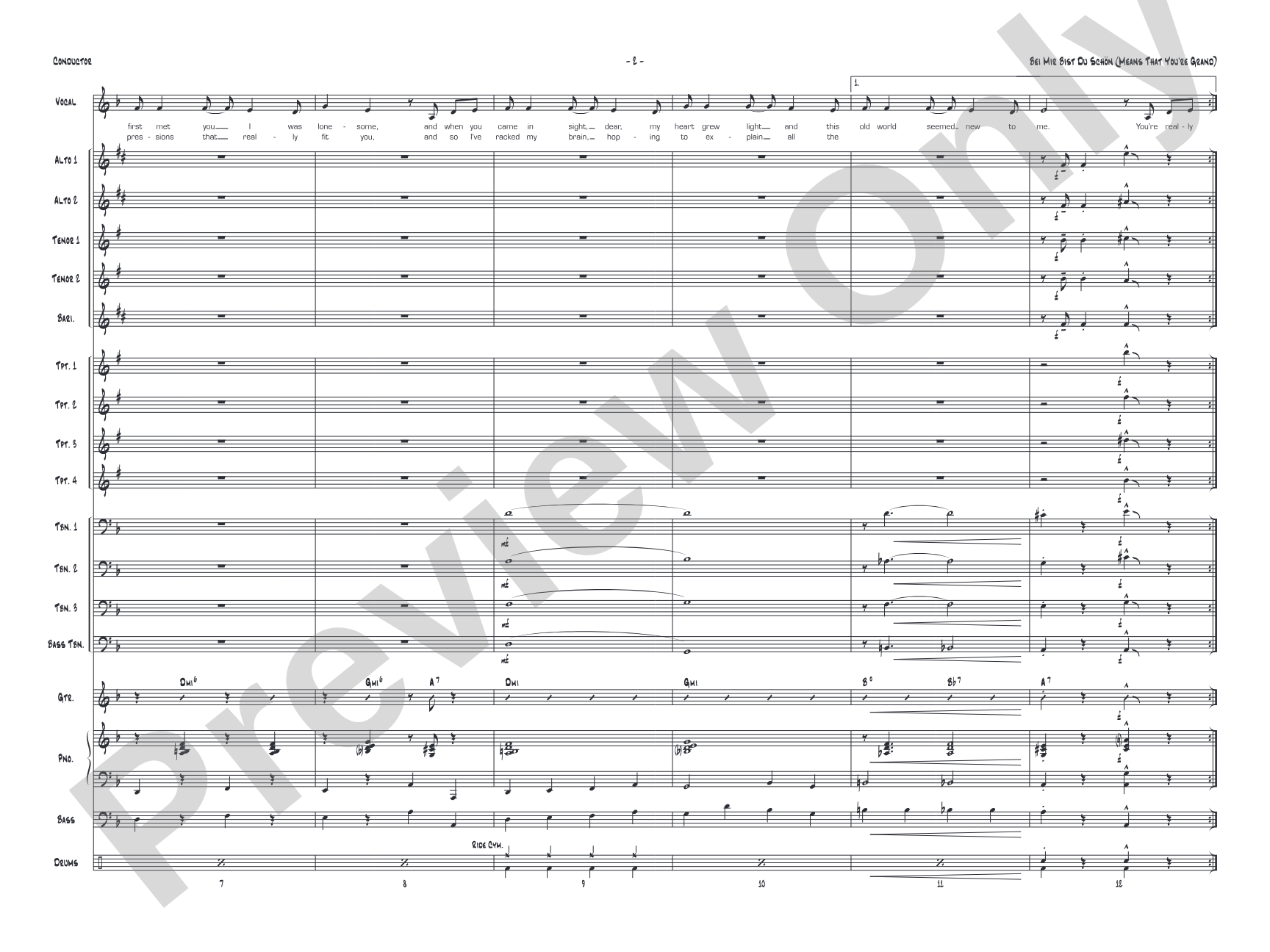
This swinger will be a hit! Arranged in two keys for flexibility by arranger Dave Wolpe, it's a bright swing vehicle for vocalist and big band at around 160 BPM. The low key is F with vocal range from A below middle C to 2nd space A, and the high key is A-flat, with vocal range from middle C to 3rd space C, treble clef. Lead trumpet range to written high C. No horn solos, just swingin' ensemble and vocal.


Don't just read it, hear it, play along with it, and watch your students grow with it. In MakeMusic Cloud, Bei Mir Bist Du Schon (Means That You're Grand): Vocal Solo with Jazz Ensemble Conductor Score & Parts comes alive with professional accompaniment, adjustable tempo, and built-in practice tools that turn solo practice into real progress.
Open in the Player
Jump straight in and assign it today.
Start Your Free Trial
Open this title and explore the full library in minutes.
Sample Audio
1
Audio File
--:--
0:00
0:00
Sample Video
No sample videos found.
Additional Details
Series:
Jazz Vocal Series
Publisher:
Alfred Music
Page Count:
74
SKU:
00-PK-0007014
More about this title
About the Composer: Sholom Secunda
Sholom Secunda (1894-1974) was a Yiddish theater composer and conductor whose work bridged European Jewish musical traditions with American popular song. His melodies became standards in American jazz and swing, performed by everyone from Ella Fitzgerald to Frank Sinatra, introducing Yiddish cultural touchstones to mainstream audiences.
Secunda's gift for memorable, singable melodies made his compositions ideal for both theater and jazz interpretation. His work remains a vital link between immigrant musical heritage and the golden age of American songwriting.
Why we love this
This arrangement gives student and community jazz ensembles access to a genuine swing standard with a vocalist at the center, not relegated to the side. Wolpe's two-key approach solves a real logistical problem: you can cast the right voice rather than forcing the music into an uncomfortable range. The straightforward ensemble writing (no horn solos to navigate) keeps focus on the vocalist and the groove.
What to expect
Bright, propulsive, and designed to make people smile. The melody sits naturally in the voice, the rhythm section swings hard, and the ensemble backs the vocalist with warmth and energy. This is music that sounds like fun to play and sounds like fun to hear.
Who it's for
Jazz ensemble directors with an ensemble-based vocal program, whether in high school, college, or community band settings. Soloists (treble or lower voices) with intermediate jazz phrasing skills who want to tackle a real standard in a fully realized big band context.
How to get the most out of it
- Lock the rhythm section first. The drummer and bass player need to establish that 160 BPM swing pocket before the vocalist enters; once they're locked, the horns will fall in naturally.
- Sit with the vocalist on the rubato sections. Even in a swinger, there are moments where the vocal phrasing needs space. Let the rhythm section breathe with the singer rather than fighting for strict time.
- Balance the lead trumpet range carefully. At written high C, this part will cut through; work with your lead player to blend with the vocal line rather than overshadow it.
- Emphasize the rhythmic unison of the ensemble. With no competing solos, the band's sectional cohesion becomes the textural foundation that lets the vocalist shine.
How to use it
Program this as a showcase feature on a jazz pops concert, where its singable melody and swing feel give audiences an immediate point of entry. It also works as a morale booster mid-rehearsal season when an ensemble needs a win: the music is achievable at the medium level, the payoff is immediate, and the joy of locking into a real standard is genuinely motivating.
Skills your students will build
- Swing rhythmic interpretation and phrasing
- Ensemble balance and blend in a horn section
- Rhythmic precision at moderate to fast tempos
- Jazz ensemble arranging concepts (how ensemble writing supports a solo voice)