
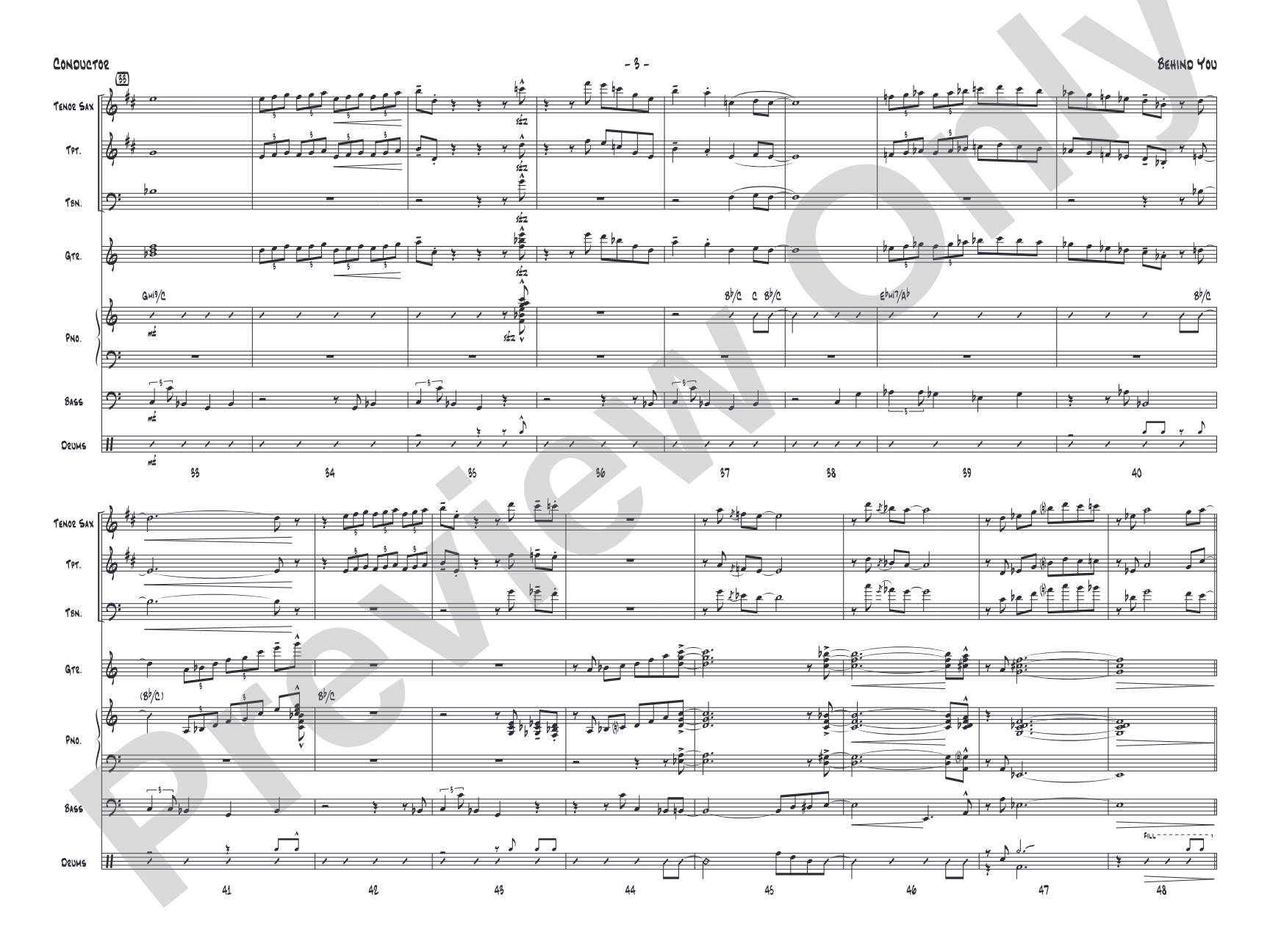
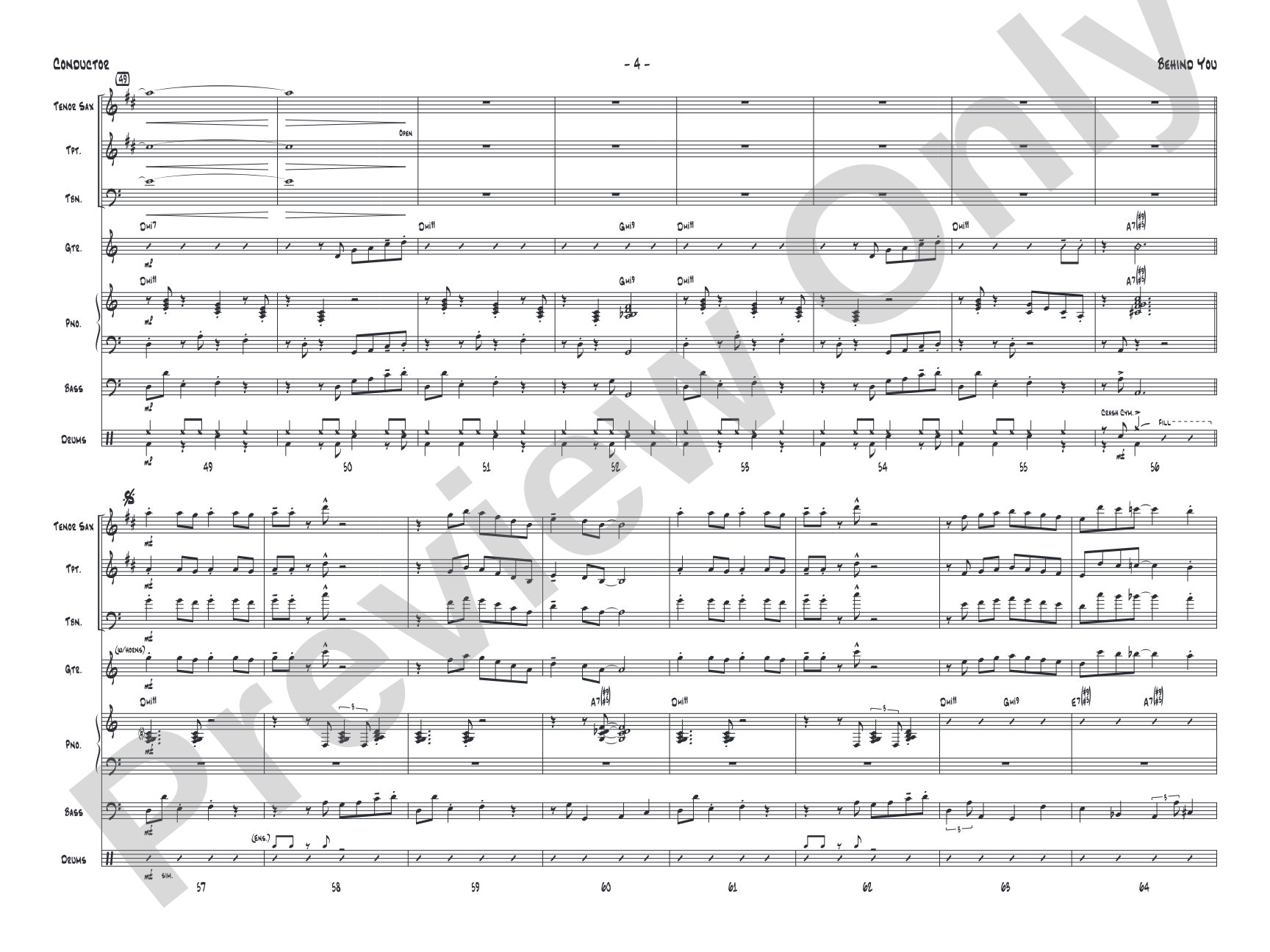
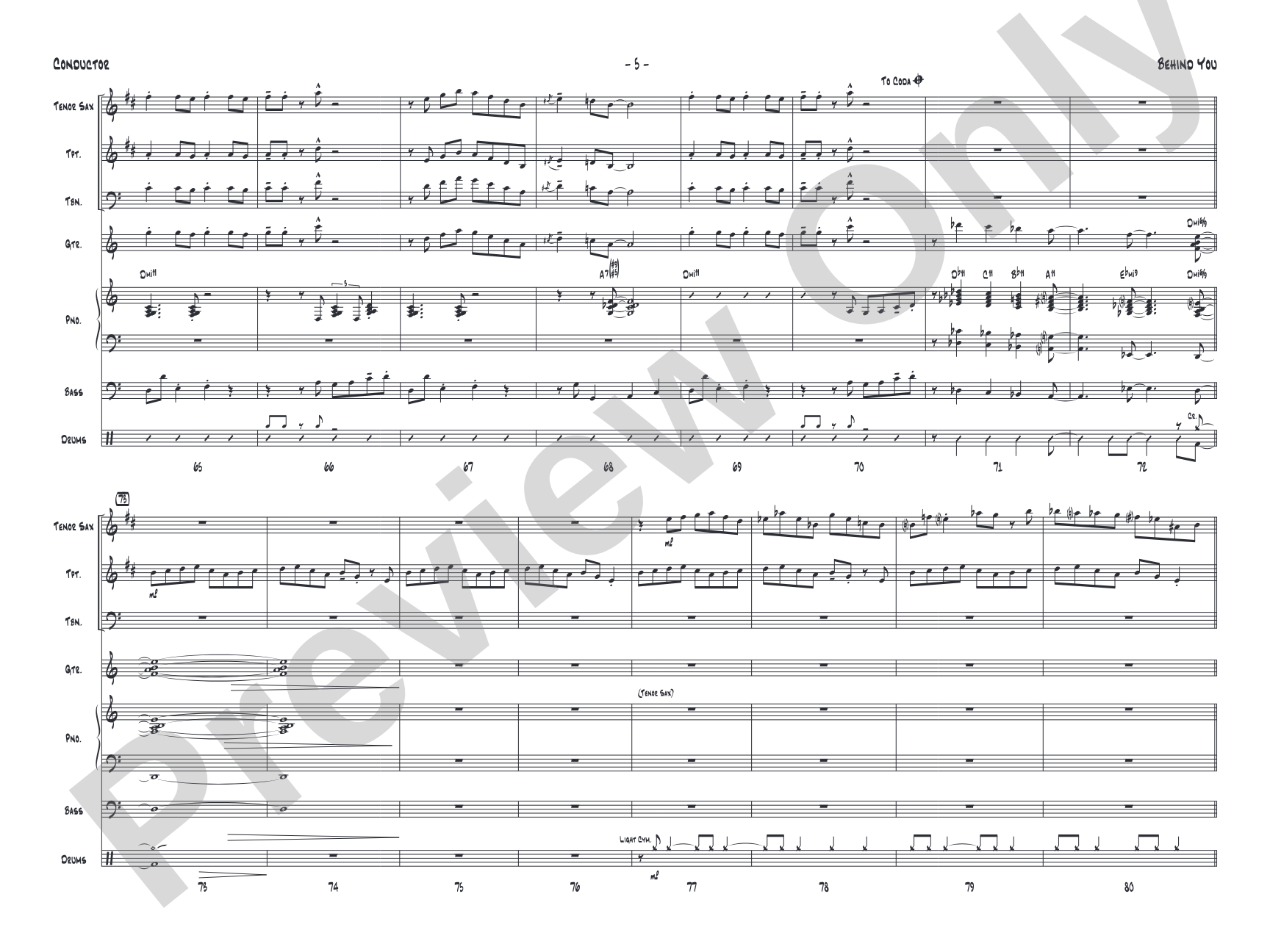
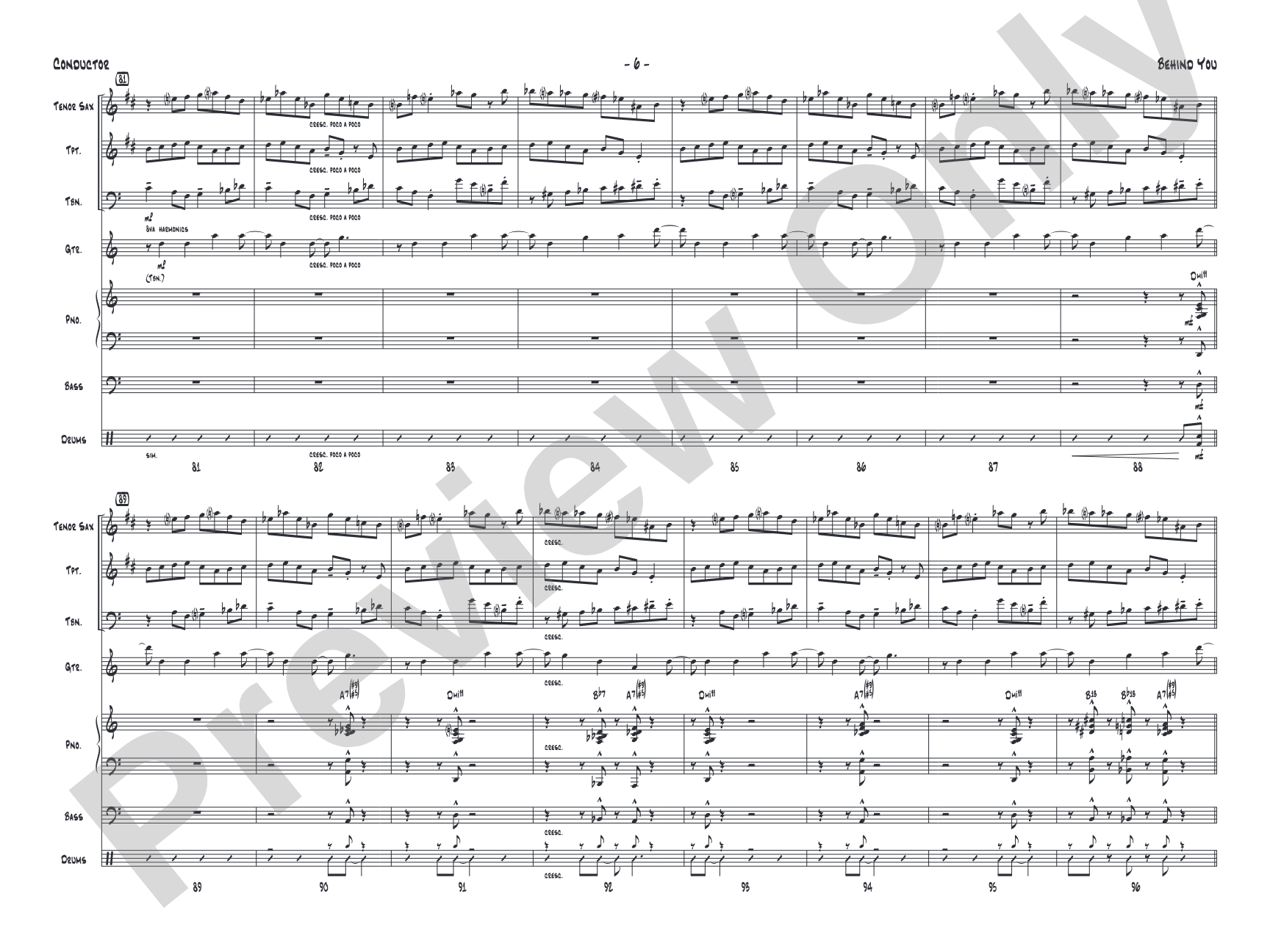
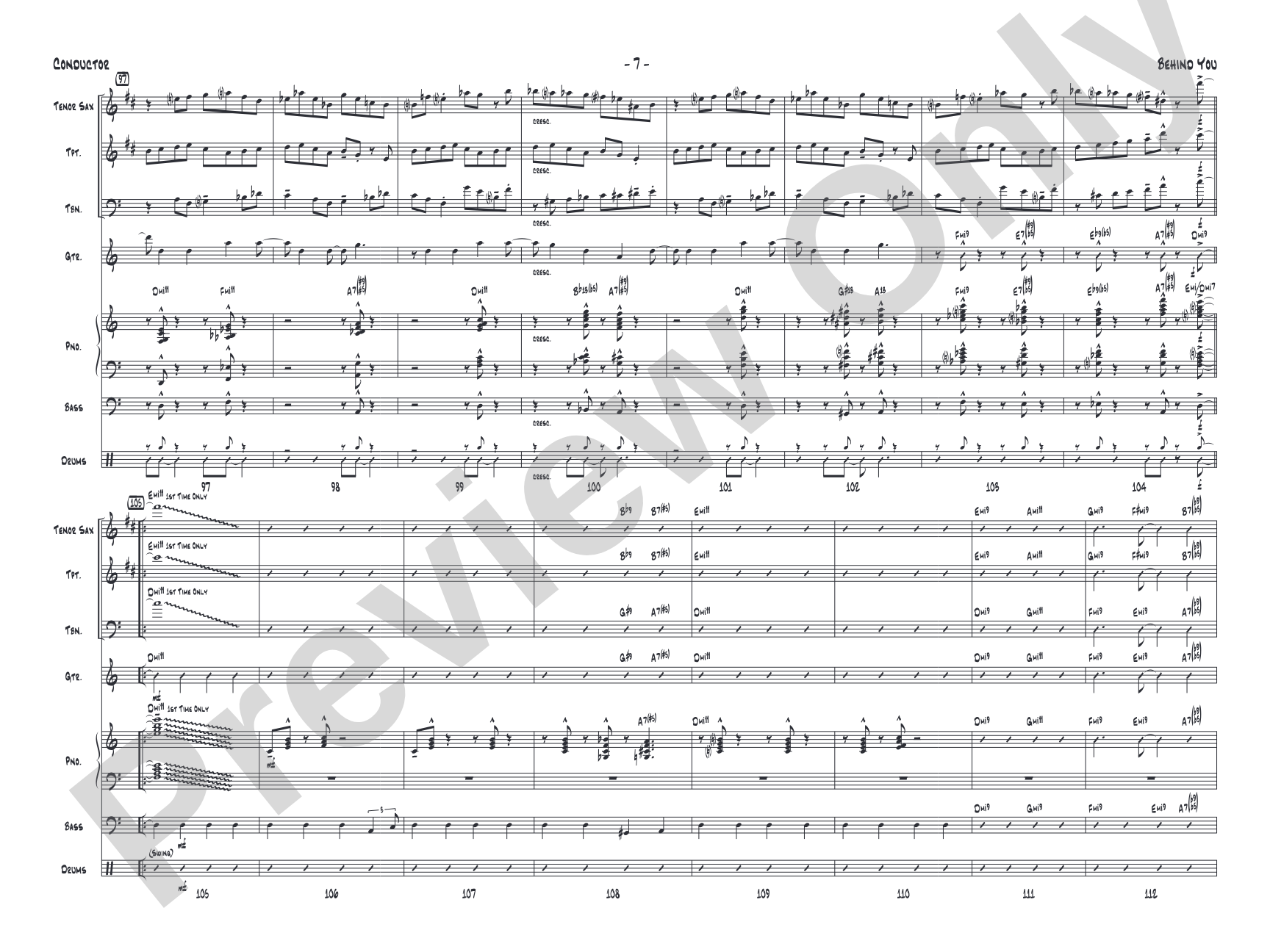
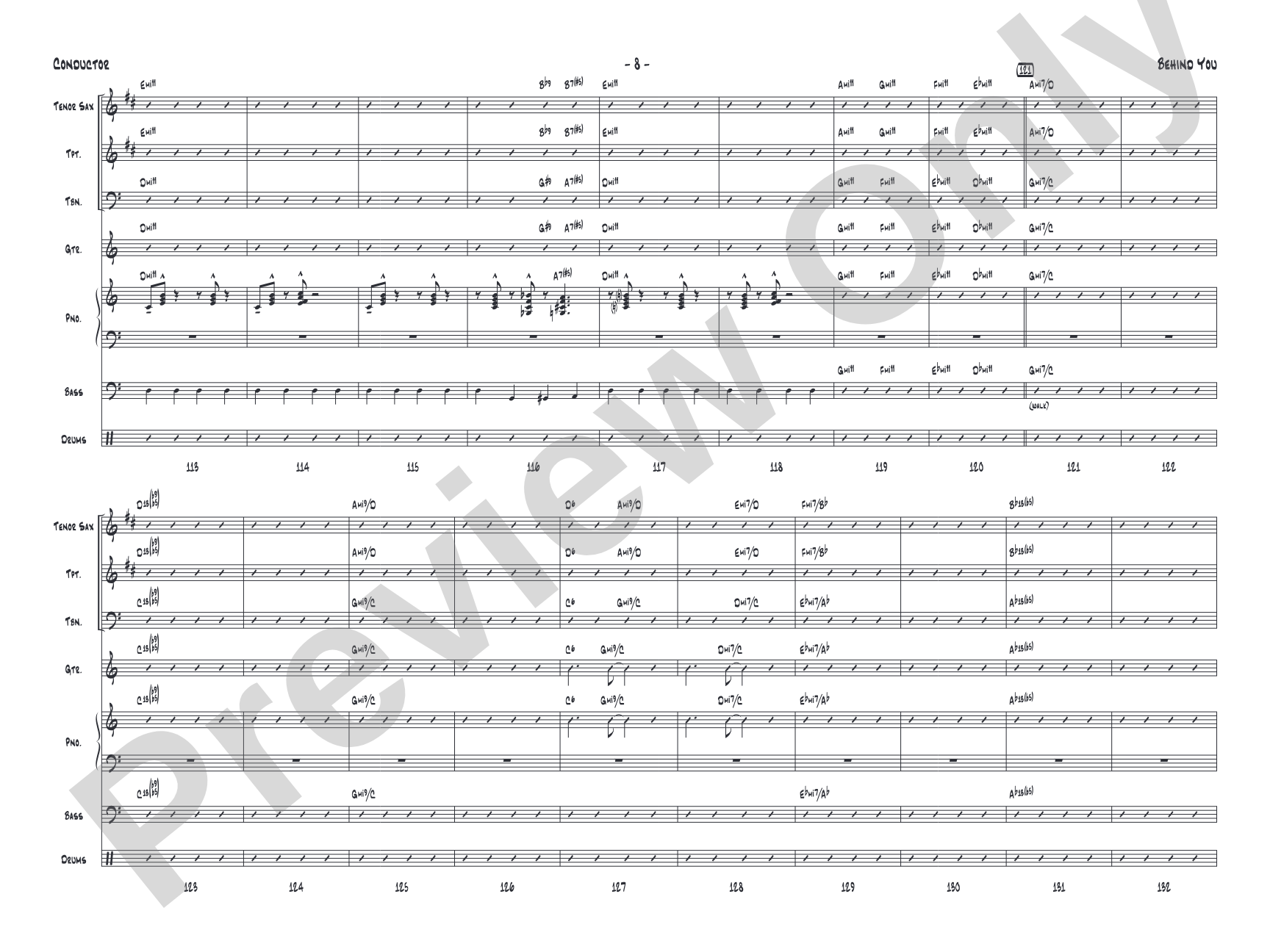
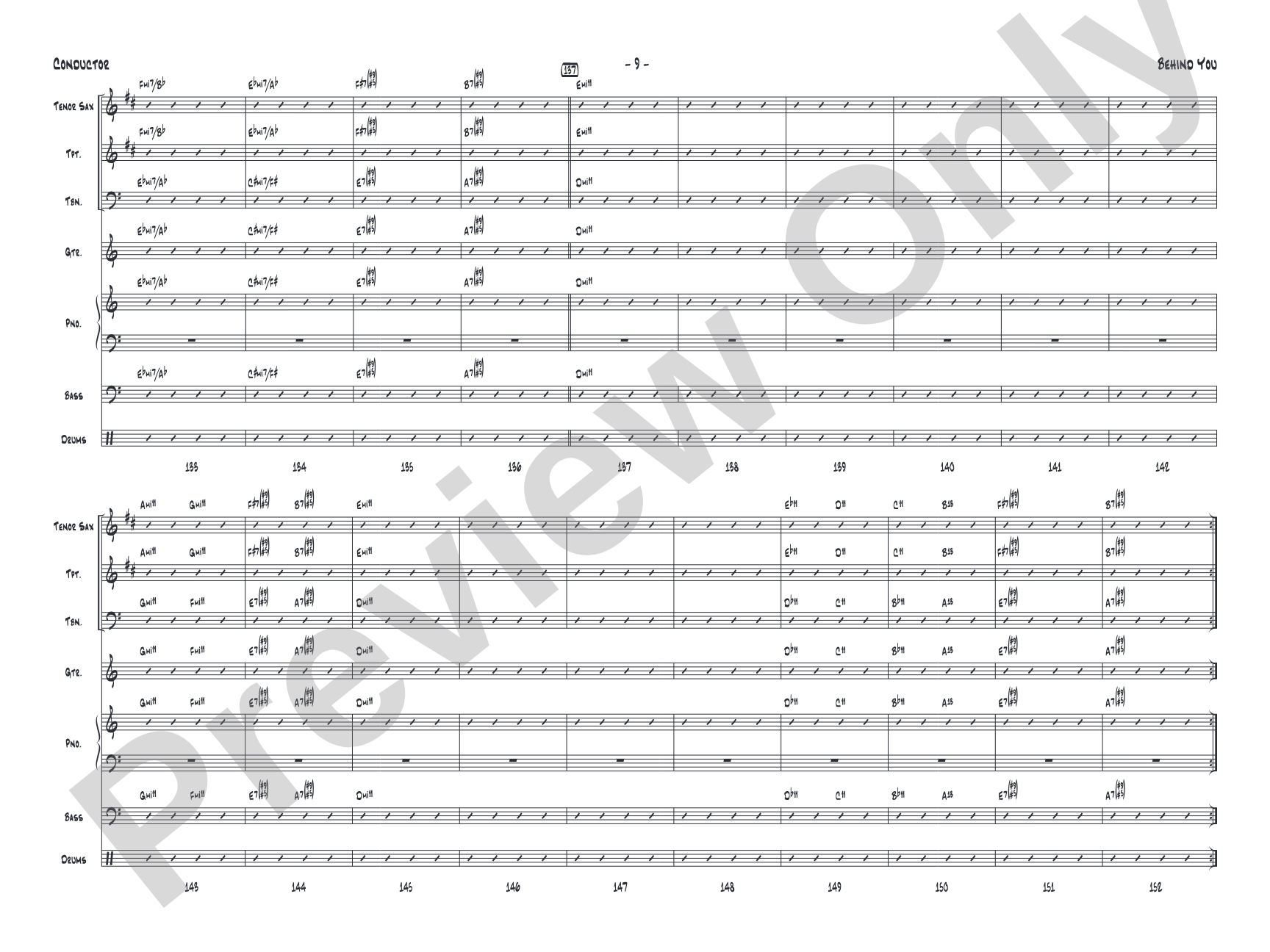
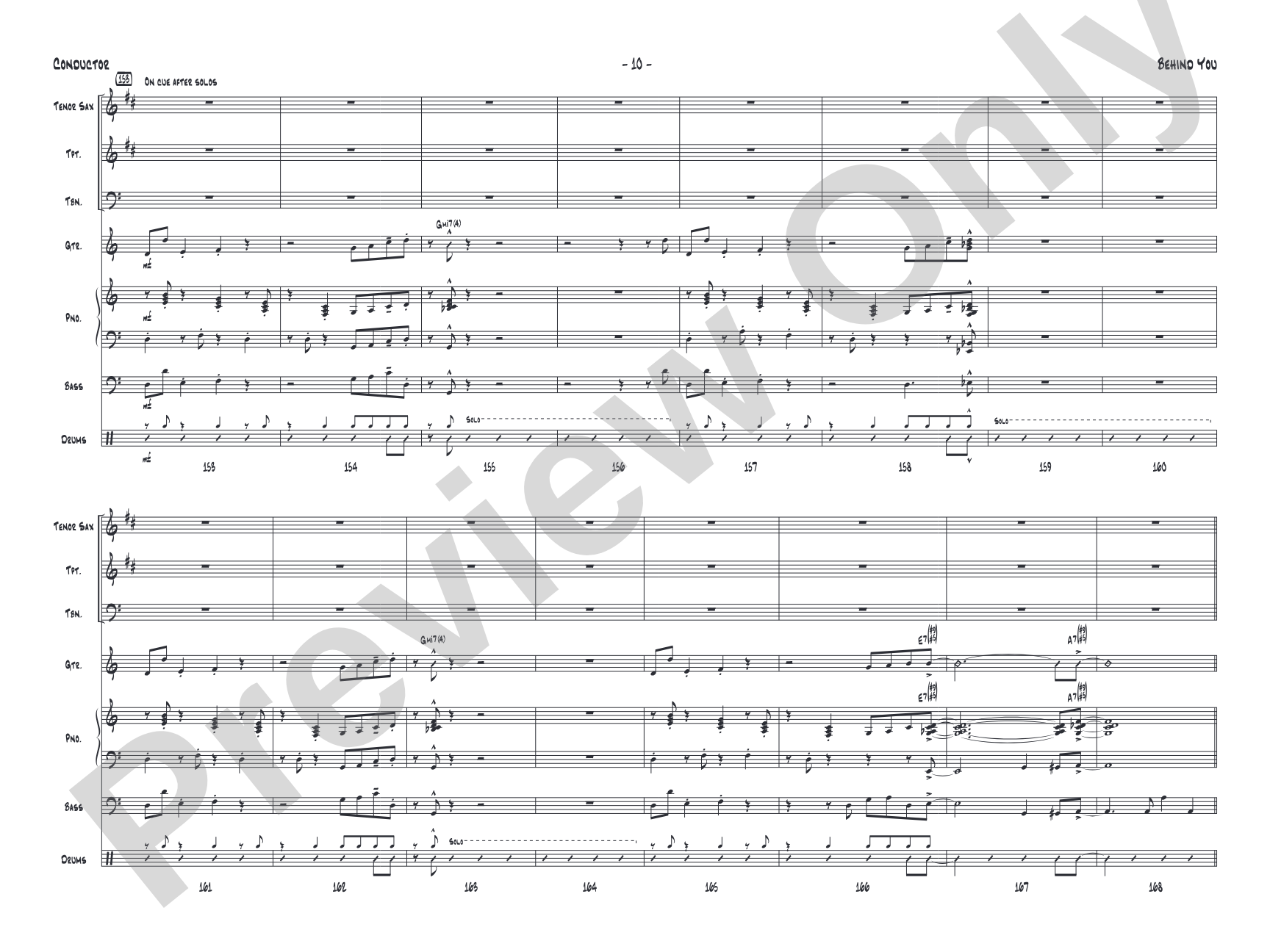
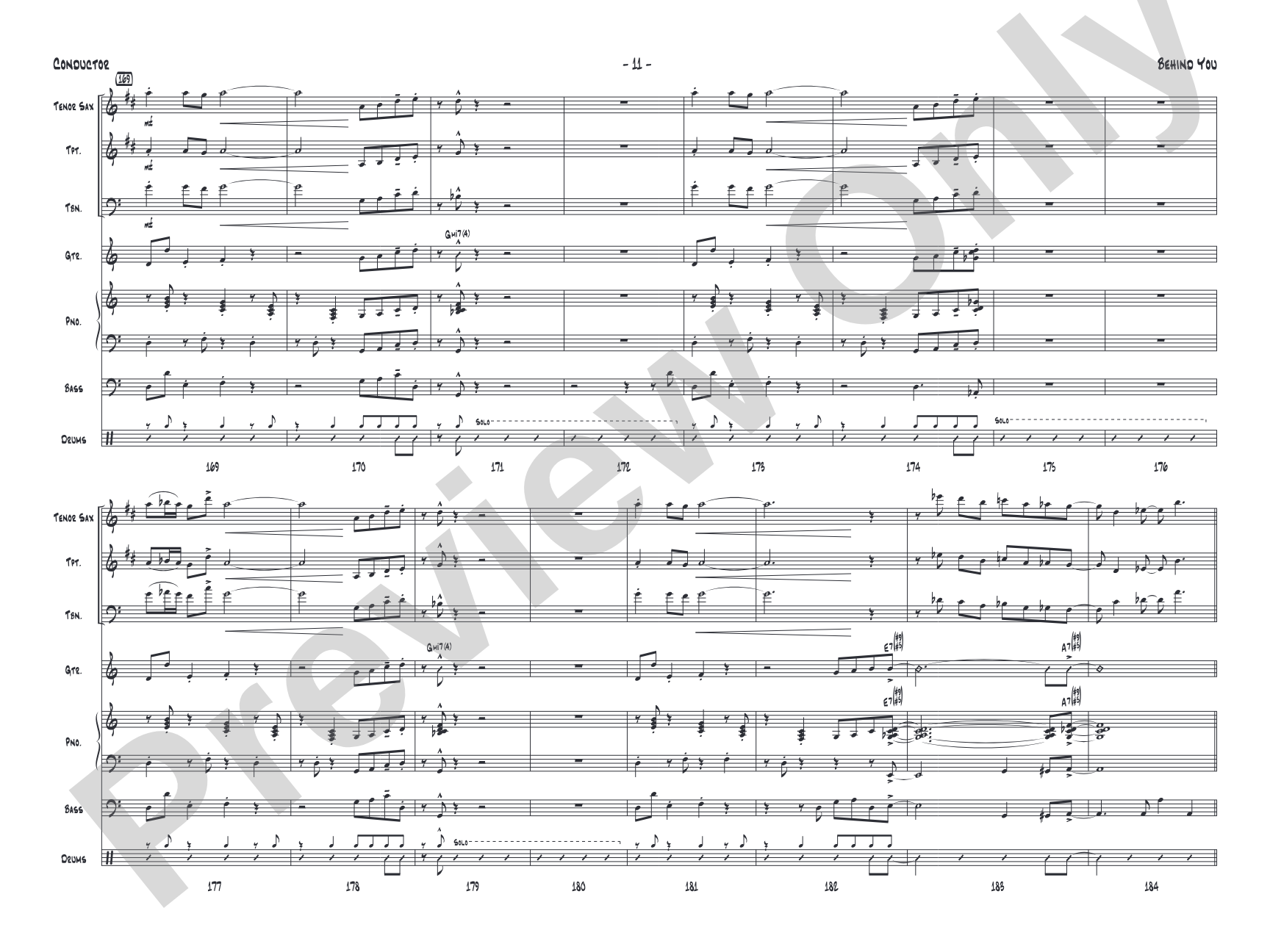
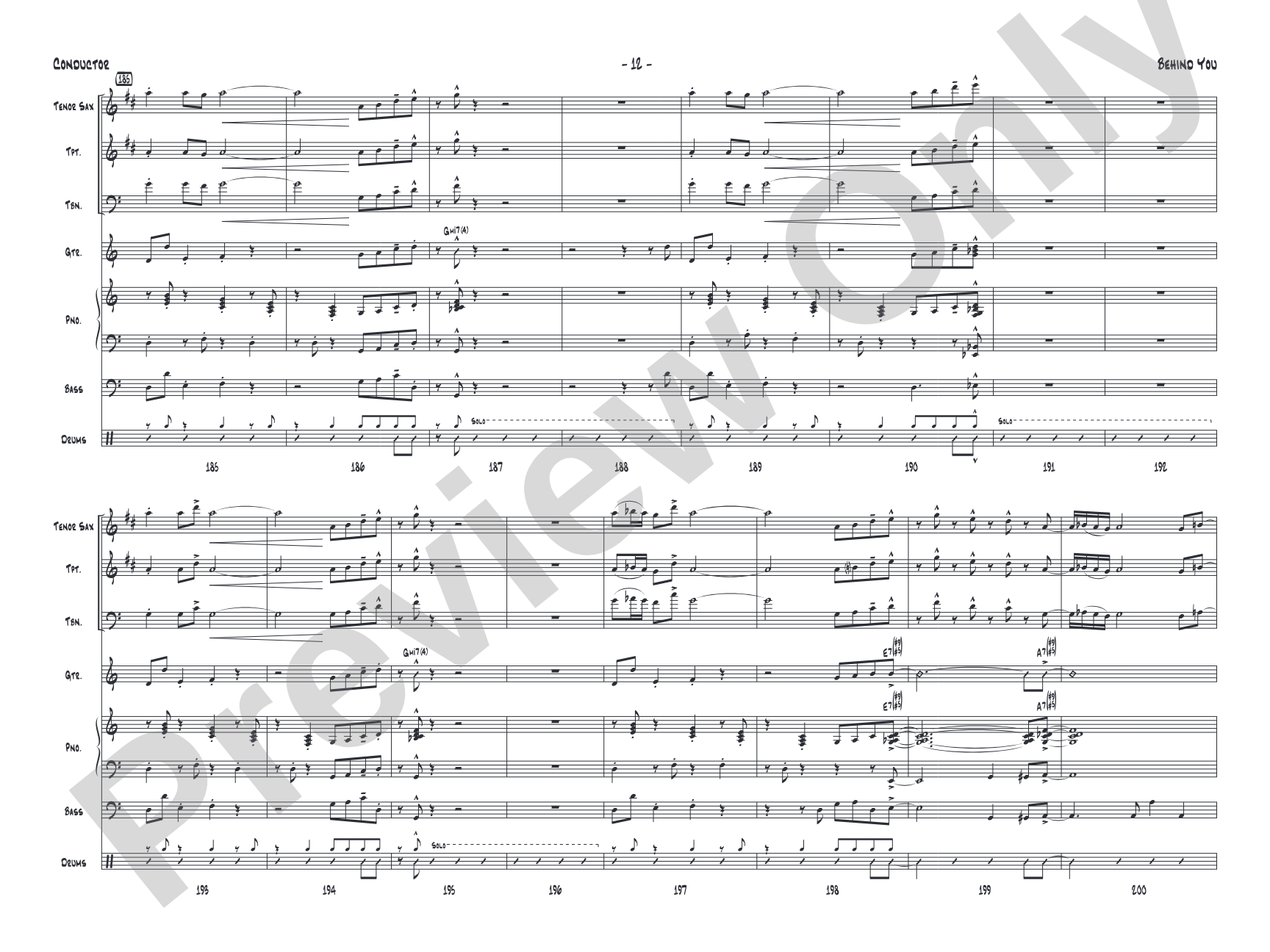
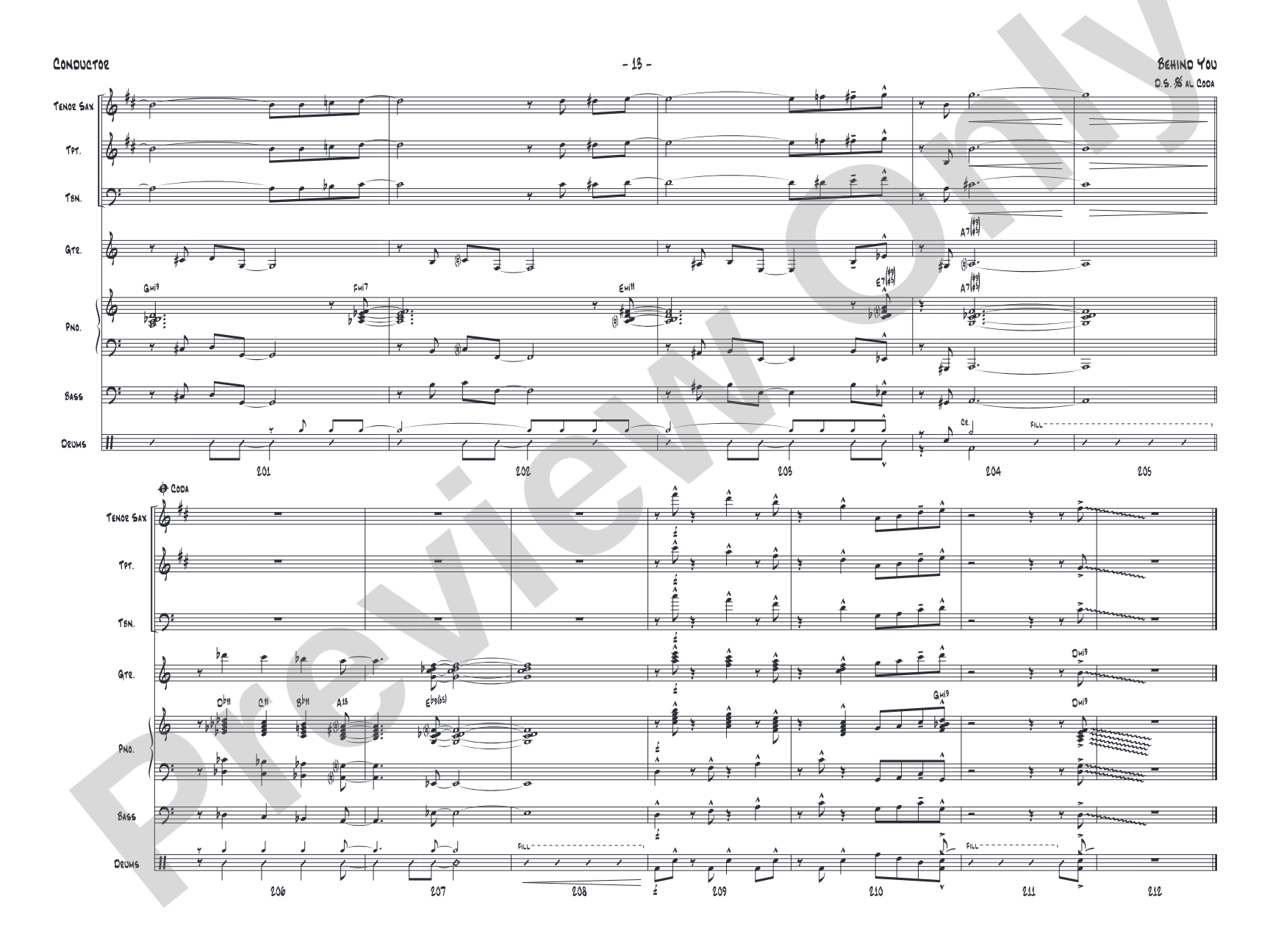

Behind You: Score
As Performed by Gordon Goodwin's Little Phat Band
By Gordon Goodwin
Grade: 4 (Medium Advanced / Difficult)
Item: 00-PR-0005548
$8.00
Pickup currently not available
Description
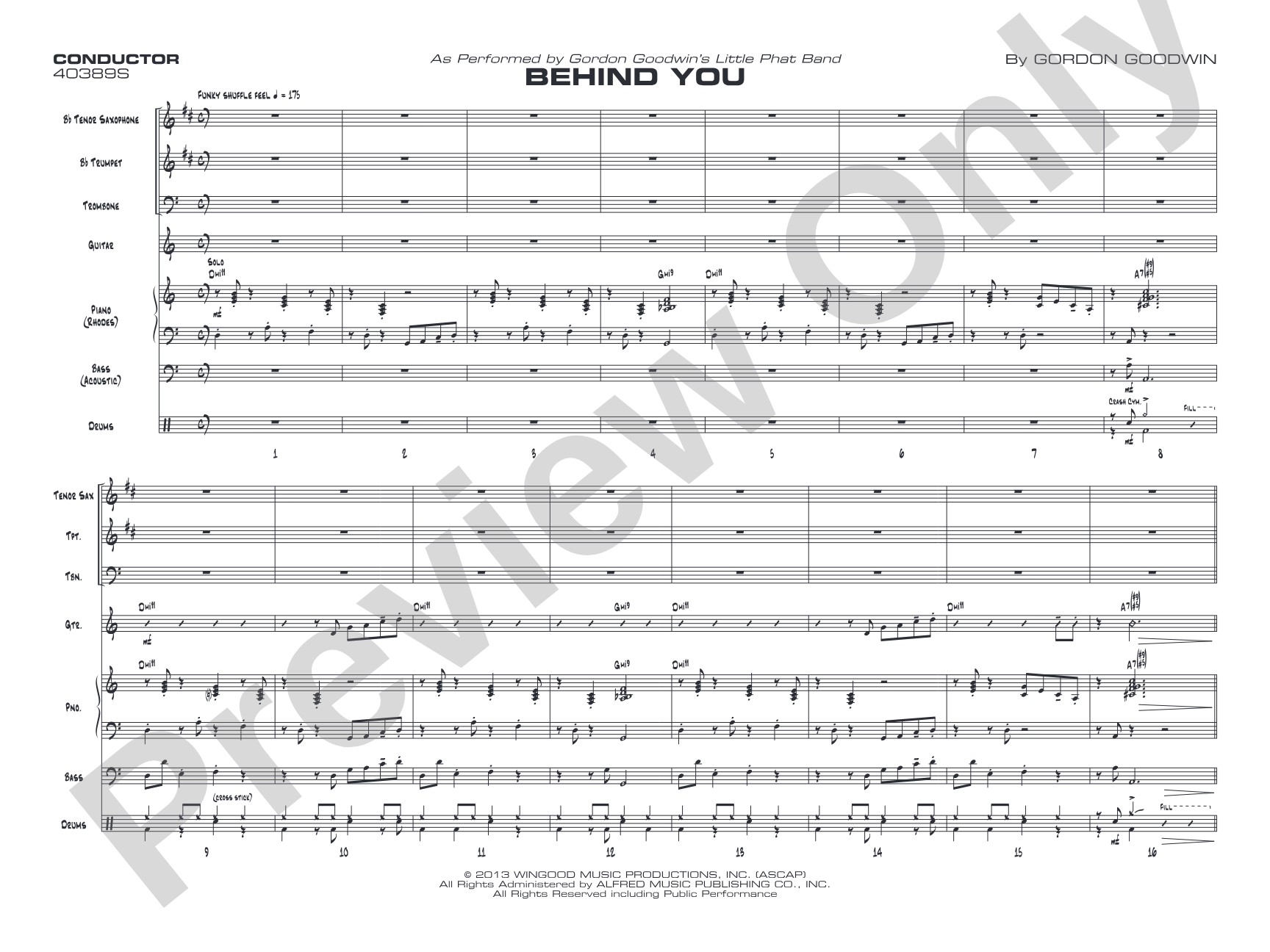
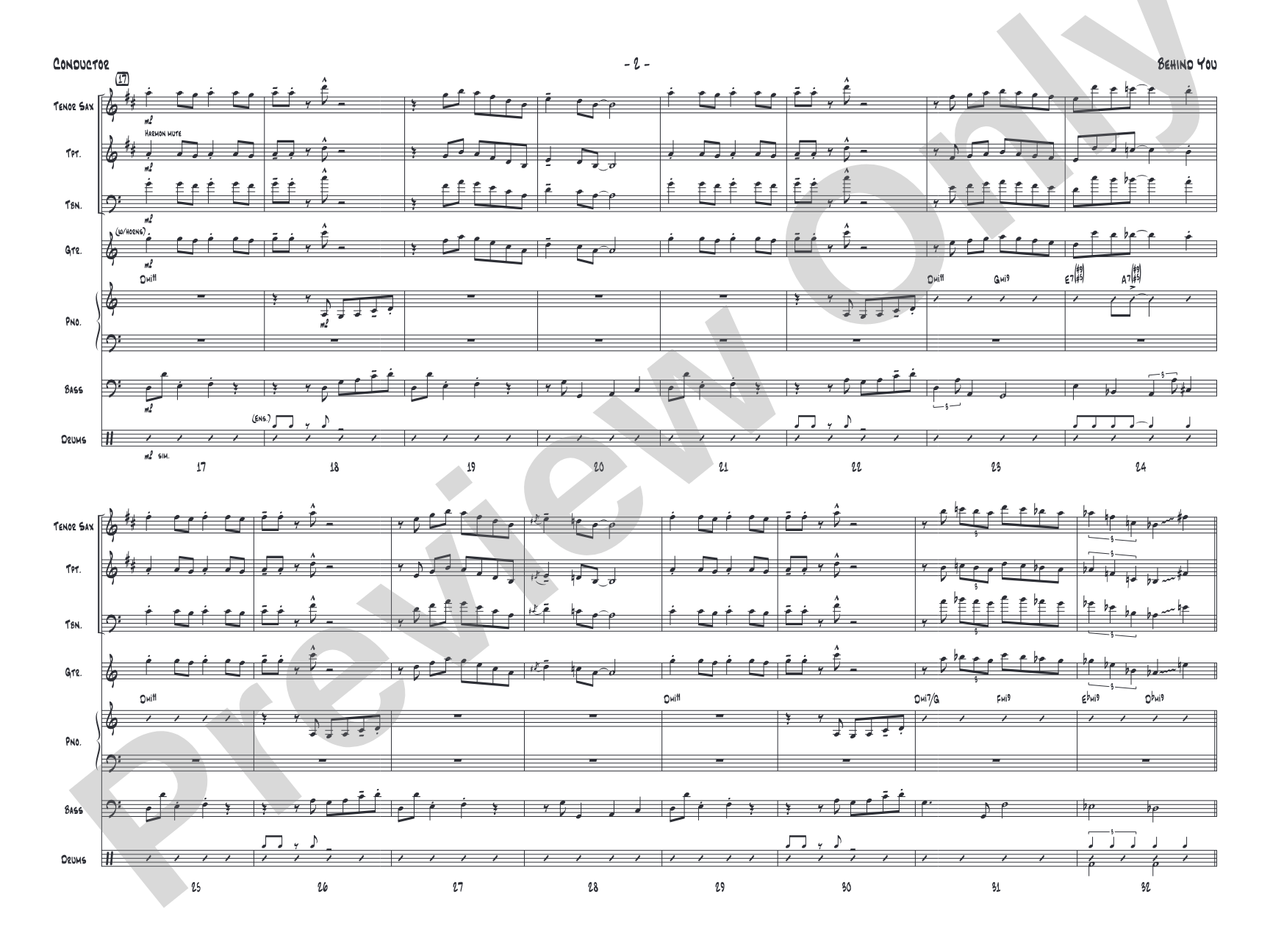
As performed by Gordon Goodwin's Little Phat Band, the instrumentation is tenor sax, trumpet, trombone, piano, guitar, bass (acoustic), and drums. This one is a funky shuffle and the tempo is around 170 BPM with some very clever counterpoint. All parts have solo space. (2:01) This title is available in MakeMusic Cloud.


Don't just read it, hear it, play along with it, and watch your students grow with it. In MakeMusic Cloud, Behind You: Score comes alive with professional accompaniment, adjustable tempo, and built-in practice tools that turn solo practice into real progress.
Open in the Player
Jump straight in and assign it today.
Start Your Free Trial
Open this title and explore the full library in minutes.
Sample Audio
1
Audio File
--:--
0:00
0:00
Sample Video
No sample videos found.
Additional Details
Series:
Gordon Goodwin Little Phat Band Series
Publisher:
Alfred Music
Page Count:
36
SKU:
00-PR-0005548
More about this title
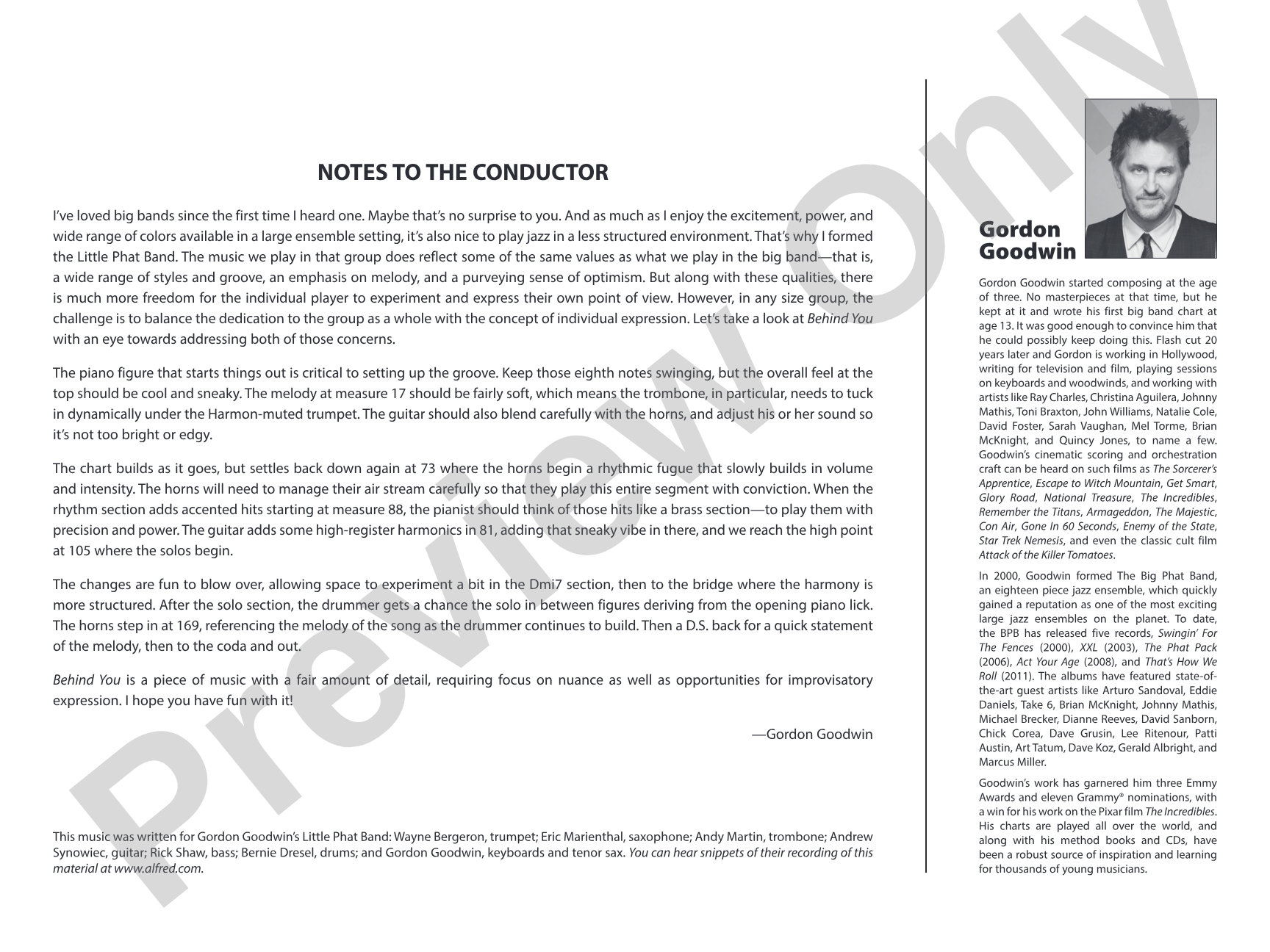
About the Composer: Gordon Goodwin

Gordon Goodwin has been composing since childhood, writing full orchestrations rather than fragments from the moment he could notate music. By age 13, he had already completed his first big band chart, a prescient sign of the composer-arranger he would become. His work in television and film earned him three Emmy Awards and multiple Grammy nominations, with orchestrations featured in blockbuster films including Bad Boys II, Con Air, Remember the Titans, and Star Trek: Nemesis.
Throughout his career, Goodwin has collaborated with some of jazz and pop music's most celebrated artists, from Quincy Jones to Christina Aguilera to Ray Charles. He has conducted major symphony orchestras across North America and Europe. Since 2000, he has led Gordon Goodwin's Big Phat Band, an LA-based ensemble whose debut DVD Audio release made history as the first commercially available title in that format and earned two Grammy nominations. His subsequent albums have continued to garner Grammy recognition, cementing his place among contemporary jazz's most accomplished voices.
Why we love this
Goodwin writes with the confidence of someone who has spent decades scoring for film and television, and it shows in every measure. The counterpoint is genuinely clever without being academic; soloists get substantial room to breathe, and the funky shuffle groove feels immediately playable rather than overly fussy. Grade 4 jazz ensembles rarely encounter writing this sophisticated that still lands with such infectious energy.
What to expect
Funky and buoyant, with the kind of sophisticated pop-jazz sensibility that comes from years of film scoring. The shuffle groove keeps things grounded and accessible, but the clever counterpoint and solo opportunities give the piece depth and sophistication that rewards careful listening and repeated plays.
Who it's for
Jazz ensembles at the Grade 4 level with solid fundamentals and the ability to handle both complex rhythmic feels and quick harmonic changes. This chart works best for groups with at least one strong soloist per section and a rhythm section comfortable with shuffle grooves at moderate-to-fast tempos.
How to get the most out of it
- Lock the shuffle feel between drums and bass first. At 170 BPM, the groove needs to lock in before soloists enter, or the counterpoint will feel rushed.
- Balance the countermelodies carefully during ensemble passages. Goodwin's orchestration layers multiple moving parts; make sure no single voice drowns out the overall texture.
- Give soloists clear entrance cues. With all parts carrying solo space, conductors need sharp cueing to keep transitions clean and momentum flowing.
How to use it
Program this as a feature showcasing individual soloists in a jazz concert, or pair it with other contemporary big band charts to highlight ensemble cohesion and swing. At just over two minutes, it works as a strong closing number before an intermission or as a high-energy mid-set piece that pulls audiences in immediately.
Skills your students will build
- Shuffle groove feel and rhythmic precision at faster tempos
- Reading and executing countermelodies without losing harmonic grounding
- Solo improvisation with clear structural boundaries
- Blend and balance in jazz ensemble voicings
- Responding to conducting cues during quick section transitions