

Behind the Willow Trees: SATB a cappella Choral Octavo
Words by Sarah Hirsch, music by Nick Myers
Item: 00-PO-0007812
$2.50
Minimum order quantity: 20 copies
Pickup currently not available
Related Items
Behind the Willow Trees: SATB a cappella Choral Octavo |
$2.50
|
View |
Description
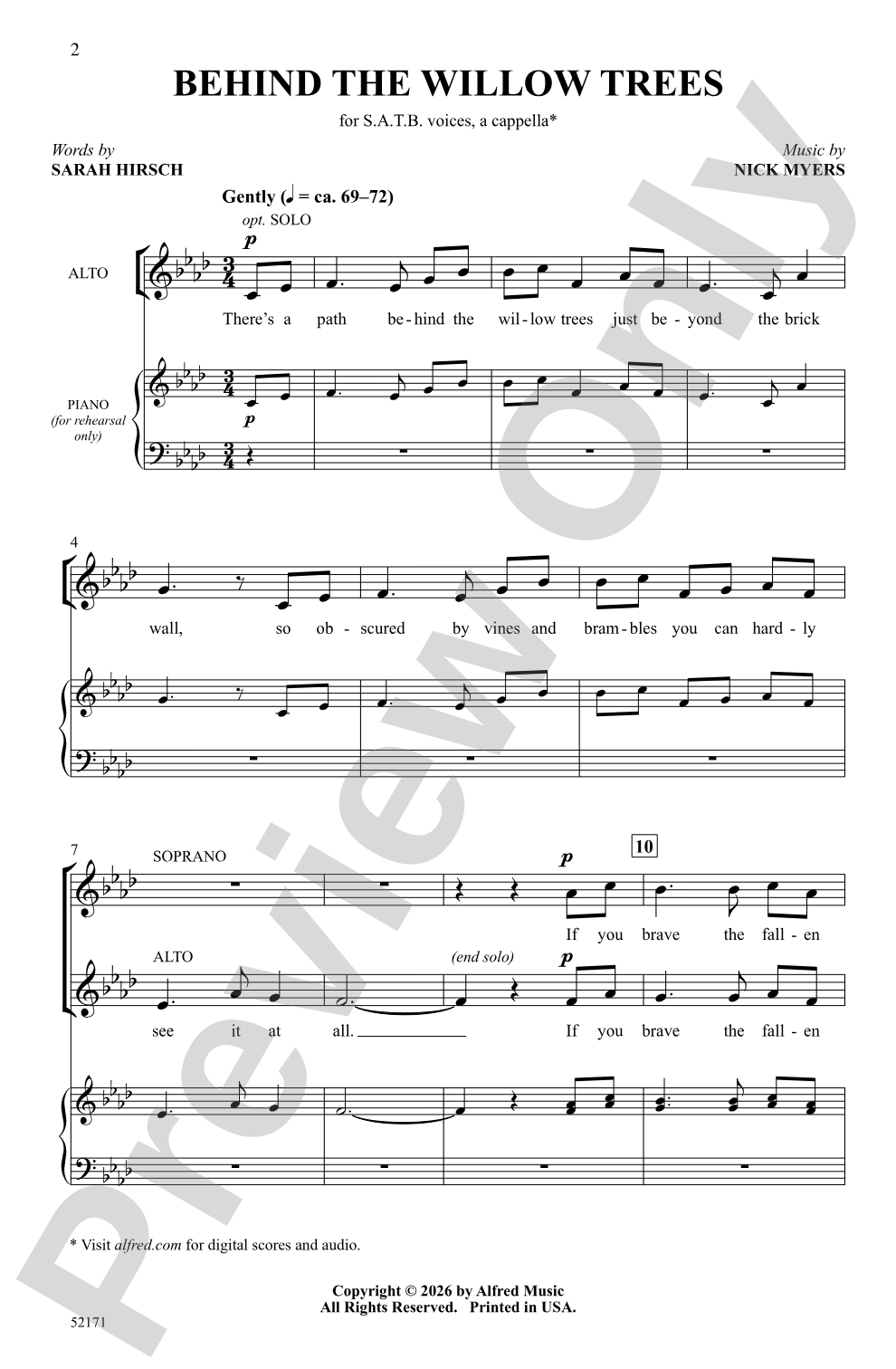
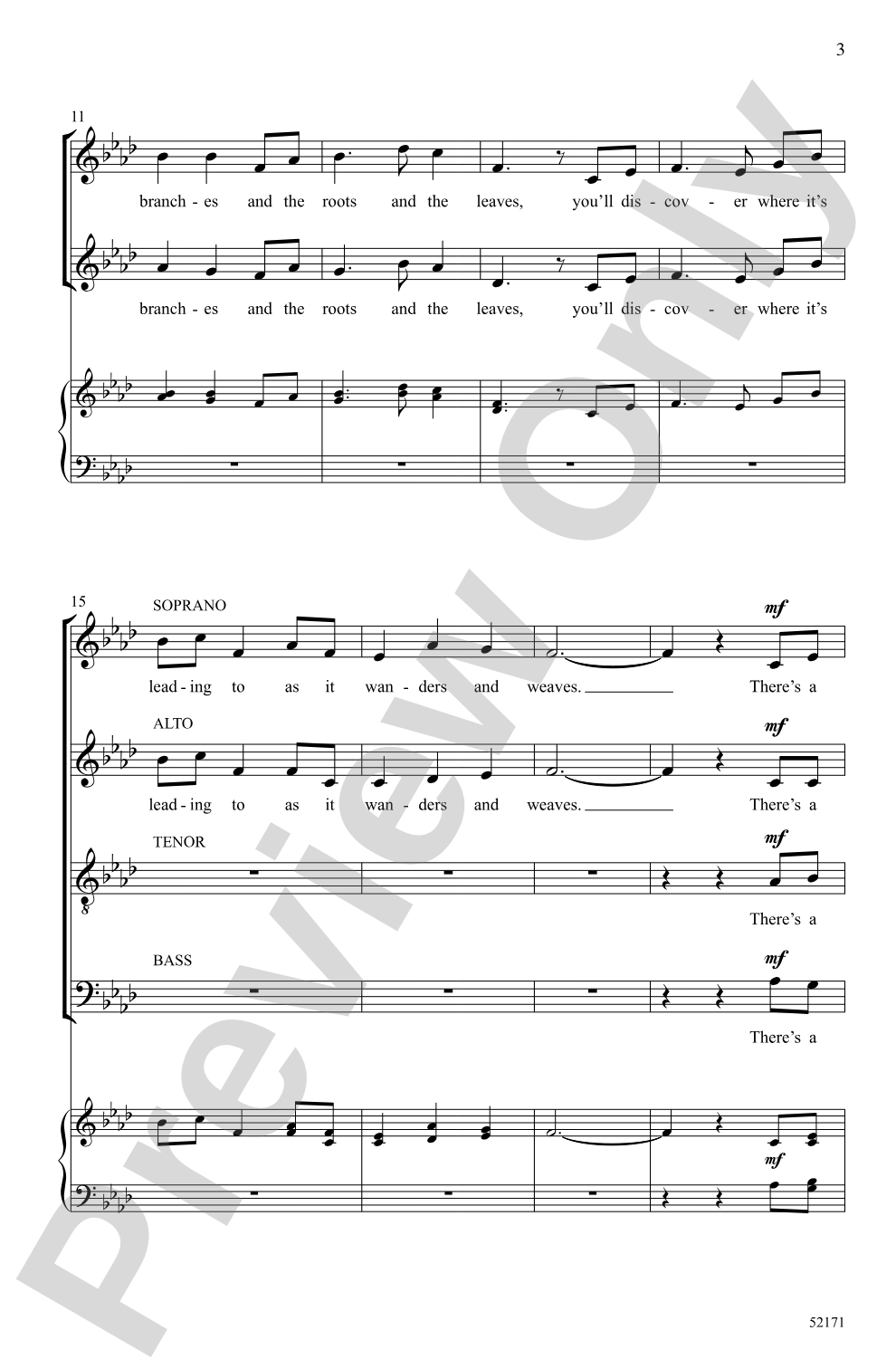
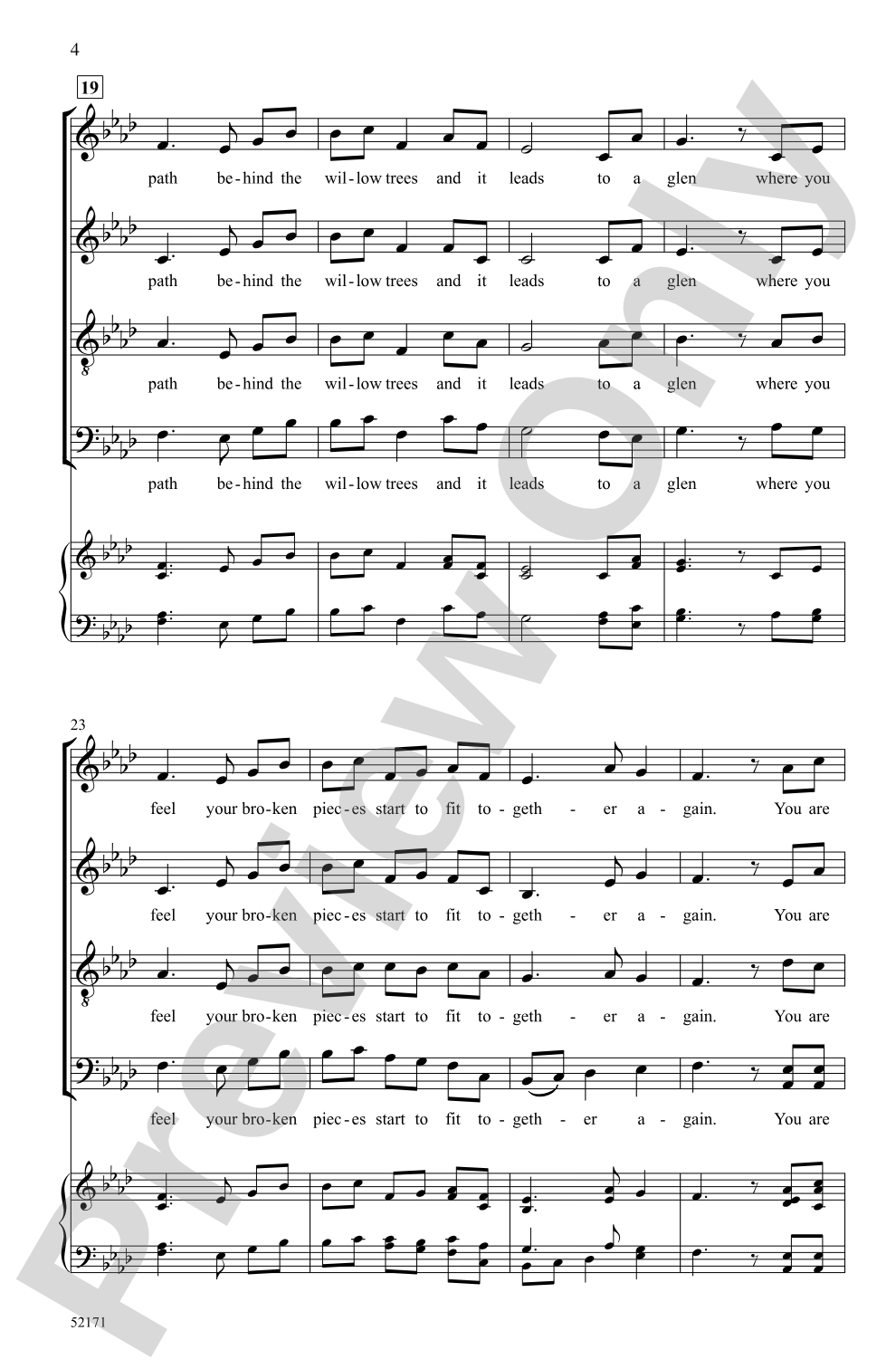
This striking a cappella work invites listeners into a world of quiet reflection. The unhurried minor-key melody grows from unison into breathtaking chordal harmonies, eventually flowing into a polyphonic texture as "the music overtakes you and seeps through your soul." The newly penned poem speaks of finding solace where you least expect it and carrying that quiet strength home. An alternate final cadence accommodates choirs without low basses.


Discover MakeMusic Cloud: thousands of interactive titles your students can play along with today.
Sample Audio
1
Audio File
--:--
0:00
0:00
Sample Video
Additional Details
Series:
Lawson-Gould
Publisher:
Alfred Music
Page Count:
12
SKU:
00-PO-0007812
More about this title
About the Composer: Nick Myers

Nick Myers brings theatrical craftsmanship to choral composition. A 2012 graduate of NYU's Graduate Musical Theatre Writing Program, Myers has worked as composer, orchestrator, and producer across Broadway productions including IF/THEN (where he assisted Tom Kitt) and shows like BRING IT ON and TRACES. His compositions have reached major concert halls including Carnegie Hall, and he has received commissions for multiple choral works alongside his ongoing musical theatre projects.
Beyond the stage, Myers serves as organist and music director at St Nicholas of Tolentine Church in Atlantic City, New Jersey, and chairs the New York Theatre Organ Society. His work was recognized through a 2012-2013 Dramatist Guild Fellowship, shared with writing partner Sarah Hirsch.
Why we love this
The arc of this piece rewards singers and audiences alike. Starting in unison and gradually opening into lush, spacious harmonies gives your choir a structural pathway through the emotional journey, and the alternate cadence option means you won't need to transpose or rewrite for your ensemble's range. The text and music align so naturally that you're not fighting against either one.
What to expect
Stepping into a space of unexpected refuge. The music unfolds slowly, building from the simplicity of single-voice singing into layered, complex harmonies that seem to breathe around you. There's nothing ornamental here; every voice matters to the emotional architecture.
Who it's for
This work suits choirs with solid blend and secure intonation who are ready to sit with quiet intensity. It's ideal for groups looking for a concert or festival piece that doesn't rely on flashy effects but instead trusts the power of restrained harmony.
How to get the most out of it
- Treat the opening unison section as the emotional ground zero. Don't rush it; let the simplicity establish the reflective mood before the harmonies enter.
- Shape the transition into polyphony with dynamic restraint. These textures are dense; clarity comes from precise vowels and thoughtful part balance, not volume.
- Use the alternate cadence to serve your ensemble's strengths. If your basses can sustain the original, commit fully. If you need the adjustment, own it without apology.
- Pay attention to how the poem's pacing drives the musical phrasing. The text about solace finding you won't land if the music feels hurried.
How to use it
Program this as a centerpiece for a concert built around introspection or as a bridge between lighter repertoire and more intense works. The contemplative mood makes it especially effective in mid-program positions where it can draw listeners inward before the set shifts direction.
Skills your students will build
- Sustaining pure vowels in sustained a cappella unison and harmony
- Blending into four-part SATB texture with awareness of overtone and balance
- Navigating polyphonic writing with independent voice lines
- Shaping dynamic contours across extended phrases without rhythmic reference
- Understanding how poetic text informs musical phrasing and emotional intent