
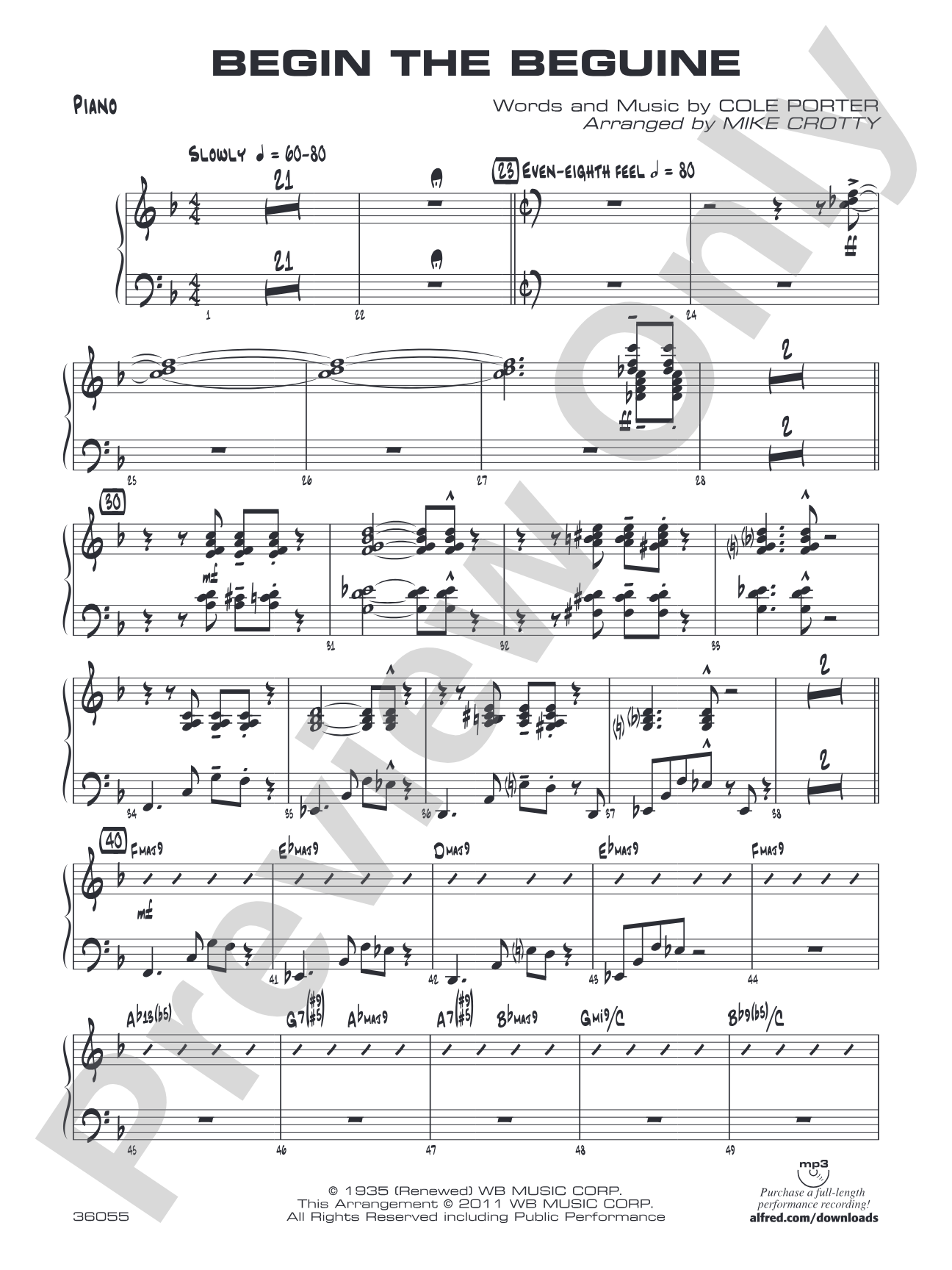
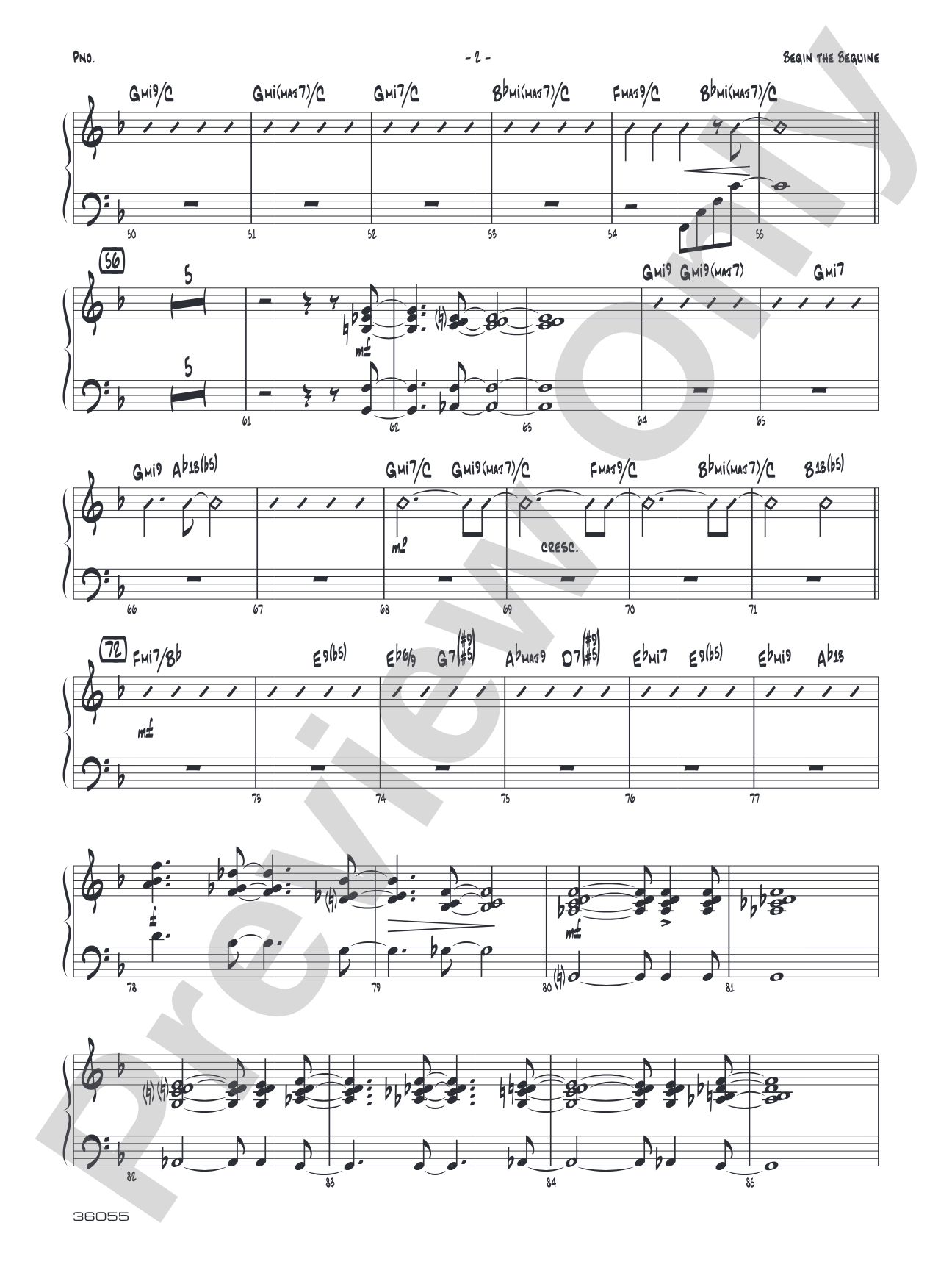

Begin the Beguine: Piano Accompaniment
Words and music by Cole Porter / arr. Mike Crotty
Grade: 4 (Medium Advanced / Difficult)
Item: 00-PC-0017197_K
$3.00
Pickup currently not available
Description
Arranged especially for the USAF Airmen of Note, this exciting chart packs in solis with some tight harmony, lush chords, and remarkable motives. A tenor sax solo feature with a ballad intro moves into a straight-eight groove at around 160 BPM. Lead trumpet has a high D and the (electric) bass and guitar parts will challenge your students.


Don't just read it, hear it, play along with it, and watch your students grow with it. In MakeMusic Cloud, Begin the Beguine: Piano Accompaniment comes alive with professional accompaniment, adjustable tempo, and built-in practice tools that turn solo practice into real progress.
Open in the Player
Jump straight in and assign it today.
Start Your Free Trial
Open this title and explore the full library in minutes.
Sample Audio
1
Audio File
--:--
0:00
0:00
Sample Video
No sample videos found.
Additional Details
Series:
Premier Jazz Series
Publisher:
Alfred Music
Page Count:
84
SKU:
00-PC-0017197_K
More about this title
About the Composer: Cole Porter
Cole Porter (1891–1964) stands among America's greatest songwriters, crafting standards that define the jazz and musical theater repertoire. His melodies are instantly recognizable, his harmonies sophisticated yet singable, and his lyrics witty and culturally sharp. For jazz ensembles, Porter's compositions offer rich harmonic landscapes and memorable themes that invite both faithful interpretation and creative improvisation.
Porter's work remains central to jazz education because it bridges written composition and interpretive freedom. His songs have been arranged countless ways across decades, making them ideal vehicles for teaching students how the same musical material can sound fresh in different contexts and settings.
Why we love this
Mike Crotty's arrangement brings genuine sophistication to the jazz ensemble library without sacrificing playability. The tenor sax solo feature gives a clear spotlight to an important voice, the ballad intro sets a mature interpretive tone, and the harmonic writing throughout rewards careful listening from both players and audience. This is the kind of chart that sounds polished in performance yet teaches legitimate jazz ensemble skills across the section.
What to expect
Elegant and propulsive. The ballad opening draws listeners in with intimate phrasing before the ensemble locks into a groove that feels both written and swung. The harmonic language is lush without becoming overwrought, and the orchestral colors shift throughout, keeping the piece engaging across its full length. It's the kind of arrangement that sounds like a small big band.
Who it's for
Jazz ensemble directors seeking a chart with genuine orchestral depth and arrangement sophistication. This is appropriate for high school ensembles with solid fundamentals and at least one strong tenor saxophonist ready for a meaningful solo feature. The grade 4 difficulty reflects not just range and tempo, but the harmonic and rhythmic maturity required in all sections.
How to get the most out of it
- Balance the tenor sax feature by keeping the rhythm section intentional and unhurried during the ballad intro; this solo should float slightly ahead of time, not rush to the straight-eight feel.
- Flag the high D for your lead trumpet player early in rehearsal and establish it as a landmark for section intonation; the lead's upper register work throughout the chart sets the tone for the entire ensemble's pitch center.
- Treat the guitar and electric bass parts as equal voices in the harmonic conversation, not accompaniment. These parts demand musicianship and will significantly affect how the ensemble sounds in the groove.
- Nail the rhythmic precision of the ensemble hits and soli moments; at 160 BPM, any sloppiness in the written passages will be audible immediately. Tight section work makes the soloists shine.
How to use it
Program this as a centerpiece for a jazz concert, either solo or alongside another Porter standard in a mini-set celebrating American songwriting. It pairs well with more contemporary jazz originals because the Porter lineage reminds audiences where modern jazz harmony comes from. This also works beautifully as a festival or adjudication piece where the arrangement's craftsmanship and the solo feature will impress.
Skills your students will build
- Interpreting ballad phrasing and rubato (tenor sax and full ensemble during the intro)
- Executing straight-eight rhythmic feel and pocket playing at tempo
- Reading and balancing lush, close-voiced chord voicings in the soli sections
- Comping and responding to solo voices (guitar and bass)
- High-register intonation and endurance in the lead trumpet part
- Maintaining clarity and blend during fast harmonic movement and chord changes