Bega Sheet Music Preview

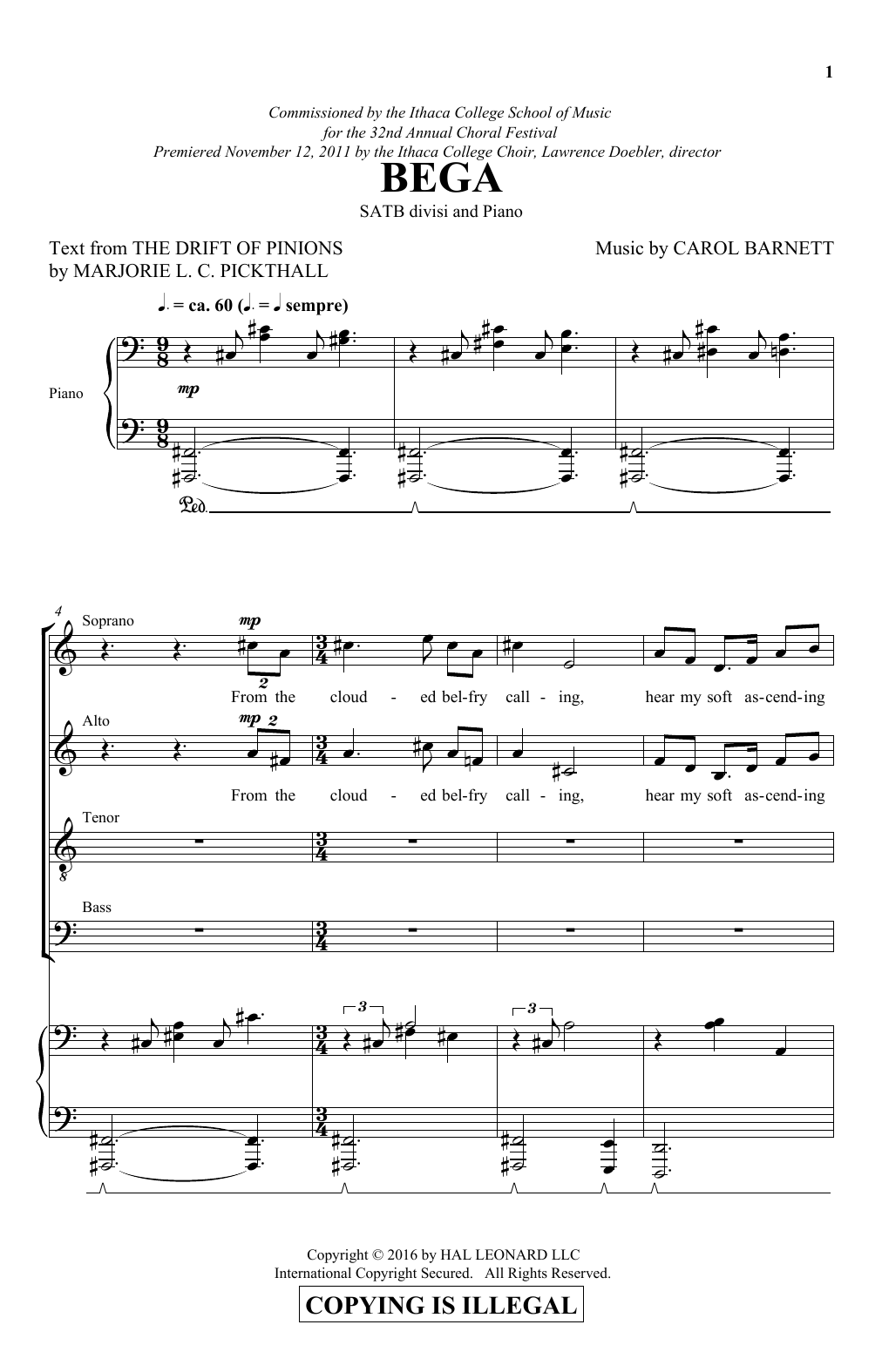
Bega: SATB Choral Octavo

By Carol Barnett

Item: 35-DS00473595

Digital Download
$2.99
Description

Bega: SATB Choral Octavo isn't in MakeMusic Cloud just yet...but it could be. Let us know you'd like to see it, and you'll help shape what comes next. In the meantime, start a free trial and dive into thousands of interactive titles your students can play along with today.

Sample Audio
No sample audio found.
Sample Video
Additional Details
Publisher: Hal Leonard
Page Count: 17
SKU: 35-DS00473595

More about this title

About the Composer: Carol Barnett

Carol Barnett is a composer whose choral writing speaks directly to singers and audiences alike. Her works blend accessible melodic writing with genuine musical substance, making her a reliable voice for concert and festival programming across difficulty levels.

Why we love this

Barnett's gift for balancing musicality with singability means your choir gets material that sounds polished without requiring months of rehearsal to achieve. The writing sits naturally in each voice part, which frees singers to focus on expression rather than wrestling with uncomfortable ranges or awkward intervals.

What to expect

The piece has an intrinsic warmth and directness that connects singers to one another through the harmonic writing. Listeners will hear genuine communication rather than technical display.

Who it's for

This octavo works well for high school and community choirs seeking quality secular repertoire with immediate musicality. Its 17 pages give singers enough substance to sink into without overwhelming an ensemble's rehearsal schedule.

How to get the most out of it

  • Identify the harmonic progressions early in rehearsal so your singers understand where the piece is moving harmonically rather than just learning individual notes.
  • Pay attention to vowel consistency across the four parts; Barnett's writing often uses similar shapes in parallel motion, and unified vowels will clarify those architectures.
  • Let the text breathe. Work for clarity of diction without sacrificing the lyrical quality that makes this piece rewarding to perform.
  • Mark phrase endings carefully so the choir understands where energy should resolve and where it should push forward into the next phrase.

How to use it

Pair this with other contemporary concert works to show your audience the range of modern choral voices available. It also works as a strong closer for a lighter concert set, since it lands with musicality and presence without demanding an overly dramatic context.

Skills your students will build

  • Harmonic awareness through vertical listening
  • Phrasing and breath control in sustained passages
  • Part independence within a cohesive ensemble sound
  • Text expression and diction clarity

You May Also Like