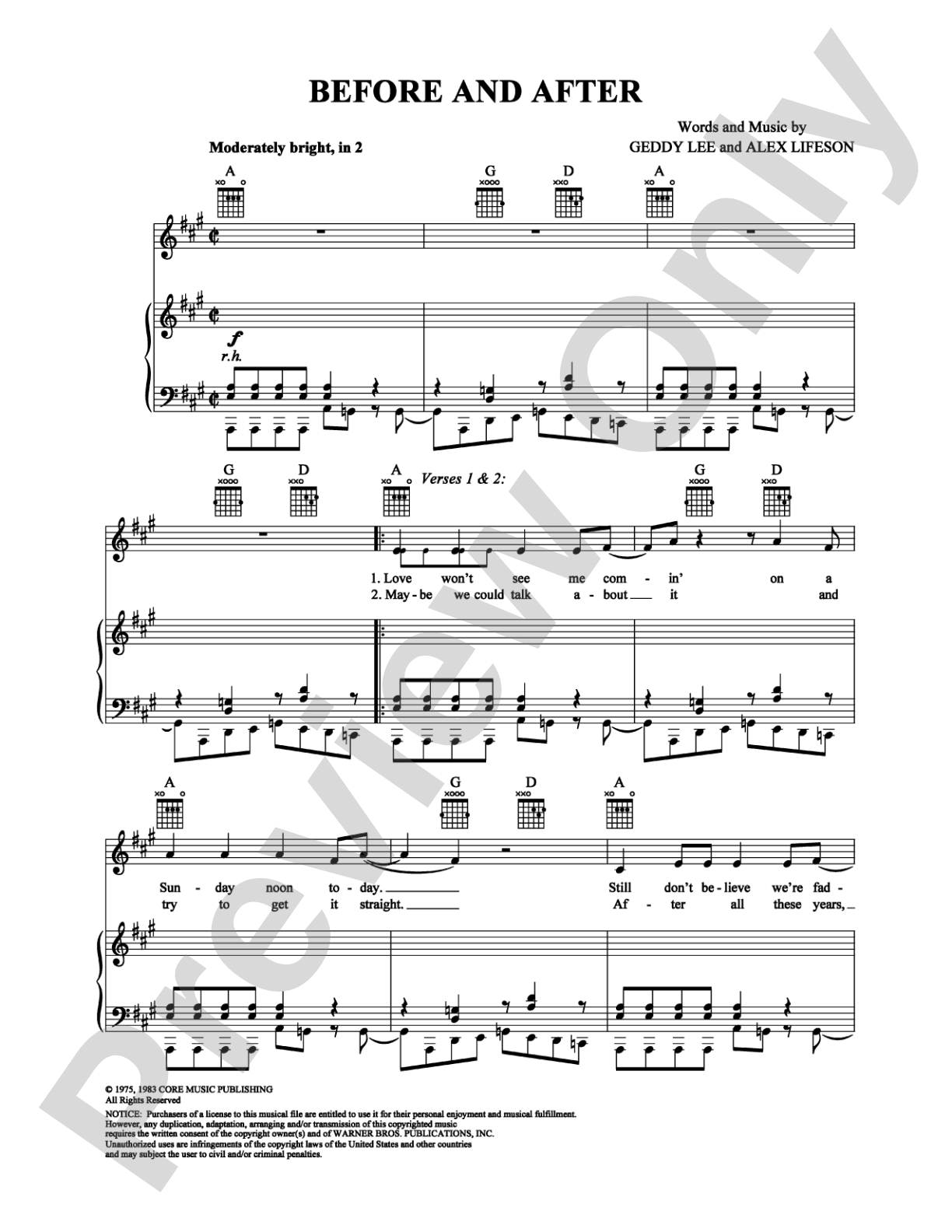
Before And After: Piano/Vocal/Chords Digital Sheet Music

Before And After: Piano/Vocal/Chords Digital Sheet Music

Rush, Geddy Lee, Alex Lifeson

Item: 00-PS-0005702

Digital Download
$3.99
Description

Before And After: Piano/Vocal/Chords Digital Sheet Music isn't in MakeMusic Cloud just yet...but it could be. Let us know you'd like to see it, and you'll help shape what comes next. In the meantime, start a free trial and dive into thousands of interactive titles your students can play along with today.

Sample Audio
No sample audio found.
Sample Video
Additional Details
SKU: 00-PS-0005702

More about this title

About the Artist: Rush

Rush stands as one of rock's most technically sophisticated and artistically ambitious bands. Formed in Toronto in 1968, the trio built a reputation for complex compositional structures, virtuosic instrumental performances, and lyrics that ranged from science fiction narratives to philosophical inquiry. Their influence extends across multiple generations of musicians who value both musical complexity and emotional authenticity.

Why we love this

This arrangement captures the melodic and harmonic substance of a Rush composition without requiring the polyrhythmic gymnastics or instrumental virtuosity of the original recording. Singers and pianists can engage with Rush's melodic sensibility and chord vocabulary in a more intimate setting, making their catalog accessible to students and performers who might otherwise find these songs out of reach.

What to expect

Rush's compositional voice balances intricate harmonic movement with memorable melodic hooks, creating music that feels both cerebral and emotionally resonant. This arrangement preserves that duality, inviting performers and listeners into the band's distinctive aesthetic without overwhelming them with technical demands.

Who it's for

This arrangement suits singers with intermediate to advanced musicianship who want to explore rock repertoire with harmonic depth. It works equally well for pianists and vocalist collaborators in recital or rehearsal settings, and for ensemble singers adding Rush to a mixed-repertoire program.

How to get the most out of it

  • Pay close attention to the chord changes, which often move with harmonic sophistication beyond typical pop progressions. Give yourself time to absorb the voice leading.
  • Balance the vocal melody against the piano accompaniment so the lyrics remain clear while the harmonic foundation stays grounded.
  • Consider the lyrical content and emotional arc of the song when shaping your phrasing and dynamics, rather than default to mechanical execution of the notation.

How to use it

Program this alongside other rock or contemporary repertoire in a recital that celebrates the compositional craft of popular music. It also works well in educational contexts where students are exploring how professional songwriting operates across genres and decades.

Skills your students will build

  • Reading piano/vocal scores with complex chord symbols
  • Negotiating non-diatonic harmonic progressions and voice leading
  • Balancing vocal melody with piano accompaniment in a duo setting
  • Interpreting rhythmic and harmonic nuance within a rock idiom

You May Also Like