
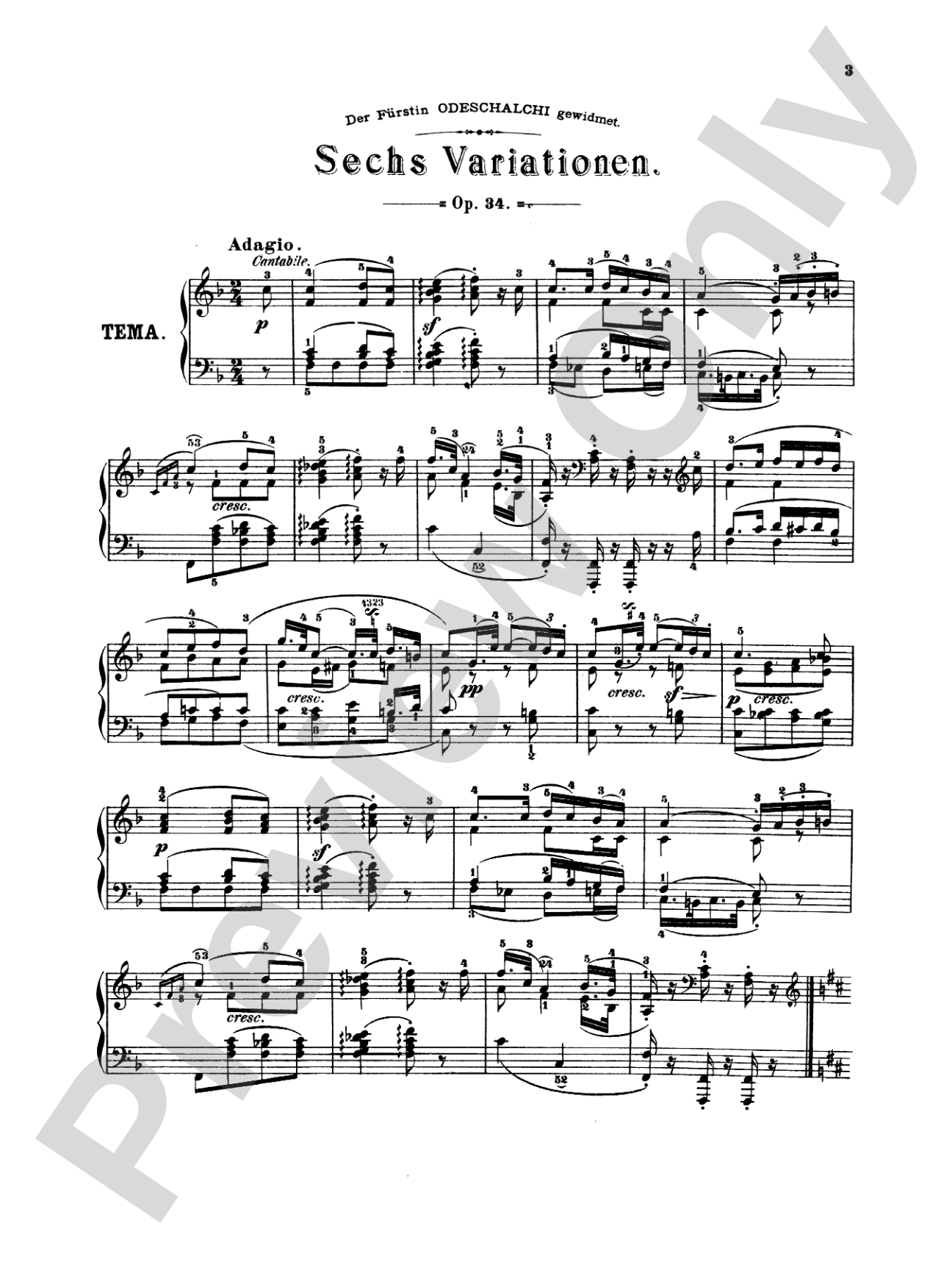
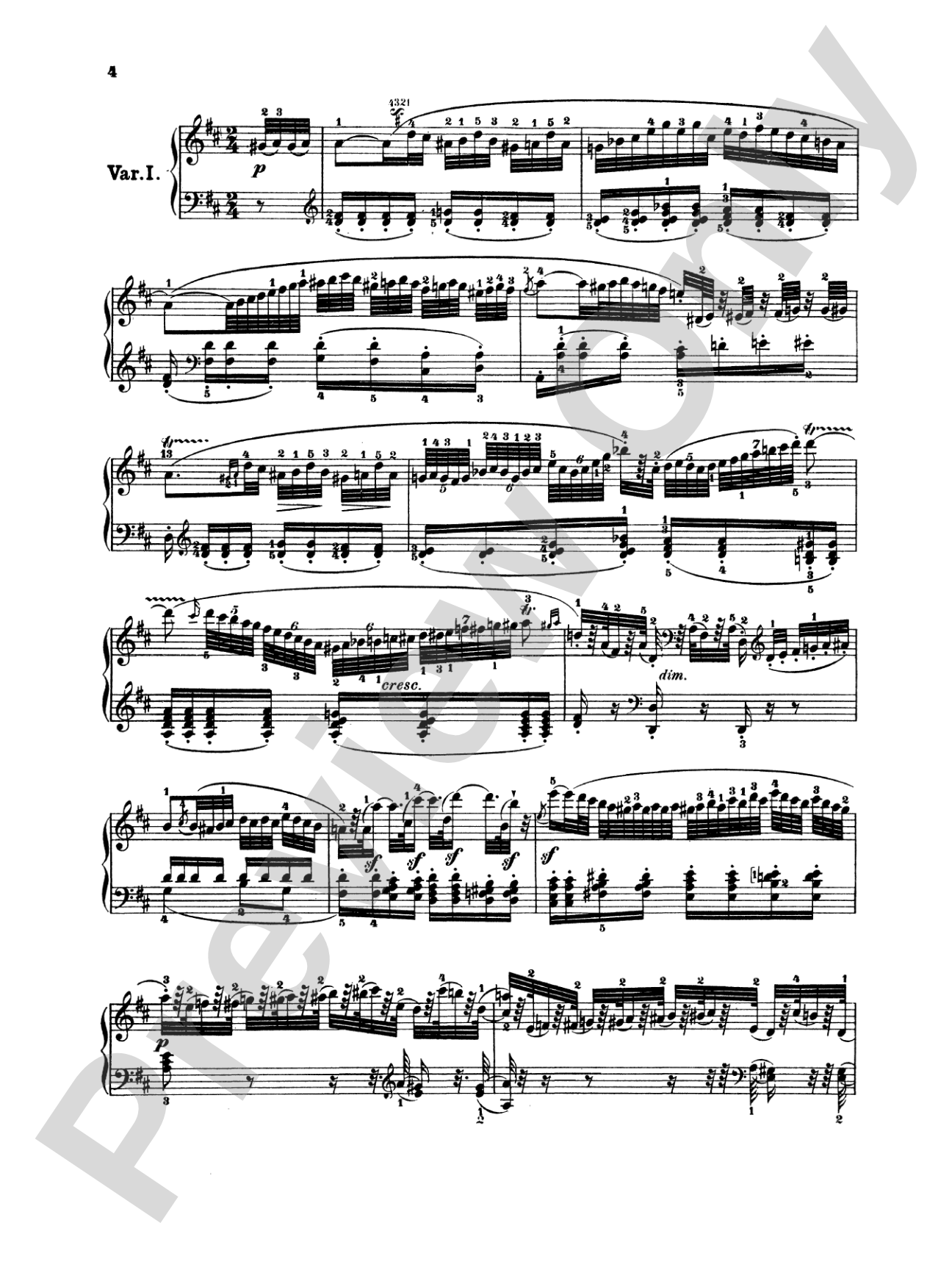
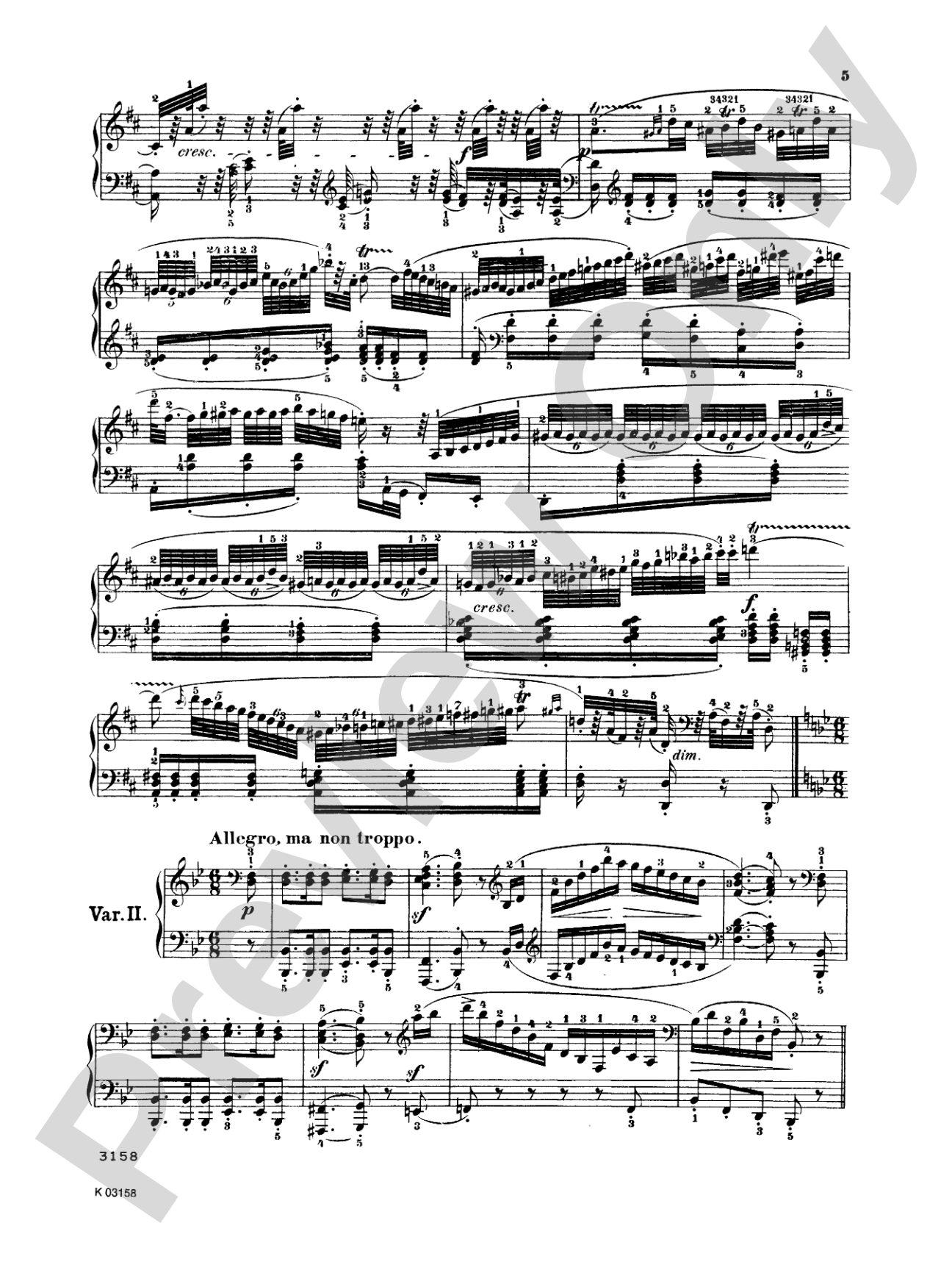
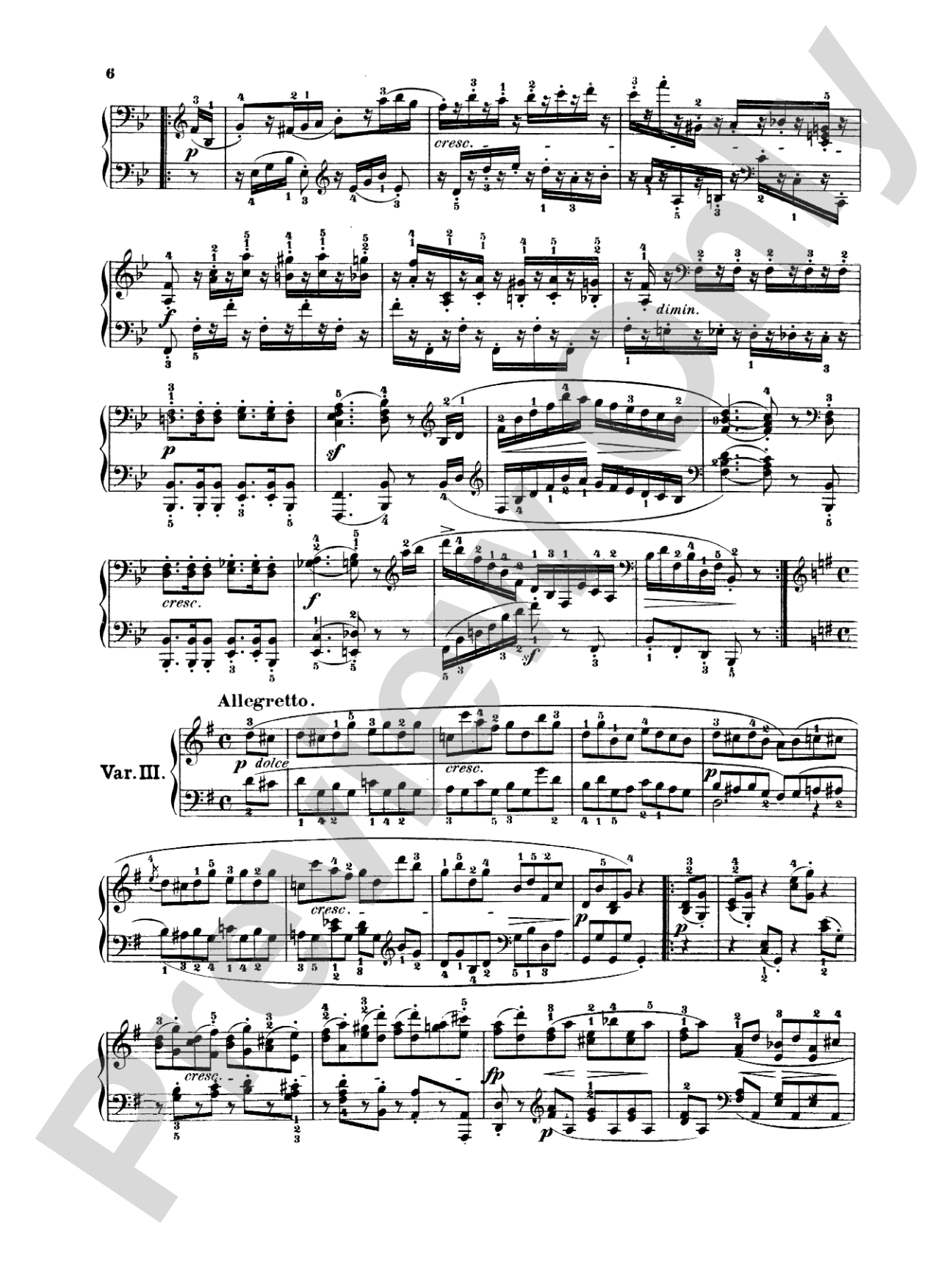
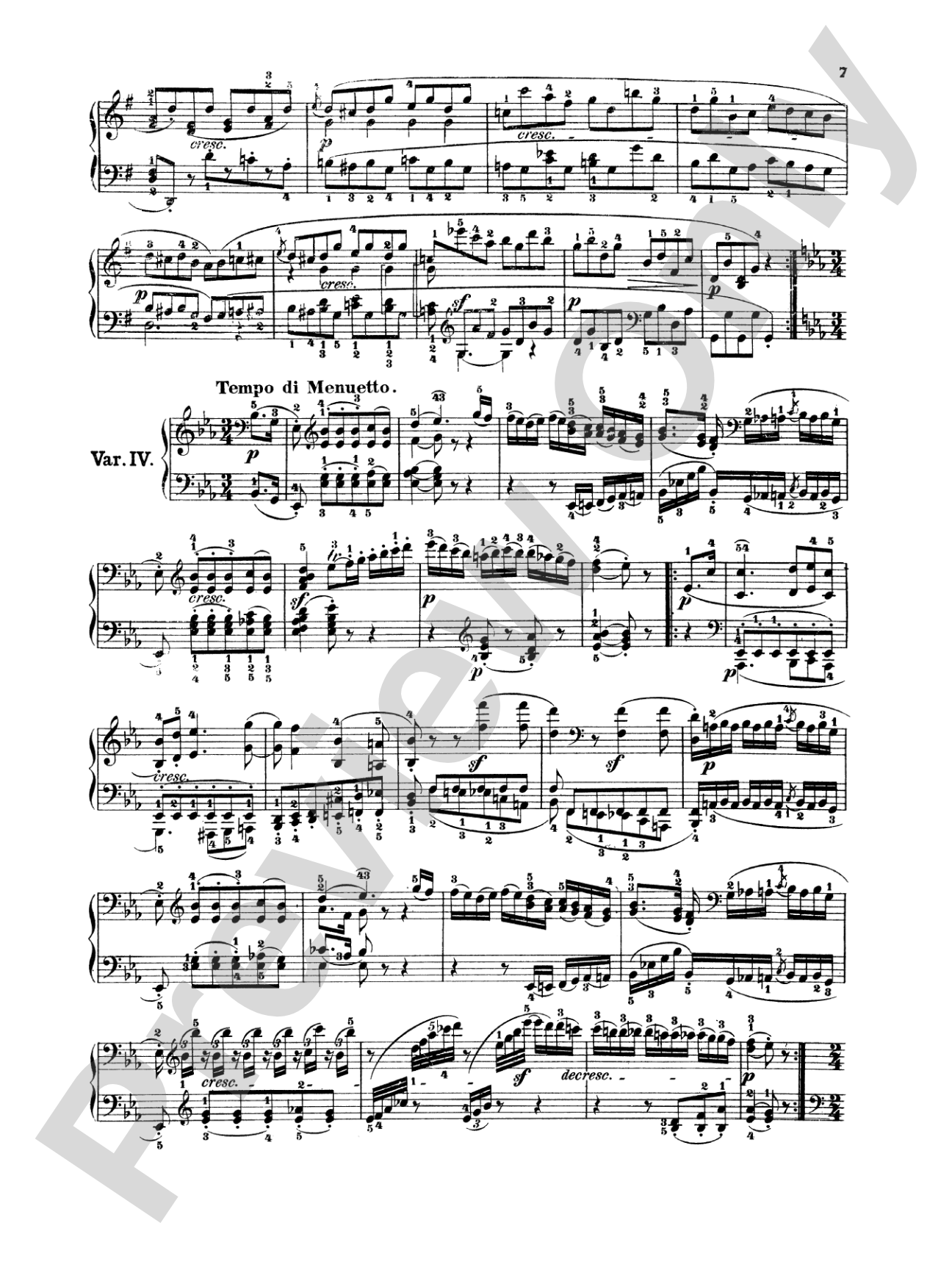
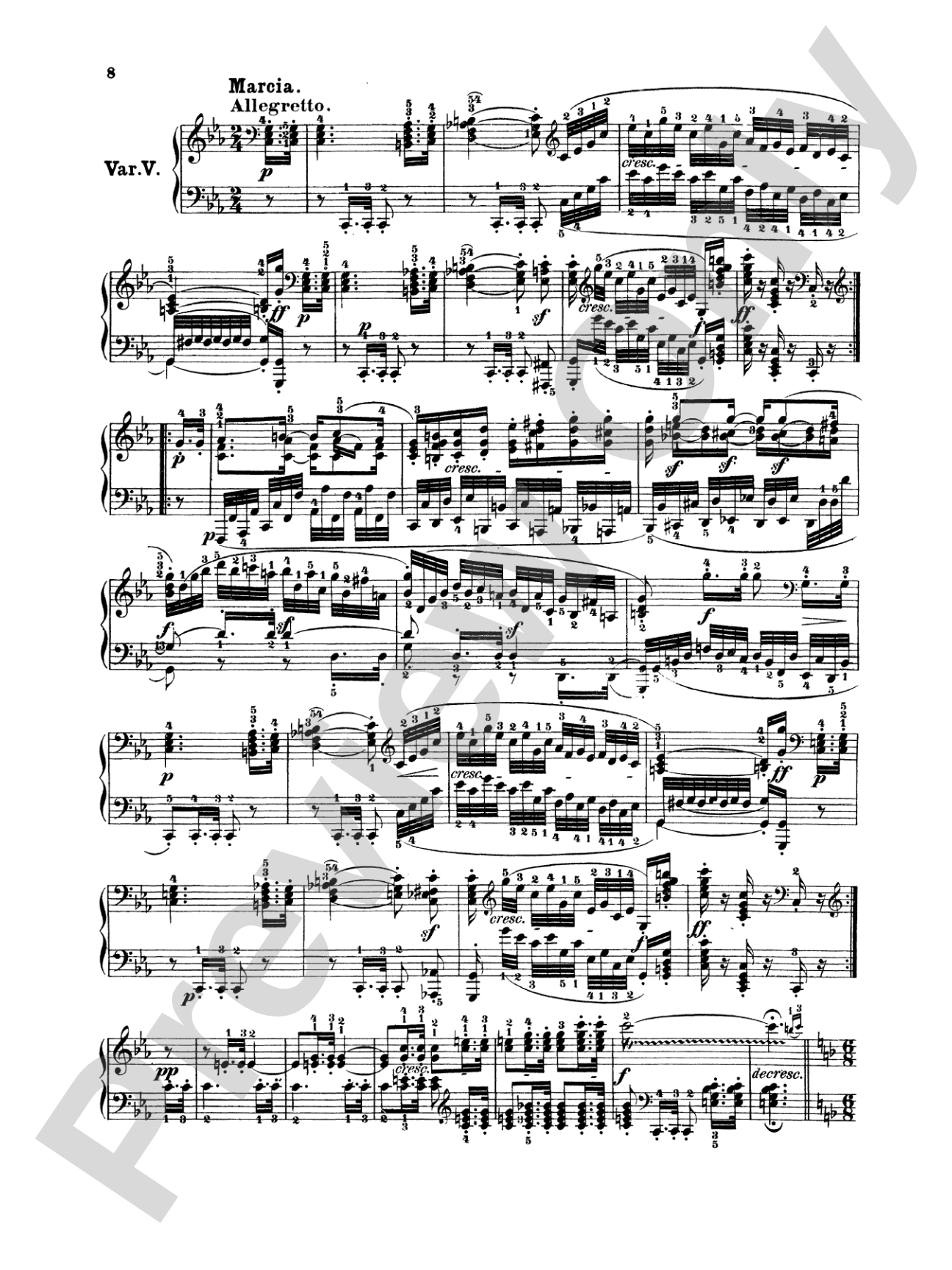
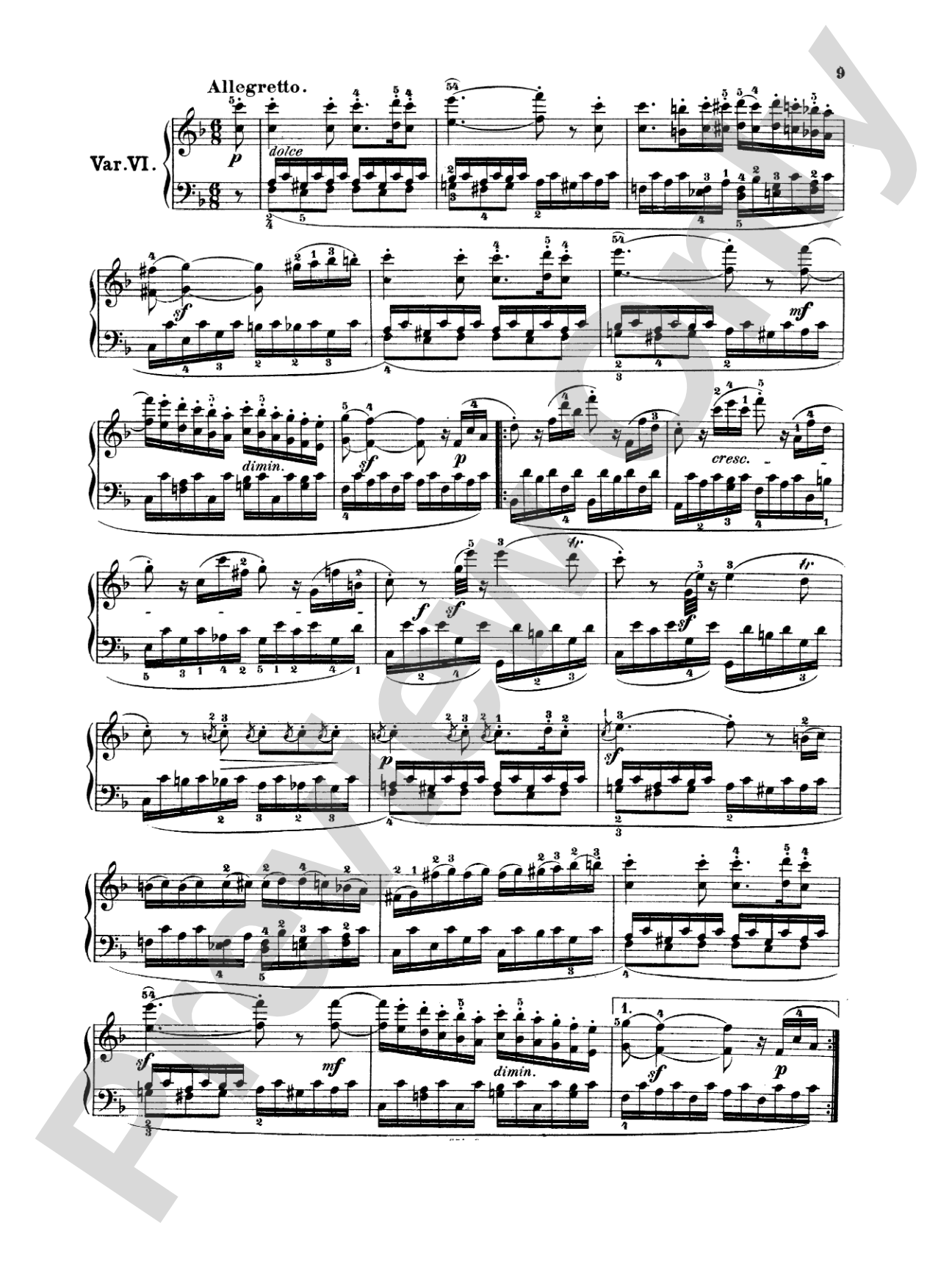
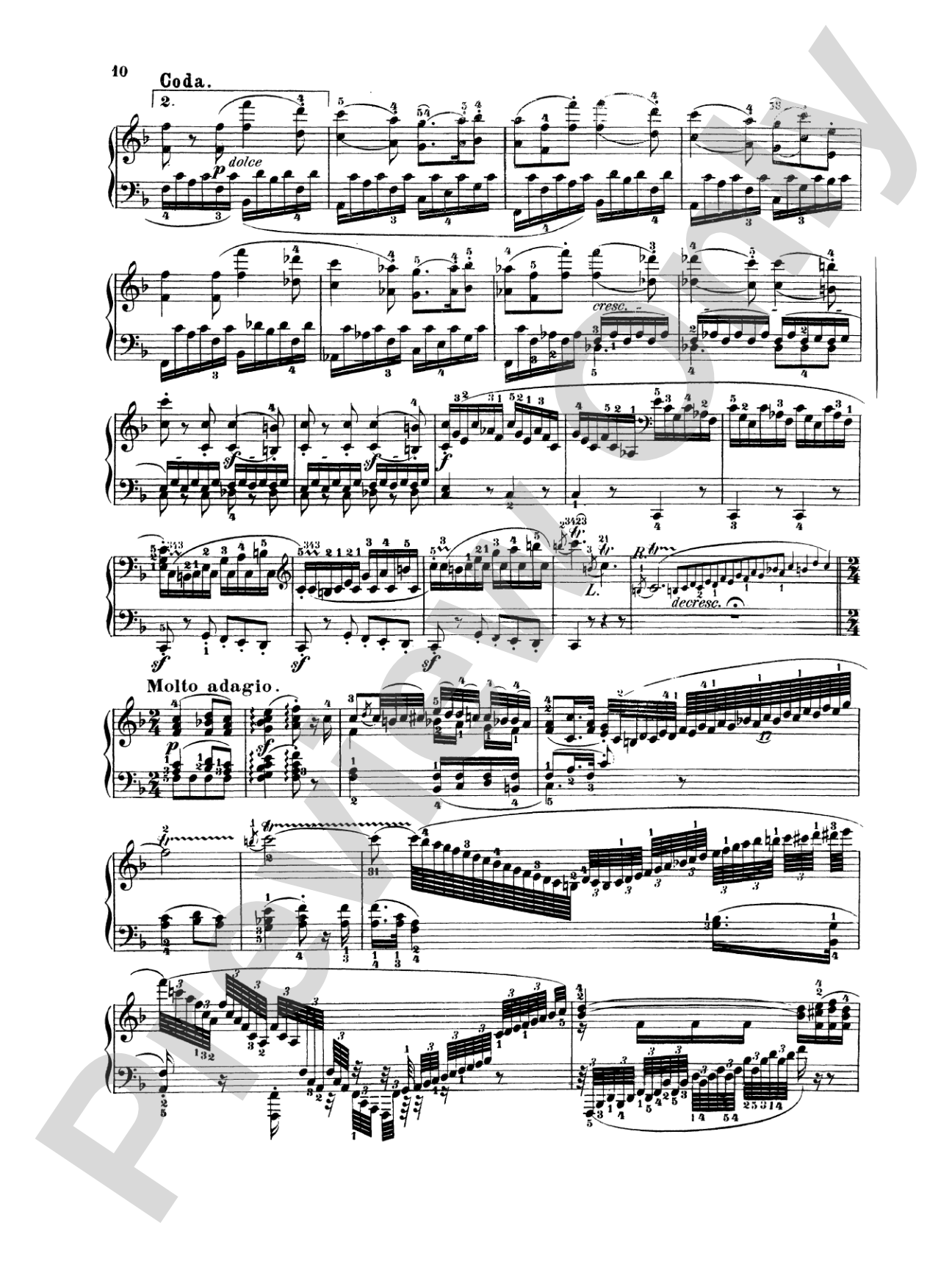
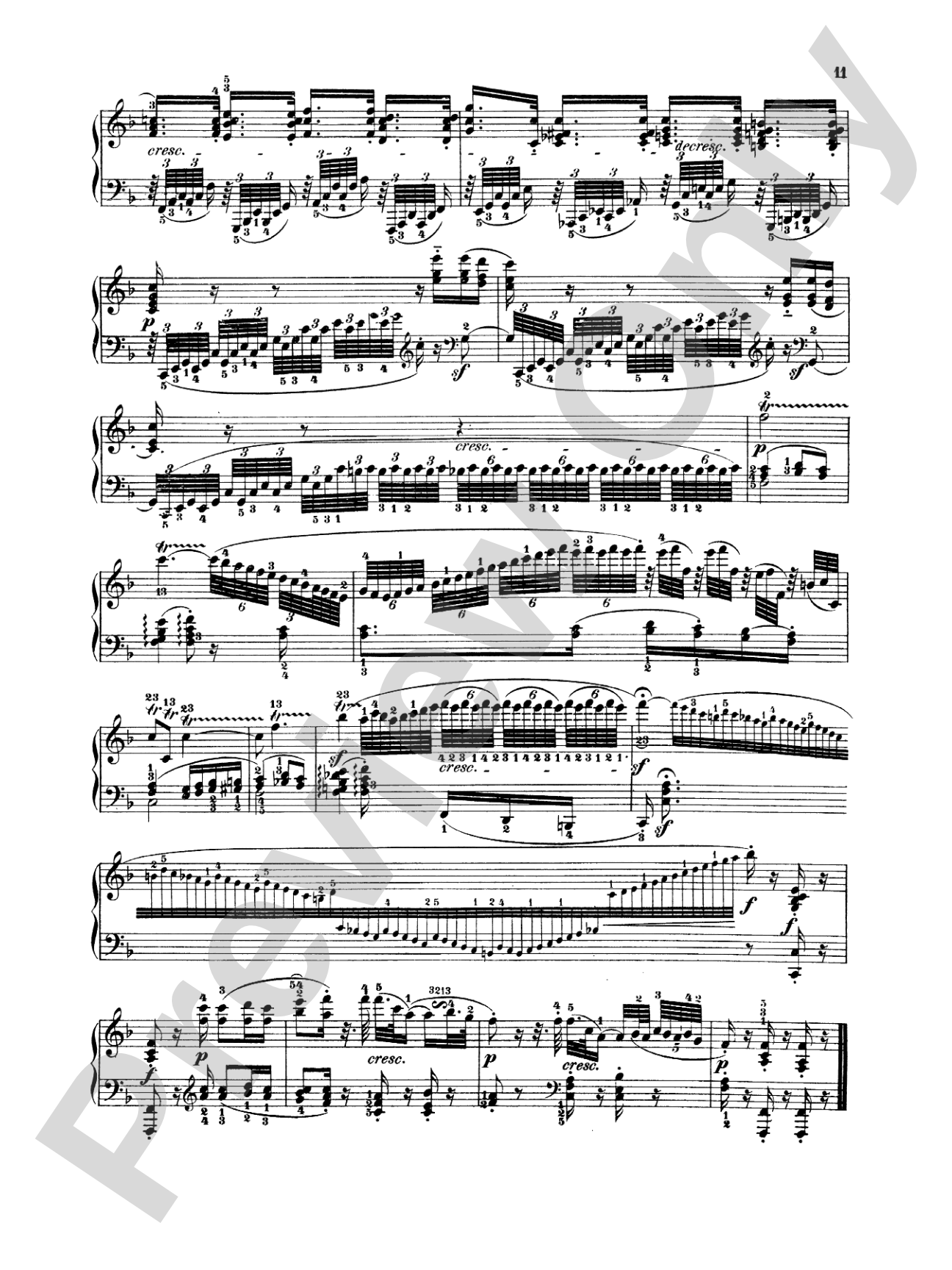

Beethoven: Variations (Volume I): Piano Book
By Ludwig van Beethoven
Level: Intermediate / Advanced
Item: 00-PK-0002915

$18.99
Pickup currently not available
Buy Extra Parts (Digital PDF Download)
| Product | Price | Quantity |
|---|---|---|
| Beethoven: Variations (Volume I) | $1.99 | |
| Beethoven: Variations (Volume I) | $1.99 | |
| Beethoven: Variations (Volume I) | $1.99 | |
| Beethoven: Variations (Volume I) | $1.95 | |
| Beethoven: Variations (Volume I) | $1.99 | |
| Beethoven: Variations (Volume I) | $1.99 | |
| Beethoven: Variations (Volume I) | $1.99 |
Parts Added to Cart!
Description
Includes: 6 Variations, Opus 34 * 15 Variations with Fugue, Opus 35 * 6 Variations, Opus 76 * 33 Variations (Diabelli Variations), Opus 120 * 12 Variations on the Russian Dance from the ballet "Das Waldmädchen" * 24 Variations on "Vieni amore" by Righini * 32 Variations in C Major. 100 pages.


Don't just read it, hear it, play along with it, and watch your students grow with it. In MakeMusic Cloud, Beethoven: Variations (Volume I): Piano Book comes alive with professional accompaniment, adjustable tempo, and built-in practice tools that turn solo practice into real progress.
Open in the Player
Jump straight in and assign it today.
Start Your Free Trial
Open this title and explore the full library in minutes.
Sample Audio
No sample audio found.
Sample Video
No sample videos found.
Additional Details
Series:
Kalmus Edition
Publisher:
Alfred Music
Page Count:
100
SKU:
00-PK-0002915
More about this title
About the Composer: Ludwig van Beethoven
Ludwig van Beethoven (1770-1827) transformed the piano from a drawing room instrument into a vehicle for profound musical exploration. His approach to composition demanded everything from his pianists: technical brilliance, interpretive maturity, and the stamina to sustain complex musical arguments across substantial forms.
Why we love this
Beethoven's variation sets reveal how a single musical idea can yield infinite reinterpretations without exhausting its possibilities. This collection spans his career and shows variation technique as a laboratory for harmonic innovation, rhythmic invention, and keyboard virtuosity that remains startling even today.
What to expect
These variations range from crystalline wit to profound introspection. Early sets sparkle with Classical elegance and decorative brilliance, but as the collection deepens, Beethoven bends variation into something more searching, harmonic tensions tighten, rhythmic ideas fracture and recombine, and by the late works you're inside the mind of a composer rethinking what the form can hold.
Who it's for
Advanced pianists seeking to deepen their understanding of Classical and early Romantic form, and intermediate-advanced students ready to tackle substantive works that reward both technical control and interpretive thought. This collection supports performers preparing recital repertoire or exploring Beethoven's compositional evolution.
How to get the most out of it
- Study each variation's formal function before diving into technical details; understanding whether Beethoven is exploring texture, harmony, rhythm, or register helps you shape the variations as a unified journey rather than a string of exercises.
- Pay close attention to Beethoven's dynamic and articulation markings, which often signal structural turning points and melodic reemergence; these marks are compositional choices, not suggestions.
- Prepare your hand position and fingering options early in your practice; the keyboard demands vary dramatically from one variation to the next, and secure technique frees your mind for interpretive work.
- Treat fermatas and rests as active musical moments; silence in these works often precedes a harmonic shift or textural change that reshapes what follows.
How to use it
Select individual variation sets as recital anchors rather than programming the entire collection at once; a single opus such as the Diabelli Variations or the 15 Variations with Fugue makes a compelling concert statement. Pairing one variation set with contemporary works reveals how Beethoven's structural thinking anticipated later developments in musical form.
Skills your students will build
- Recognizing and executing variation techniques (melodic embellishment, harmonic reinterpretation, rhythmic transformation, and textural alteration)
- Managing extended keyboard figuration and hand independence across varying textural densities
- Interpreting structural relationships across extended single-movement forms
- Balancing technical demands with musical coherence and phrase architecture
- Responding to rapid shifts in harmonic language and tonal color