Beethoven: Two Romances, Op. 40 & 50 Sheet Music Preview

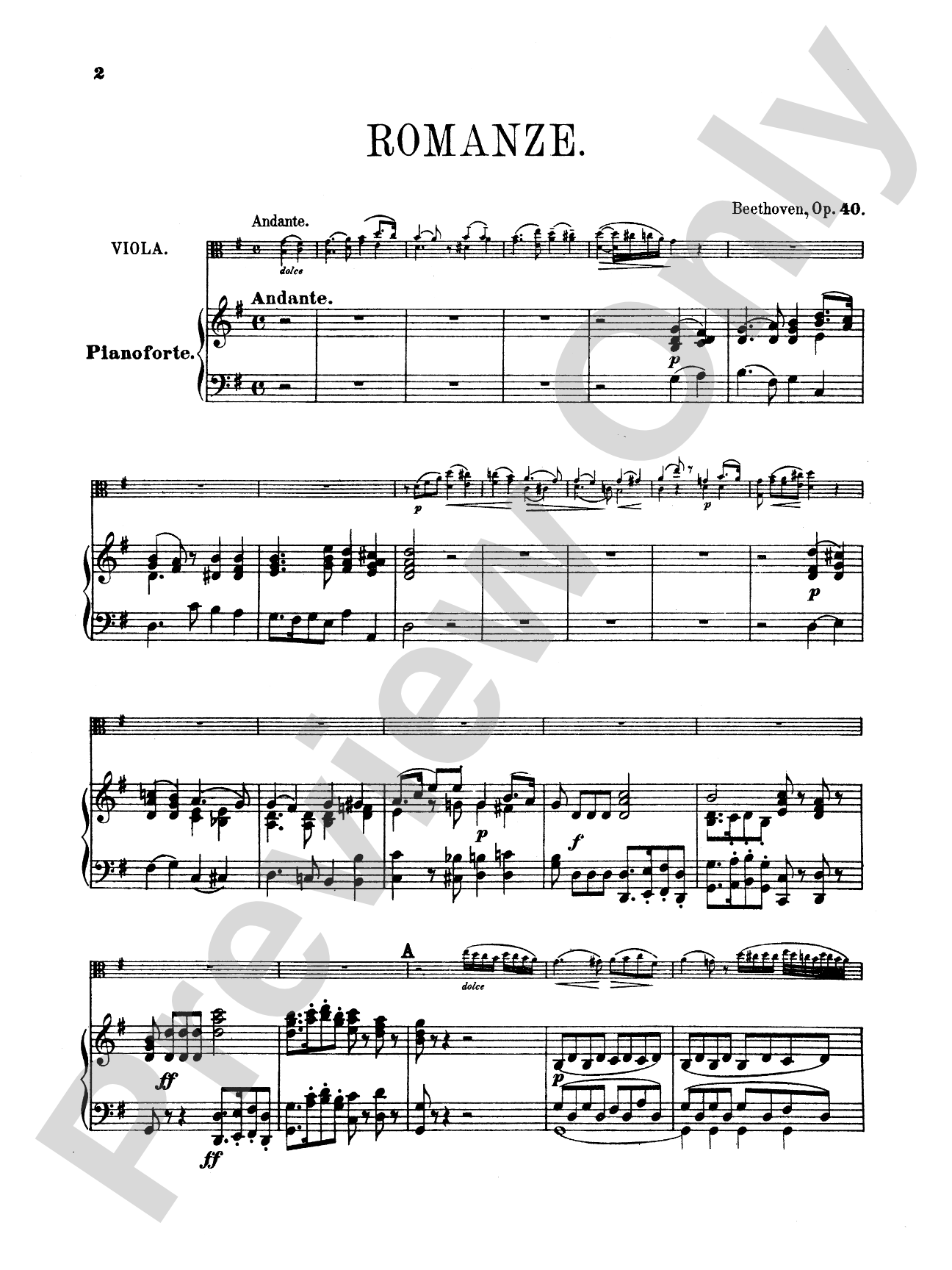
Beethoven: Two Romances, Op. 40 & 50

By Ludwig van Beethoven

Item: 00-PC-0010204

Digital Download
$1.99
Description
(arranged)

Don't just read it, hear it, play along with it, and watch your students grow with it. In MakeMusic Cloud, Beethoven: Two Romances, Op. 40 & 50 comes alive with professional accompaniment, adjustable tempo, and built-in practice tools that turn solo practice into real progress.

Sample Audio
No sample audio found.
Sample Video
Additional Details
Series: Kalmus Edition
Publisher: Alfred Music
Page Count: 16
SKU: 00-PC-0010204

More about this title

About the Composer: Ludwig van Beethoven

Ludwig van Beethoven (1770–1827) bridged the Classical and Romantic eras through symphonies, sonatas, and chamber works that expanded harmonic language and emotional range. His compositional voice evolved from the structured forms of Haydn and Mozart toward the dramatic intensity and introspection that defined the 19th century.

Why we love this

These two Romances showcase Beethoven's gift for lyrical writing without sacrificing structural depth. Arranging them for viola and piano opens this repertoire to string players who might otherwise reach for Romantic-era works, and the combination gives violists access to genuine Beethoven material that sits comfortably on the instrument.

What to expect

Both Romances sing with a gentle, introspective quality that reflects Beethoven's mastery of songful melody. The writing alternates between moments of intimate stillness and passages that swell with warmth, creating an emotional arc that feels both contained and deeply felt.

Who it's for

Violists seeking substantial solo repertoire that bridges Classical form and Romantic expression will find these Romances intellectually rewarding and musically grateful. Advanced students and professional performers benefit from accessing Beethoven's voice through an arrangement that honors the original while acknowledging the viola's unique timbre.

How to get the most out of it

  • Shape each phrase as though singing it; Beethoven's melodies demand vocal continuity even across register shifts.
  • Balance the viola line against the piano part so the accompaniment supports rather than overwhelms the solo voice.
  • Pay attention to dynamic marking specificity, particularly the subtle gradations that distinguish Beethoven's expressive intent.
  • Coordinate carefully with the pianist on tempo stability during rubato moments; these Romances invite slight flexibility but require ensemble trust.

How to use it

Use these pieces to anchor a chamber recital or to complement other Beethoven works on a concert program. They work equally well in a mixed string solo concert or as part of a repertoire showcase demonstrating Beethoven's range across genres and instrumental combinations.

Skills your students will build

  • Sustaining long-lined melodic phrases with consistent tone quality
  • Balancing solo line against accompanying chords
  • Interpreting Classical-era formal structure within Romantic-era expressive language
  • Collaborating with a pianist through attention to ensemble cues and articulation
  • Navigating shifts in register while maintaining musical continuity

You May Also Like