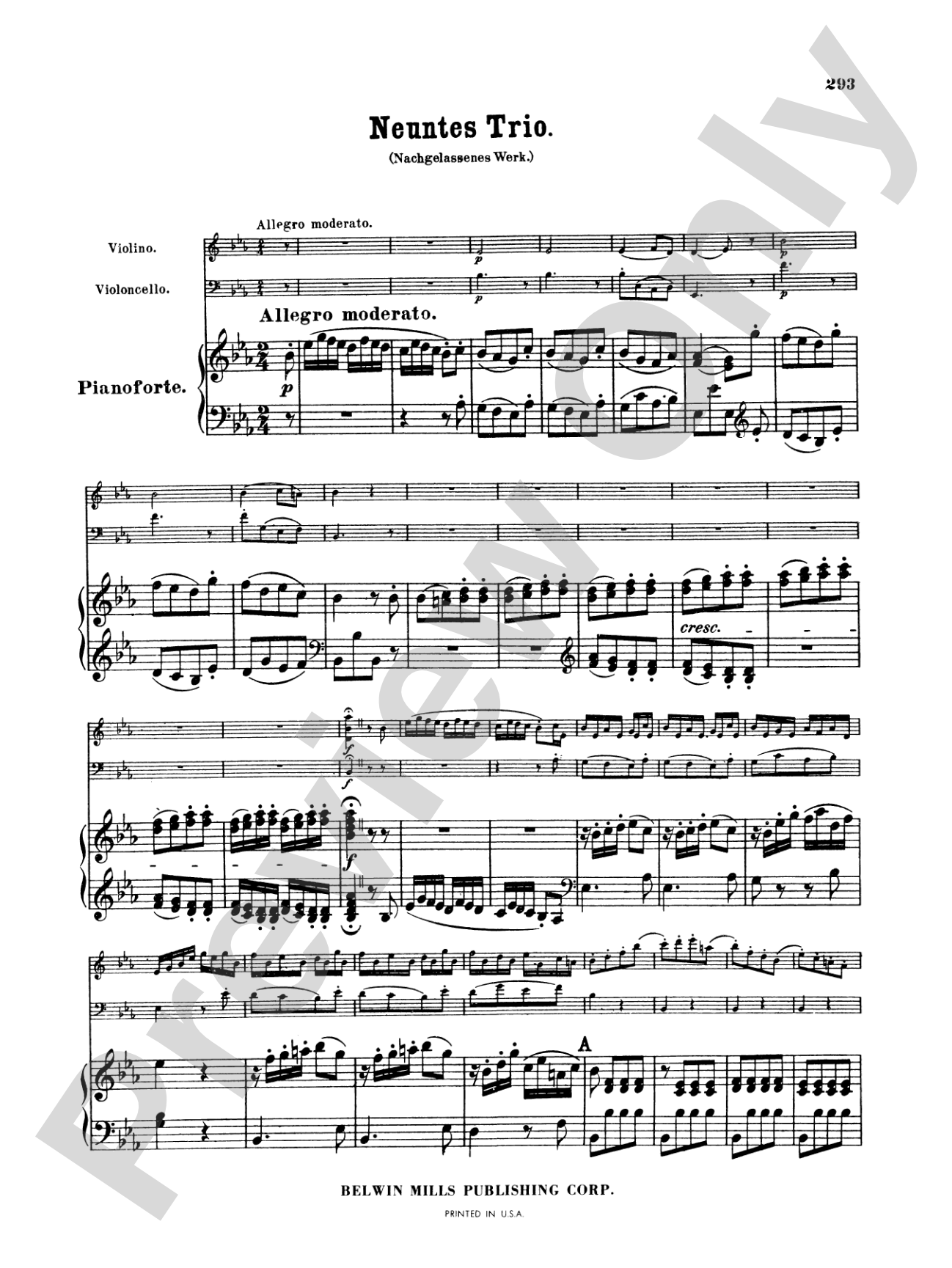
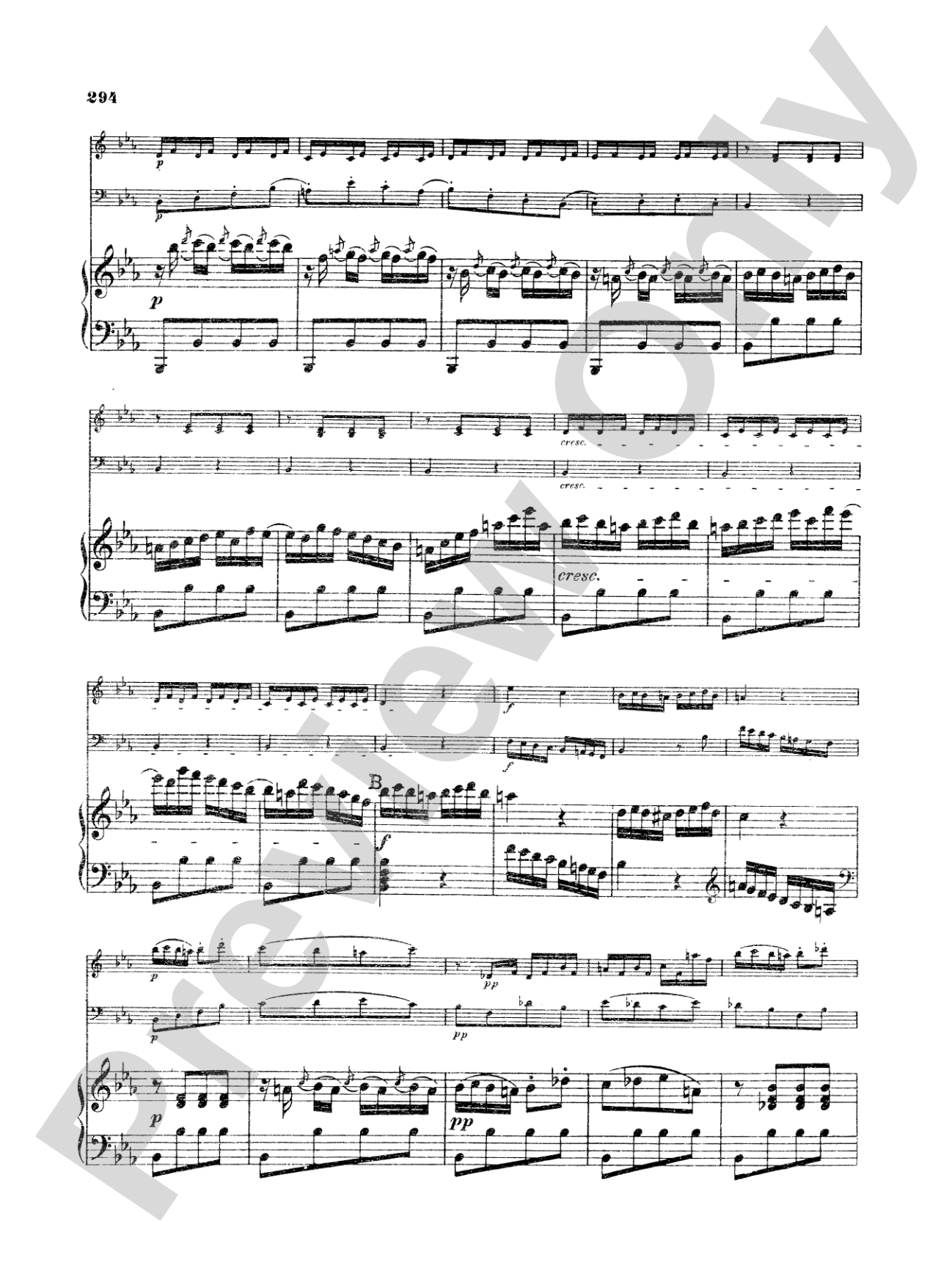
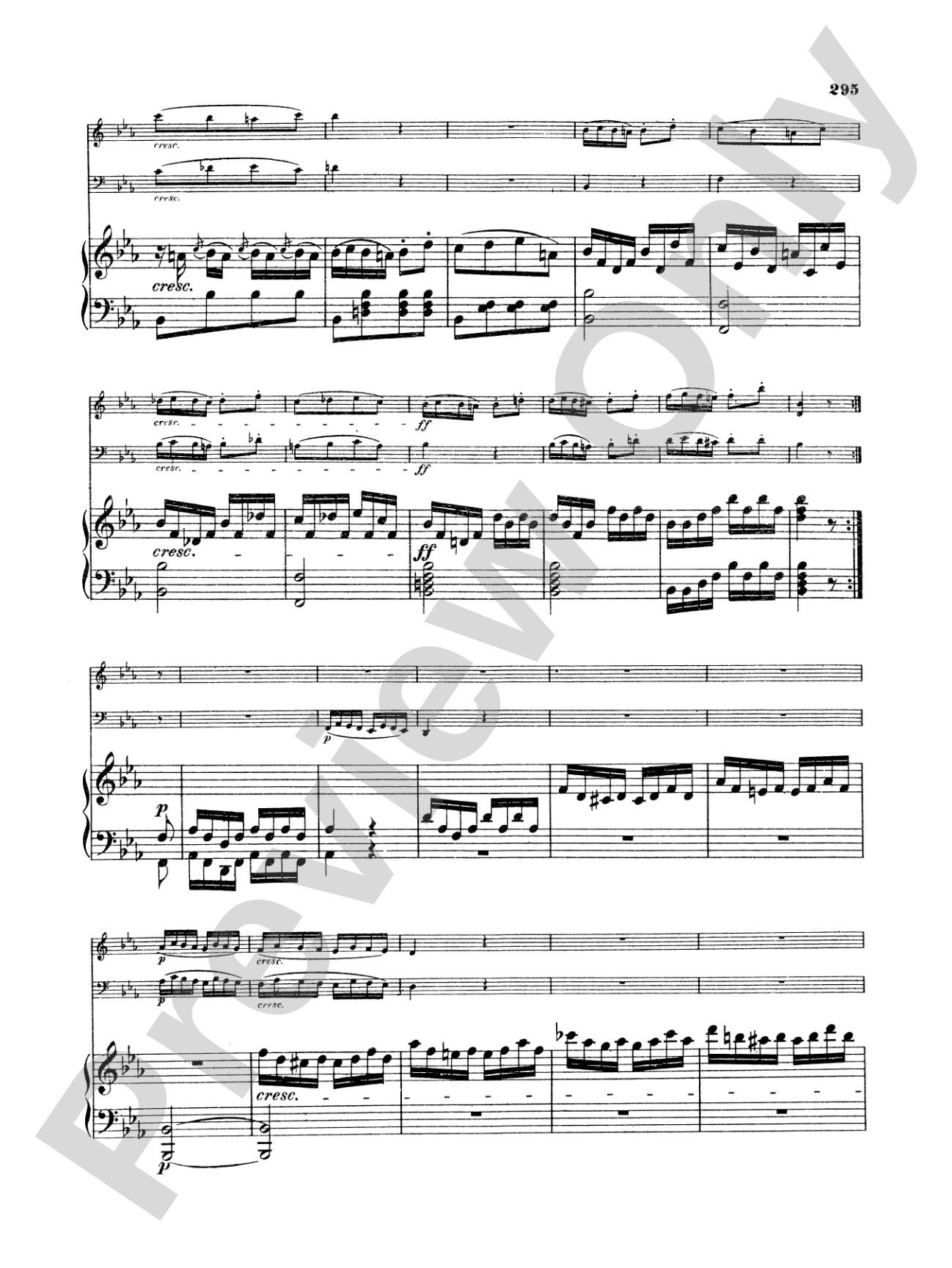
Beethoven: Trio No. 9, in E flat Major (for piano, violin, and cello) Sheet Music Preview

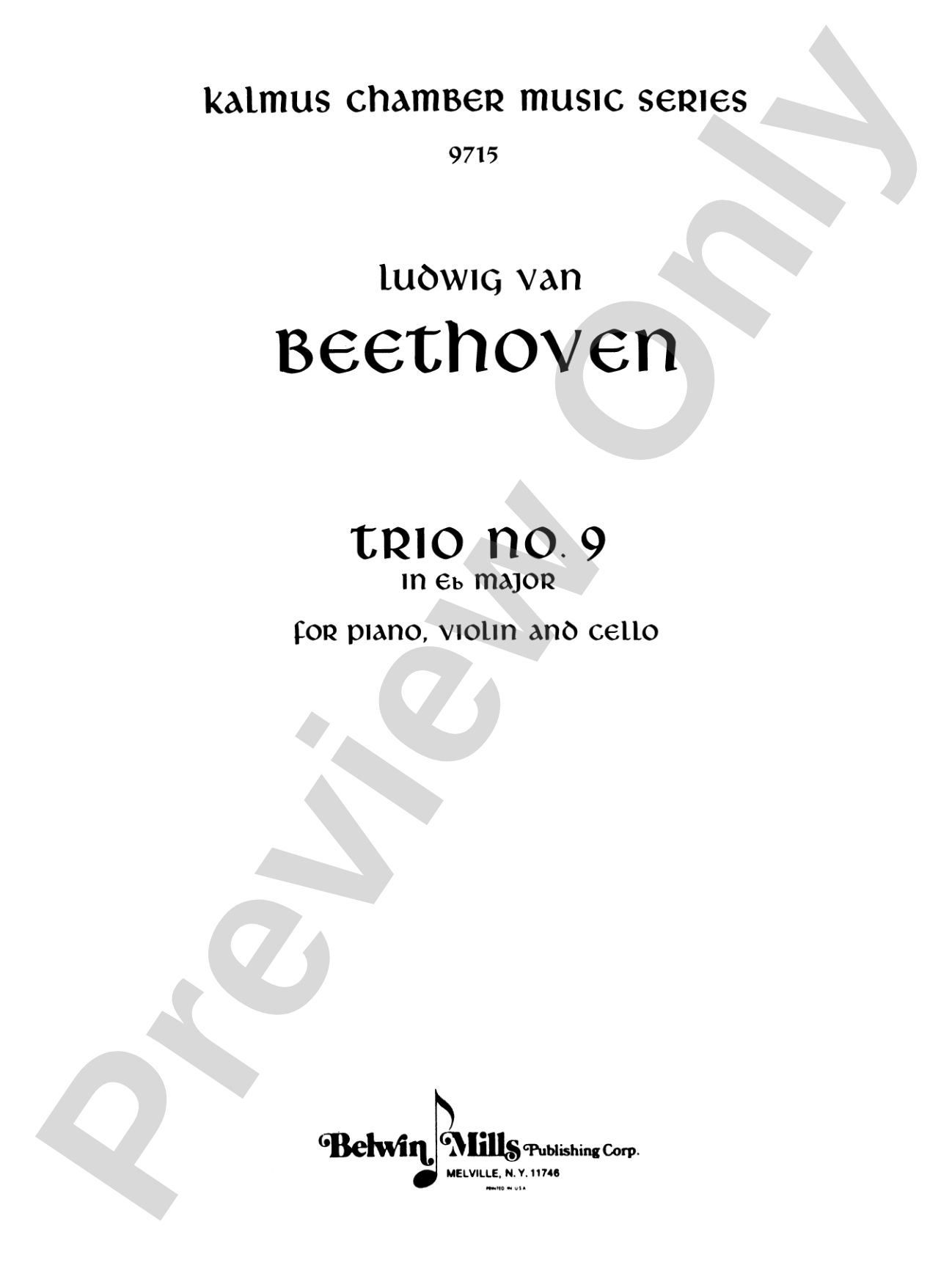
Beethoven: Trio No. 9, in E flat Major (for piano, violin, and cello)

E-flat major

By Ludwig van Beethoven

Item: 00-PC-0013068

Digital Download
$0.99
Description

Don't just read it, hear it, play along with it, and watch your students grow with it. In MakeMusic Cloud, Beethoven: Trio No. 9, in E flat Major (for piano, violin, and cello) comes alive with professional accompaniment, adjustable tempo, and built-in practice tools that turn solo practice into real progress.

Sample Audio
No sample audio found.
Sample Video
Additional Details
Series: Kalmus Edition
Publisher: Alfred Music
Page Count: 40
SKU: 00-PC-0013068
Instrumentation: Piano, Violin & Cello

More about this title

About the Composer: Ludwig van Beethoven

Ludwig van Beethoven (1770-1827) fundamentally expanded the vocabulary of Classical form while pointing toward Romanticism. His chamber music sits at the heart of his legacy: these works show a composer thinking through architectural problems of structure, thematic development, and emotional depth without the constraints of operatic narrative or symphonic scale. The piano trios represent his sustained engagement with the ensemble, and they remain central to understanding how a single musician transformed every genre he touched.

Why we love this

This trio demands musical maturity from all three players while offering the rewards of genuine dialogue rather than accompaniment. The writing balances intimate chamber transparency with the formal weight of a major work, making it an ideal bridge between repertoire that feels manageable and repertoire that feels consequential.

What to expect

Formal and contained on the surface, but animated by urgency underneath. Beethoven's argument unfolds methodically across movements, yet the musical language crackles with energy and unexpected harmonic turns that would have surprised his contemporaries. The writing feels both transparent and profound.

Who it's for

Advanced high school chamber musicians and college-level players seeking substantial Classical repertoire that has stood the test of 200 years. This is also repertoire for teachers programming concert or festival performances where the work itself—not just the execution—needs to carry artistic weight.

How to get the most out of it

  • Balance the piano's role carefully: it functions as both harmonic anchor and thematic participant. Resist the urge to accompany; listen for moments where the keyboard line deserves prominence.
  • Shape phrases through the ensemble, not within individual instruments. Mark where the melodic responsibility transfers between violin and cello, and ensure each player releases on cue.
  • Tempo stability matters more than expressive flexibility in the faster movements. Lock rhythmic clarity first, then layer nuance on top.
  • Prepare the double-stop passages and higher positions in the cello part early; these shifts feel less awkward when they're automatic rather than negotiated in rehearsal.

How to use it

Program this alongside other Classical chamber works to show stylistic continuity and growth, or pair it with a Romantic-era trio to illustrate Beethoven's bridge between eras. The 40-page score makes it substantial enough to anchor a chamber concert or serve as a centerpiece in a festival showcase.

Skills your students will build

  • Sustaining ensemble intonation across multiple key areas and harmonic progressions
  • Balancing three independent musical voices without hierarchy or dominance
  • Tracking thematic development and structural recall across a multi-movement work
  • Managing tempo steadiness and rhythmic cohesion as a trio
  • Reading and executing Classical-era articulation and phrasing conventions
  • Navigating extended passages in upper positions and high registers (cello)

You May Also Like