
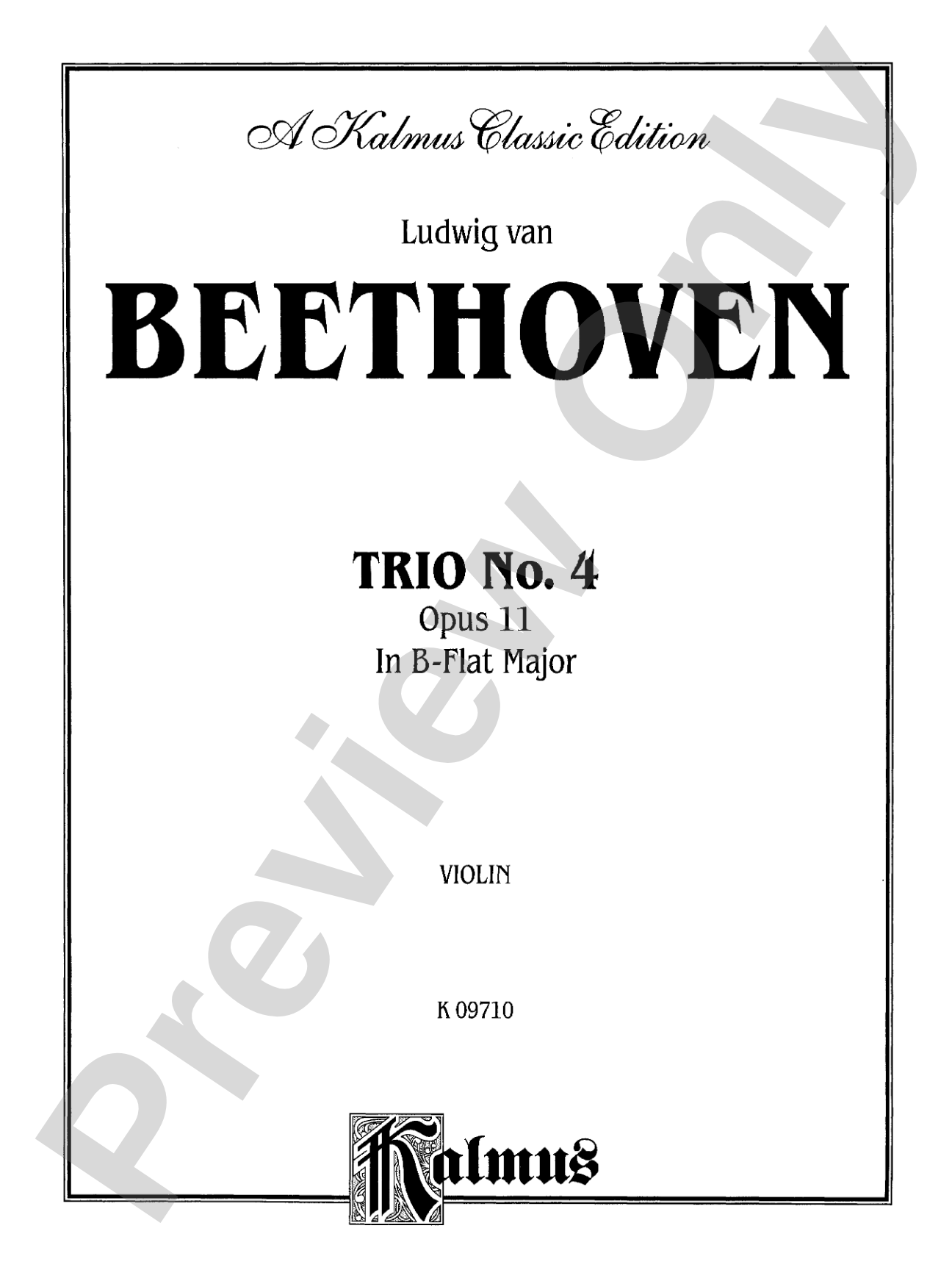
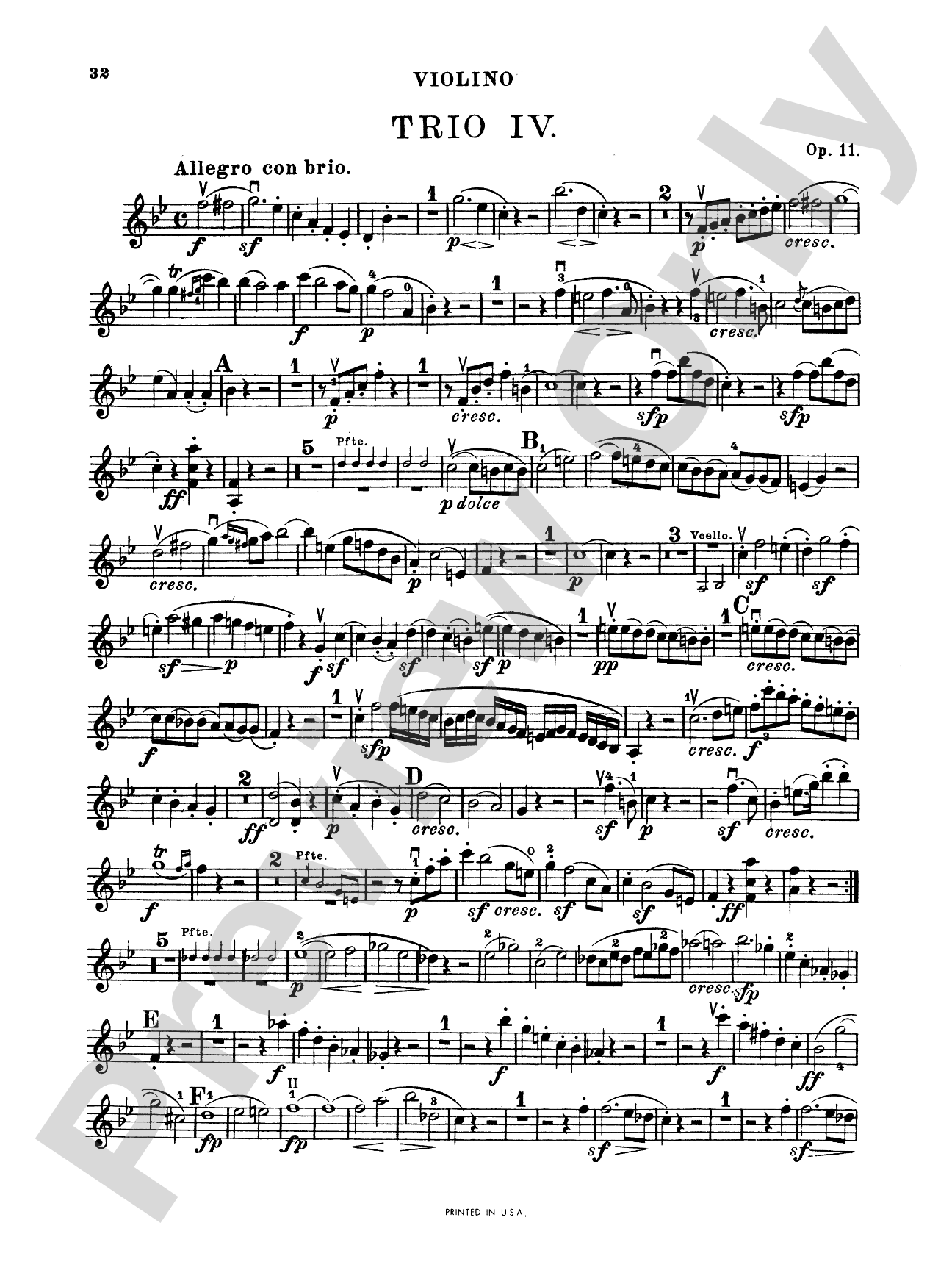
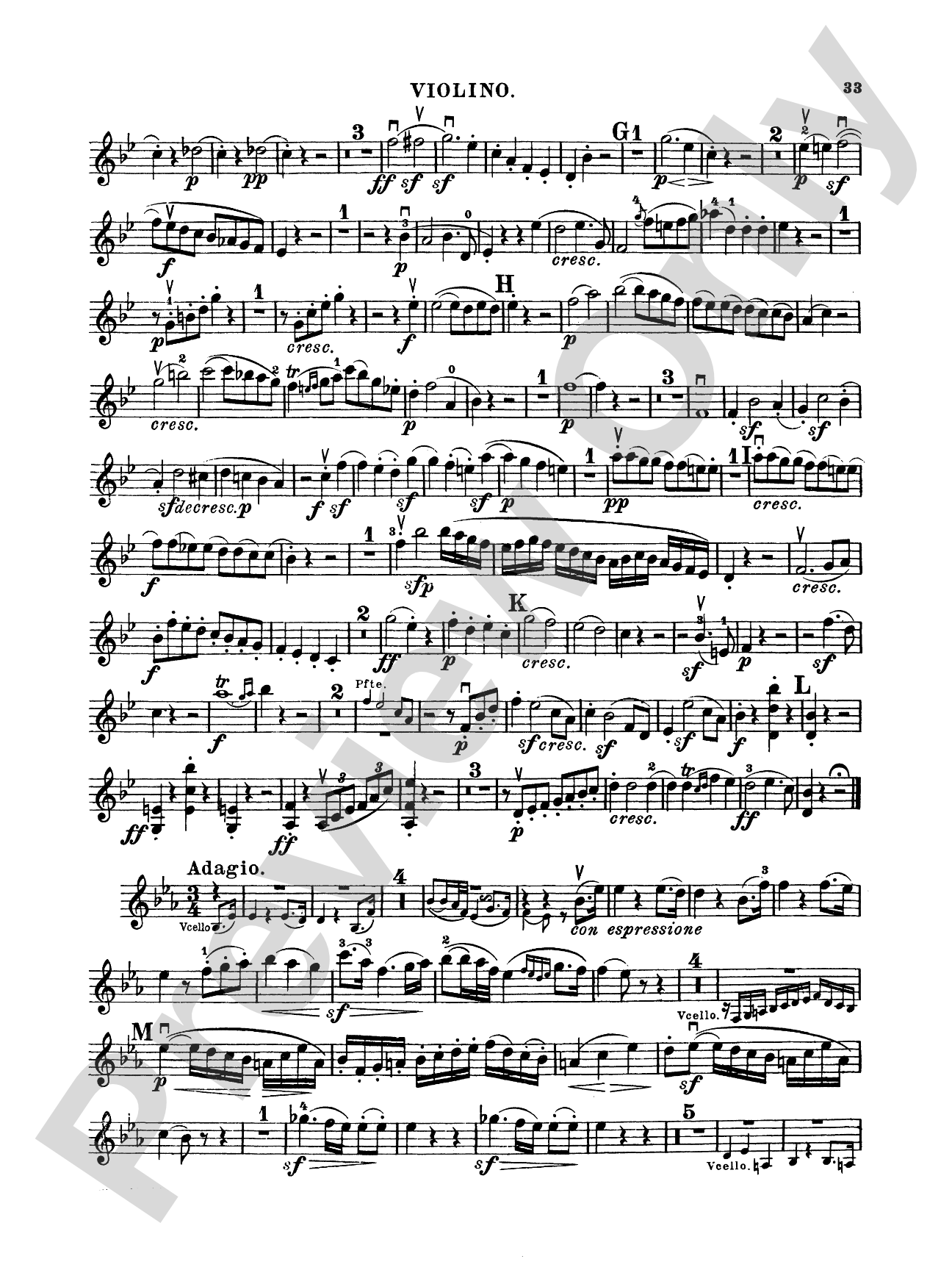
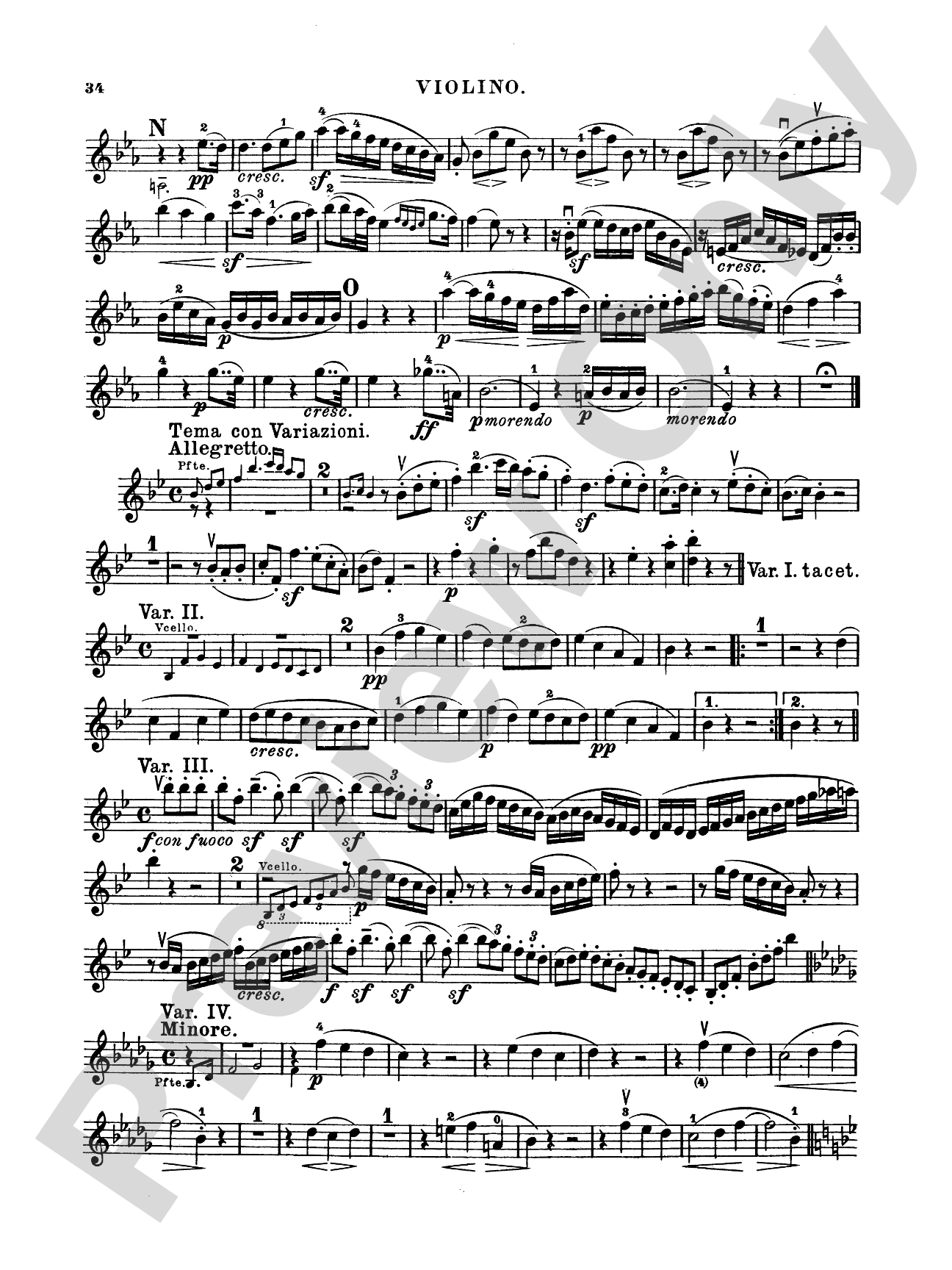
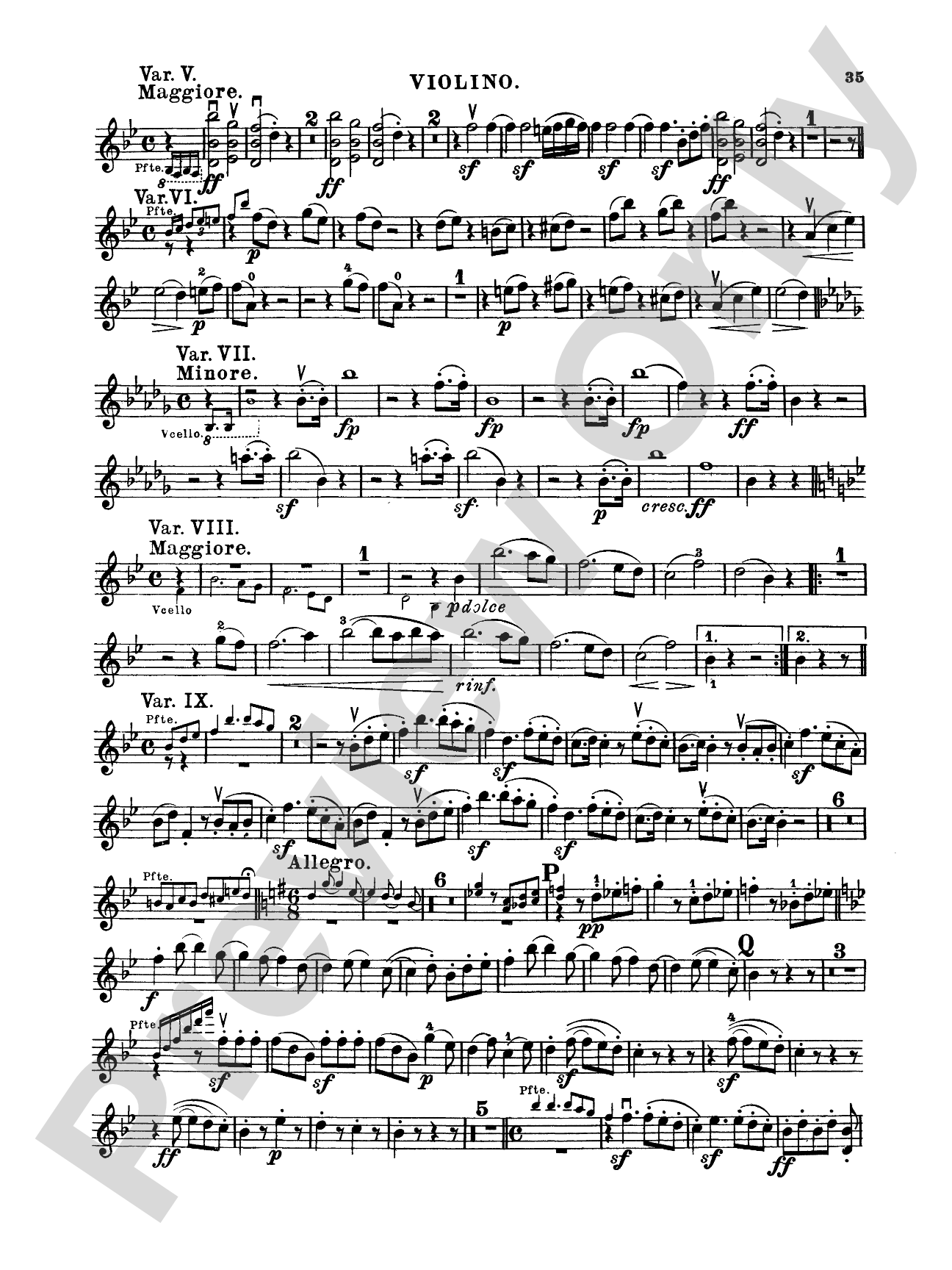




Beethoven: Trio No. 4, Op. 11, in B flat Major (for piano, violin, and cello)
B-flat Major
By Ludwig van Beethoven
Item: 00-PK-0003834

$17.99
Pickup currently not available
Buy Extra Parts (Digital PDF Download)
Parts Added to Cart!
Description


Don't just read it, hear it, play along with it, and watch your students grow with it. In MakeMusic Cloud, Beethoven: Trio No. 4, Op. 11, in B flat Major (for piano, violin, and cello) comes alive with professional accompaniment, adjustable tempo, and built-in practice tools that turn solo practice into real progress.
Open in the Player
Jump straight in and assign it today.
Start Your Free Trial
Open this title and explore the full library in minutes.
Sample Audio
No sample audio found.
Sample Video
No sample videos found.
Additional Details
Series:
Kalmus Edition
Publisher:
Alfred Music
Page Count:
48
SKU:
00-PK-0003834
More about this title
About the Composer: Ludwig van Beethoven
Ludwig van Beethoven (1770-1827) fundamentally transformed chamber music by expanding its expressive range and structural ambition. His trios bridge the Classical and Romantic eras, moving beyond the galant style of his predecessors to explore profound harmonic language, dramatic contrast, and intimate dialogue between instruments. Beethoven's chamber works remain essential repertoire for understanding how a single composer reshaped Western music.
Why we love this
The Op. 11 trio occupies a unique place in the chamber music canon: approachable enough for advanced student ensembles, yet sophisticated enough to reveal new layers with repeated study. Unlike some early Beethoven, this work balances Classical clarity with genuine emotional depth, making it an ideal bridge between standard Classical trios and later chamber masterworks.
What to expect
The B flat major tonality brings warmth and brightness, while Beethoven's structural mastery creates a sense of inevitability beneath moments of gentle lyricism and unexpected harmonic turns. The dialogue between piano and strings feels conversational yet profound, as if three voices are discovering something together rather than performing a predetermined script.
Who it's for
Advanced high school trios, undergraduate chamber ensembles, and serious adult amateur players seeking substantial Classical repertoire with Romantic implications. This work suits musicians ready for Beethoven's harmonic language and formal sophistication but not yet tackling his late quartets or sonatas.
How to get the most out of it
- Balance the piano part carefully. The keyboard writing is often as dialogical as the strings; avoid letting it become mere accompaniment, especially in the first movement.
- Shape the Adagio with long, connected lines. This movement's lyrical character rewards sustained phrasing over note-by-note articulation.
- Bring rhythmic precision and energy to the Menuetto without rushing; Beethoven's wit lives in the timing and accent placement.
- In the Finale, coordinate the ensemble's articulation on repeated figures to create rhythmic cohesion rather than blurring the texture.
How to use it
Pair this trio with other Classical chamber works on a salon-style recital, or program it as a standalone masterwork concert to showcase ensemble musicianship. Its length and substance make it suitable for both casual chamber concerts and formal competition or festival settings.
Skills your students will build
- Balancing three-part texture with equal voice independence
- Reading and responding to Beethoven's harmonic language (tonicization, chromaticism, unexpected modulation)
- Sustaining long-line phrasing across multi-movement structures
- Ensemble coordination without a conductor
- Intonation in extended tonal passages with chromatic voice-leading