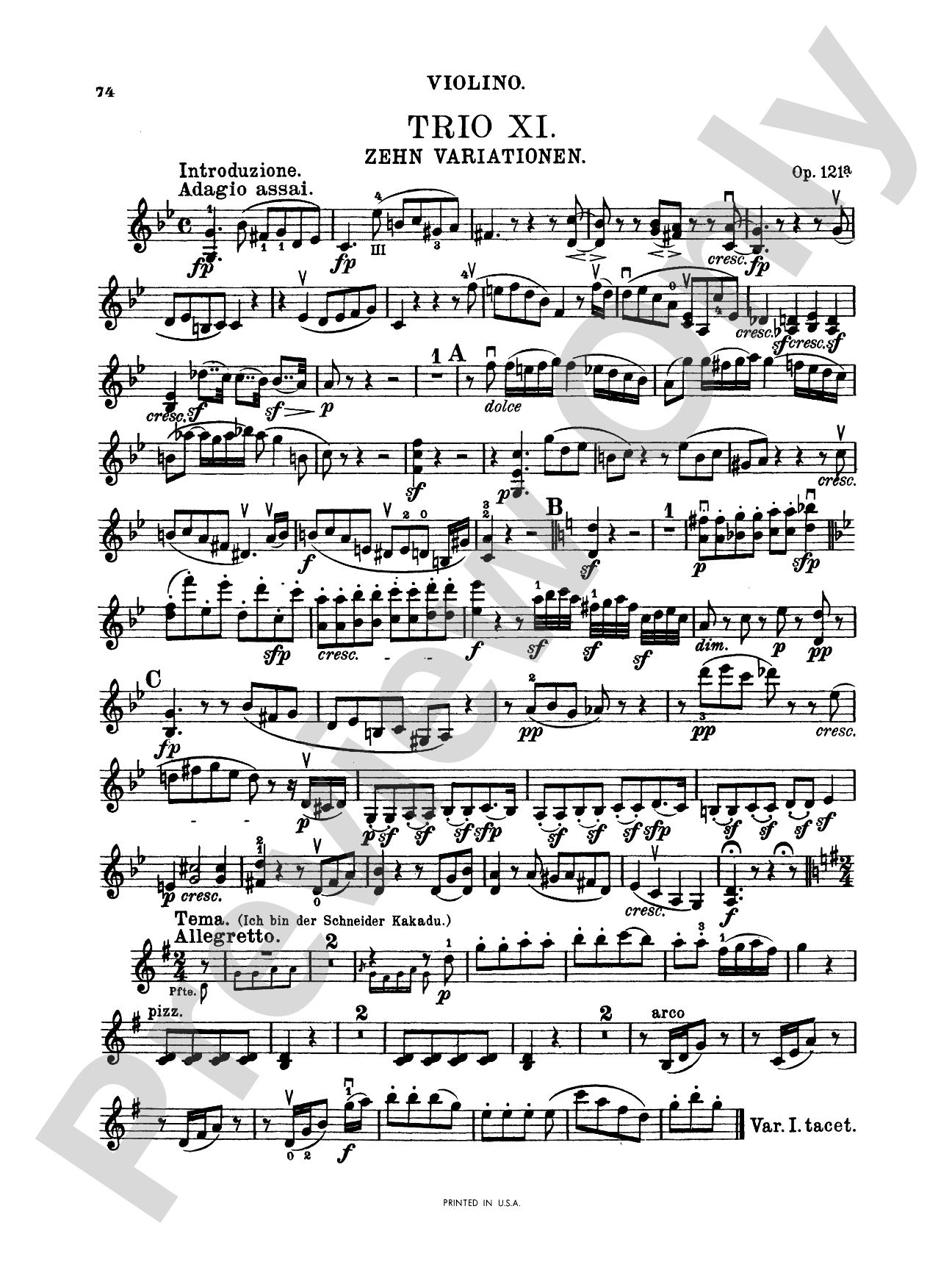
Beethoven: Trio No. 11, Op. 121a, in G Major (for piano, violin, and cello) Sheet Music Preview

Beethoven: Trio No. 11, Op. 121a, in G Major (for piano, violin, and cello)

By Ludwig van Beethoven

Item: 00-PC-0013072

Digital Download
$2.99
Description
For violin, cello and piano.

Don't just read it, hear it, play along with it, and watch your students grow with it. In MakeMusic Cloud, Beethoven: Trio No. 11, Op. 121a, in G Major (for piano, violin, and cello) comes alive with professional accompaniment, adjustable tempo, and built-in practice tools that turn solo practice into real progress.

Sample Audio
No sample audio found.
Sample Video
Additional Details
Series: Kalmus Edition
Publisher: Alfred Music
Page Count: 40
SKU: 00-PC-0013072
Instrumentation: Piano, Violin & Cello

More about this title

About the Composer: Ludwig van Beethoven

Ludwig van Beethoven (1770-1827) transformed the Classical trio into a vehicle for profound musical argument. His late chamber works, composed as his hearing deteriorated, reached toward new expressive possibilities that would influence composers for generations. Beethoven's trios span his entire creative life, from youthful works steeped in Haydnesque charm to late compositions of extraordinary harmonic daring and structural complexity.

Why we love this

Op. 121a sits at a sweet spot between accessibility and substance. The G Major tonality and tuneful themes make it inviting for chamber musicians still building their repertoire, yet the harmonic language and structural sophistication reward careful study. Programmers appreciate how naturally it anchors a chamber music recital or contest submission without demanding the rehearsal intensity of later Beethoven trios.

What to expect

This trio opens with the warmth of G Major and maintains a conversational elegance throughout, with the three instruments trading musical ideas like seasoned chamber players who know each other's language. Beethoven's Classical training anchors every movement, yet you sense harmonic currents running just beneath the surface, subtle gestures that hint at the expressive freedom to come. The overall effect is intelligent and lyrical, inviting rather than imposing.

Who it's for

Chamber musicians at the intermediate to early advanced level will find this trio rewarding without excessive technical demand. It suits ensembles preparing for competitions or recitals that showcase Classical masterworks and serves musicians exploring Beethoven's chamber legacy systematically. The forty-page score makes it manageable as an addition to an active ensemble's season.

How to get the most out of it

  • Balance the piano part carefully during opening phrases; Beethoven often uses it to frame rather than dominate, but the texture demands precise voicing to emerge clearly without overwhelming the strings.
  • Work the string dialogue in the development section with attention to phrasing continuity across the violin-cello exchanges; these lines need to breathe as one musical thought despite passing between instruments.
  • Shape the returns to main themes by observing Beethoven's dynamic markings exactly; his notation is spare but intentional, and precision here clarifies the formal architecture.
  • Establish a clear tempo hierarchy between sections and trust the written rhythms to create momentum; resist the urge to compensate for ensemble difficulties by rushing or dragging.

How to use it

Program this as a main offering on a chamber music recital, where it can anchor a concert of Classical trios or form part of a Beethoven-focused program. It works equally well in competition settings or as the centerpiece of a concert series exploring Beethoven's lesser-known works. The manageable length and popular era make it ideal for mid-season programming when ensembles have settled into their repertoire.

Skills your students will build

  • Balancing three distinct instrumental voices in close harmonic texture
  • Executing Classical phrase shapes and articulation within Beethoven's structural design
  • Sustaining musical continuity through key areas and modulations characteristic of early 19th century harmony
  • Coordinating ensemble entries and breathing points across different instrumental ranges
  • Reading and interpreting period-appropriate tempo and dynamic markings

You May Also Like