
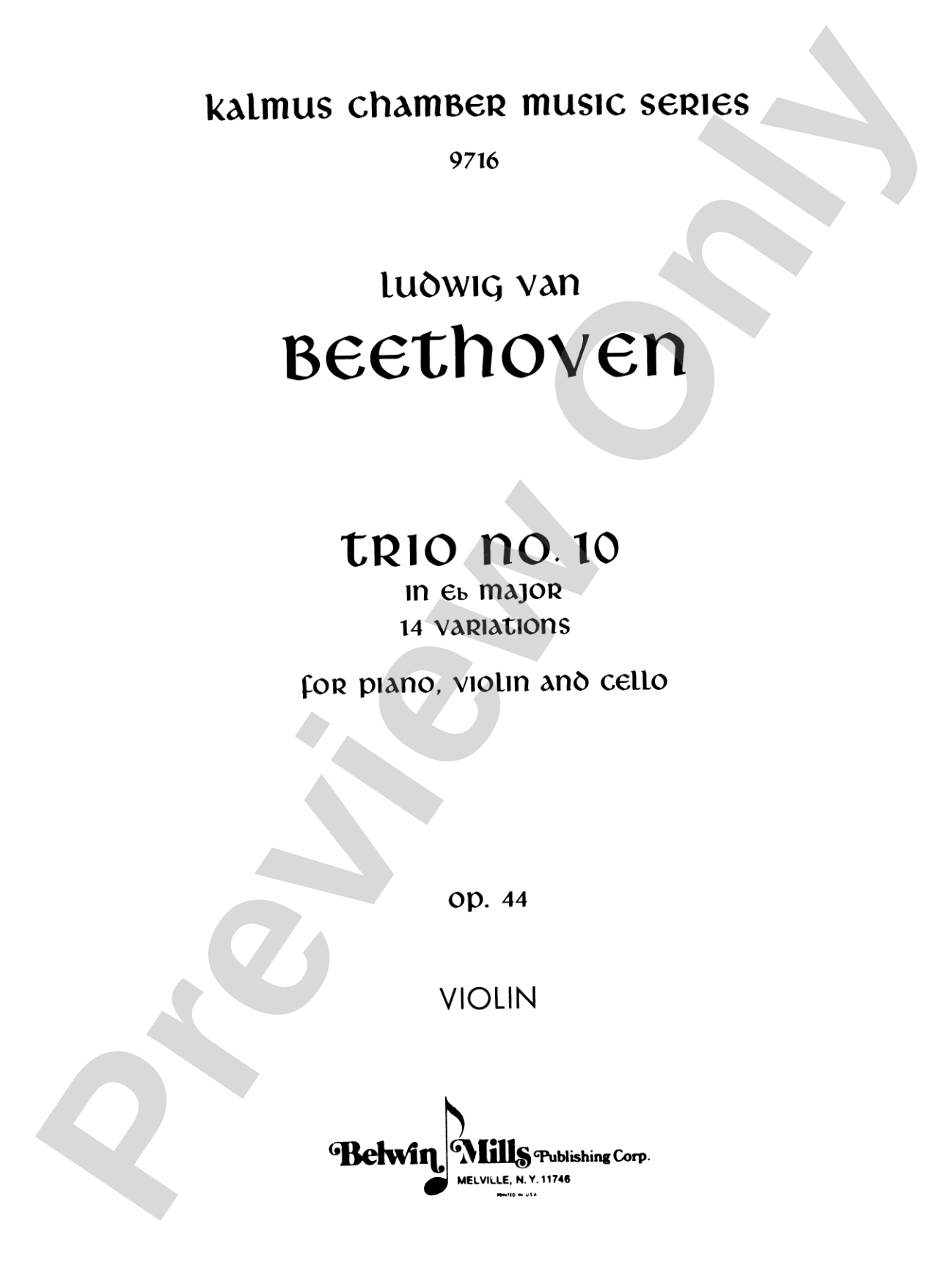
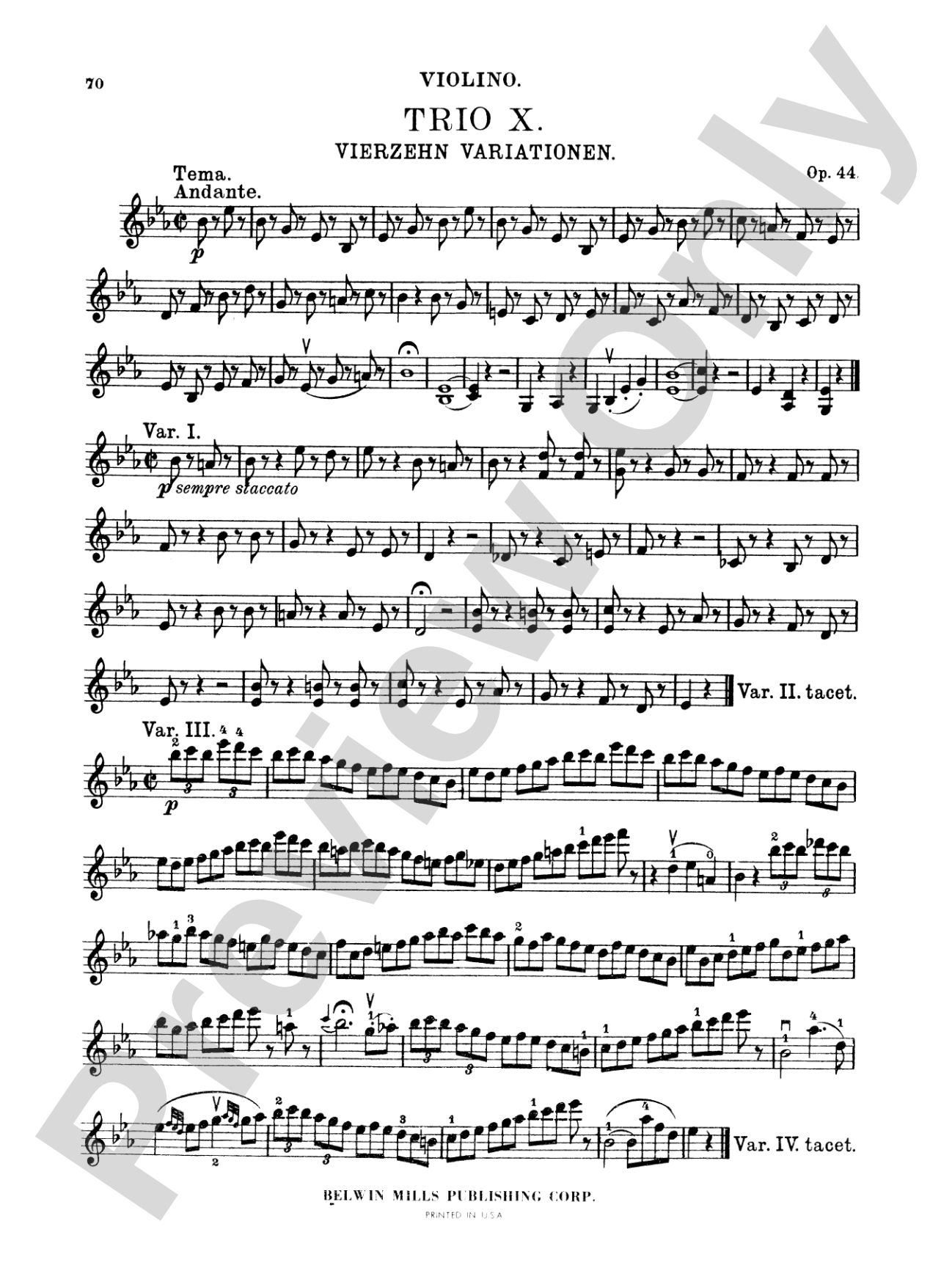
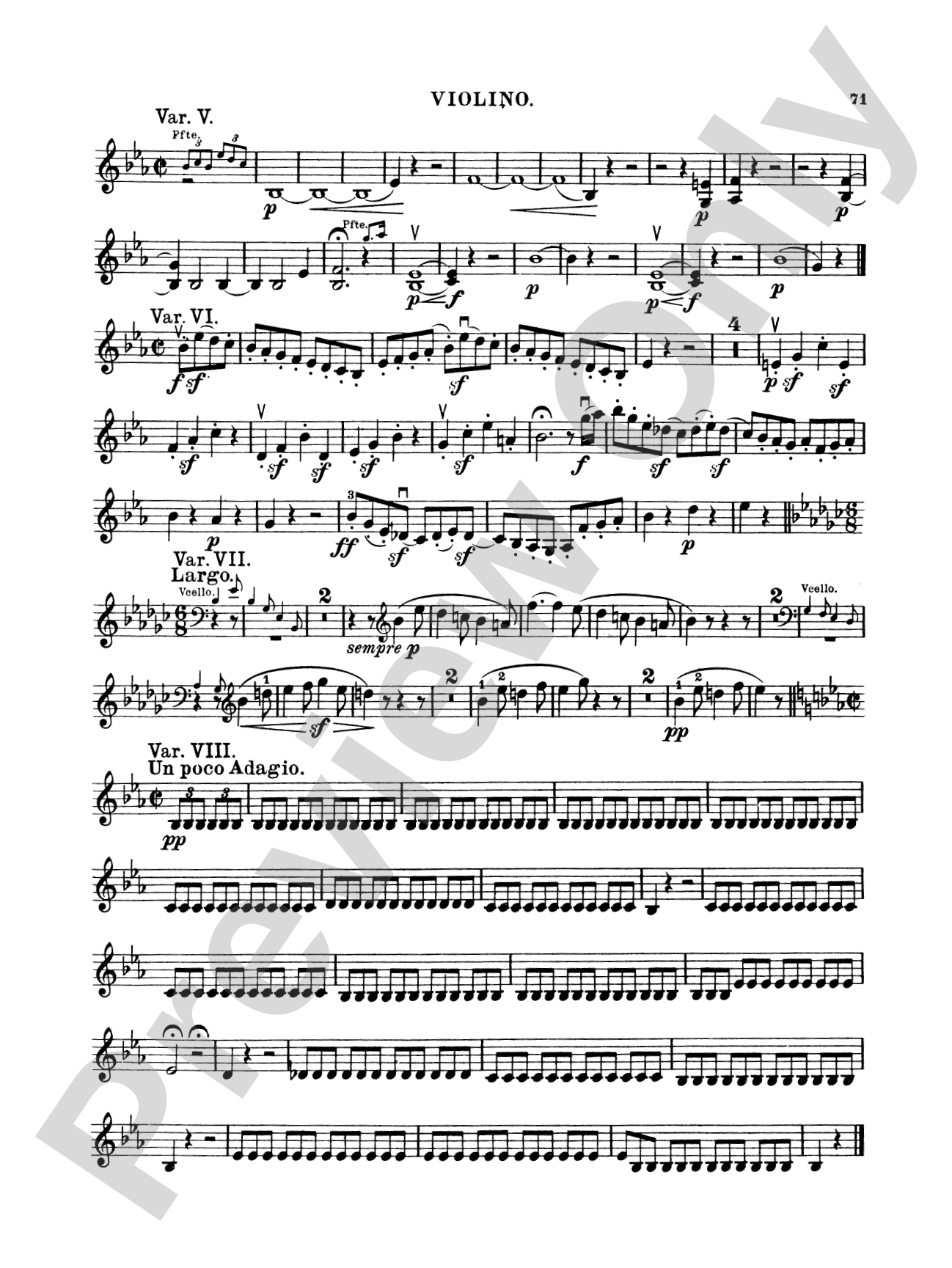
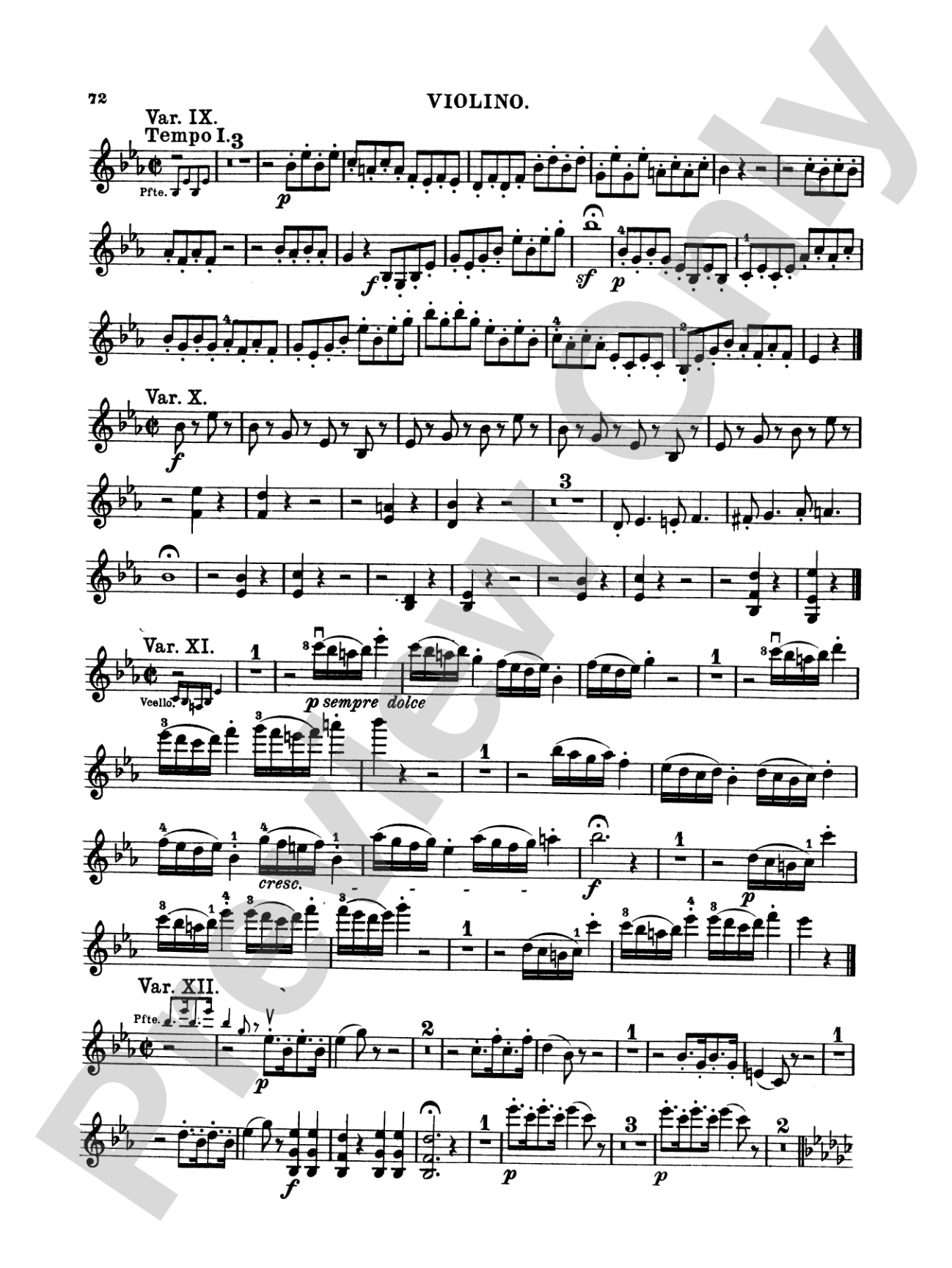
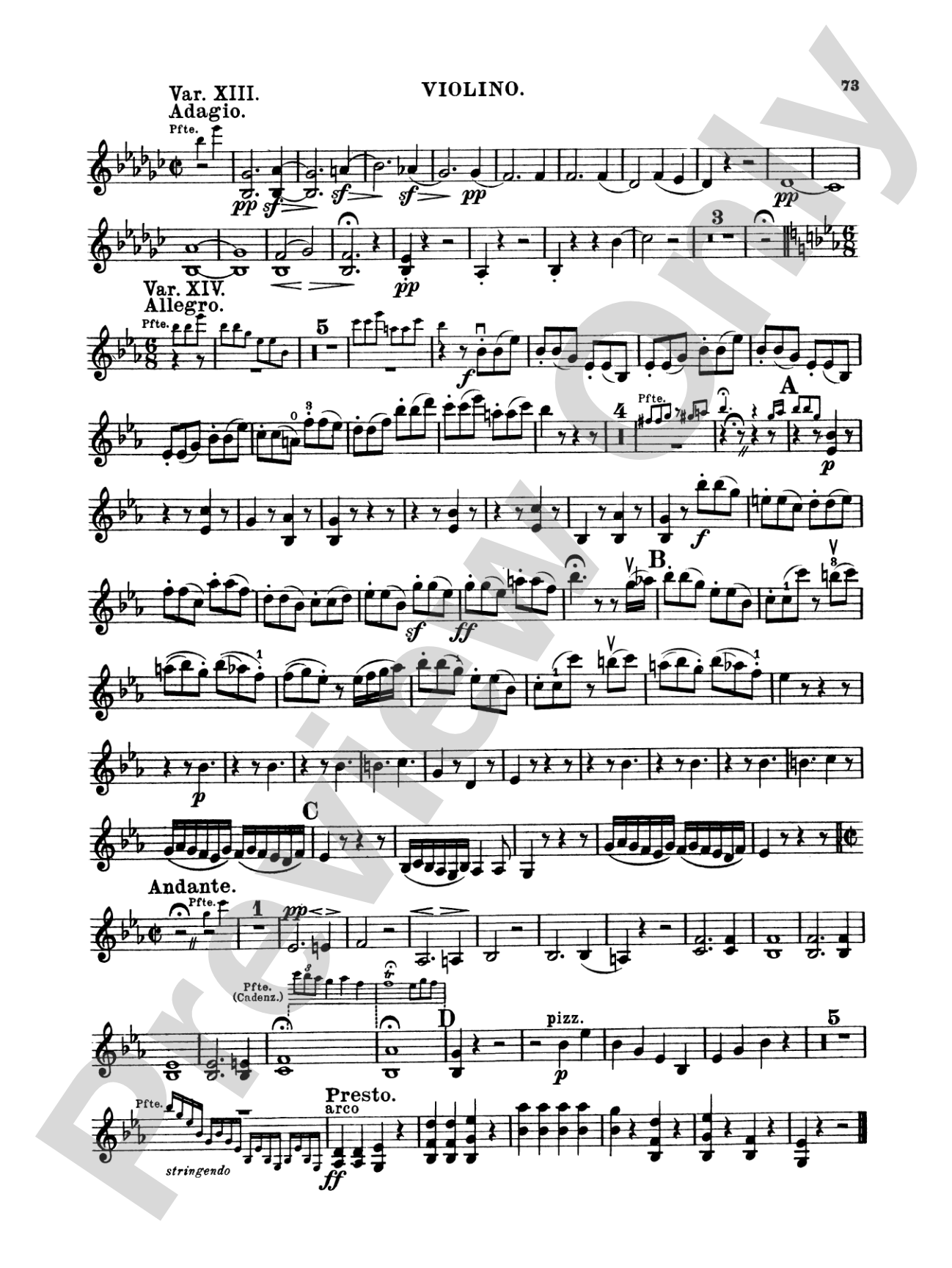




Beethoven: Trio No. 10, in E flat Major, 14 Variations (for piano, violin, and cello): Chamber Trio
E-flat Major
By Ludwig van Beethoven
Item: 00-PK-0003839

$9.99
Pickup currently not available
Buy Extra Parts (Digital PDF Download)
Parts Added to Cart!
Related Items
Piano Trio No. 10, Opus 44: Chamber Trio |
$9.95
|
View |
Description


Don't just read it, hear it, play along with it, and watch your students grow with it. In MakeMusic Cloud, Beethoven: Trio No. 10, in E flat Major, 14 Variations (for piano, violin, and cello): Chamber Trio comes alive with professional accompaniment, adjustable tempo, and built-in practice tools that turn solo practice into real progress.
Open in the Player
Jump straight in and assign it today.
Start Your Free Trial
Open this title and explore the full library in minutes.
Sample Audio
No sample audio found.
Sample Video
No sample videos found.
Additional Details
Series:
Kalmus Edition
Publisher:
Alfred Music
Page Count:
36
SKU:
00-PK-0003839
Instrumentation:
Piano, Violin & Cello
More about this title
About the Composer: Ludwig van Beethoven
Ludwig van Beethoven (1770-1827) fundamentally transformed chamber music by expanding its emotional range and structural ambition. His trios for piano, violin, and cello rank among the most challenging and rewarding works in the chamber repertoire, combining the virtuosic demands of the Classical period with the expressive intensity that defined his mature style.
Why we love this
This trio combines technical rigor with genuine musical interest in a way that keeps both players and audiences engaged. The 14-variation structure gives you a natural arc for programming while showcasing how Beethoven develops material across texture, register, and harmonic language without losing coherence.
What to expect
The work opens with elegant restraint before transforming through increasingly elaborate variations that test the ensemble's rhythmic unity, textural control, and collective musicianship. By the later variations, Beethoven's harmonic language grows bolder and more introspective, creating moments of unexpected tenderness alongside virtuosic display.
Who it's for
Advanced chamber musicians preparing festival or competition repertoire will find a work that demands serious musical engagement alongside technical precision. This trio suits upper-level high school ensembles and adult chamber groups with strong collaborative habits and comfort with Classical-era harmony and Romantic-era expressive range.
How to get the most out of it
- Balance the three voices carefully during the opening statement; the piano can easily dominate, but the violin and cello lines carry essential harmonic and melodic material that listeners need to hear.
- Use the opening theme as your harmonic and rhythmic anchor through the variations. Each variation reshapes surface details while preserving the underlying structure, so ensemble members who internalize the theme's skeleton will maintain security through rapid figuration and metric displacements.
- Shape the transitions between variations deliberately. These moments are often brief but offer crucial opportunities to reset the ensemble's internal pulse and prepare for the next character shift.
- Attend to the written dynamics throughout the work. Beethoven's phrasing marks and articulations are not decorative; they define each variation's identity and prevent the piece from becoming a generic display of technical ability.
How to use it
This trio works exceptionally well on festivals featuring Classical and early Romantic chamber music, where its 36 pages and substantial musical substance command serious attention. Pair it with other Beethoven chamber works or with string-and-piano music by his contemporaries to create a thematic concert exploring the evolution of the Classical trio form.
Skills your students will build
- Maintaining rhythmic independence across three voices with different figuration patterns
- Balancing multiple melodic lines in the same register without losing clarity
- Responding to rapid harmonic movement in the Classical-Romantic harmonic language
- Sustaining long-term ensemble cohesion across 14 formally related sections
- Navigating the technical demands of the piano part while remaining connected to the strings
- Shaping character contrasts between variations through articulation, tempo flexibility, and dynamic nuance