

Beethoven: Three German Dances: Piano
By Ludwig van Beethoven
Level: Intermediate / Advanced
Item: 00-PK-0002927

$6.99
Pickup currently not available
Buy Extra Parts (Digital PDF Download)
| Product | Price | Quantity |
|---|---|---|
| Beethoven: Three German Dances | $1.99 | |
| Beethoven: Three German Dances | $1.99 | |
| Beethoven: Three German Dances | $1.99 |
Parts Added to Cart!
Related Items
Three German Dances: Piano |
$6.95
|
View |
Description
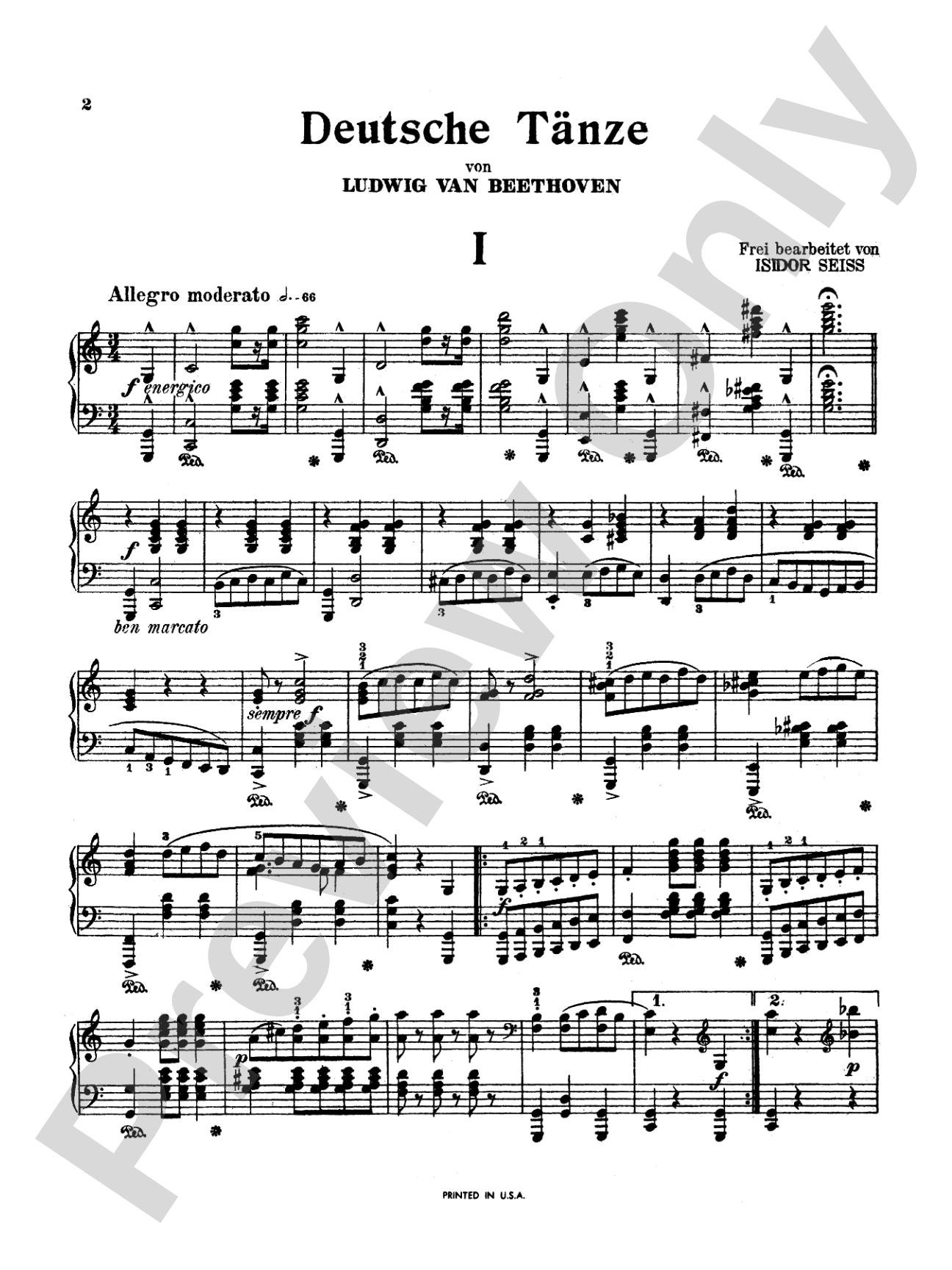
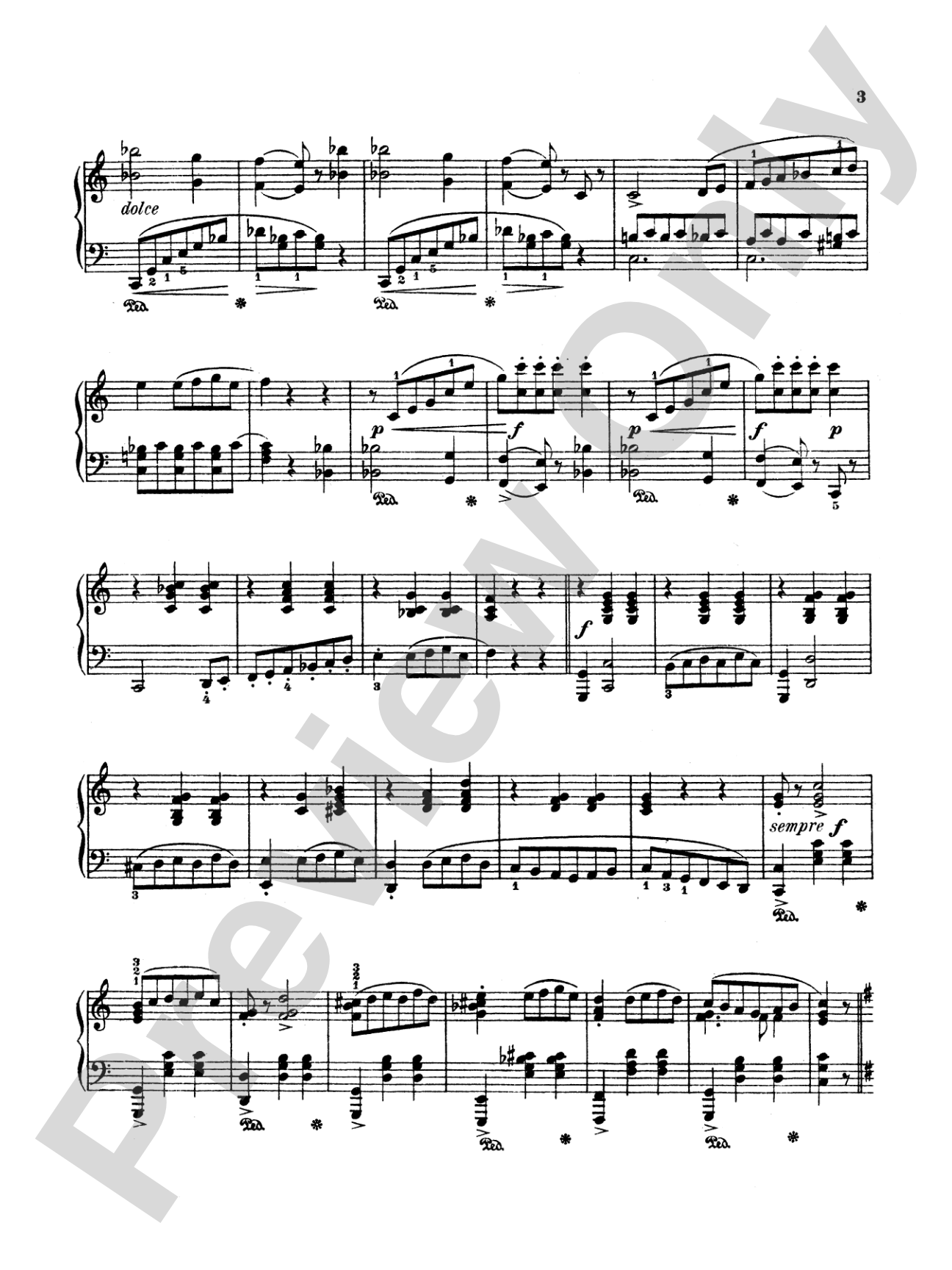
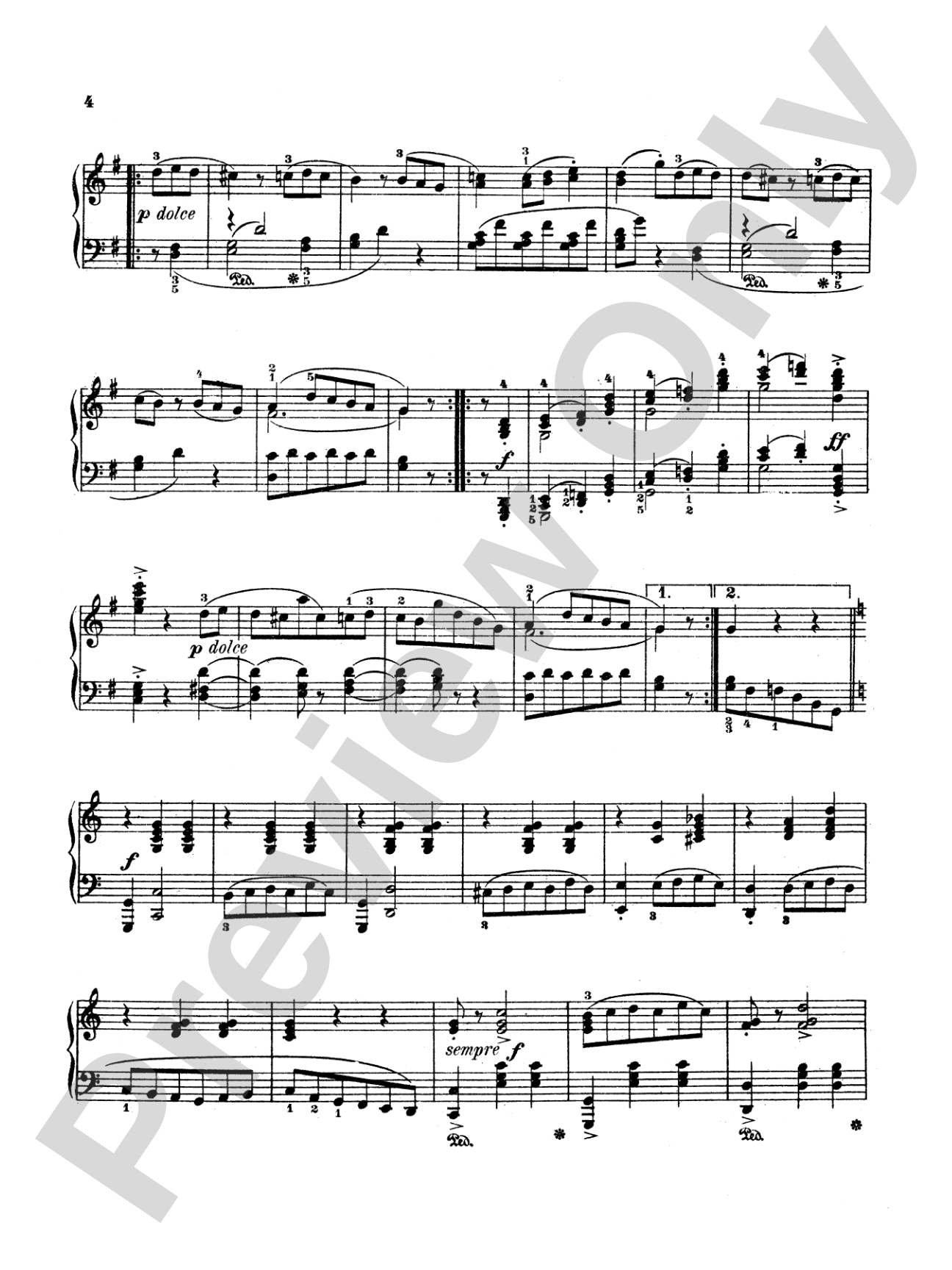
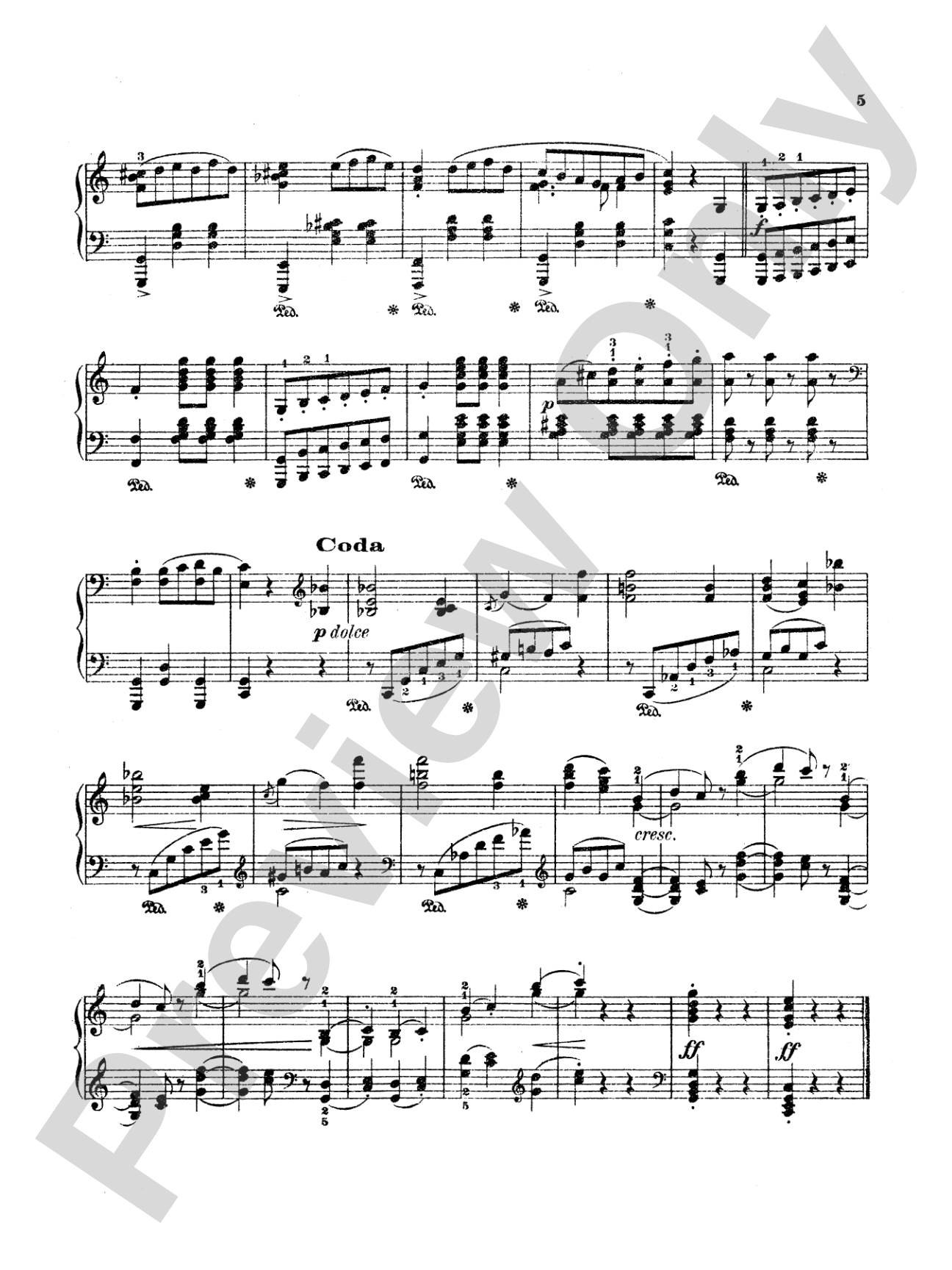
Three German Dances by Ludwig von Beethoven, transcribed by Isidor Seiss for piano, includes: 1. Allegro moderato (C Major) * 2. Allegretto grazioso (G Major) * 3. Allegro risoluto (C Major).


Don't just read it, hear it, play along with it, and watch your students grow with it. In MakeMusic Cloud, Beethoven: Three German Dances: Piano comes alive with professional accompaniment, adjustable tempo, and built-in practice tools that turn solo practice into real progress.
Open in the Player
Jump straight in and assign it today.
Start Your Free Trial
Open this title and explore the full library in minutes.
Sample Audio
No sample audio found.
Sample Video
No sample videos found.
Additional Details
Series:
Kalmus Edition
Publisher:
Alfred Music
Page Count:
16
SKU:
00-PK-0002927
More about this title
About the Composer: Ludwig van Beethoven
Ludwig van Beethoven (1770, 1827) bridged the Classical and Romantic eras, expanding the emotional and structural possibilities of nearly every genre he touched. His genius lay in taking traditional forms and infusing them with dramatic tension, lyrical depth, and formal innovation that influenced composers for generations to come.
Beyond his symphonies and concertos, Beethoven's smaller works reveal his mastery of character and restraint. These German Dances showcase his gift for melody and rhythmic vitality, offering pianists access to his compositional voice in works that demand musical maturity without requiring virtuosic extremes.
Why we love this
These three dances distill Beethoven's classical elegance and rhythmic vitality into a manageable set for intermediate to advanced pianists. The progression from moderate tempo to graceful to resolute creates natural programming momentum, and each piece showcases different character and harmonic color while remaining accessible and rewarding to perform. The Kalmus Edition provides a clean, reliable text that lets the music speak without unnecessary editorial apparatus.
What to expect
Elegant, refined, and unexpectedly energetic. These dances capture the grace of Viennese salon music while carrying Beethoven's signature rhythmic drive and structural logic. You'll feel the forward propulsion of social dancing refined through a composer's architectural mind.
Who it's for
Intermediate to advanced pianists preparing for recitals or informal performances, and students exploring Classical era keyboard literature beyond the standard sonata repertoire. This set works equally well for pianists developing stylistic command and those seeking shorter, self-contained works that build interpretive skill.
How to get the most out of it
- Honor the tempo markings as character indicators: the opening Allegro moderato should feel structured and dance-like, not rushed; the Allegretto grazioso benefits from gentle shaping of its lyrical contours; the final Allegro risoluto demands rhythmic precision and forward momentum.
- Shape phrases through dynamic inflection rather than rushing. Beethoven's melodic lines breathe naturally when you attend to his slurs and articulation markings as guides for phrasing architecture.
- Maintain clarity in the accompaniment figures, especially in the Allegretto grazioso, where supporting patterns can blur if the hand position becomes tense. Release between phrases to refresh the tone.
- Balance textural layers so the melody sings above accompaniment without losing harmonic definition. These dances work best when listeners hear the full harmonic language, not just the top line.
How to use it
Program all three consecutively as a Classical era set piece, or extract individual dances to anchor recitals alongside Beethoven sonatas or works by his contemporaries. The contrasting characters and modest page count make them ideal as opener or interlude, and the combination of C and G major creates a satisfying tonal arc.
Skills your students will build
- Performing characteristic dance rhythms with stylistic authenticity
- Managing tempos and phrase shaping within Classical form
- Balancing melody and accompaniment texture across different harmonic densities
- Reading articulation and slur markings as interpretive content, not merely technical instruction
- Sustaining musical narrative across three related but distinct character pieces