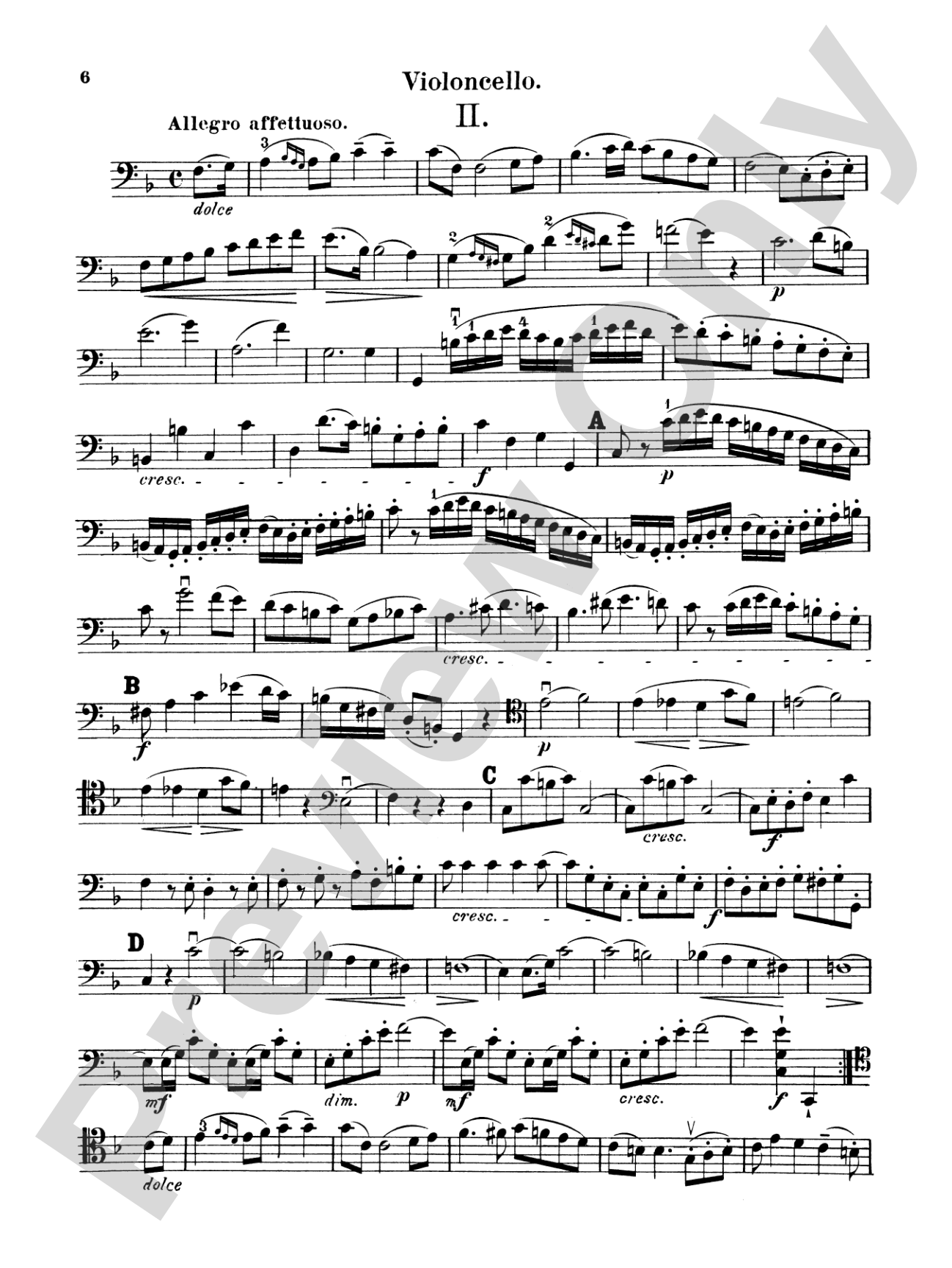
Includes separate violin and cello parts. I. Allegro comodo * Larghetto sostenuto * Rondo, II. Allegro affettuoso * Aria * Rondo, III. Allegro sostenuto * Aria con Variazioni * Allegro assai.
Discover MakeMusic Cloud: thousands of interactive titles your students can play along with today.
Ludwig van Beethoven (1770-1827) fundamentally transformed chamber music by expanding its emotional range and structural ambition. Working across the Classical and early Romantic periods, he elevated the string duo from salon entertainment to serious artistic statement, demanding equal musical responsibility from both instruments rather than treating one as accompaniment.
Why we love this
These three duets showcase Beethoven at his most intimate and conversational. The writing balances virtuosity with lyricism, giving both violinist and cellist equally satisfying musical material; there's no hierarchy here, just two voices in genuine dialogue. They work beautifully in recital or festival contexts and reward the kind of chamber music commitment that builds ensemble musicianship.
What to expect
Intimate yet urgent. Beethoven writes in short, declarative gestures that feel both personal and formally rigorous; you move quickly between tender lyricism and brilliant figuration. The three duets create a complete emotional arc across the set, from energetic warmth through lyrical introspection to virtuosic drive.
Who it's for
Advanced high school and undergraduate string players ready for substantial chamber repertoire. These duets suit musicians preparing for competitions, festival performances, or meaningful recital work, and they demand genuine partnership between performers rather than a lead-and-follow dynamic.
How to get the most out of it
Invest time in the slow movements (Larghetto sostenuto, Aria, Aria con Variazioni). Beethoven's writing here is deceptively simple; transparency and tone quality matter more than technical flash.
Balance the opening statements in each movement carefully. Since both players carry thematic weight, clarity of entrance and phrase shape will define the performance.
The rondo sections reward rhythmic precision and forward momentum. Maintain a conversational pace rather than rushing; let the dialogue breathe.
How to use it
Program these as a complete set to anchor a chamber recital and show off your string program's depth. A single duet also pairs well with solo repertoire or with larger ensemble works, offering a sophisticated showcase for two serious players. They're substantial enough to justify a full recital but intimate enough to program flexibly.
Skills your students will build
Balancing two independent lines of equal musical importance
Shaping phrase contours across multiple movements with stylistic variety
Navigating Classical and early Romantic harmonic language
Building ensemble communication and rhythmic unity without a conductor
Developing expressive control in slow movements with minimal accompaniment
You May Also Like
Scan to Complete Your Purchase
Use your phone's camera to scan the code below
You'll log in on your phone and the order will be added to your account