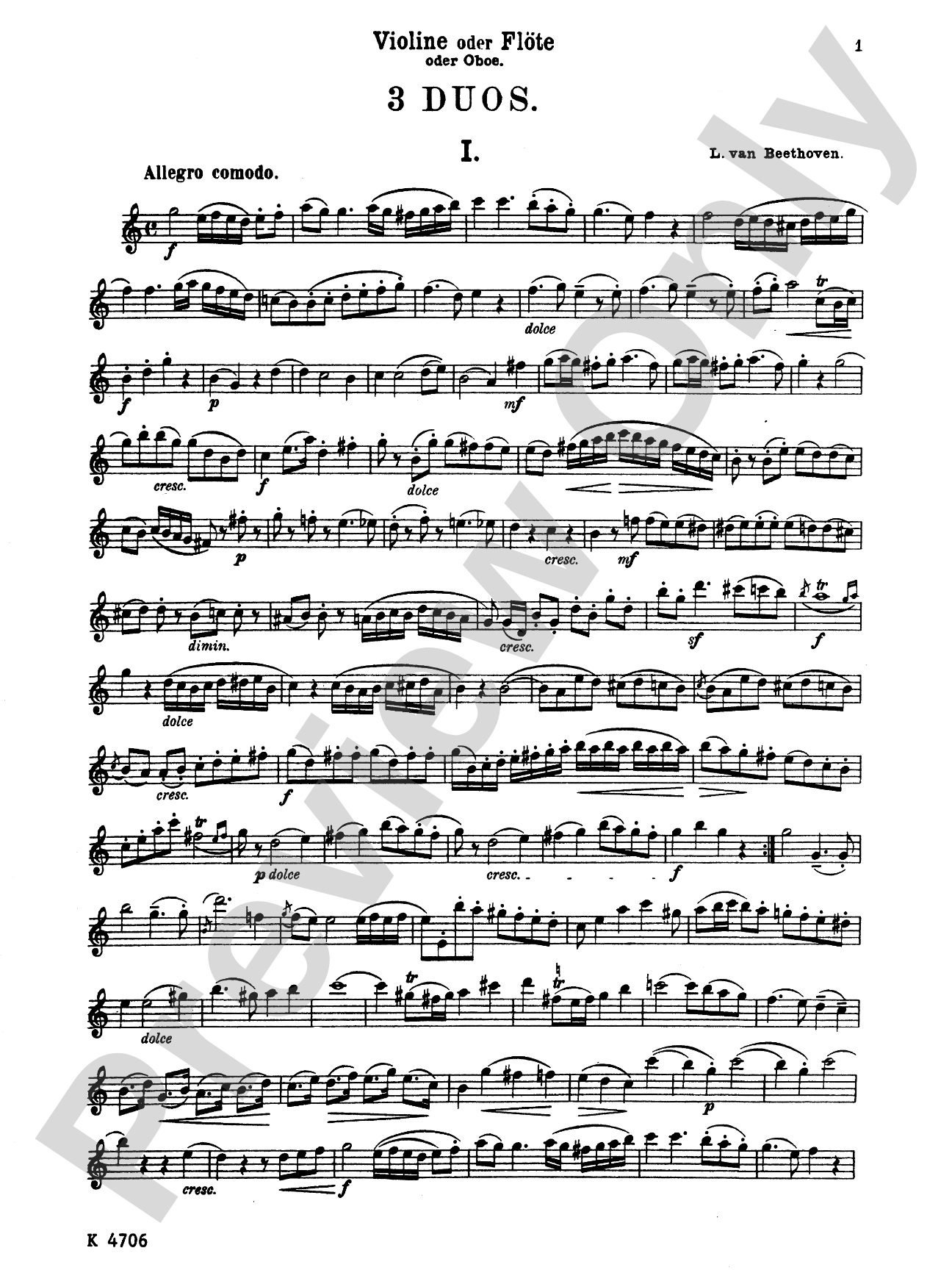
Beethoven: Three Duets Sheet Music Preview

Beethoven: Three Duets

By Ludwig van Beethoven

Item: 00-PC-0010978

Digital Download
$2.99
Description
Three duets for flute or oboe or violin and cello or bassoon.

Don't just read it, hear it, play along with it, and watch your students grow with it. In MakeMusic Cloud, Beethoven: Three Duets comes alive with professional accompaniment, adjustable tempo, and built-in practice tools that turn solo practice into real progress.

Sample Audio
No sample audio found.
Sample Video
Additional Details
Series: Kalmus Edition
Publisher: Alfred Music
Page Count: 12
SKU: 00-PC-0010978
Instrumentation: Flute/Oboe/Violin & Cello/Bassoon

More about this title

About the Composer: Ludwig van Beethoven

Ludwig van Beethoven (1770-1827) stands as the bridge between Classical and Romantic eras, a composer whose chamber works reveal his genius for intimate, conversational writing. His duets showcase the same structural clarity and emotional depth found in his symphonies, but compressed into dialogues between two instruments where every voice matters equally.

Why we love this

These duets reveal Beethoven's gift for melodic invention and formal balance at the chamber level. The flexibility of instrumentation (flute or oboe paired with cello or bassoon) means you can program them with the players you have while maintaining the composer's voice entirely. They're substantial enough to anchor a recital but nimble enough to fit alongside other Classical repertoire.

What to expect

Elegant and conversational, with the clarity of Classical form tempered by Romantic warmth. The dialogues unfold naturally, with moments of lyrical beauty and passages of brisk playfulness that highlight each performer's voice.

Who it's for

Chamber musicians seeking standard Classical duet literature and teachers building duet repertoire for flute, oboe, violin, cello, or bassoon students. These works suit intermediate to advanced players who read comfortably and can handle independent melodic lines.

How to get the most out of it

  • Balance the two voices as equals; neither instrument should dominate. These are conversations, not accompaniment relationships.
  • Shape phrases with clear arrival points and breathing moments. The Classical structure rewards purposeful phrasing that respects the form.
  • Choose your instrumental pairing thoughtfully before rehearsal begins. The flute-cello combination will sound brighter and more transparent; oboe-bassoon creates warmer color and more tonal blend.

How to use it

Program these as a bridge between large ensemble works and solo repertoire in a student recital, or pair them with other Beethoven chamber music to create a composer-focused concert. They work equally well in educational settings where students perform for peers and in public recital contexts.

Skills your students will build

  • Ensemble balance and voice independence
  • Phrasing and shaping within Classical forms
  • Listening and responding to a peer's musical choices
  • Reading and executing period-appropriate articulation and ornamentation

You May Also Like