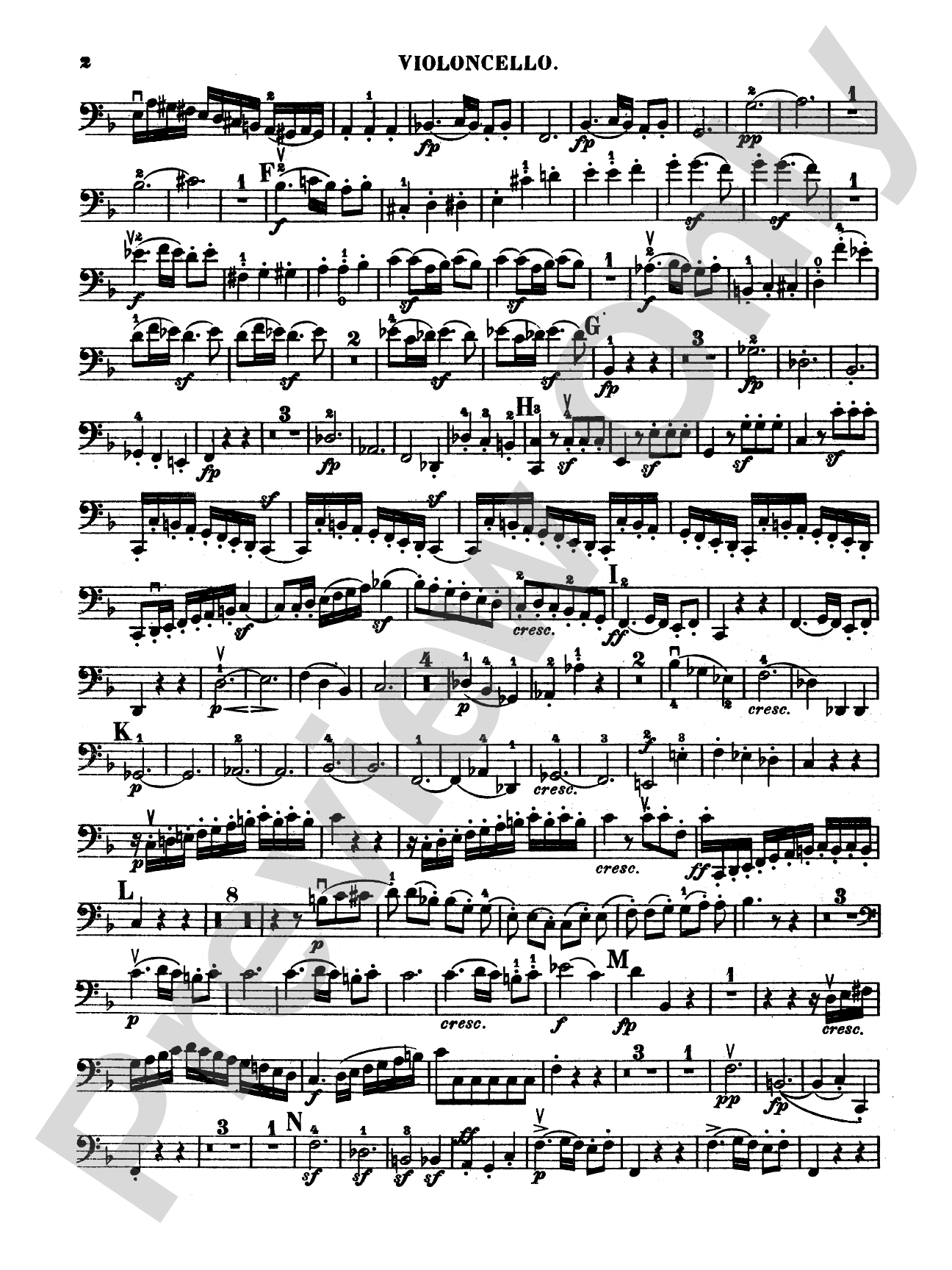
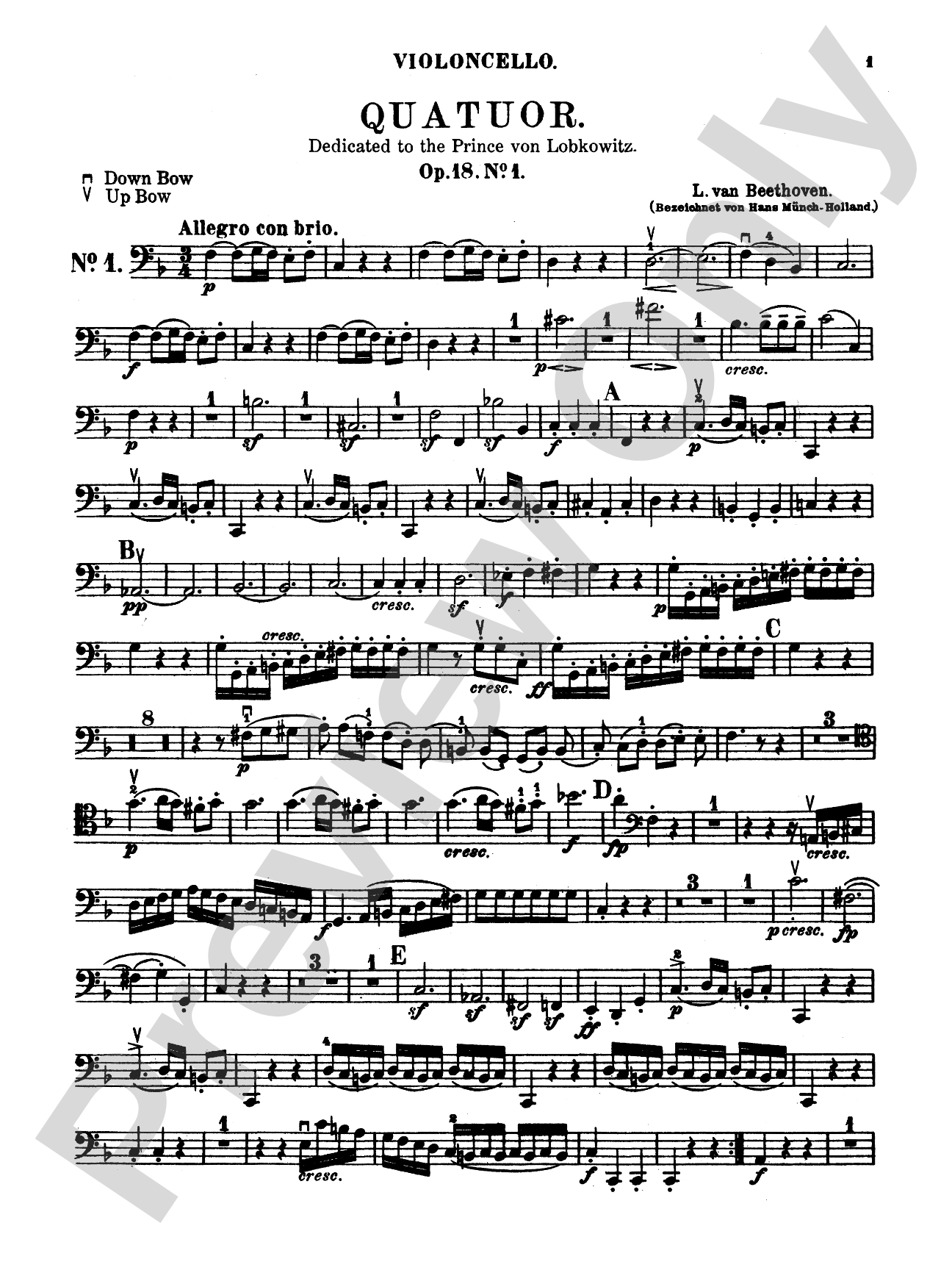
Beethoven: String Quartets, Volume I, Op. 18 (Nos. 1-6) Sheet Music Preview

Beethoven: String Quartets, Volume I, Op. 18 (Nos. 1-6)

By Ludwig van Beethoven

Item: 00-PC-0005122

Digital Download
$0.99
Description

Don't just read it, hear it, play along with it, and watch your students grow with it. In MakeMusic Cloud, Beethoven: String Quartets, Volume I, Op. 18 (Nos. 1-6) comes alive with professional accompaniment, adjustable tempo, and built-in practice tools that turn solo practice into real progress.

Sample Audio
No sample audio found.
Sample Video
Additional Details
Series: Kalmus Edition
Publisher: Alfred Music
Page Count: 202
SKU: 00-PC-0005122

More about this title

About the Composer: Ludwig van Beethoven

Ludwig van Beethoven (1770–1827) transformed the string quartet from an elegant chamber form into a vehicle for profound philosophical and emotional exploration. Working in Vienna during the Classical and early Romantic periods, he expanded the genre's harmonic vocabulary, structural ambition, and expressive range, setting the standard that would define string quartet writing for generations of composers to follow.

Beethoven's early quartets, Op. 18, reveal a composer building on Haydn and Mozart while already pushing toward his own voice. These six works showcase his gift for thematic development, surprising harmonic turns, and the integration of folk-like melodies with rigorous formal architecture. They remain essential repertoire for chamber musicians seeking to understand how the string quartet evolved from drawing-room entertainment into a medium for serious artistic statement.

Why we love this

Op. 18 occupies a unique position in the quartet repertoire: these works are accessible enough for dedicated student ensembles to tackle, yet sophisticated enough to reward years of study and reveal new details with each performance. The six quartets offer variety in character and difficulty, allowing you to build a student quartet program that grows progressively, and they're recognized as contest and festival staples, so your ensemble gains both artistic growth and competitive repertoire from a single volume.

What to expect

These quartets balance elegance with urgency. Melodies often sing with Classical grace, but underneath runs a restless harmonic energy and structural intelligence that keeps the listener engaged. You'll encounter moments of intimate lyricism alongside surprising dramatic turns, sudden shifts in texture, and development sections that spiral through unexpected keys, all delivered with the directness and conviction that made Beethoven's voice unmistakable even in his early years.

Who it's for

Advanced high school string quartets, chamber ensembles at the undergraduate level, and community quartet groups ready to engage with substantial Classical-Romantic repertoire. Violists and cellists benefit especially from these works, which give them genuinely interesting material rather than subordinate accompaniment roles.

How to get the most out of it

  • Approach the expositions with clear phrase architecture and allow breathing space between ideas; Beethoven's melodies are often built from short motifs that need definition rather than legato blur.
  • Balance the first violin line carefully against the inner voices, which frequently carry essential harmonic and textural information that shouldn't be buried.
  • Pay attention to the repeat signs and first/second endings; they're integral to Beethoven's structural plan and skipping them alters the formal shape.
  • Experiment with slight tempo flexibility in the development sections to highlight the surprise key changes and thematic transformations rather than treating them as linear progressions.

How to use it

These six quartets work beautifully in a chamber music festival or concert series where you can program one or two across an evening, letting audiences experience how Beethoven develops his ideas across multiple movements. They're also ideal for student quartet contests, where performance of recognizable, respected repertoire builds credibility, or as the foundation of a semester-long chamber music seminar exploring the evolution of the string quartet.

Skills your students will build

  • Unified ensemble intonation across changing harmonic contexts
  • Characterization of thematic material through articulation and tone color
  • Balance and independence of inner voices within homophonic and contrapuntal textures
  • Navigation of formal structure across four-movement cycles
  • Ensemble entrances and releases following rests and held notes
  • Interpretation of period-appropriate articulation and phrasing conventions

You May Also Like