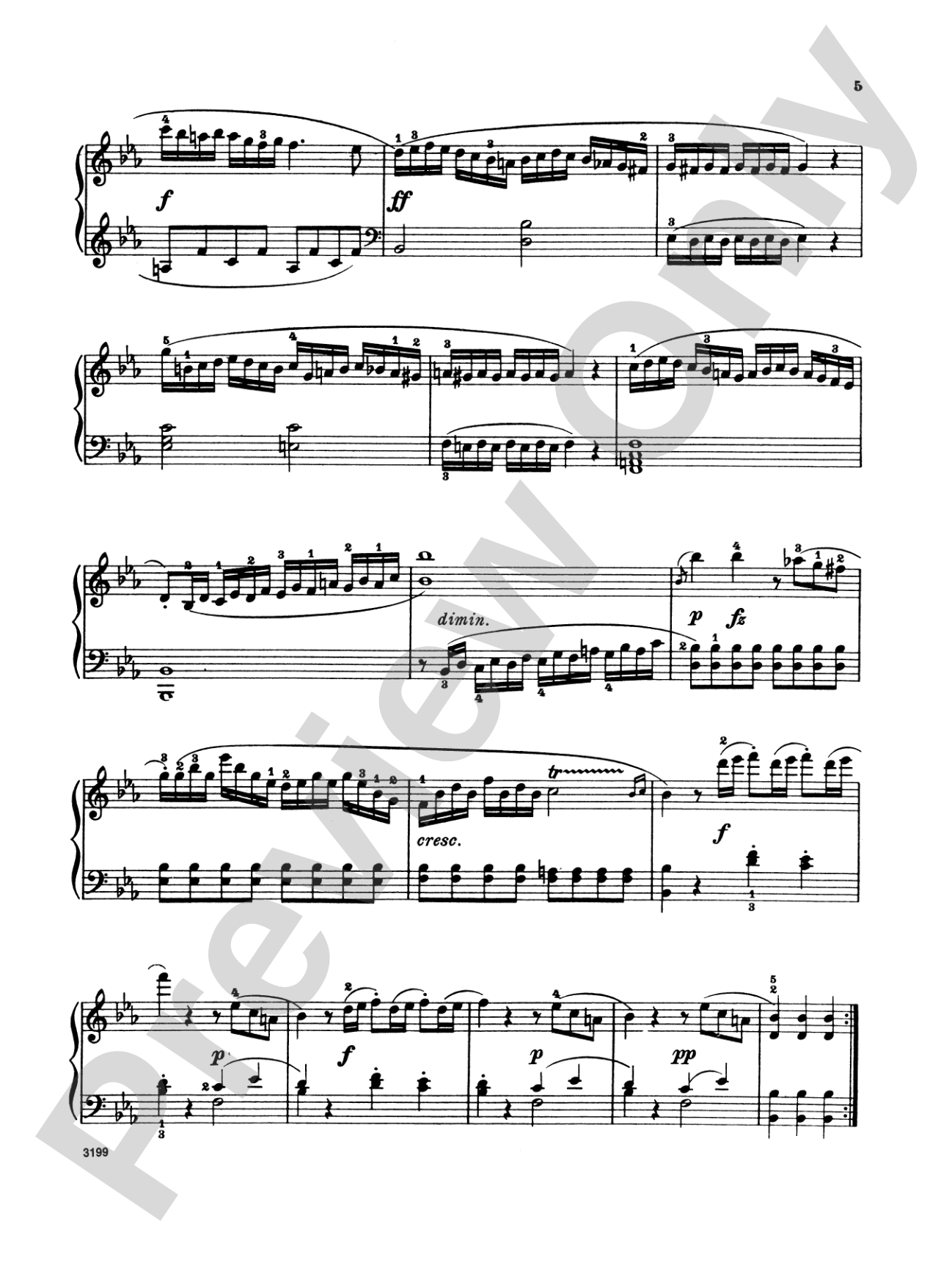
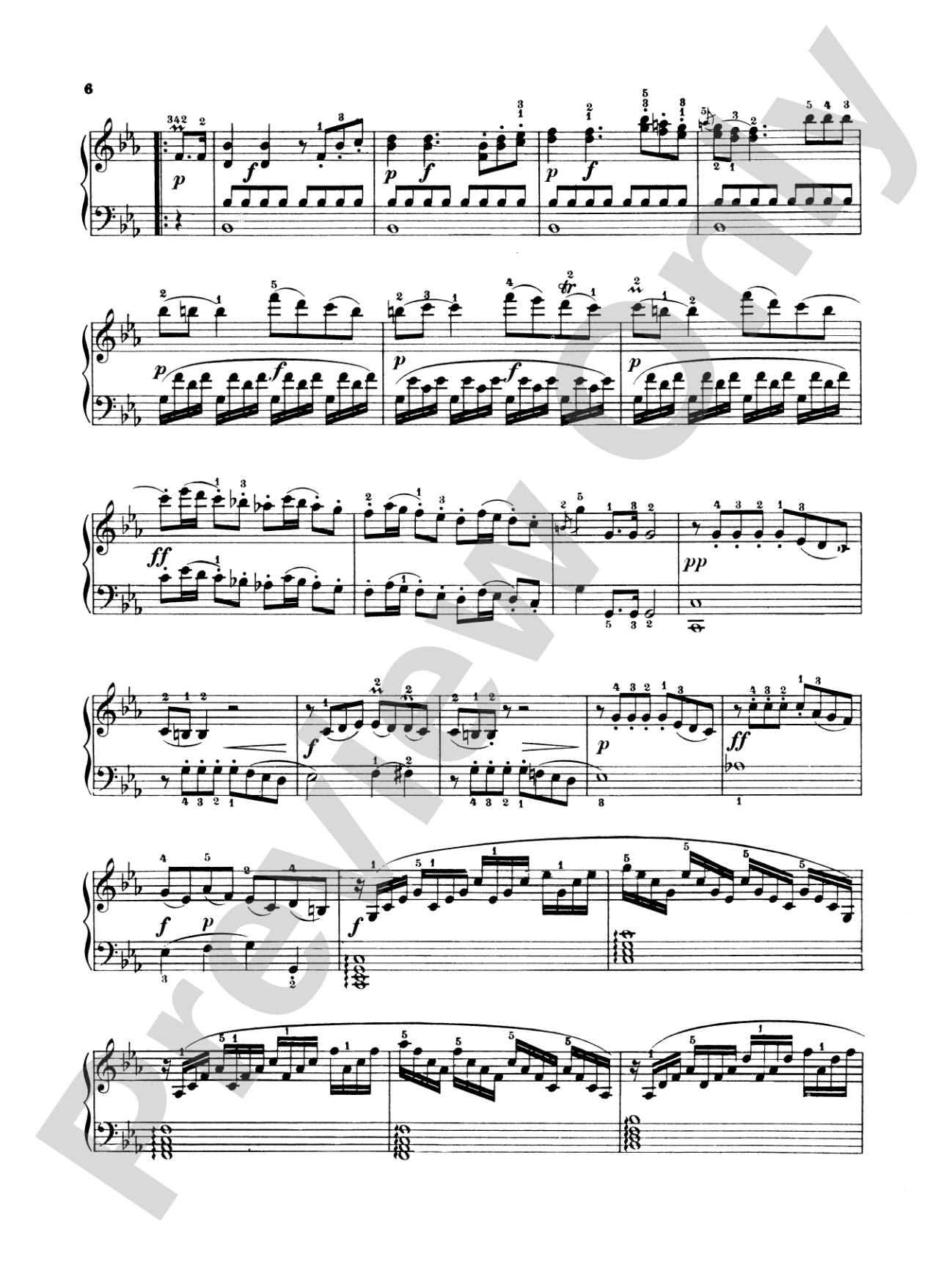
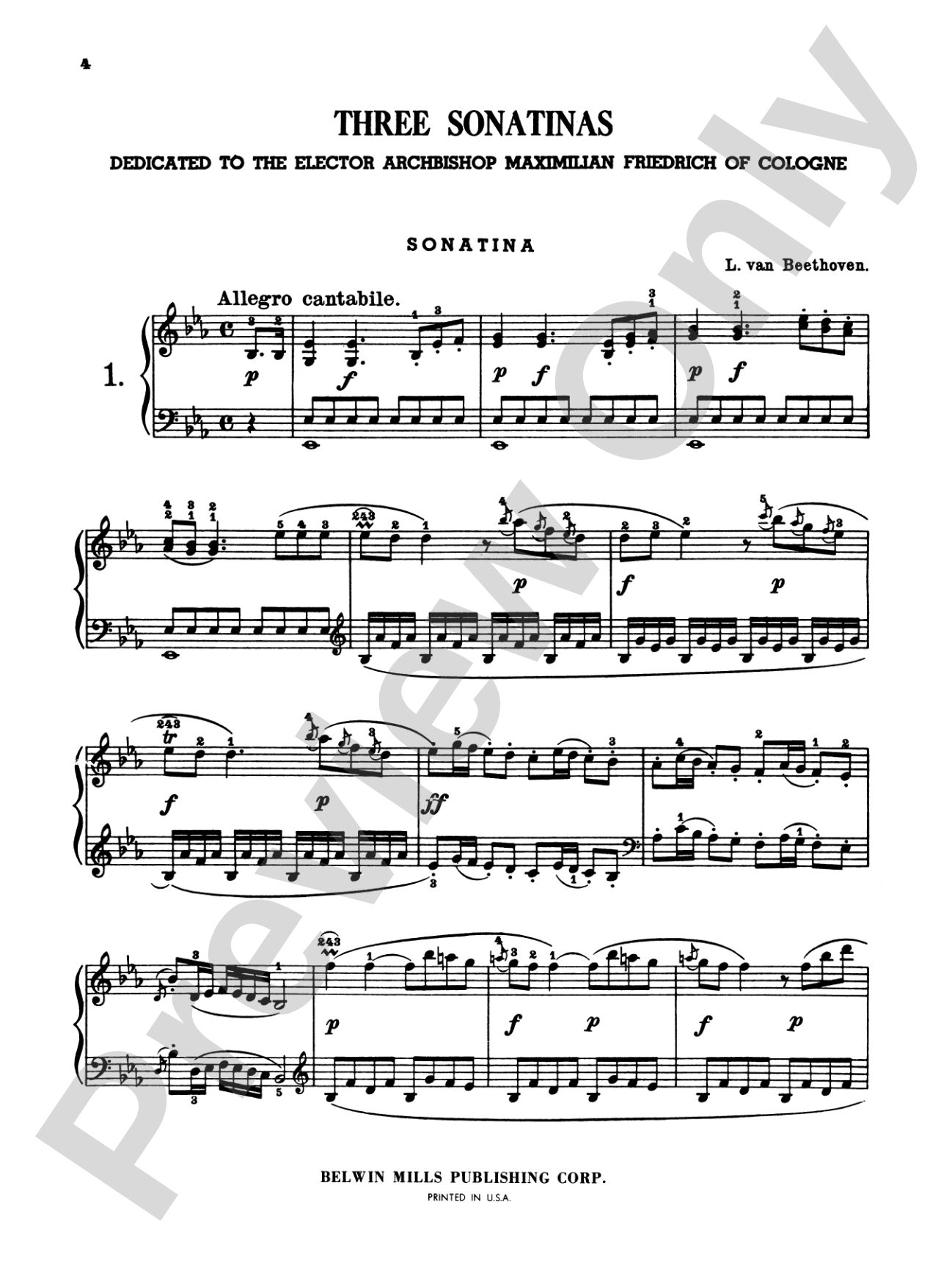
Beethoven: Sonatinas, Complete Sheet Music Preview

Beethoven: Sonatinas, Complete

By Ludwig van Beethoven

Level: Advanced

Item: 00-PC-0005307

Digital Download
$0.99
Description
Includes: Sonatina No. 1 in E-flat Major * Sonatina No. 2 in F Minor * Sonatina No. 3 in D Major * Sonatina No. 4 in C Major * Sonatina No. 5 in G Major * Sonatina No. 6 in F Major.

Don't just read it, hear it, play along with it, and watch your students grow with it. In MakeMusic Cloud, Beethoven: Sonatinas, Complete comes alive with professional accompaniment, adjustable tempo, and built-in practice tools that turn solo practice into real progress.

Sample Audio
No sample audio found.
Sample Video
Additional Details
Series: Kalmus Edition
Publisher: Alfred Music
Page Count: 52
SKU: 00-PC-0005307

More about this title

About the Composer: Ludwig van Beethoven

Ludwig van Beethoven (1770-1827) stands at the threshold between Classical restraint and Romantic expression. His early works, including these sonatinas, reveal a composer already pushing against the formal boundaries of his predecessors while maintaining the clarity and structural logic of the Classical tradition. His influence on Western music is immeasurable; he expanded what the piano could express and proved that instrumental music could carry profound emotional weight without text or program.

For pianists and students, Beethoven's sonatinas offer something rare: works of genuine artistic substance that remain approachable for advancing players. They capture a pivotal moment in music history when the composer was still finding his voice, making them invaluable for understanding both the Classical period and Beethoven's own artistic development.

Why we love this

These six sonatinas bridge the gap between early-level repertoire and the monumental sonatas that define Beethoven's legacy. Each work is individually convincing and structurally sophisticated; you're not teaching simplified versions but genuine compositions that reward careful attention to voicing, articulation, and dramatic pacing. A student who masters this collection understands Classical form from the inside.

What to expect

These sonatinas sparkle with clarity and purpose. Each movement feels like a small journey: you encounter a memorable idea, see it tested and developed, and arrive at a satisfying harmonic home. There's elegance and wit here, moments of tenderness, and passages that hint at the passionate intensity Beethoven would later unleash.

Who it's for

Advanced high school pianists and conservatory-level students ready to engage with serious Classical repertoire and build independence in interpretation. Teachers seeking substantial, rewarding works that prepare students for Beethoven's mature sonatas and comparable works by Haydn and Mozart.

How to get the most out of it

  • Attend to the character marking at the head of each movement. Beethoven's tempo and mood indications are not decorative; they shape how you approach phrase architecture and dynamic contrast.
  • Balance clarity of texture with singing tone in the right hand. The Classical period prizes transparency, but Beethoven's melodies demand a full, legato sound that doesn't blur the underlying harmony.
  • Practice the left-hand patterns separately until they become second nature. Alberti figures and broken chords require steady, unaccented evenness so the right hand can shape the phrase without accompaniment noise.
  • Shape each phrase with gentle dynamic arcs rather than rigid terraced dynamics. Beethoven anticipates Romantic sensibility; allow breath and give in the phrasing.

How to use it

Program individual sonatinas in student recitals to show technical facility and interpretive maturity, or pair one with a contemporary work (Schumann, early Brahms) to illustrate the bridge between Classical and Romantic sensibilities. They also serve as excellent preparation for upper-level study of the complete sonatas.

Skills your students will build

  • Reading and performing multi-movement works with contrasting characters and textures
  • Interpreting Classical formal structures (sonata, rondo, theme and variations) from score
  • Balancing accompaniment patterns with melodic independence in the right hand
  • Managing articulation and phrasing to create dramatic shape within measured tempos
  • Identifying and responding to harmonic function and cadential structures

You May Also Like