
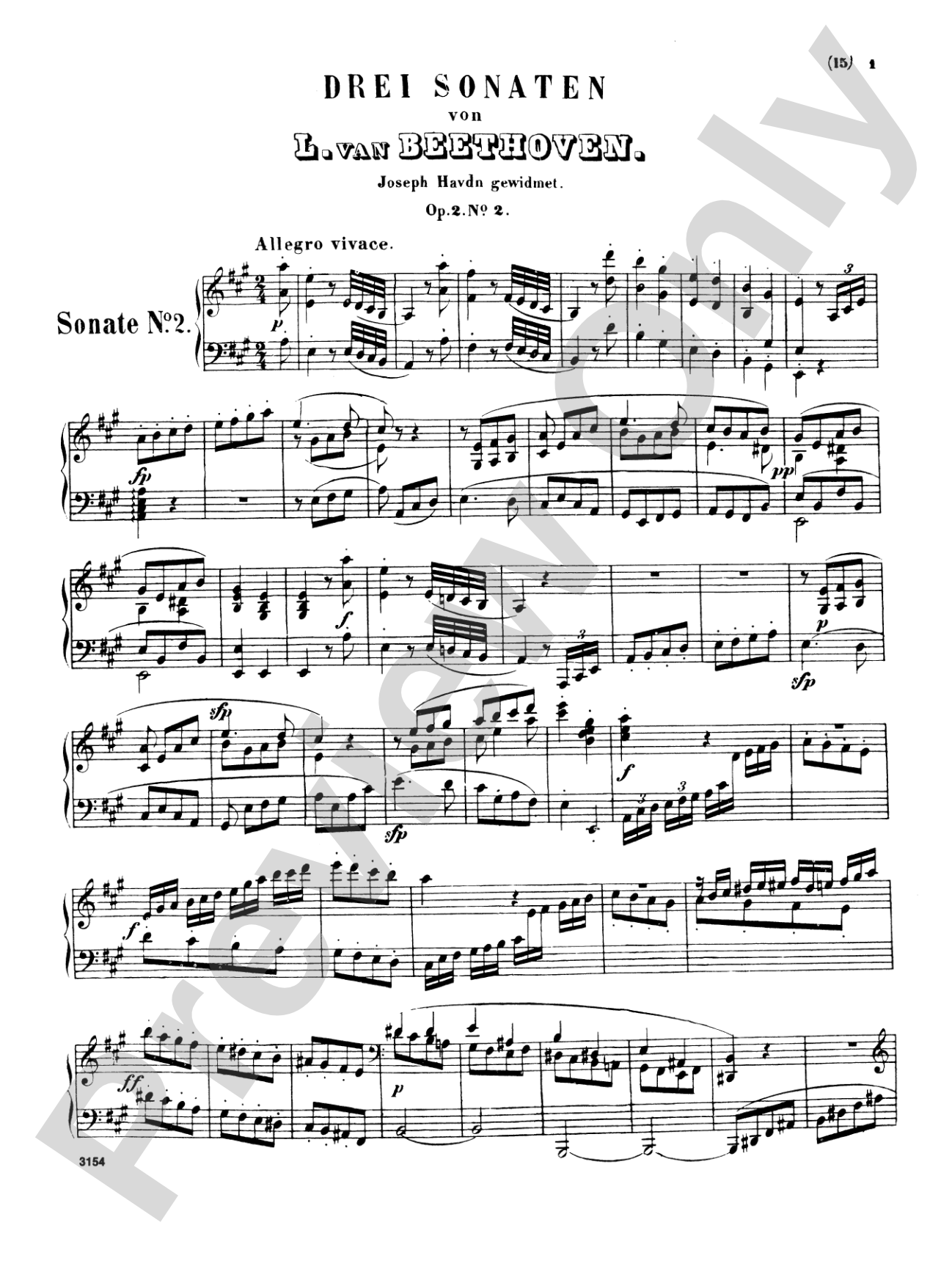

Beethoven: Sonatas (Urtext), Volume I (Nos. 1-15)
Nos. 1-15
By Ludwig van Beethoven
Level: Advanced
Item: 00-PC-0005194
$0.99
Pickup currently not available
Description
Titles: Sonata No. 1: Opus 2, No. 1 in F Minor * Sonata No. 2: Opus 2, No. 2 in A Major * Sonata No. 3: Opus 2, No. 3 in C Major * Sonata No. 4: Opus 7, E-Flat Major * Sonata No. 5: Opus 10, No. 1 in C Minor * Sonata No. 6: Opus 10, No. 2 in F Major * Sonata No. 7: Opus 10, No. 3 in D Major * Sonata No. 8: Opus 13, C Minor "Pathetique" * Sonata No. 9: Opus 14, No. 1 in E Major * Sonata No. 10: Opus 14, No. 2 in G Major * Sonata No. 11: Opus 22, B-Flat Major * Sonata No. 12: Opus 26, A-Flat Major * Sonata No. 13: Opus 27, No. 1 in E-Flat Major * Sonata No. 14: Opus 27, No. 2 in C-sharp Minor "Moonlight Sonata" * Sonata No. 15: Opus 28, D Major.


Don't just read it, hear it, play along with it, and watch your students grow with it. In MakeMusic Cloud, Beethoven: Sonatas (Urtext), Volume I (Nos. 1-15) comes alive with professional accompaniment, adjustable tempo, and built-in practice tools that turn solo practice into real progress.
Open in the Player
Jump straight in and assign it today.
Start Your Free Trial
Open this title and explore the full library in minutes.
Sample Audio
No sample audio found.
Sample Video
No sample videos found.
Additional Details
Series:
Kalmus Edition
Publisher:
Alfred Music
Page Count:
252
SKU:
00-PC-0005194
More about this title
About the Composer: Ludwig van Beethoven
Ludwig van Beethoven (1770-1827) stands as one of history's most consequential composers, bridging the Classical and Romantic periods through his relentless innovation and expressive depth. His piano sonatas represent the full arc of his artistic development, from the structured elegance of his early works through the visionary complexity of his late style. For pianists and teachers, his sonatas function as a complete curriculum in themselves: they demand technical mastery, interpretive maturity, and the ability to shape large-scale musical narratives.
Beethoven's approach to the sonata form was revolutionary. He expanded the possibilities of the genre, deepened its emotional range, and treated the piano not as an ornamental instrument but as a vehicle for profound musical thought. These works remain central to advanced piano study because they require pianists to synthesize technique, musicality, and intellectual engagement in equal measure.
Why we love this
This Urtext edition offers the authoritative texts students need to engage seriously with these cornerstone works. The fifteen sonatas span Beethoven's most formative decades, creating a natural trajectory for advanced pianists to trace his evolution from confident young composer through visionary maturity. Programming these works across multiple semesters or a full year provides both structure and substance to any advanced piano studio.
What to expect
These sonatas pulse with intellectual rigor and emotional urgency. Early works radiate confidence and Classical proportion, while later sonatas plunge into introspection, drama, and visionary spaces that feel startlingly modern. The journey from the crystalline Opus 2 sonatas through the profound Moonlight and Appassionata works traces the inner life of a revolutionary artist.
Who it's for
Advanced pianists preparing for competitions, university auditions, recitals, or professional performance will find essential repertoire here. This collection serves serious students who have mastered fundamental technique and are ready to engage with works that demand both virtuosity and interpretive depth.
How to get the most out of it
- Study the autograph manuscript facsimiles or Beethoven sketches when available; his compositional process illuminates interpretive choices, particularly in works like the Pathetique and Moonlight Sonatas where published editions have historically diverged.
- Approach the early sonatas (Nos. 1-3) with clarity of voice and structural awareness rather than Romantic excess; Beethoven's Classical foundation is essential to understanding his later innovations.
- Mark harmonic progressions and key relationships across movements before memorizing; Beethoven's large-scale architecture rewards deep structural analysis.
- Experiment with tempo relationships between movements, especially in multi-movement works; Beethoven's proportional indications reveal dramatic intent that metronome markings alone cannot convey.
How to use it
Sequence these sonatas across a full academic year or across multiple years of study, moving chronologically to allow students to experience Beethoven's stylistic development firsthand. Individual sonatas work beautifully on recital programs as anchor works paired with shorter contemporary pieces, or program the Pathetique and Moonlight as signature works that audiences recognize and expect from accomplished pianists.
Skills your students will build
- Reading and interpreting Urtext scores without editorial fingerings or pedal markings
- Large-scale formal analysis across sonata, rondo, and theme-and-variations structures
- Coordination of independent melodic lines and voices across both hands
- Sustaining musical narratives across multi-movement works
- Balancing Classical clarity with Romantic expression
- Executing rapid figurations and octave passages with control and precision
- Pedal technique for creating harmonic resonance without muddiness