
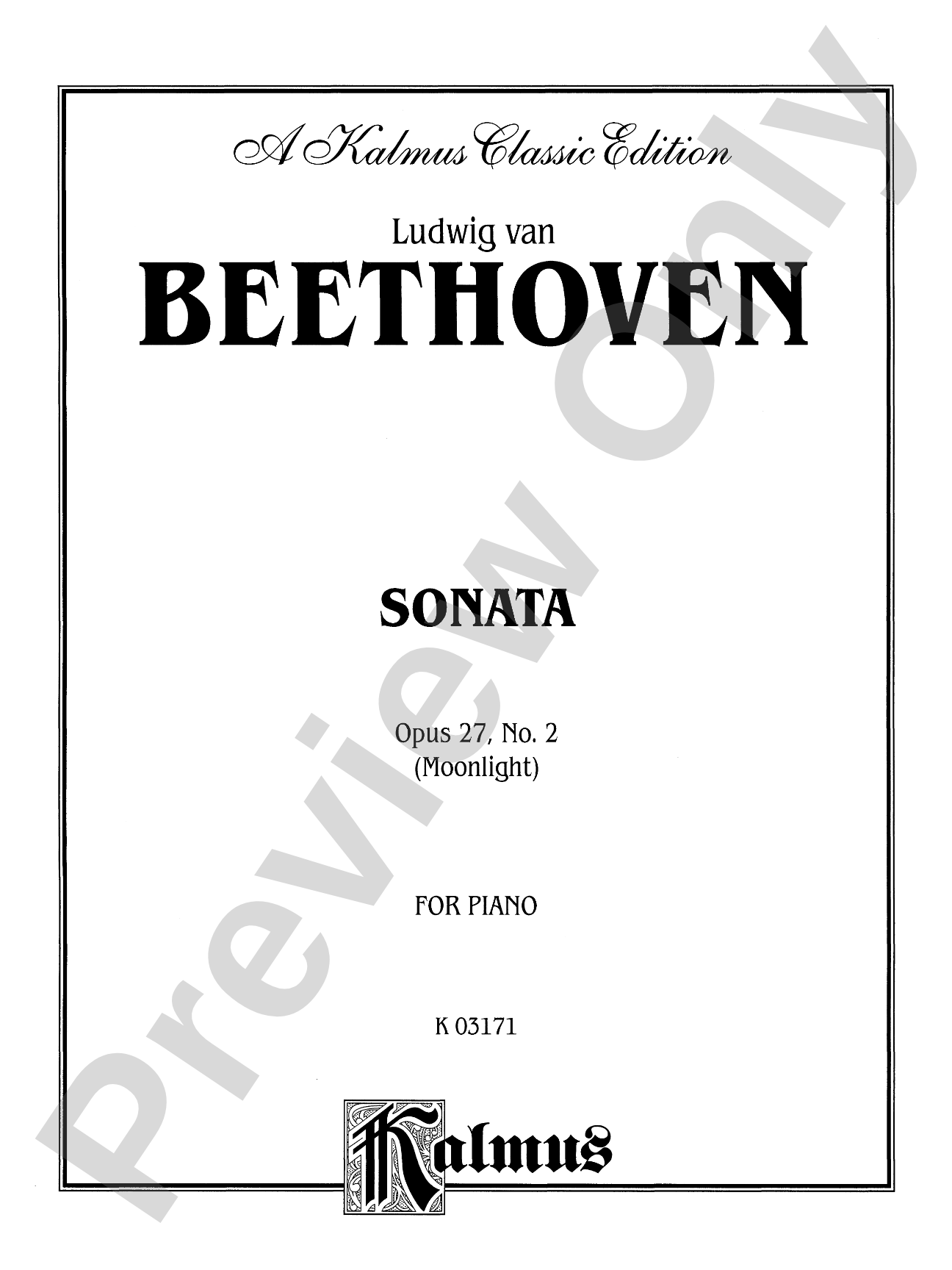

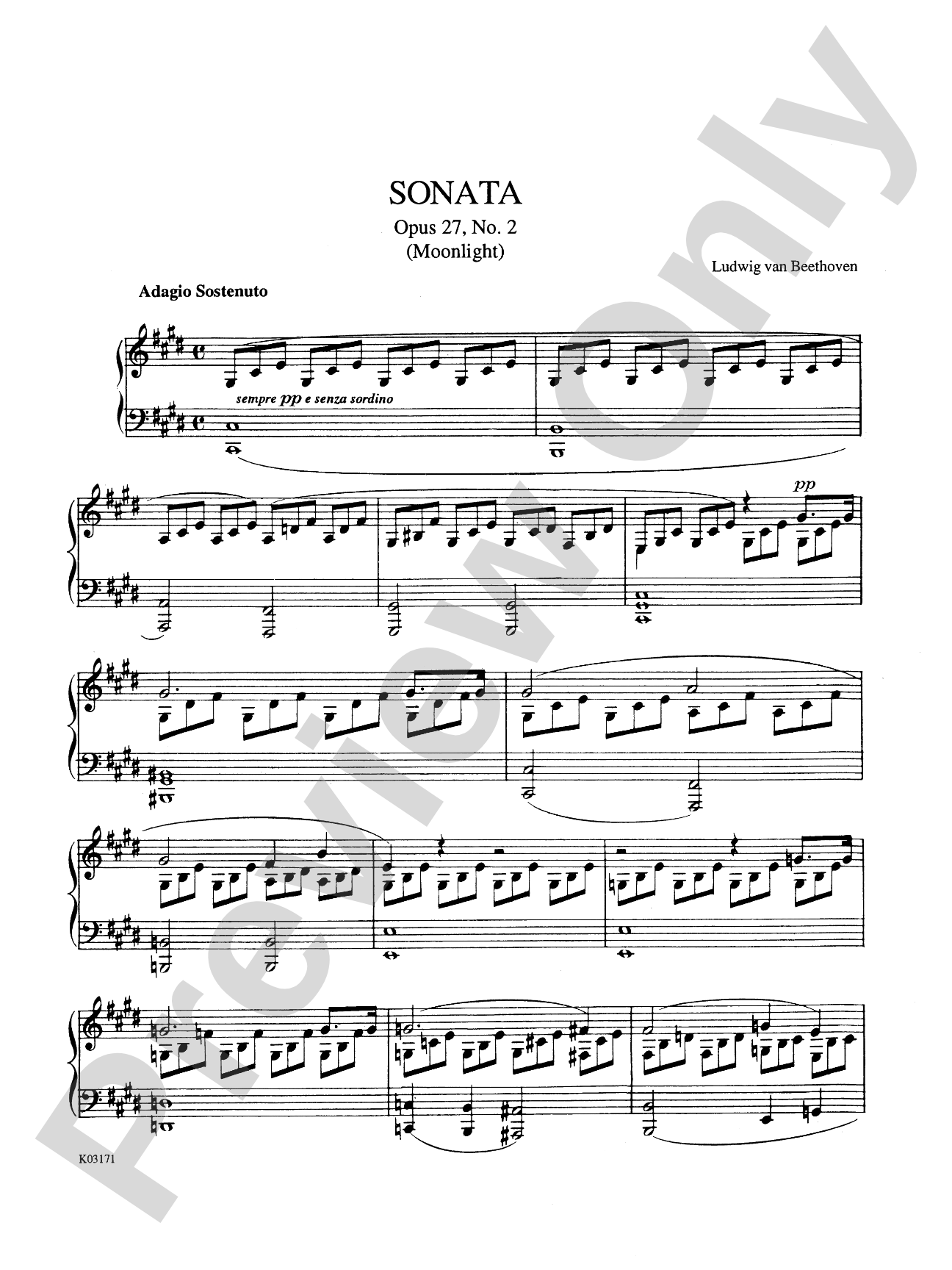
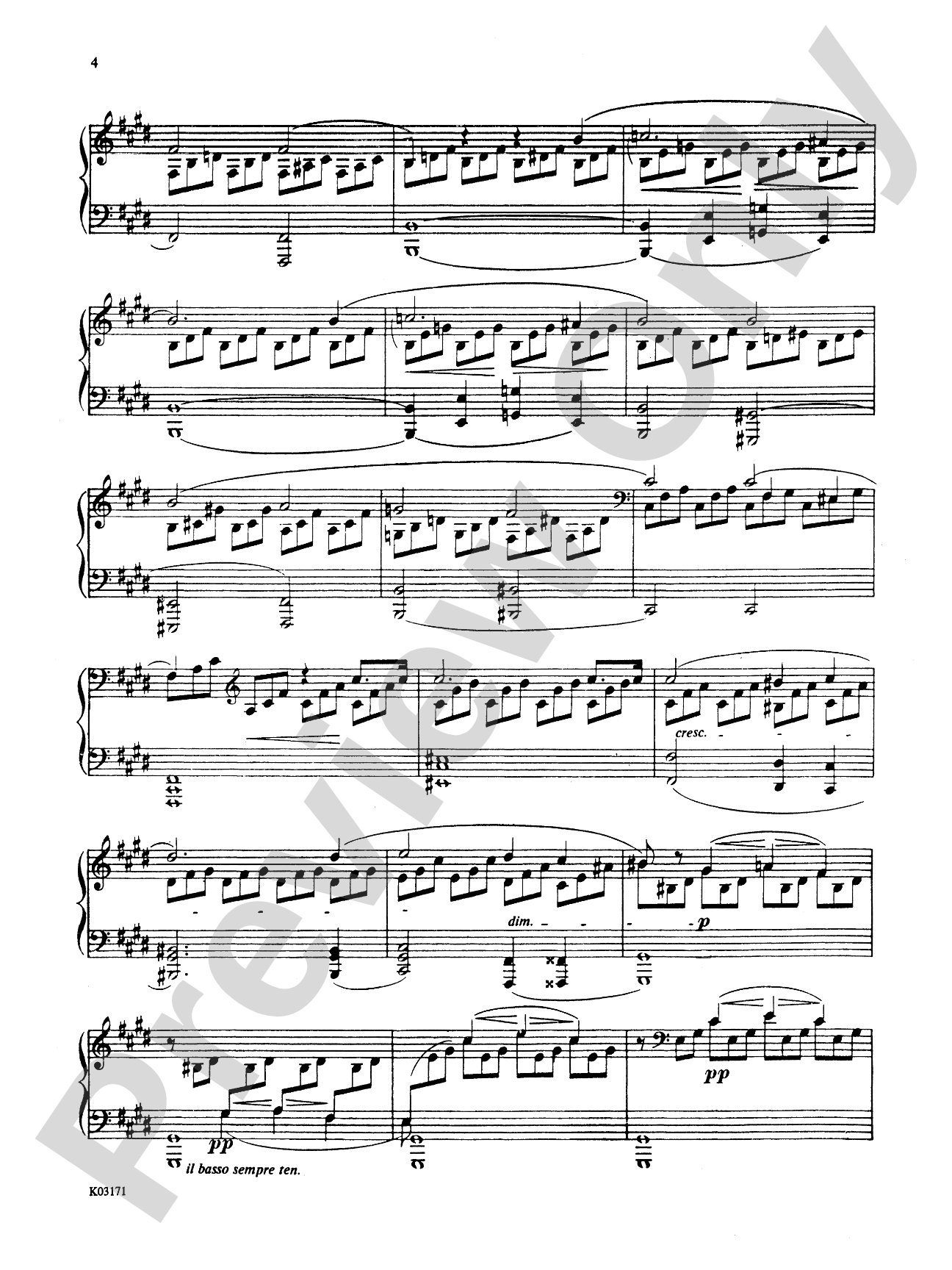
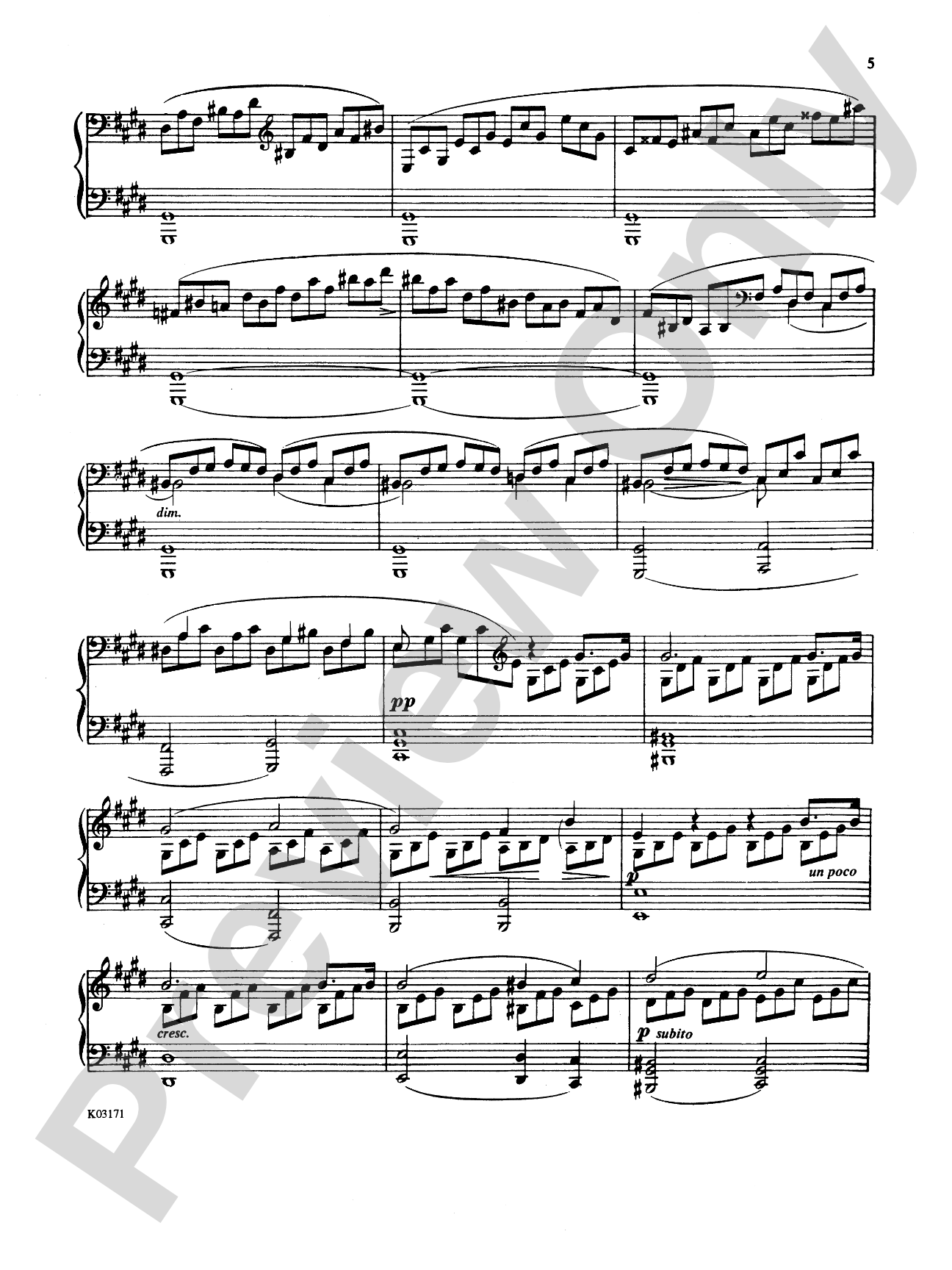
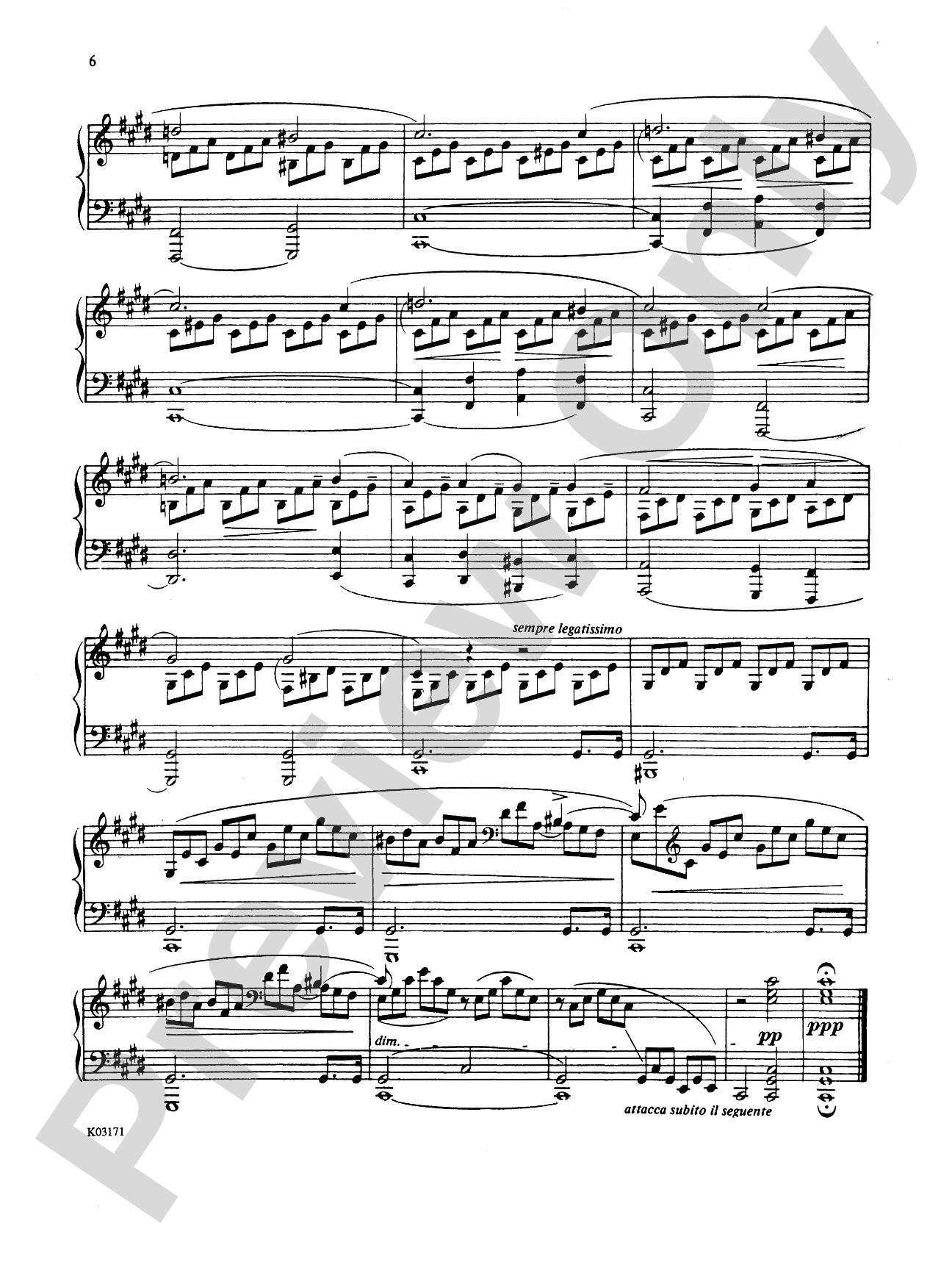
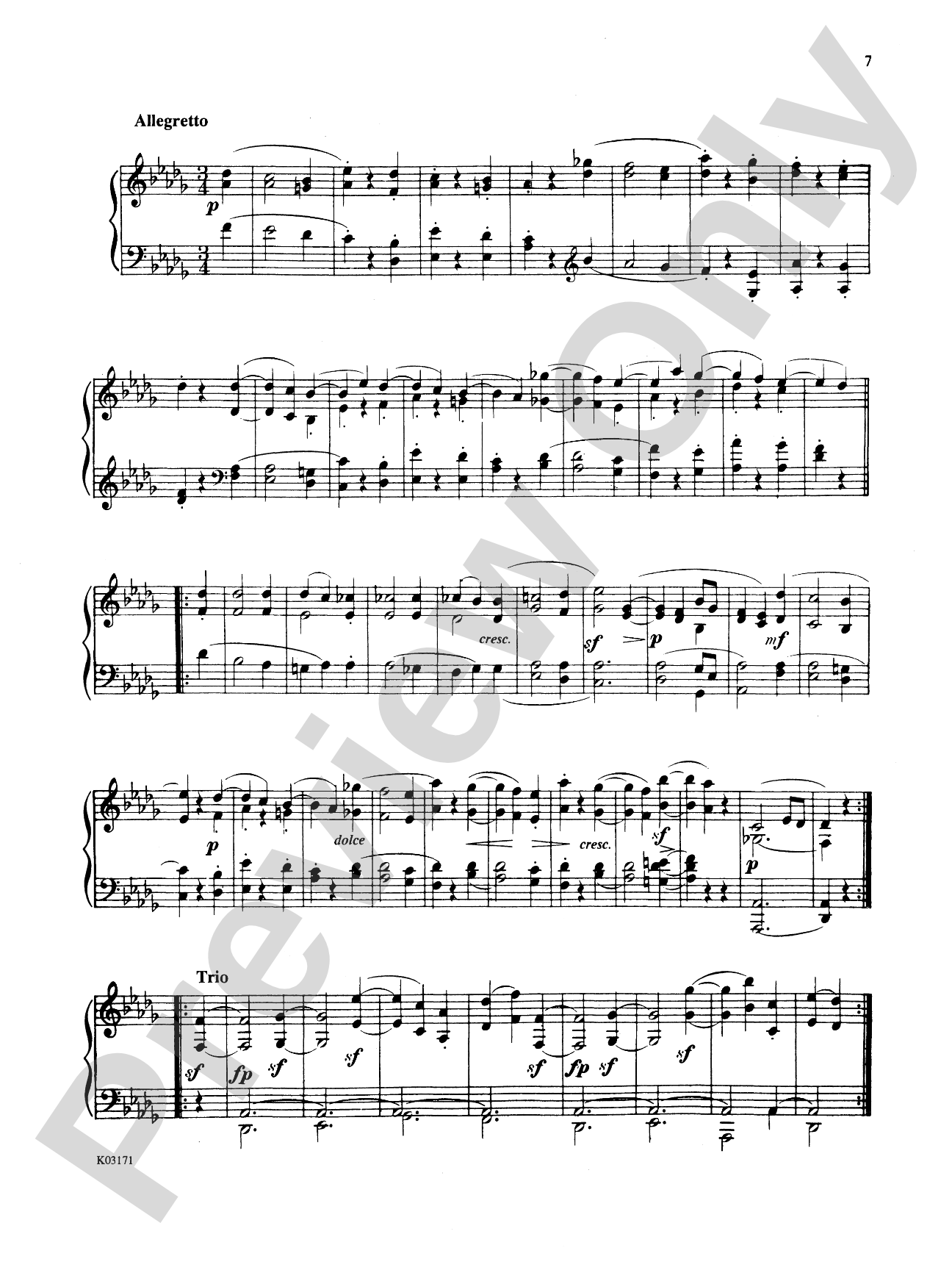
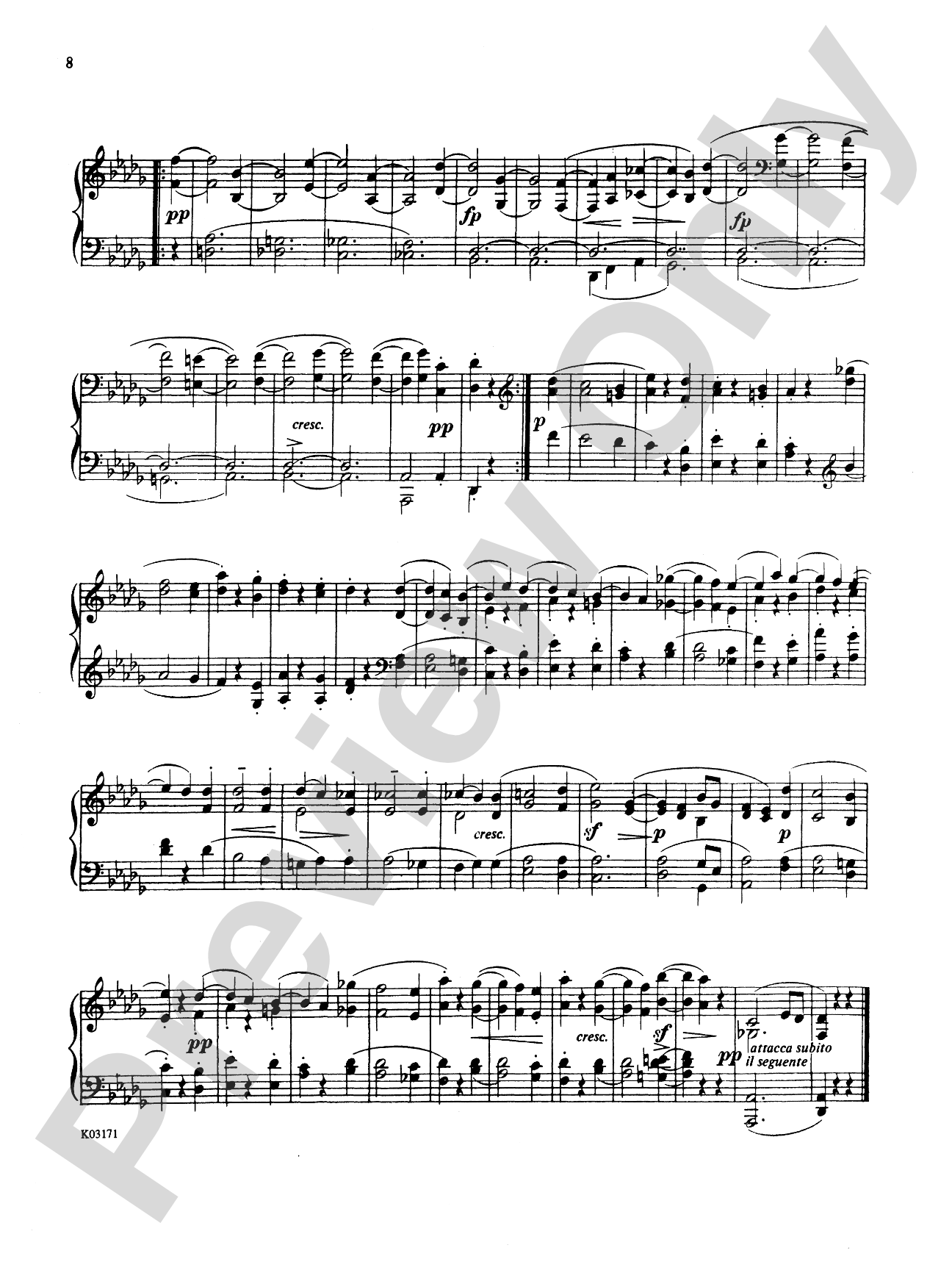
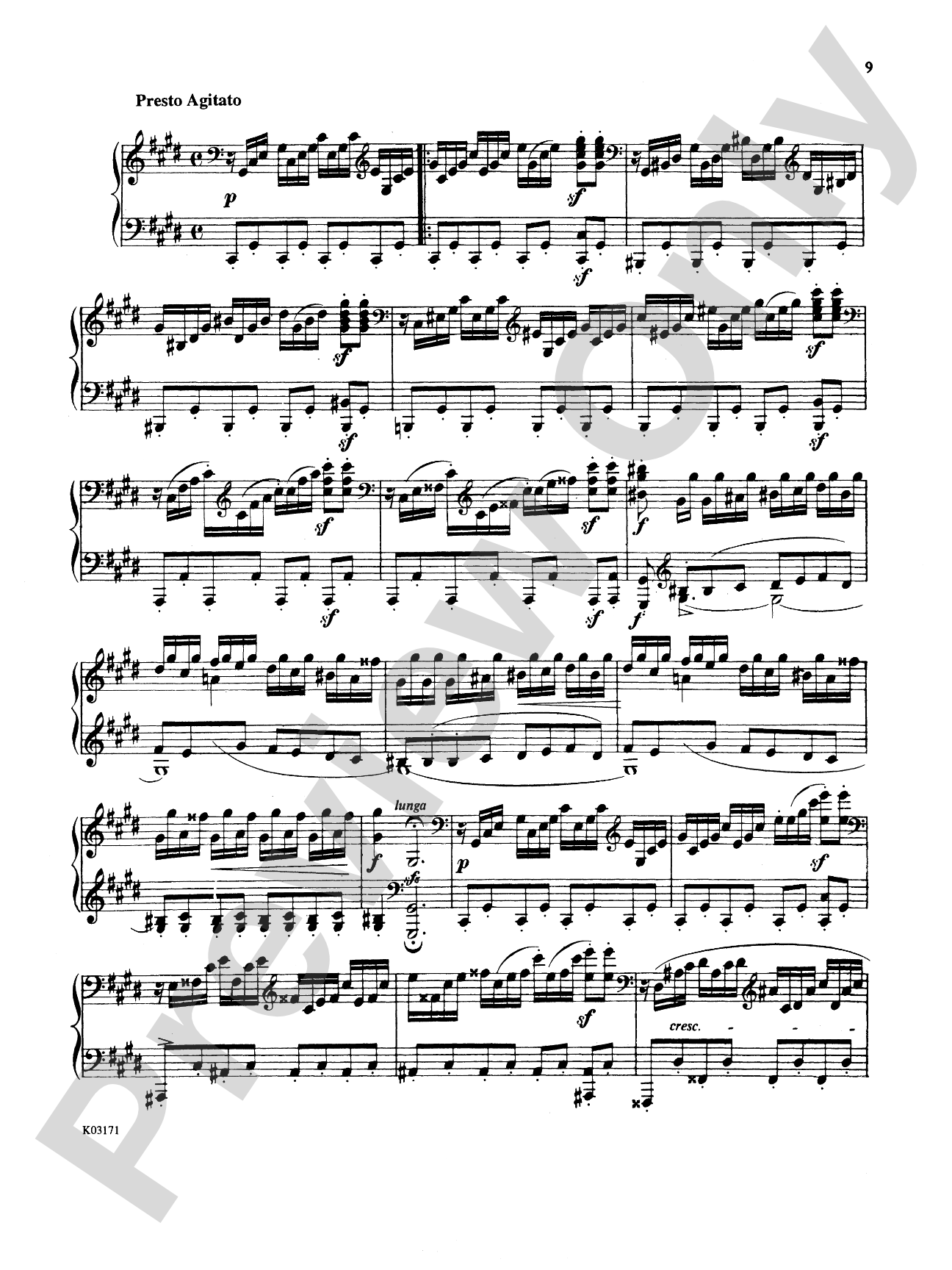
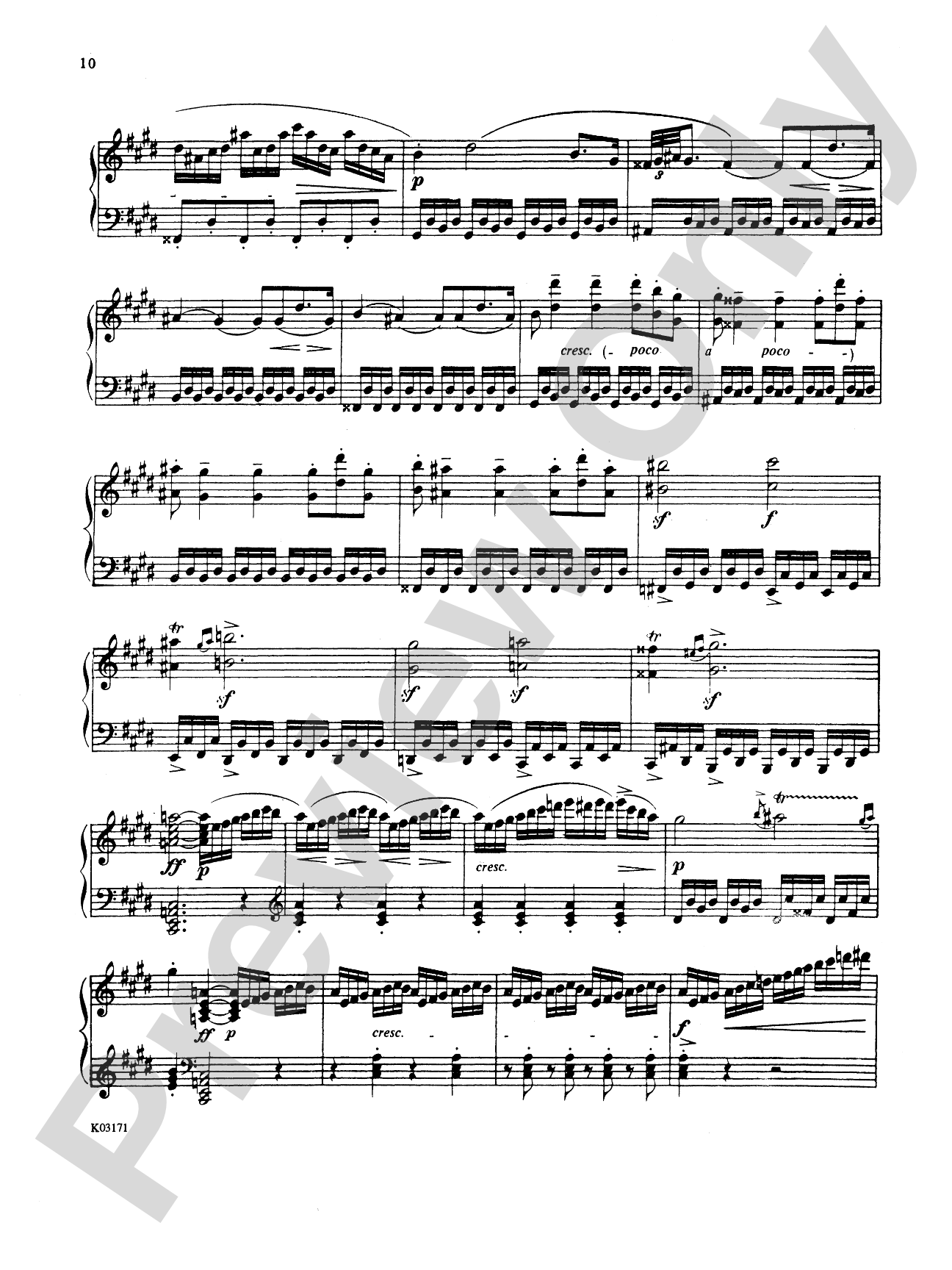
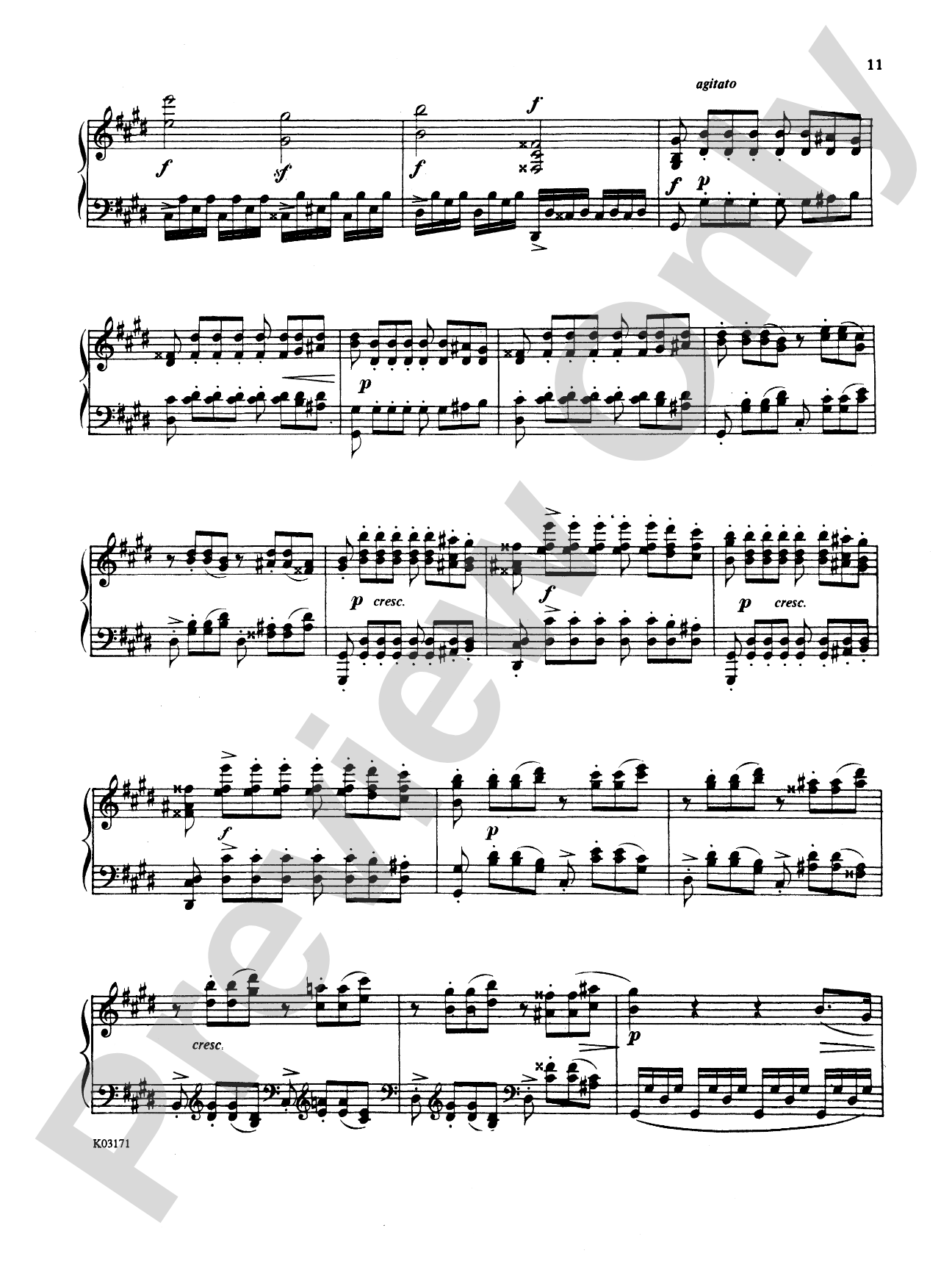
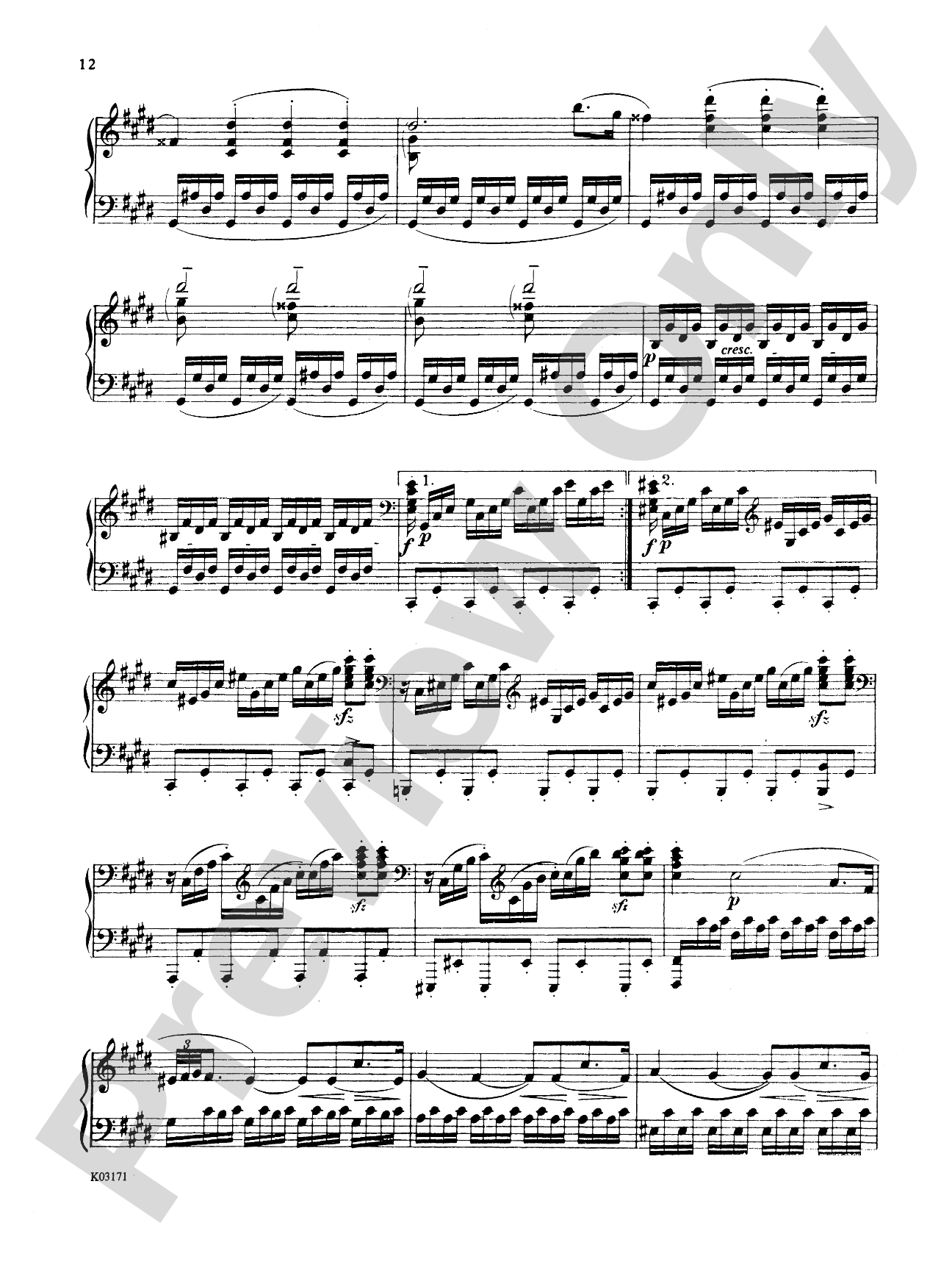
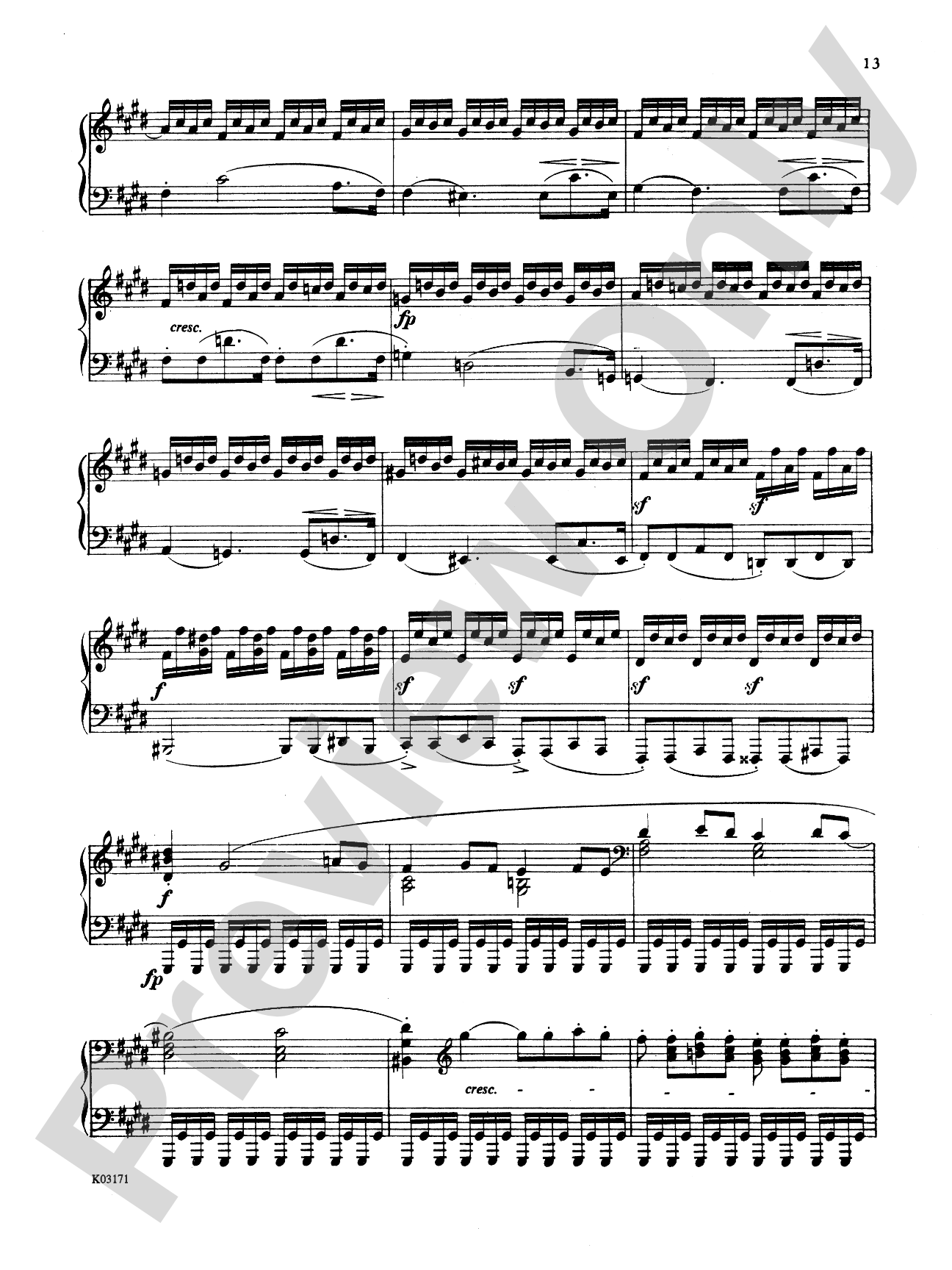
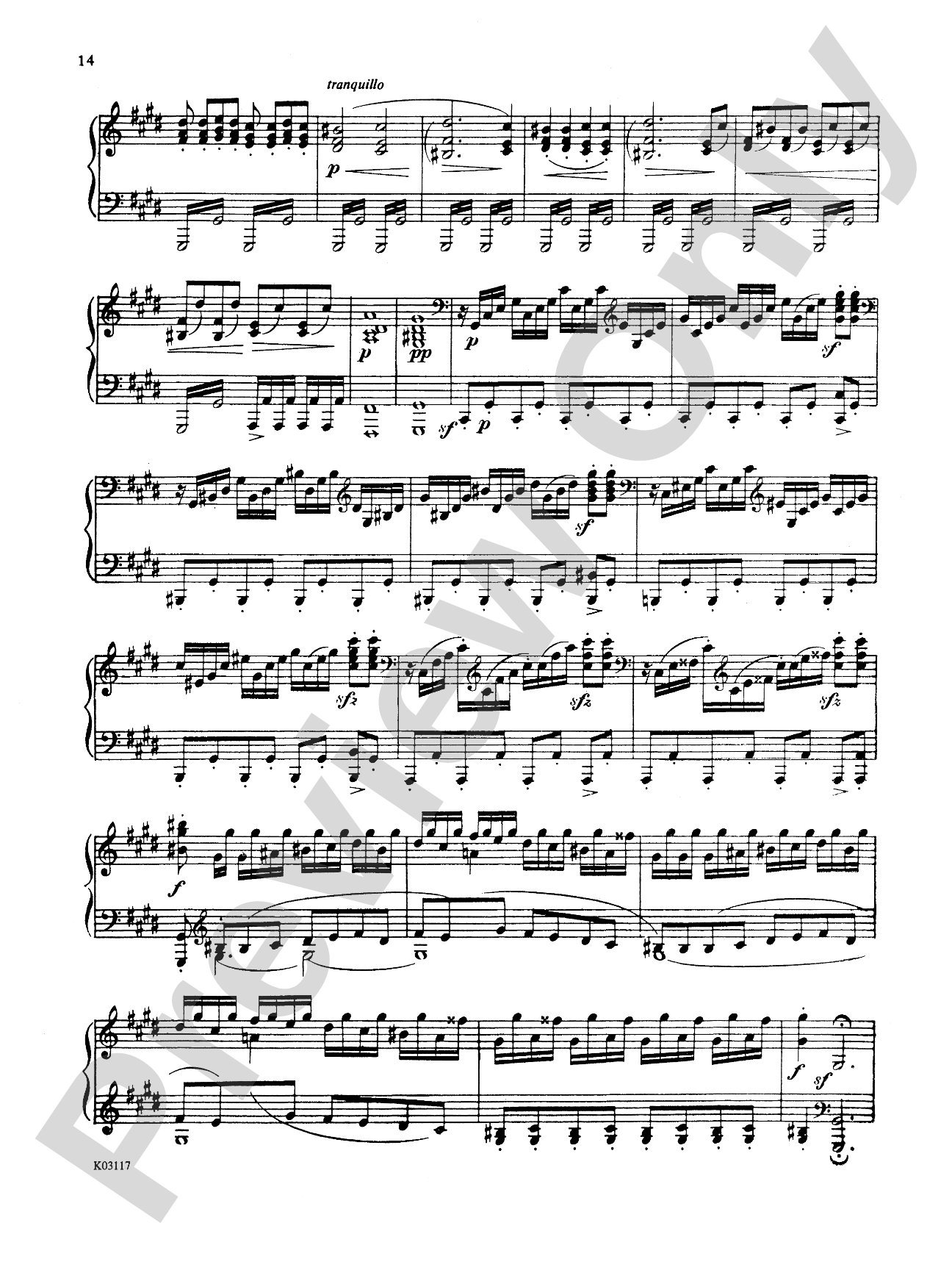
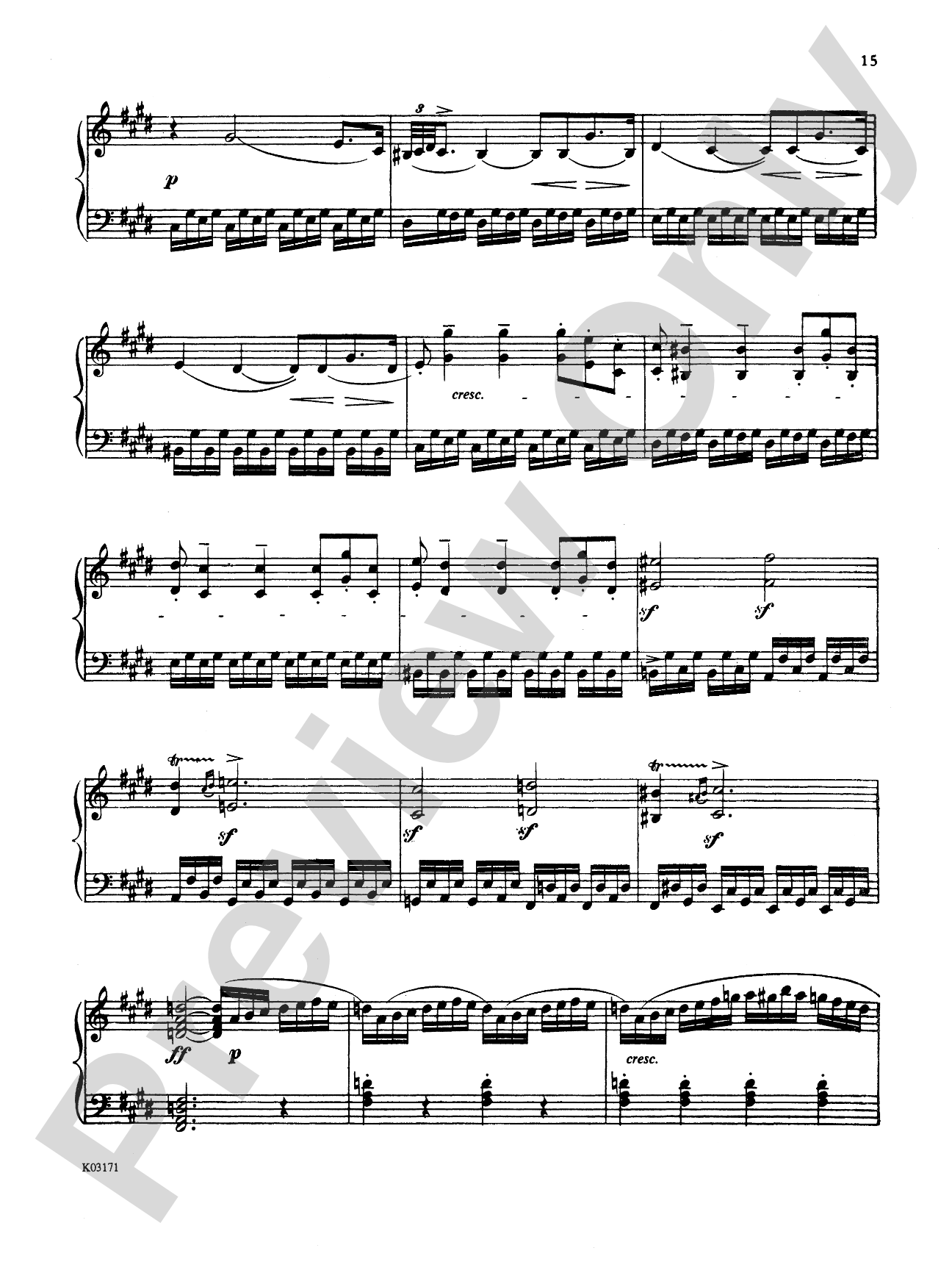
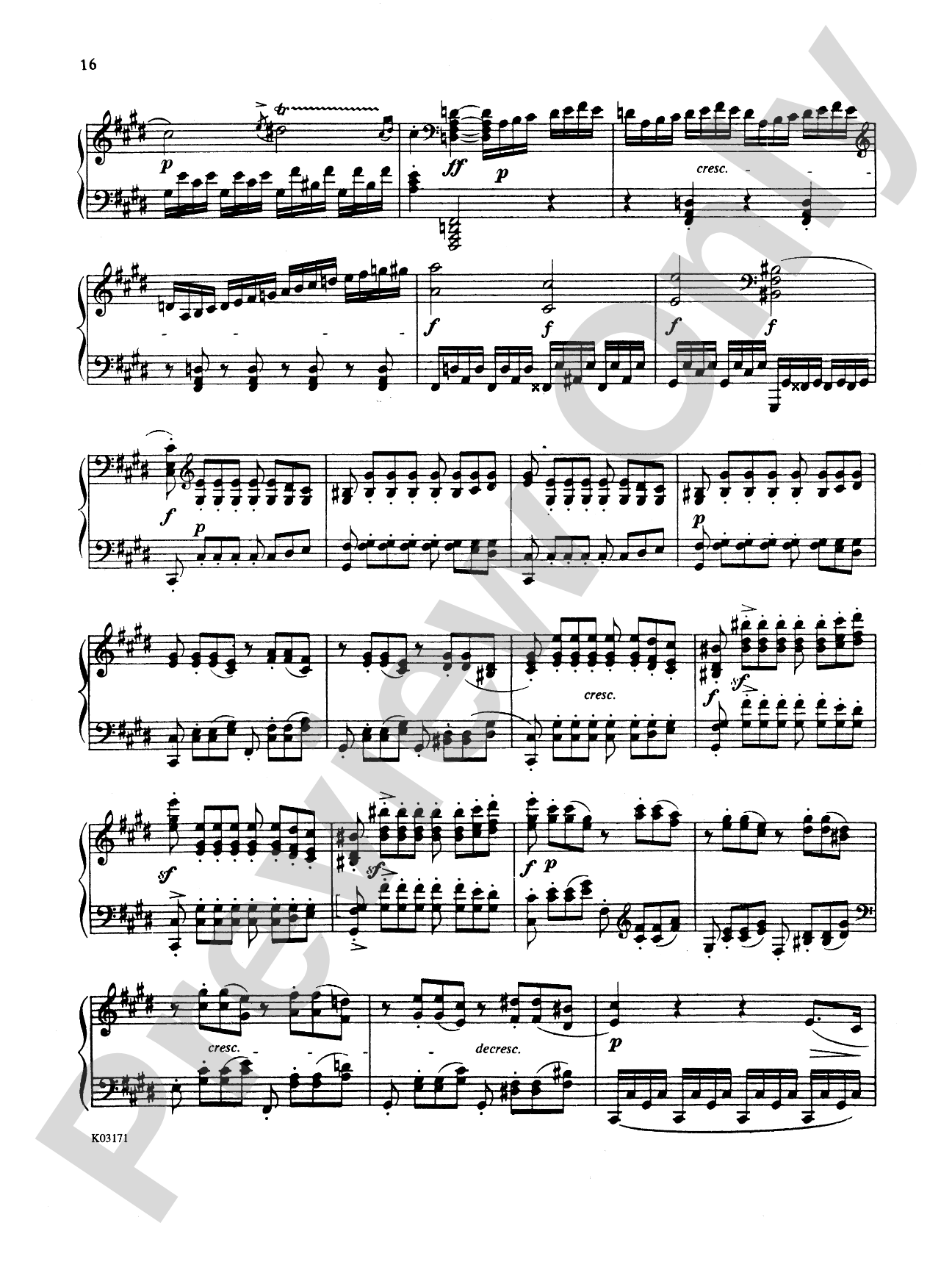
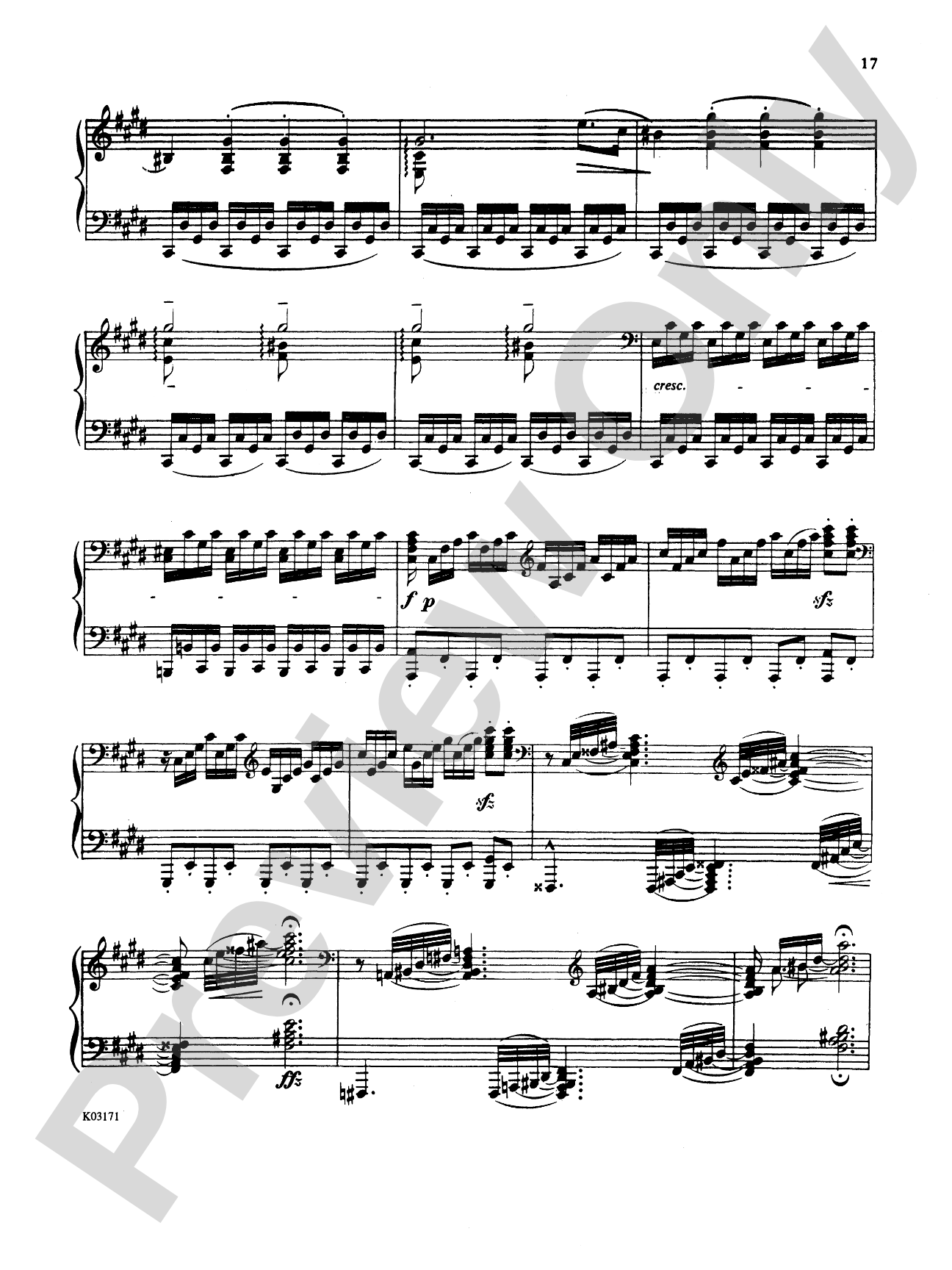
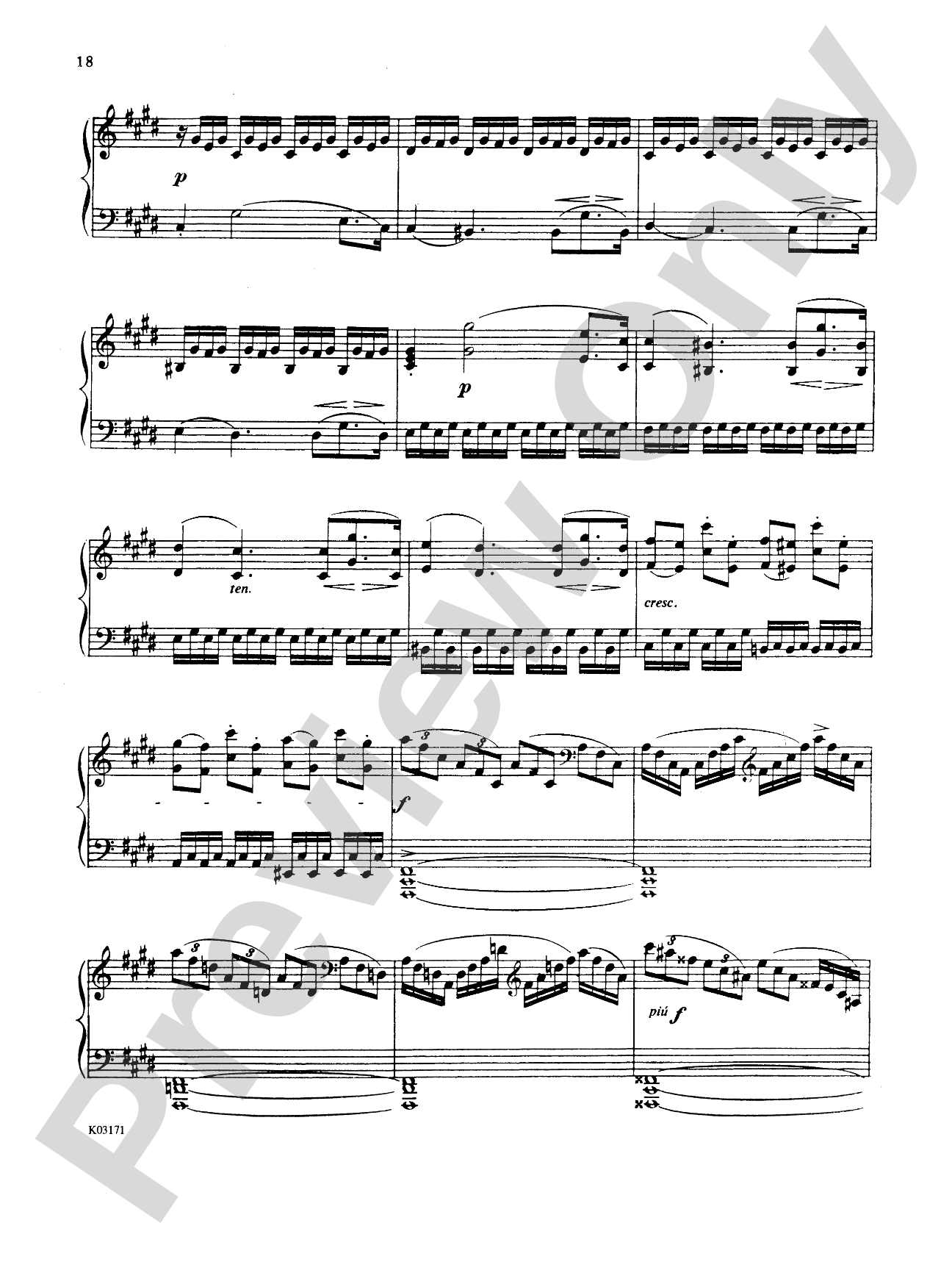
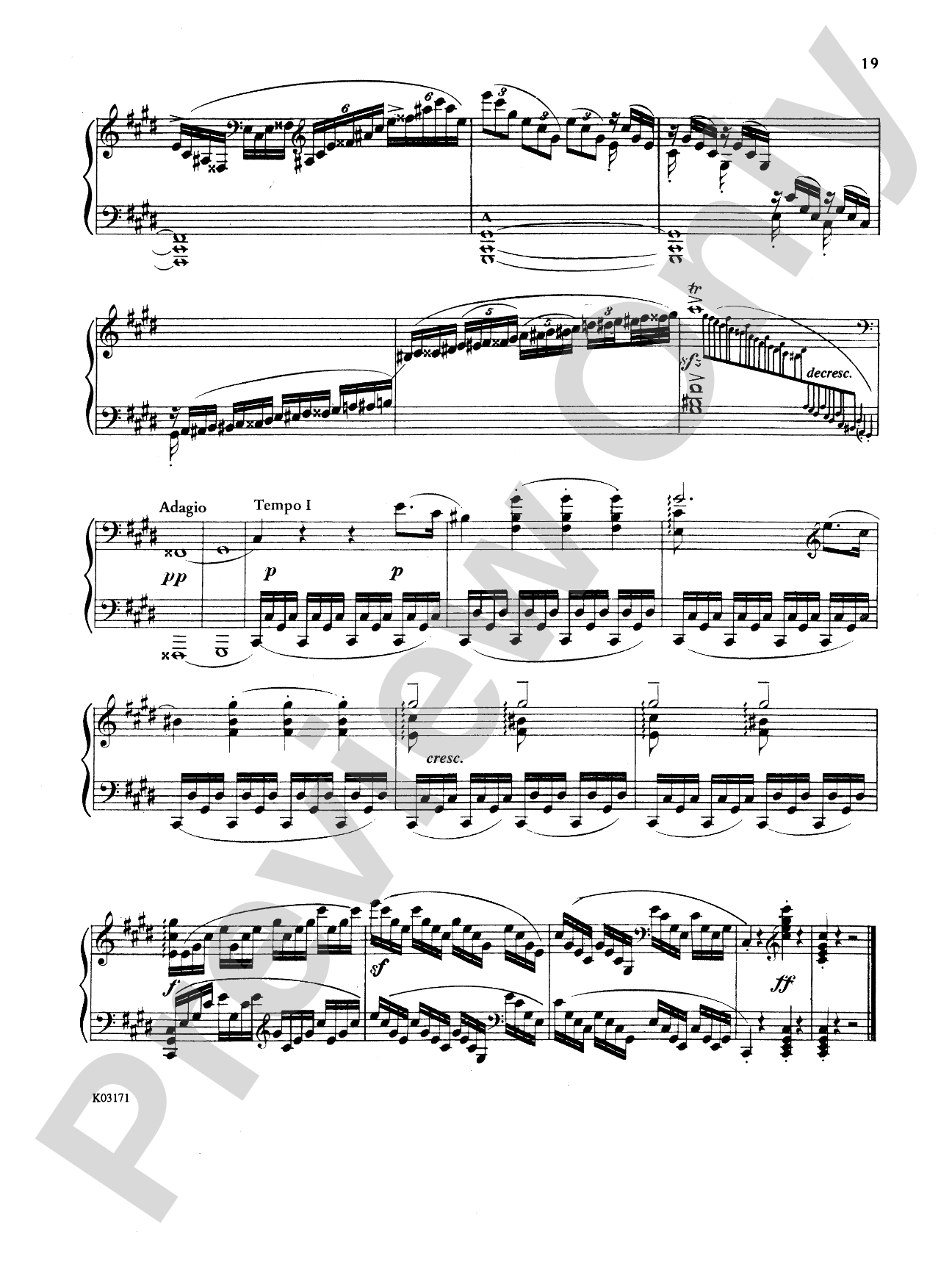


Beethoven: Sonata No. 14 in C-Sharp Minor, Op. 27, No. 2, "Moonlight": Piano
By Ludwig van Beethoven
Level: Advanced
Item: 00-PK-0002923

$7.99
Pickup currently not available
Buy Extra Parts (Digital PDF Download)
| Product | Price | Quantity |
|---|---|---|
| Beethoven: Sonata No. 14 in C-Sharp Minor, Op. 27, No. 2, "Moonlight" | $6.99 |
Parts Added to Cart!
Related Items
Sonata No. 14 in C-sharp Minor, Opus 27, No. 2 ("Moonlight"): Piano |
$7.95
|
View |
Description
Beethoven's Sonata, Opus 27, No. 2, was not known as the "Moonlight Sonata" during his lifetime. The name has its origins in 1832, in remarks by the German music critic Ludwig Rellstab, as he likened the effect of the first movement to that of moonlight shining upon Lake Lucerne. The name caught on quickly, and later in the nineteenth century, it could be said that the sonata was "universally known" by that name.


Don't just read it, hear it, play along with it, and watch your students grow with it. In MakeMusic Cloud, Beethoven: Sonata No. 14 in C-Sharp Minor, Op. 27, No. 2, "Moonlight": Piano comes alive with professional accompaniment, adjustable tempo, and built-in practice tools that turn solo practice into real progress.
Open in the Player
Jump straight in and assign it today.
Start Your Free Trial
Open this title and explore the full library in minutes.
Sample Audio
No sample audio found.
Sample Video
No sample videos found.
Additional Details
Series:
Kalmus Edition
Publisher:
Alfred Music
Page Count:
20
SKU:
00-PK-0002923
More about this title
About the Composer: Ludwig van Beethoven
Ludwig van Beethoven (1770-1827) stands as the bridge between Classical and Romantic music, a composer whose innovations in form, harmonic language, and emotional depth fundamentally transformed what the sonata could express. Deaf for much of his compositional career, he created some of the most introspective and technically demanding works in the piano repertoire, demanding that performers engage not just with virtuosity but with profound interpretive responsibility.
Why we love this
This sonata remains a rite of passage for serious pianists because it demands mastery of texture, voicing, and sustained tonal control in the first movement while rewarding that discipline with three contrasting sections that showcase different facets of the instrument. The nickname obscures the architecture: this is not a pretty picture but a carefully constructed emotional arc spanning three movements, and advanced students benefit enormously from studying how Beethoven uses restraint in the opening to build toward the turbulent final Presto.
What to expect
The first movement envelops the listener in a state of suspension, with broken chord figures creating an almost hypnotic atmosphere that feels contemplative rather than virtuosic. The work moves through intimate introspection, measured repose, and sudden turbulence across its three movements, creating an arc that feels more like a psychological journey than a traditional sonata display.
Who it's for
Advanced pianists ready to engage with one of the cornerstone works of the keyboard literature, particularly those preparing for competitions, recitals, or advanced repertoire study. This sonata demands not just technical security but interpretive maturity and the ability to sustain musical thought across extended passages of minimal dramatic action.
How to get the most out of it
- Shape the opening arpeggios with consistent voicing rather than treating them as mere accompaniment; each note participates in a slowly unfolding harmonic progression that reveals itself only through careful listening
- Balance the melodic line in the right hand against the accompanying texture without allowing it to dominate; Beethoven's writing asks for transparency, not projection
- Approach the second and third movements as direct emotional contrasts to the first; the Allegretto's measured restraint and the Presto's agitation each require distinct interpretive choices that highlight the work's architecture
How to use it
Program this as the centerpiece of a recital devoted to Beethoven's sonata output or as part of a program exploring Romantic approaches to the Classical sonata form. It also serves as an excellent study piece for advanced students preparing for examinations or competitions that emphasize repertoire depth.
Skills your students will build
- Sustaining tonality and voicing independence across left-hand arpeggios
- Managing textural balance between accompaniment figures and melodic material
- Interpreting contrasting movements within a single work as unified dramatic statements
- Navigating rapid figurations in the final movement with clarity and control
- Reading and realizing extended passages written in two staves with complex voice leading