Beethoven: Seven Easy Pieces Sheet Music Preview

Beethoven: Seven Easy Pieces

By Ludwig van Beethoven

Item: 00-PC-0005324

Digital Download
$0.99
Description
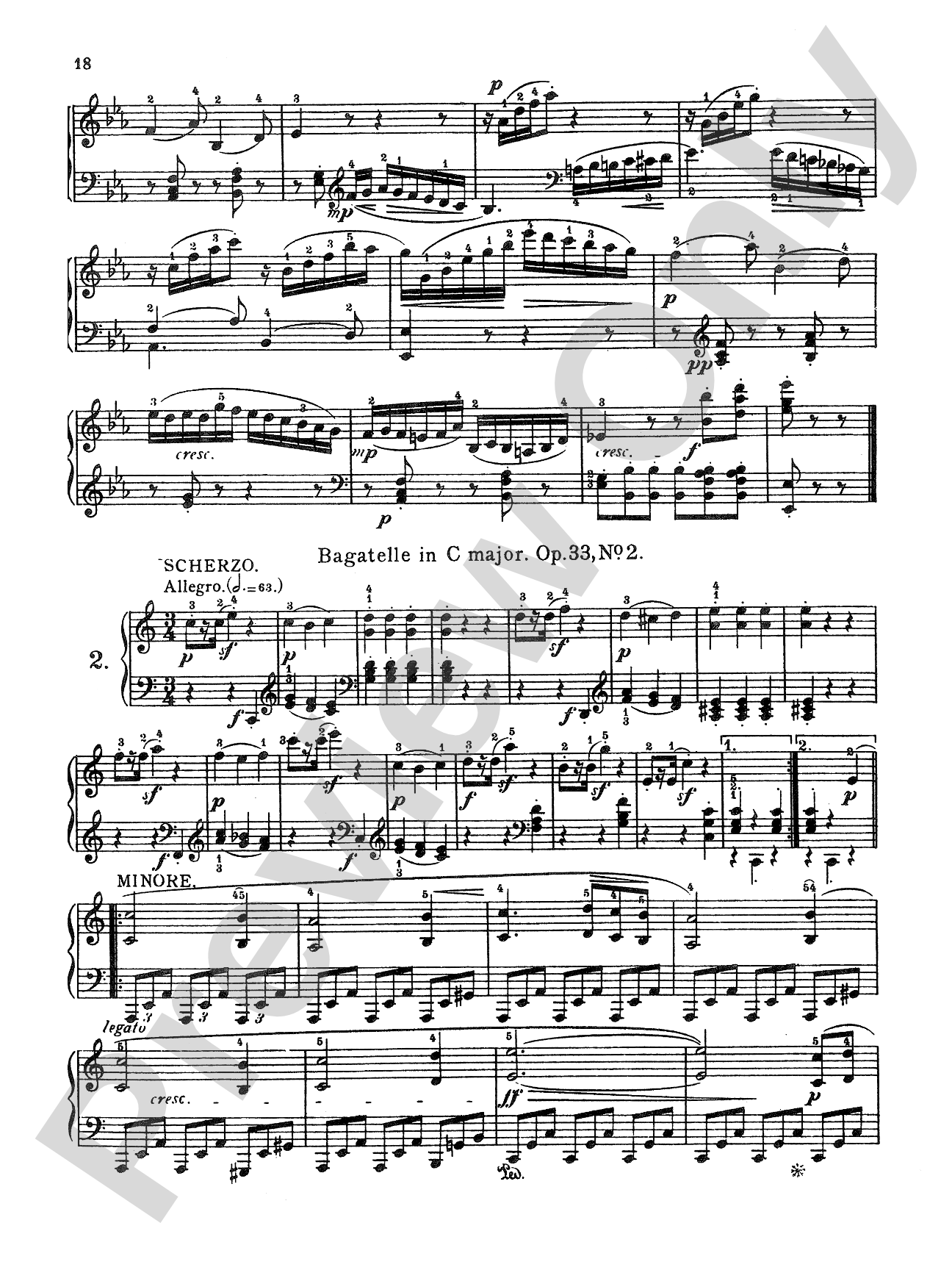
Includes: Bagatelle in E-flat, Op. 33, No. 1 * Bagatelle in C Major, Op. 33. No. 2 * Bagatelle in E-Flat, Op. 126, No. 3 * Rondo in A * Sonatina in G, Op. 79, 1st Mvmt. * Variations in C * Variations in G.

Don't just read it, hear it, play along with it, and watch your students grow with it. In MakeMusic Cloud, Beethoven: Seven Easy Pieces comes alive with professional accompaniment, adjustable tempo, and built-in practice tools that turn solo practice into real progress.

Sample Audio
No sample audio found.
Sample Video
Additional Details
Series: Kalmus Edition
Publisher: Alfred Music
Page Count: 36
SKU: 00-PC-0005324

More about this title

About the Composer: Ludwig van Beethoven

Ludwig van Beethoven (1770–1827) bridged the Classical and Romantic eras, fundamentally expanding what music could express and achieve. His output spans symphonies, concertos, string quartets, and solo keyboard works that remain central to the concert and teaching repertoires. Beethoven's smaller piano pieces, including the bagatelles and sonatinas in this collection, reveal his gift for concentrated musical ideas; they prove that profound invention doesn't require grand scale.

Why we love this

These seven pieces showcase Beethoven's gift for melody and form at a scale that intermediate pianists can actually master. Each work distills a complete musical thought without the technical or interpretive demands of his major sonatas, making them rewarding both to learn and to perform. The variety across the collection means your students encounter multiple Beethoven styles within a single book.

What to expect

These pieces balance Classical clarity with Romantic warmth. The bagatelles sparkle with wit and directness, while the sonatina and variations unfold with gentle architecture and lyrical grace. Throughout, Beethoven's voice remains distinctive: economical, purposeful, and always singing, even at modest tempos and dynamic levels.

Who it's for

Intermediate pianists (roughly Grade 3–4) seeking substantial Classical repertoire that builds independence without overwhelming technical difficulty. Teachers building recital programs or classroom repertoire will appreciate the range of forms and the opportunity to study Beethoven across different compositional approaches. Students ready to move beyond simplified arrangements but not yet prepared for the Waldstein or Moonlight sonatas.

How to get the most out of it

  • Shape the phrase endings with sensitivity to harmonic rhythm rather than mechanical tempo changes; Beethoven's Classical training shows in his architecture, and respecting the phrase structure will reveal the logic beneath the notes.
  • Approach the bagatelles as character pieces first and foreground the melodic line so that structural clarity emerges naturally from good voice leading.
  • In the sonatina and variations, distinguish between thematic statements and transitional or developmental passages through subtle dynamic shaping and articulation choices.
  • Work these pieces slowly enough to hear multiple layers of texture; the apparent simplicity masks voice independence and contrapuntal interest that rewards careful listening.

How to use it

Ideal for young artist recitals, student-led chamber concerts, or all-Beethoven programs where you want to represent his genius without demanding advanced virtuosity. These works also serve well in a chronological exploration of the sonata form or as part of a unit on variations and character pieces. Consider pairing one or two pieces with larger Classical works to create balanced programming.

Skills your students will build

  • Shaping Classical and Romantic phrases with harmonic awareness
  • Identifying and performing structural divisions in bagatelles, sonatinas, and variations
  • Voicing independence across both hands
  • Reading Beethoven's articulation and dynamic markings as musical content, not ornament
  • Building interpretive choices grounded in form and texture rather than intuition alone

You May Also Like