
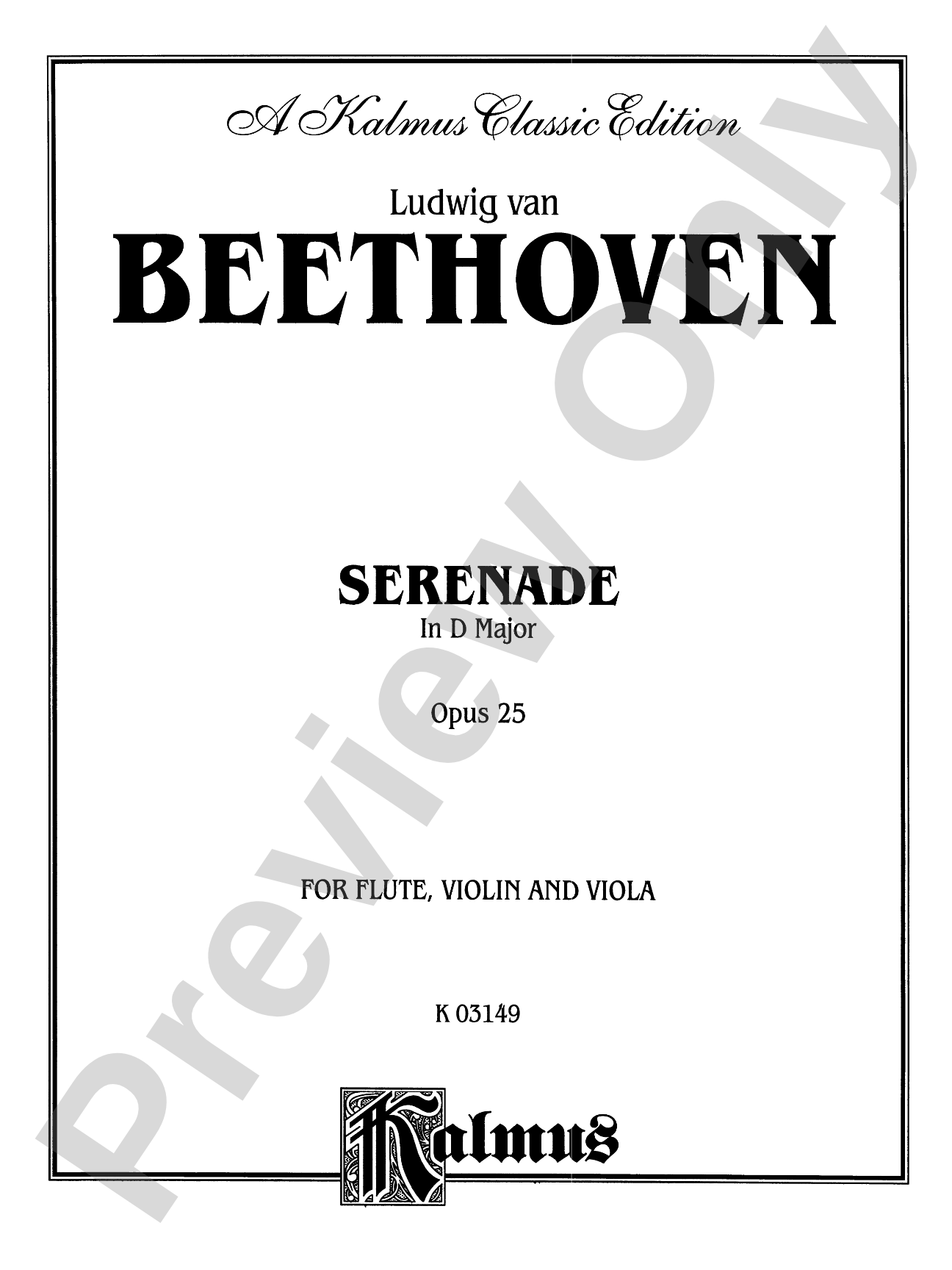
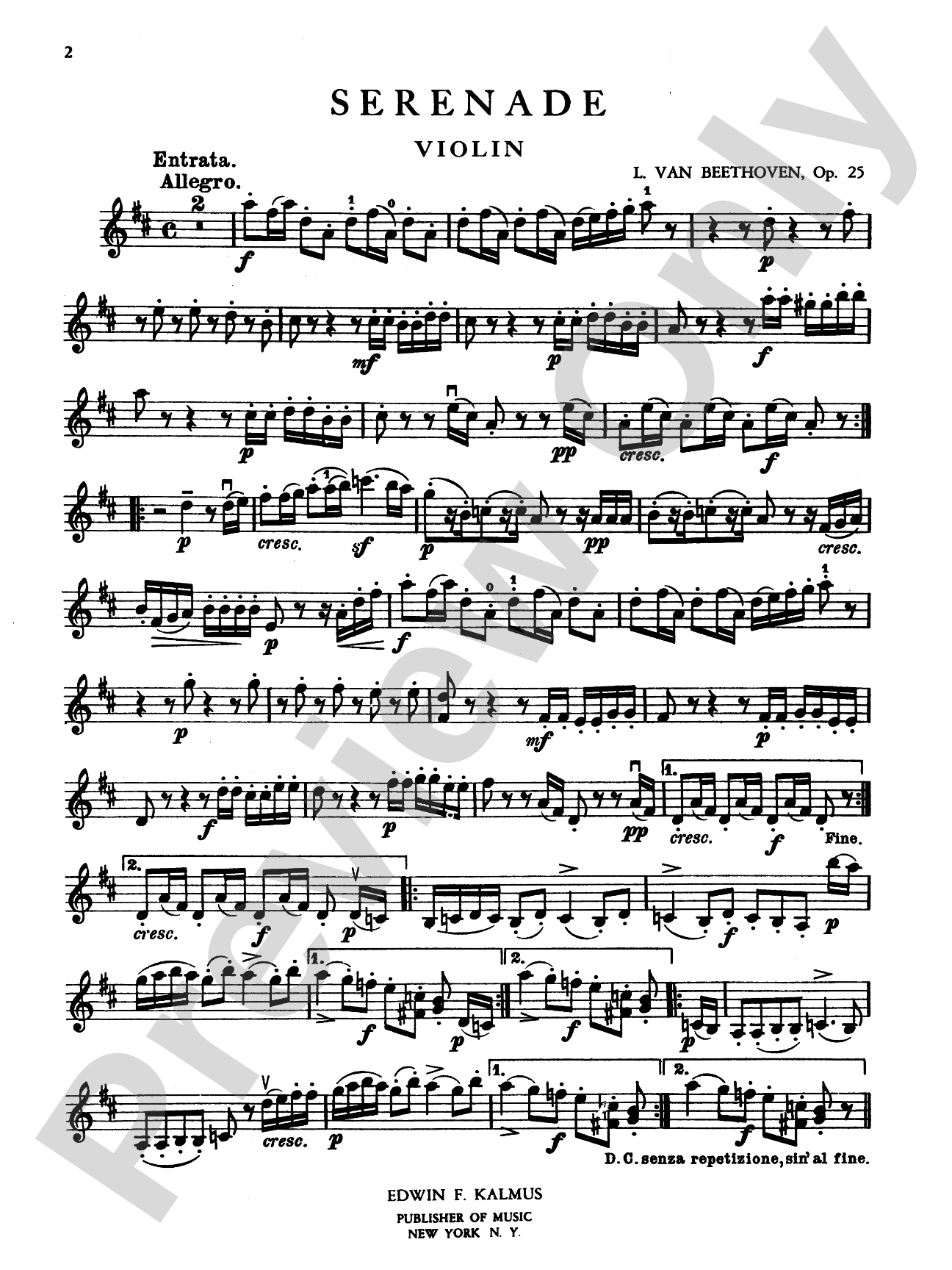
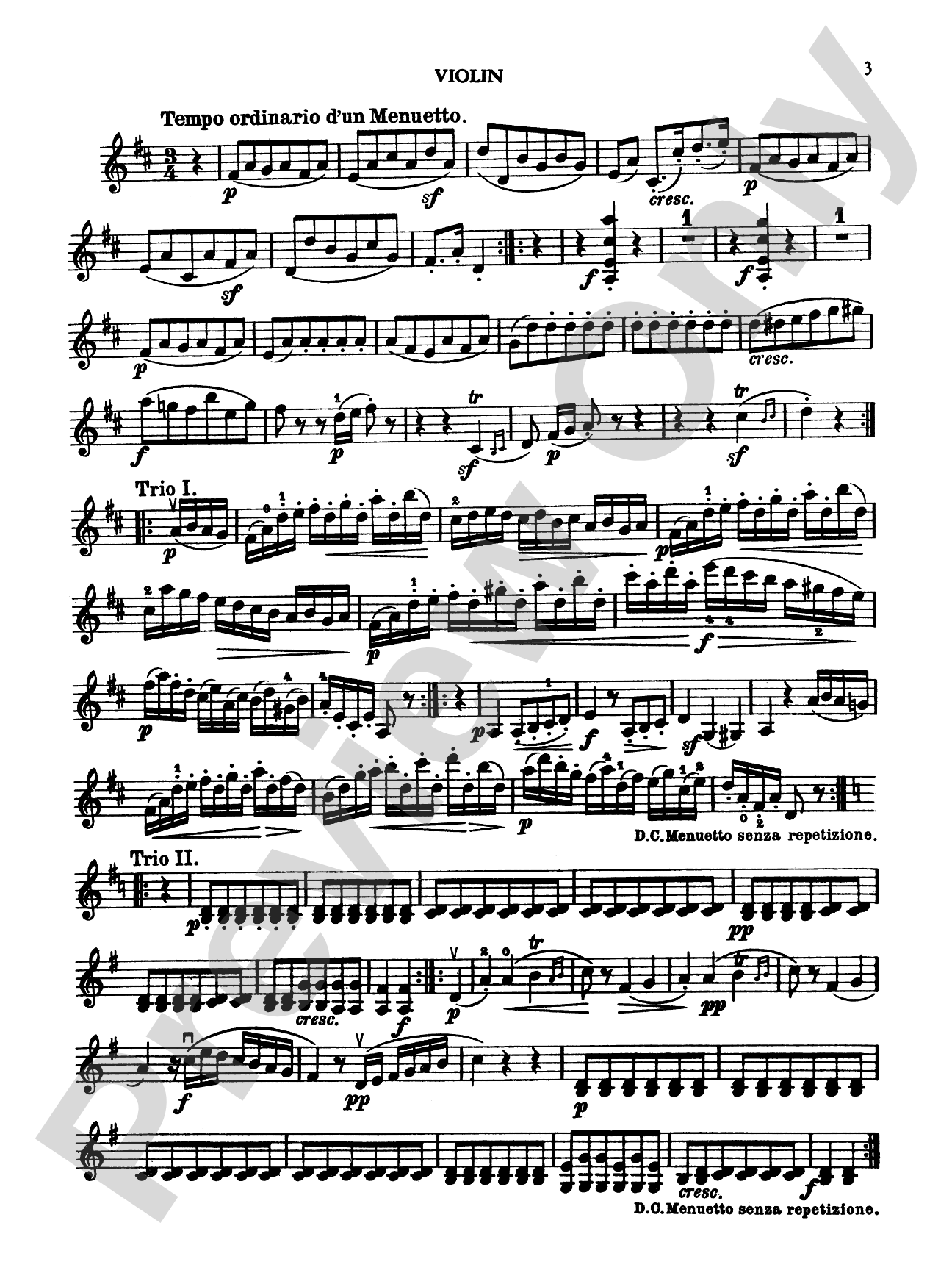

Beethoven: Serenade in D Major, Op. 25
By Ludwig van Beethoven
Item: 00-PC-0005188
$8.99
Pickup currently not available
Description
A trio, for Flute, Violin, and Viola, composed by Ludwig van Beethoven.


Don't just read it, hear it, play along with it, and watch your students grow with it. In MakeMusic Cloud, Beethoven: Serenade in D Major, Op. 25 comes alive with professional accompaniment, adjustable tempo, and built-in practice tools that turn solo practice into real progress.
Open in the Player
Jump straight in and assign it today.
Start Your Free Trial
Open this title and explore the full library in minutes.
Sample Audio
No sample audio found.
Sample Video
No sample videos found.
Additional Details
Series:
Kalmus Edition
Publisher:
Alfred Music
Page Count:
28
SKU:
00-PC-0005188
Instrumentation:
Flute, Violin, & Viola
More about this title
About the Composer: Ludwig van Beethoven
Ludwig van Beethoven (1770-1827) stands as the pivotal figure who bridged Classical and Romantic musical languages. A master of absolute music across all genres, he expanded the structural possibilities and emotional range of the forms he inherited, demanding new levels of virtuosity and interpretive maturity from performers.
Beethoven's chamber works occupy a special place in his output: they enabled him to experiment with texture, dialogue among instruments, and philosophical depth without the constraints of large-scale orchestration. His trios, particularly those for unusual instrumental combinations like this one, showcase his gift for writing idiomatic parts that reveal the distinct personality of each instrument while maintaining tight musical cohesion.
Why we love this
Beethoven's Serenade in D Major presents a mature composer's command of three-part writing at a moment when such intimate scorings were becoming rarer. The work's clear formal architecture and singing melodic lines make it accessible to serious young musicians, while its harmonic language and developmental sophistication reward careful study and offer genuine musical substance that avoids condescension.
What to expect
The Serenade radiates the gracious, refined character typical of Classical chamber writing, yet shot through with Romantic warmth and harmonic color. Lyrical and conversational, the work invites intimate musical dialogue among the three voices; each movement unfolds with natural phrasing that feels both inevitable and surprising.
Who it's for
Advanced chamber musicians and serious university students ready to tackle Beethoven's mature compositional voice in an intimate setting. This trio suits ensembles with solid intonation, rhythmic security, and the maturity to sustain longer phrases without sacrificing clarity or stylistic period awareness.
How to get the most out of it
- Balance the flute and violin as equal melodic voices rather than defaulting to the violin as primary. Beethoven distributes thematic material deliberately across both treble instruments; honor that distribution in your voicing and projection.
- Shape each movement's longer lines with attention to harmonic arrival points, not just structural downbeats. The viola's harmonic foundation is elegant and active; it deserves clarity so the underlying progression supports rather than merely follows the melody.
- Approach tempo relationships between movements as a coherent whole; avoid treating each section as an isolated entity. Beethoven's serenades flow as unified works, and attention to pacing creates that continuity.
- Address intonation collaboratively across all three instruments, especially in the viola part where sustained tones support the more active flute and violin writing. Regular unaccompanied runs and interval checks pay dividends in rehearsal.
How to use it
Program this as a centerpiece for a chamber recital exploring Beethoven's approach to mixed-instrument combinations, or pair it with his string quartets to show his chamber writing across different textures. Its 28 pages and moderate length make it suitable for concert programming without dominating a chamber series, and its lyrical character complements more dramatic or contemporary works on the same program.
Skills your students will build
- Reading and playing in keys with multiple sharps (D major) with security
- Sustaining long melodic lines while maintaining ensemble awareness
- Balancing three independent yet interdependent instrumental voices
- Interpreting Classical-period phrasing and articulation in chamber context
- Intonation refinement in trio texture, especially across different instrument families
- Collaborative listening and response to harmonic progressions