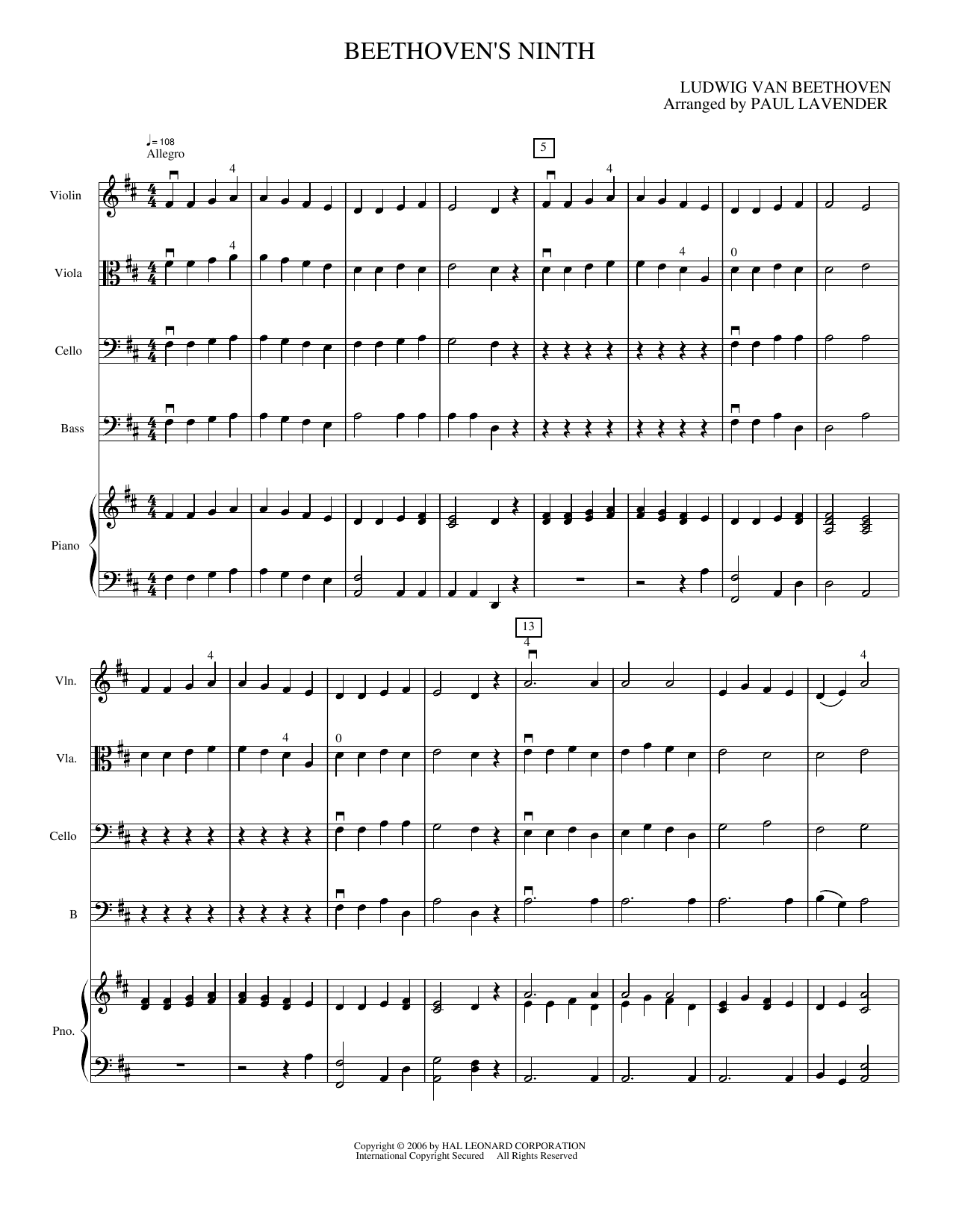
Ludwig van Beethoven (1770-1827) stands as one of classical music's most transformative voices. His nine symphonies fundamentally expanded what orchestral writing could express, moving from the Classical elegance of Haydn and Mozart toward something far more ambitious in scope and emotional depth. The Ninth Symphony in particular became a watershed moment in Western music, introducing the human voice to the symphony and cementing Beethoven's vision of instrumental music as a vehicle for universal ideals.
For music educators, Beethoven's catalogue offers an essential pedagogical foundation. His works teach clarity of gesture, purposeful harmonic movement, and the architecture that builds larger forms from economical thematic material. Even in simplified arrangements, his music trains students to listen for structural logic and to understand how individual voices contribute to a unified whole.