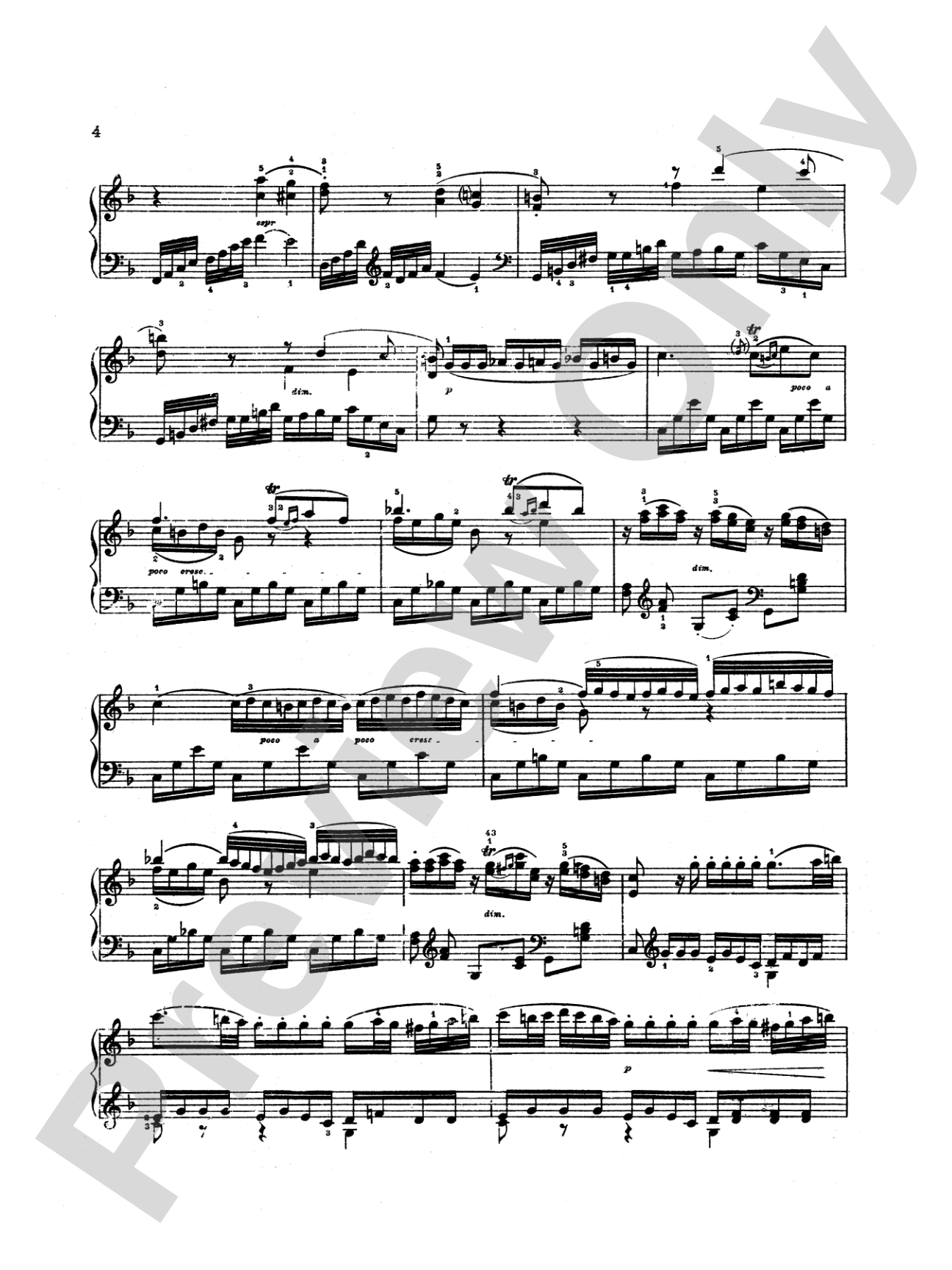
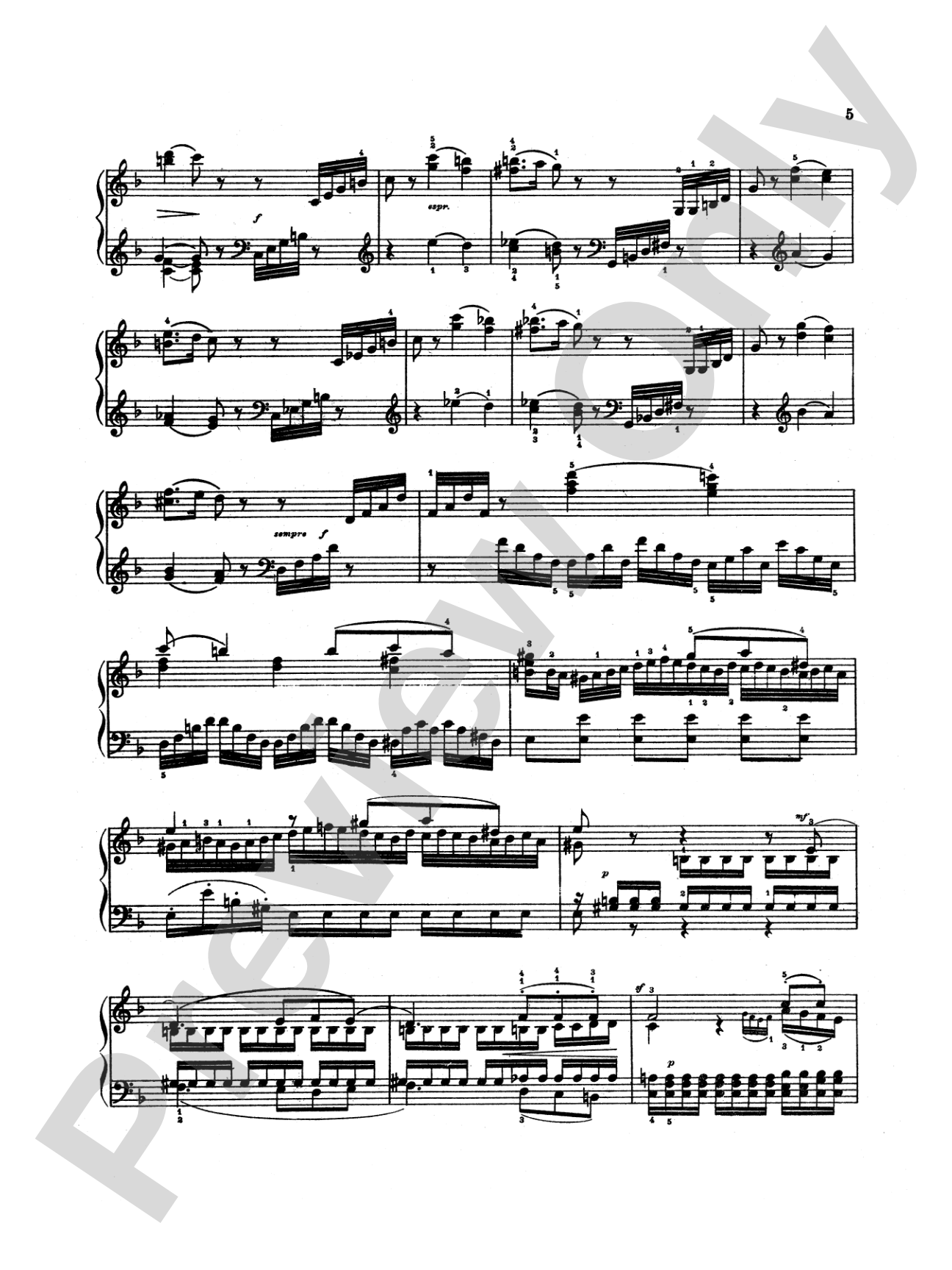
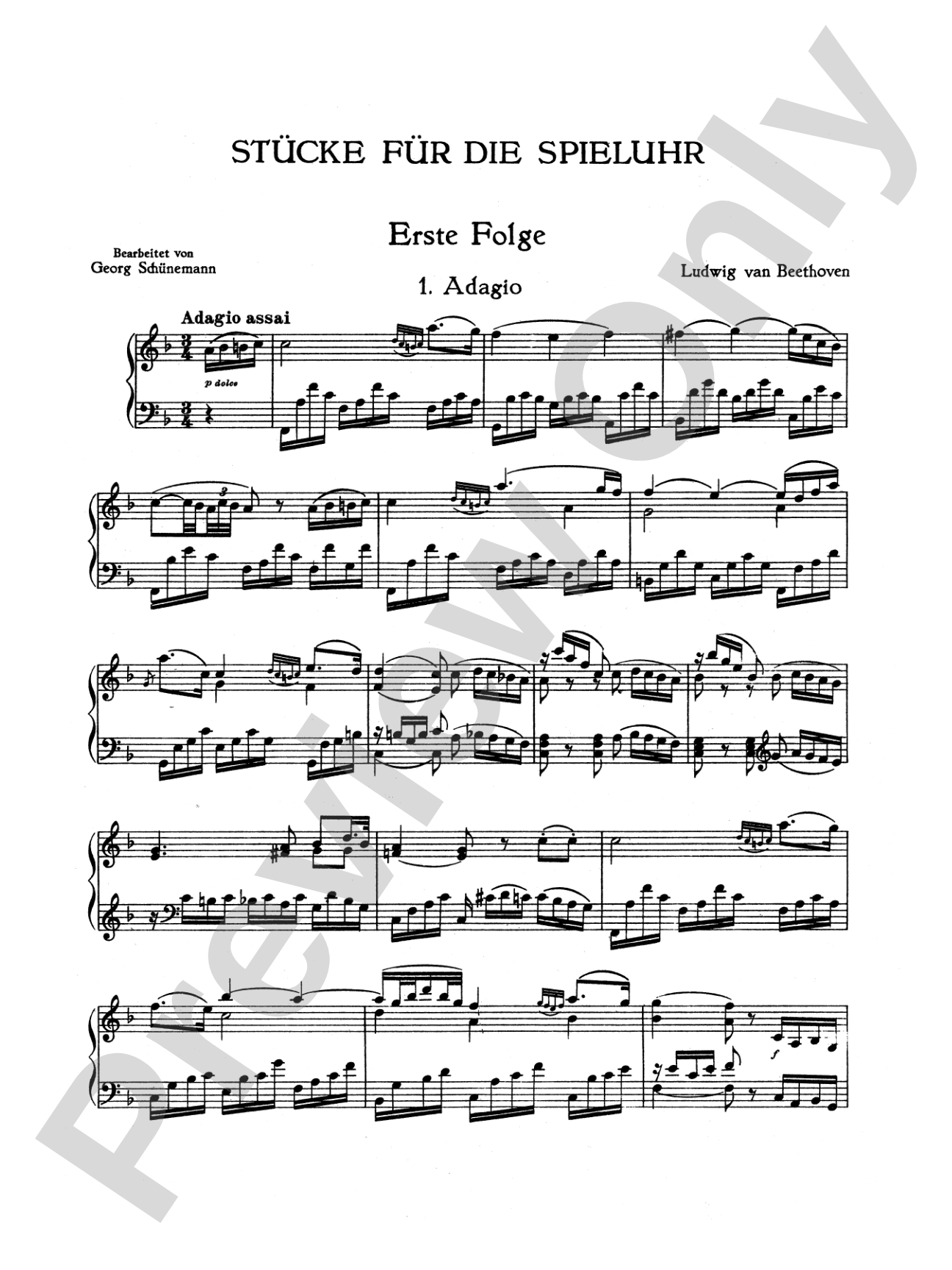
Beethoven: Pieces for the Musical Clock Sheet Music Preview

Beethoven: Pieces for the Musical Clock

By Ludwig van Beethoven

Item: 00-PC-0005279

Digital Download
$2.99
Description
These five pieces were discovered after Beethoven's death, bringing with them the question of which instrument was meant to play them. Since the first section in F Major matches Mozart's Fantasie, K. 608, for Musical Clock, a copy of which Beethoven owned, it was decided by many that Beethoven's score was likewise meant to be played on that device.

Don't just read it, hear it, play along with it, and watch your students grow with it. In MakeMusic Cloud, Beethoven: Pieces for the Musical Clock comes alive with professional accompaniment, adjustable tempo, and built-in practice tools that turn solo practice into real progress.

Sample Audio
No sample audio found.
Sample Video
Additional Details
Series: Kalmus Edition
Publisher: Alfred Music
Page Count: 20
SKU: 00-PC-0005279

More about this title

About the Composer: Ludwig van Beethoven

Ludwig van Beethoven (1770–1827) transformed music from the Classical era into the Romantic age, expanding the emotional and structural possibilities of every genre he touched. His late works, including these mysterious pieces for the musical clock, reveal a composer still experimenting with form and sonority even as deafness isolated him from the world.

Why we love this

These five pieces offer pianists a rare glimpse into Beethoven's engagement with mechanical music and constraint. The connection to Mozart's K. 608 and the question of their original instrumentation adds historical intrigue, while the musical content itself showcases Beethoven's gift for melody and formal clarity at a scale suitable for recital programming.

What to expect

The music oscillates between mechanical elegance and human warmth. Melodies emerge with Classical grace, yet harmonic shifts and unexpected turns hint at the Romantic sensibility Beethoven was developing. There is an intimacy to these works, as if Beethoven were writing for a very specific listener.

Who it's for

Intermediate to advanced pianists seeking repertoire beyond the standard canon, and teachers looking to deepen students' understanding of Beethoven's late compositional interests. These pieces reward curious musicians who want to explore the margins of a master's output.

How to get the most out of it

  • Approach the F Major section with awareness of its mechanical clock ancestry; the clarity and precision of the writing demands clean articulation and steady tempo without rushing.
  • Balance the ornamental figuration against the harmonic structure rather than treating decorative passages as mere surface texture.
  • Explore the dynamic range within each piece; Beethoven's markings are purposeful and reveal the emotional intent beneath the music's surface.

How to use it

Program one or two of these pieces as part of a Beethoven retrospective recital, pairing them with more familiar works to show the breadth of his imagination. Alternatively, feature them in a thematic concert exploring music written for or inspired by mechanical instruments, demonstrating how constraint can spark creativity.

Skills your students will build

  • Reading Classical-era ornamentation and articulation markings
  • Maintaining rhythmic precision within flowing melodic lines
  • Shaping phrase structure across changing harmonic landscapes
  • Interpreting historically informed performance choices based on instrumental origin

You May Also Like