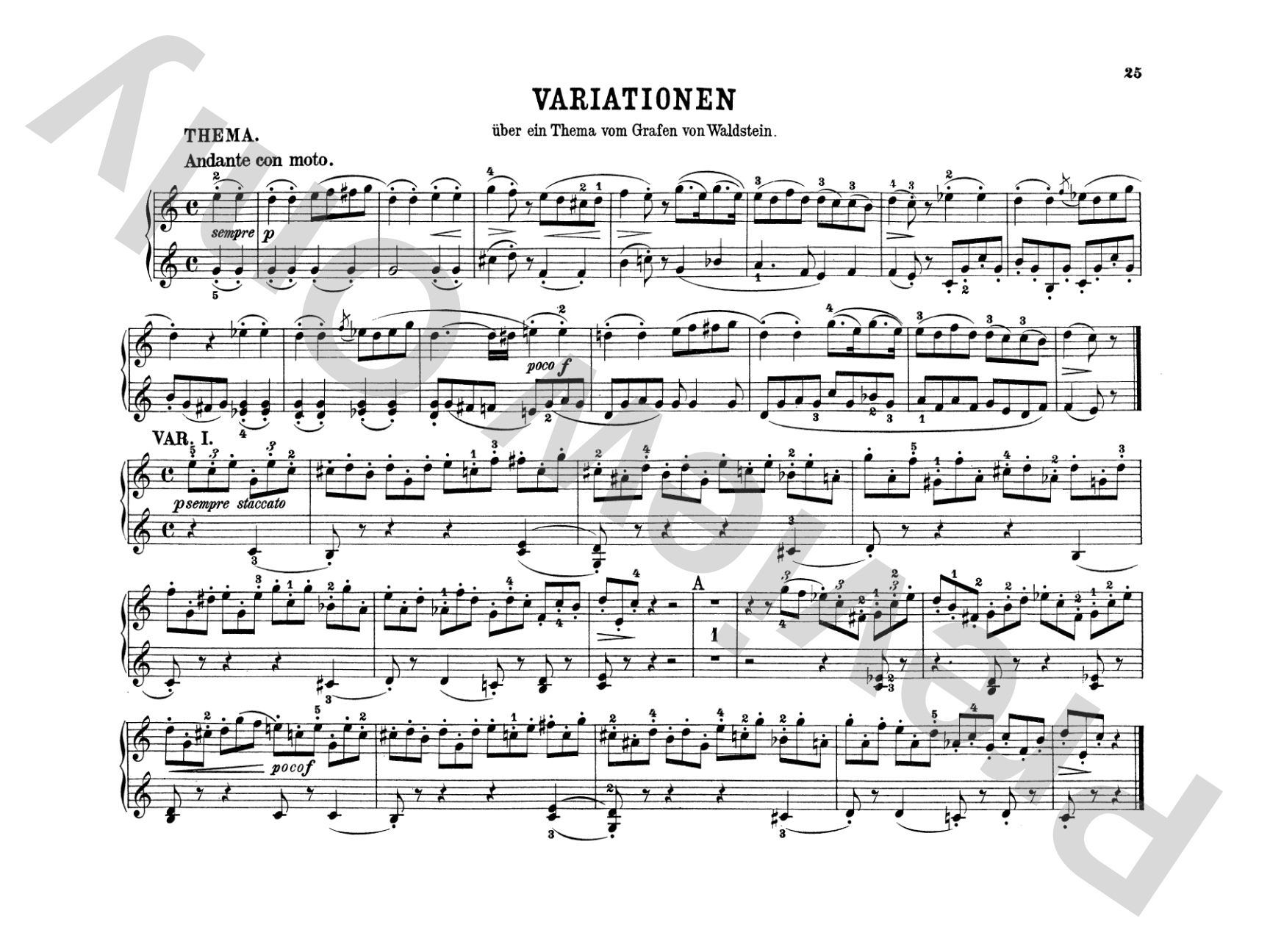
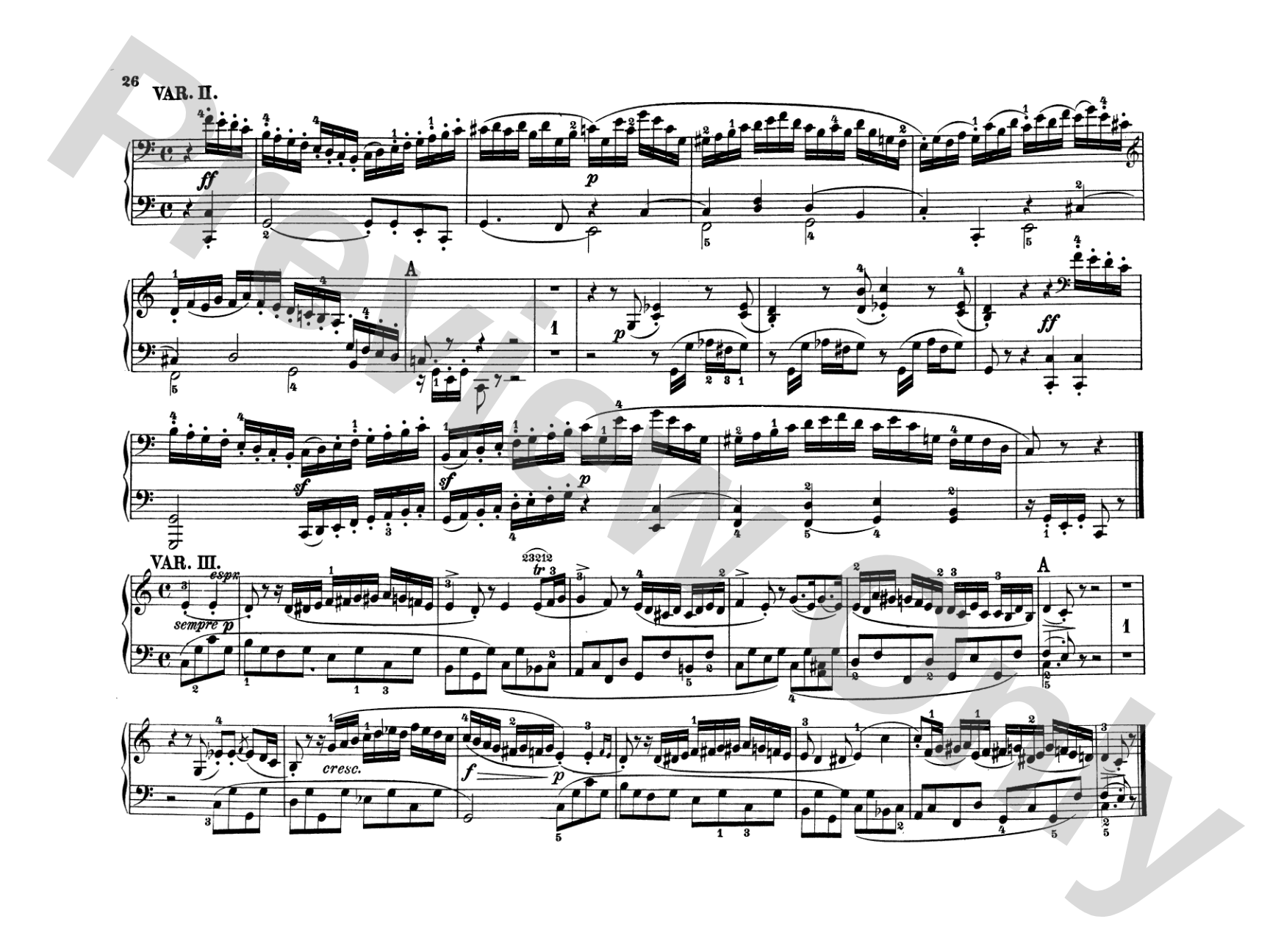
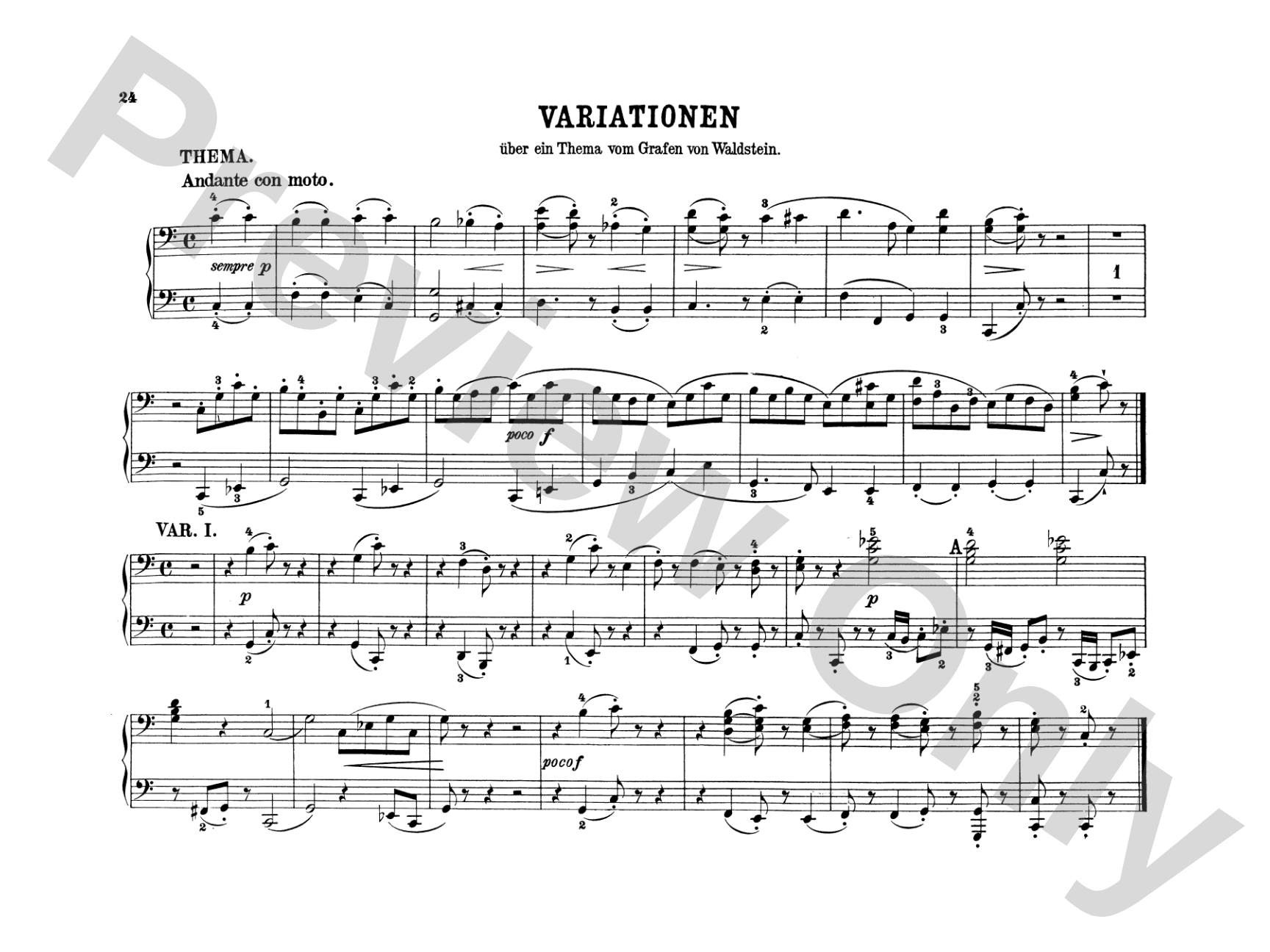
Beethoven: Original Compositions for Four Hands Sheet Music Preview

Beethoven: Original Compositions for Four Hands

By Ludwig van Beethoven

Item: 00-PC-0005268

Digital Download
$2.99
Description
Expertly arranged piano duet (1 piano, 4 hands) from our Kalmus Edition.

Don't just read it, hear it, play along with it, and watch your students grow with it. In MakeMusic Cloud, Beethoven: Original Compositions for Four Hands comes alive with professional accompaniment, adjustable tempo, and built-in practice tools that turn solo practice into real progress.

Sample Audio
No sample audio found.
Sample Video
Additional Details
Series: Kalmus Edition
Publisher: Alfred Music
Page Count: 48
SKU: 00-PC-0005268

More about this title

About the Composer: Ludwig van Beethoven

Ludwig van Beethoven (1770-1827) fundamentally transformed the piano from a parlor instrument into a vehicle for profound artistic expression. His compositions for four hands were written during a period when domestic music-making flourished, yet they carry the same structural innovation and emotional depth that define his symphonies and sonatas. These works demand serious musicianship from both players, moving far beyond entertainment music into the realm of collaborative artistry.

Why we love this

Beethoven's four-hand works give advanced piano students genuine compositional substance to explore together. The writing is idiomatic for duet performance, with clear dialogue between primo and secondo parts that feels natural rather than compromised, and the collection spans pieces of varying difficulty so you can build your students' collaborative skills over time.

What to expect

Beethoven's four-hand compositions blend Classical clarity with Romantic expression, balancing lyrical cantabile lines against rhythmic vitality. Playing them together creates an intimate dialogue where both pianists are genuine partners in the musical conversation, not one supporting the other.

Who it's for

This collection serves advanced piano duet partnerships and serious piano students preparing for recitals or competitions. Teachers seeking authentic Classical-era literature for two advanced players will find these works far more substantive than simplified arrangements or lightweight character pieces.

How to get the most out of it

  • Establish a unified tempo before you begin by playing through the opening together without the printed score; this creates immediate physical synchronization that prevents later rushing.
  • Attend carefully to dynamic balance between parts, as Beethoven frequently layers thematic material in both hands. The primo doesn't always carry the melody.
  • Practice independently first, then rehearse at the same piano multiple times before performance to acclimate to shared bench space and pedal management.
  • Honor the classical phrase architecture; Beethoven's four-hand writing respects clear periods and cadences. Let these structural moments breathe rather than pushing through them.

How to use it

Feature these as recital centerpieces or chamber music showcases that demonstrate your students' collaborative maturity. A four-hand Beethoven work announces serious programming and pairs well with solo repertoire from the same era, creating a coherent aesthetic statement about the instrument's capabilities.

Skills your students will build

  • Ensemble balance and voice leading across four hands at a single keyboard
  • Classical phrase structure and formal analysis (sonata, rondo, variation)
  • Pedal coordination shared between two pianists
  • Rhythmic independence and ensemble precision without a conductor
  • Collaborative problem-solving and musical negotiation

You May Also Like