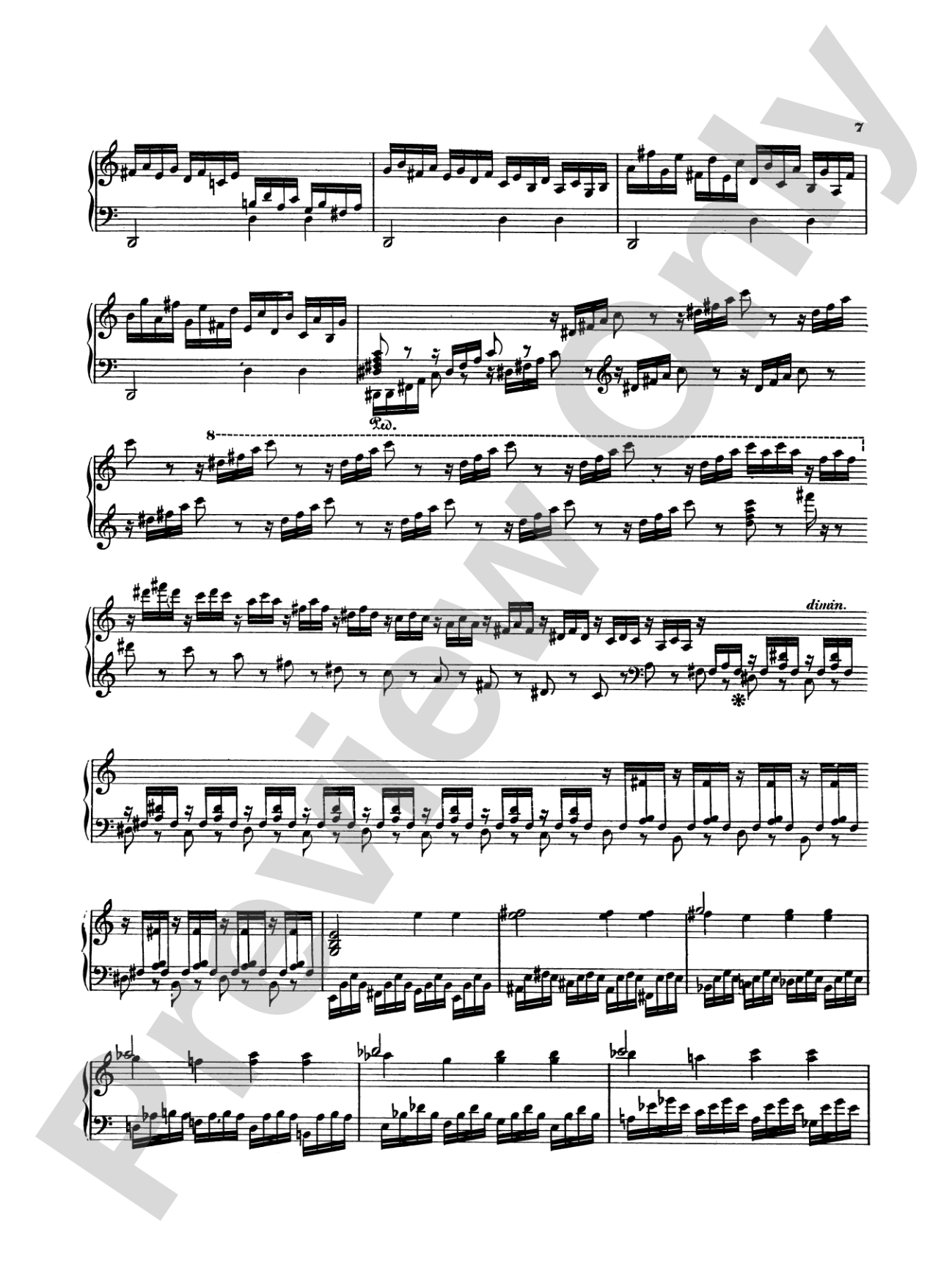
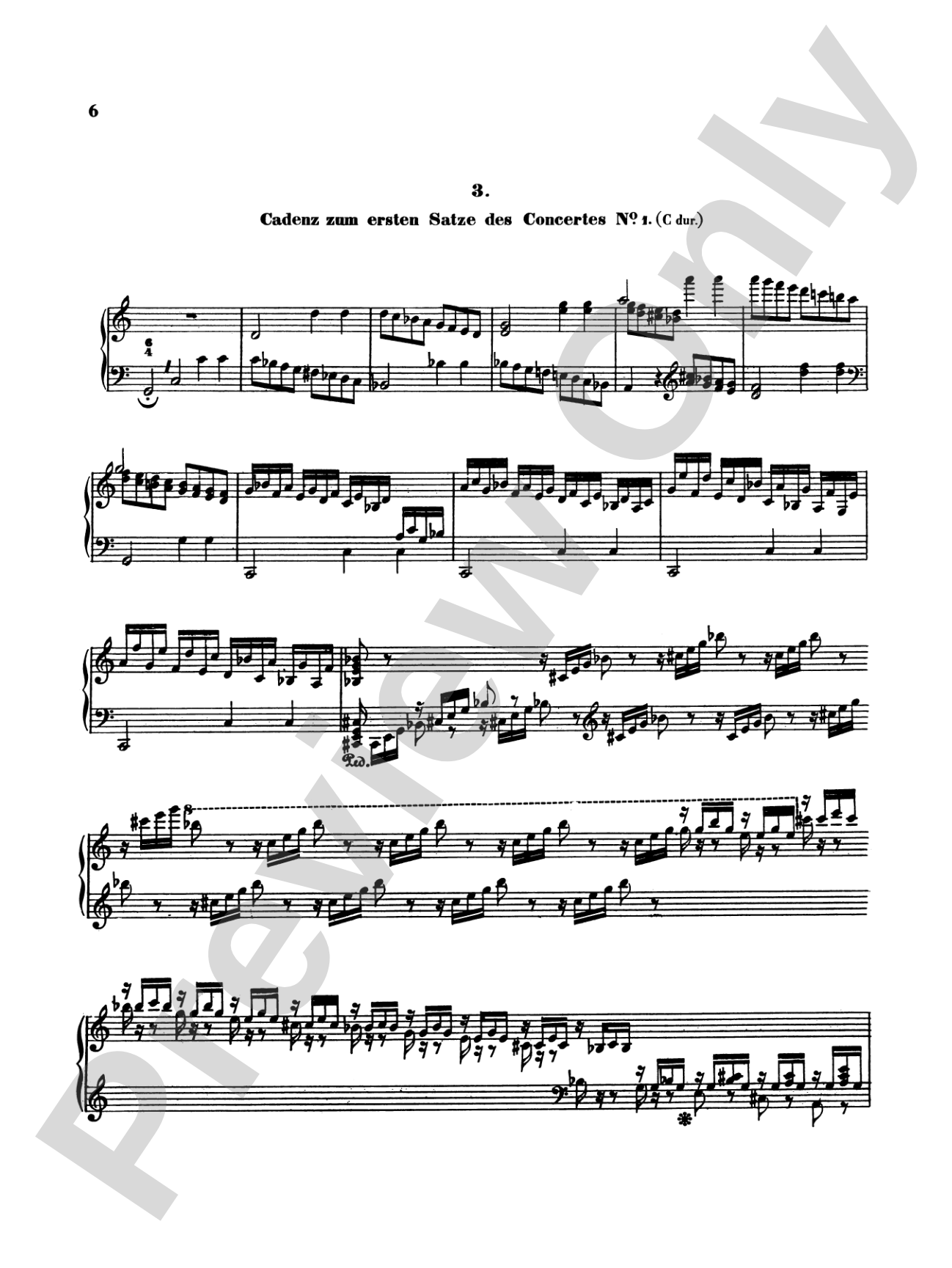
Beethoven: Cadenzas to the Piano Concerti Sheet Music Preview

Beethoven: Cadenzas to the Piano Concerti

By Ludwig van Beethoven

Level: Advanced

Item: 00-PC-0005294

Digital Download
$0.99
Description
This collection of cadenzas from Beethoven's concertos for piano and orchestra includes three from Concerto No. 1, one from Concerto No. 2, one from Concerto No. 3, and three from Concerto No. 4, as well as several others taken from the Violin Concerto and from Mozart's Concerto in D Major.

Don't just read it, hear it, play along with it, and watch your students grow with it. In MakeMusic Cloud, Beethoven: Cadenzas to the Piano Concerti comes alive with professional accompaniment, adjustable tempo, and built-in practice tools that turn solo practice into real progress.

Sample Audio
No sample audio found.
Sample Video
Additional Details
Series: Kalmus Edition
Publisher: Alfred Music
Page Count: 40
SKU: 00-PC-0005294

More about this title

About the Composer: Ludwig van Beethoven

Ludwig van Beethoven (1770-1827) bridged the Classical and Romantic eras, expanding the orchestra's expressive range and redefining what the concerto could express. His piano concertos rank among the most demanding and rewarding works in the repertoire, showcasing his gift for writing brilliant passagework alongside profound lyrical passages. The cadenzas in this collection reveal his mastery of keyboard virtuosity and his understanding of how a soloist can command the orchestra through improvisation-like display.

Why we love this

Cadenzas unlock the performer's voice within Beethoven's architectural designs. These twenty passages give advanced pianists a direct window into his improvisatory thinking, where technique serves expression rather than showmanship alone. Programming them as encore pieces or study material deepens any pianist's relationship with Classical form and Romantic ambition.

What to expect

These cadenzas alternate between virtuosic brilliance and introspective lyricism, demanding both technical command and imaginative phrasing. You will find passages that sparkle with arpeggios and scale work alongside moments of harmonic exploration that invite you to shape the line with rubato and dynamic coloring.

Who it's for

This collection serves advanced pianists preparing for concerto performances, auditions, or recitals that include Beethoven. It is equally valuable for teachers building a student's technical and interpretive command of the Classical concerto tradition.

How to get the most out of it

  • Treat each cadenza as a miniature character study. The harmonic language shifts between Beethoven's early Classical restraint and later Romantic exploration; let your tone and tempo choices reflect these differences rather than applying one interpretive lens to all.
  • Balance technical display with structural clarity. Even the longest passagework must land securely on its goal tones; use the orchestral reduction or harmonic framework as your anchor, not as accompaniment.
  • Study the context from each concerto movement before learning the cadenza in isolation. Understanding where the soloist re-enters the orchestra helps you pitch the cadenza's emotional arc and closing gestures.

How to use it

Feature cadenzas as concert openers or encores that showcase the soloist's personality without requiring a full concerto performance. They also serve as study material for pianists working toward full concerto performances; mastering the cadenza deepens understanding of the surrounding movements.

Skills your students will build

  • Virtuosic passagework across the full keyboard range
  • Harmonic navigation and understanding of tonal goals within extended improvisation
  • Balancing technical display with structural coherence
  • Stylistic awareness of early Classical versus Romantic keyboard idioms
  • Independence from orchestral cues and secure re-entry points

You May Also Like