
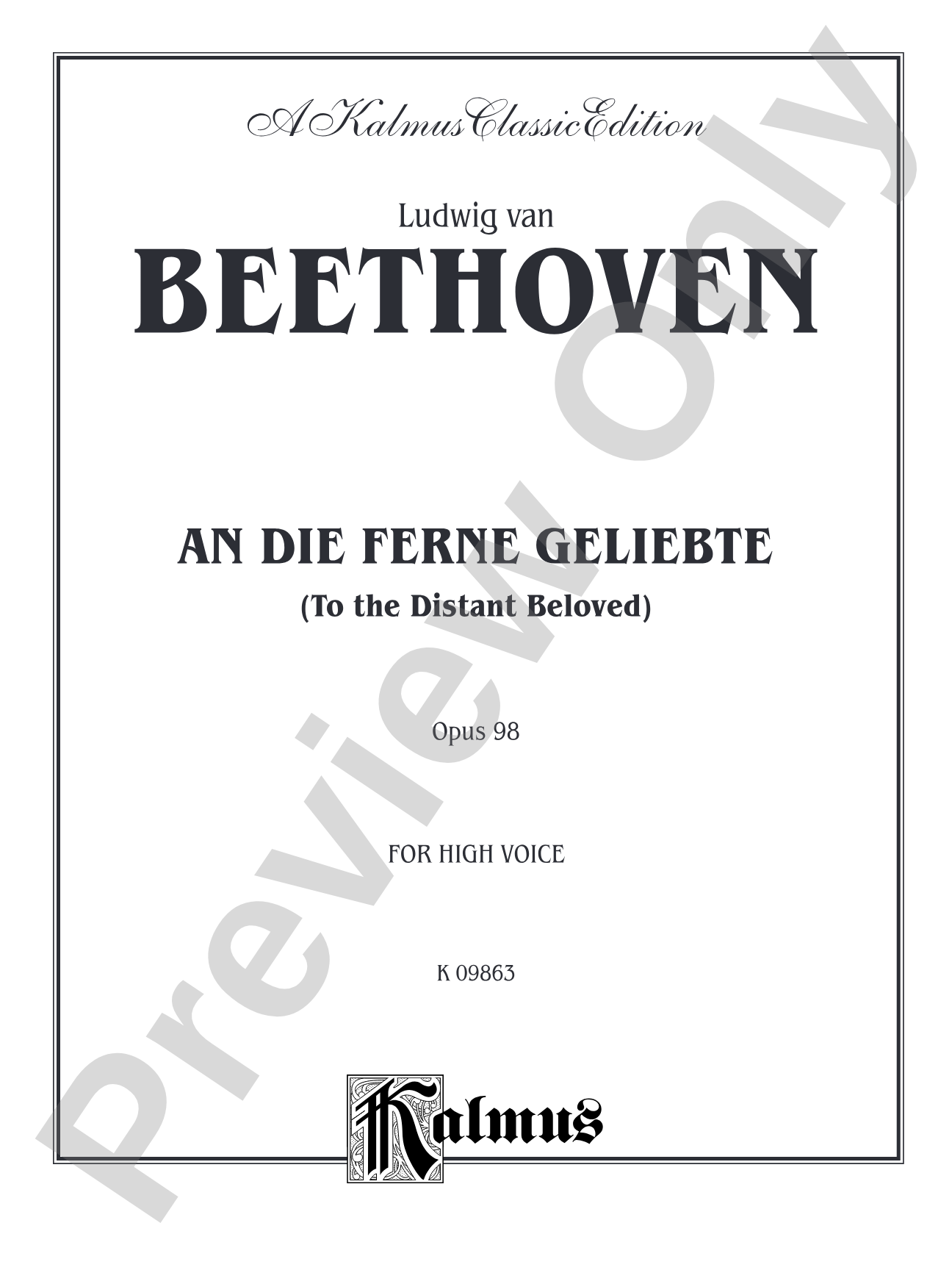
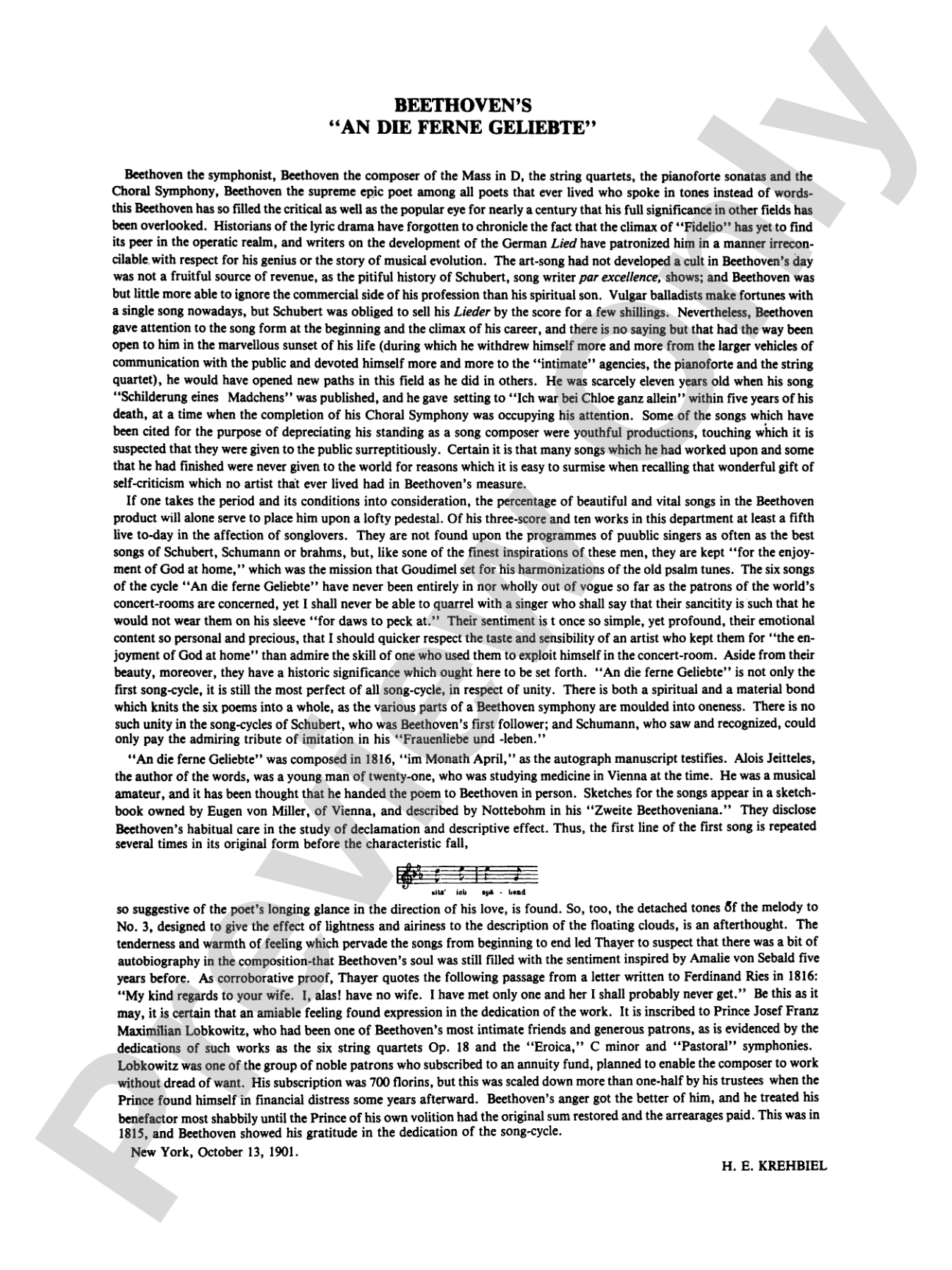
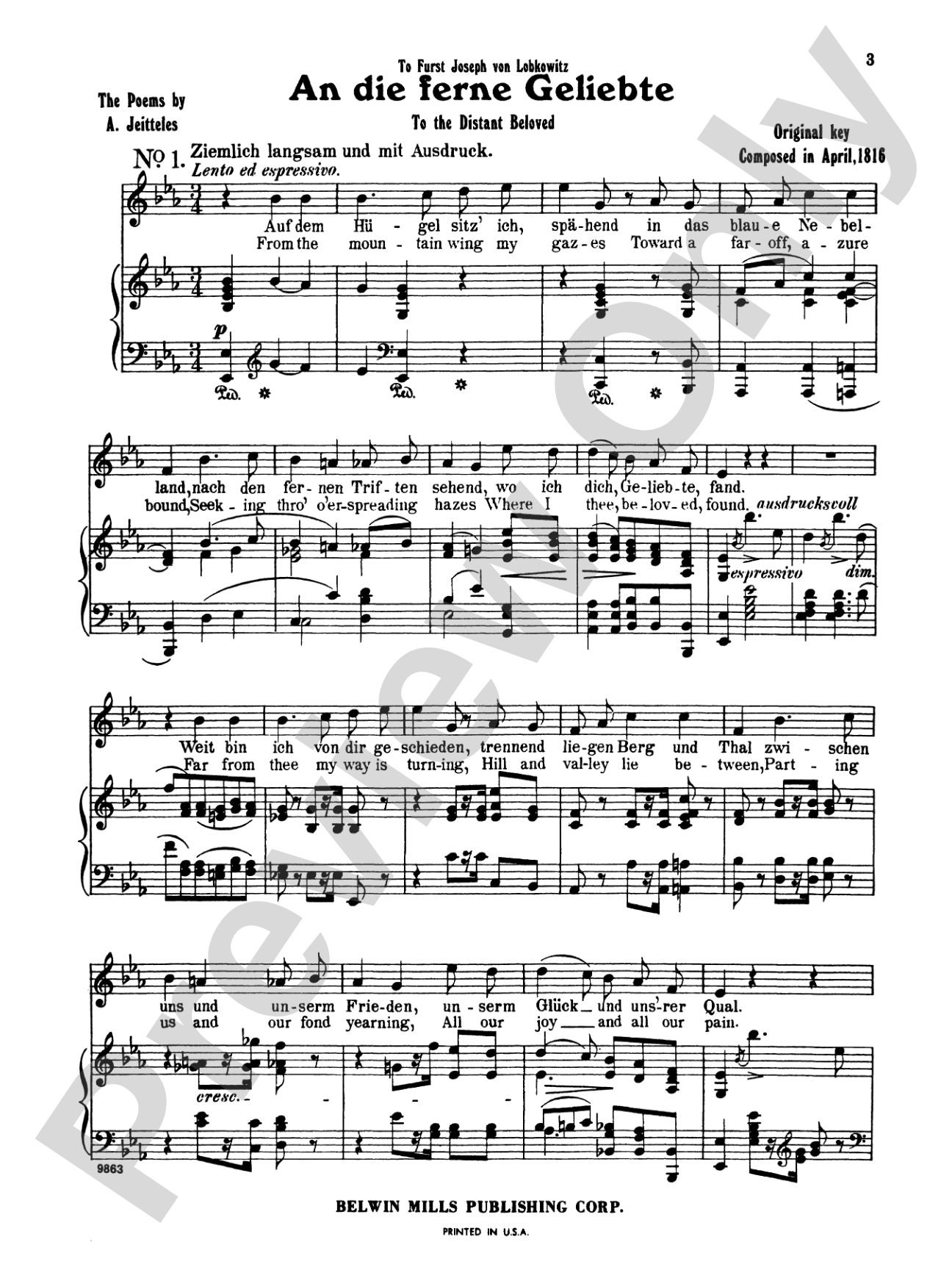
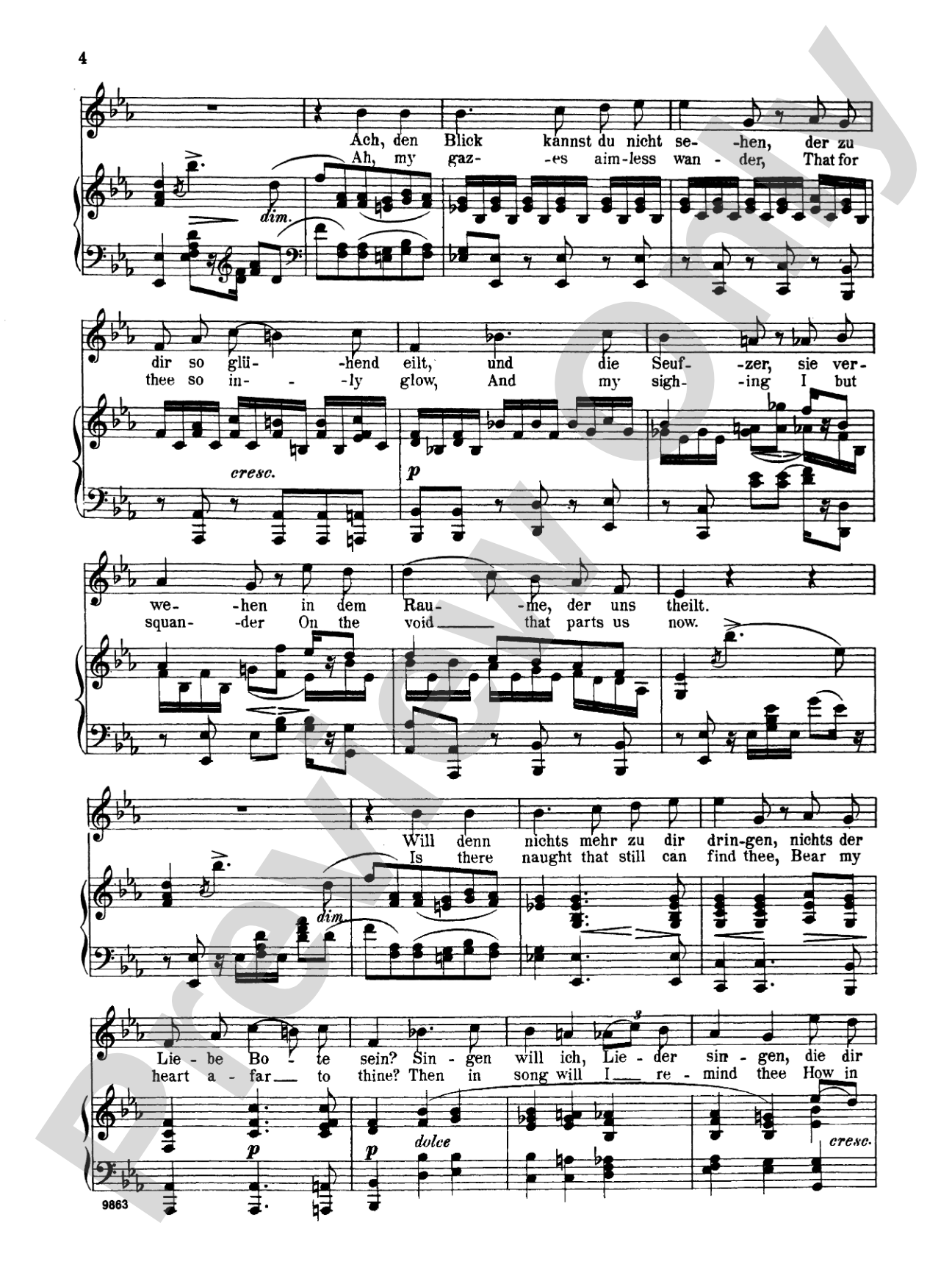
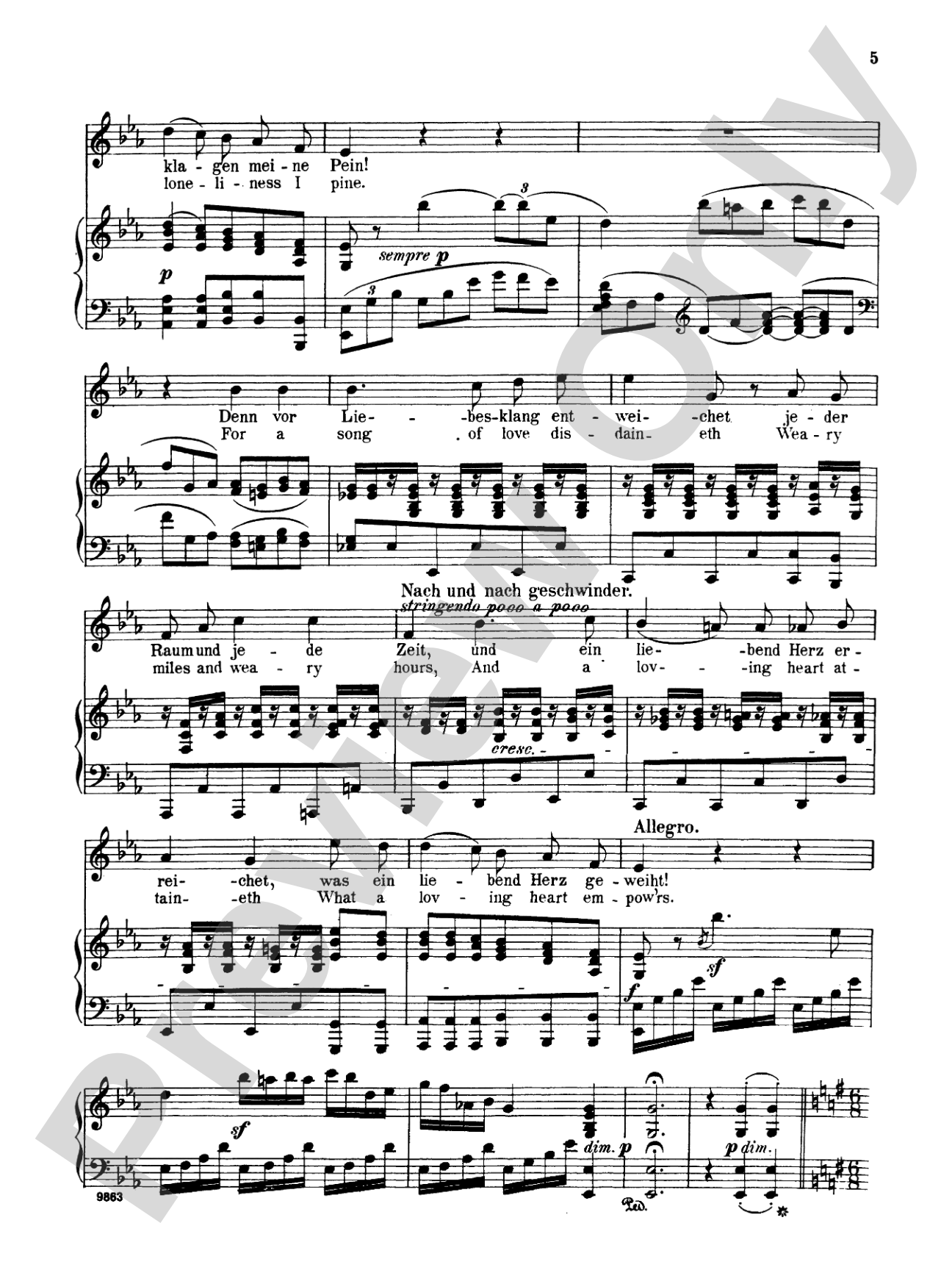
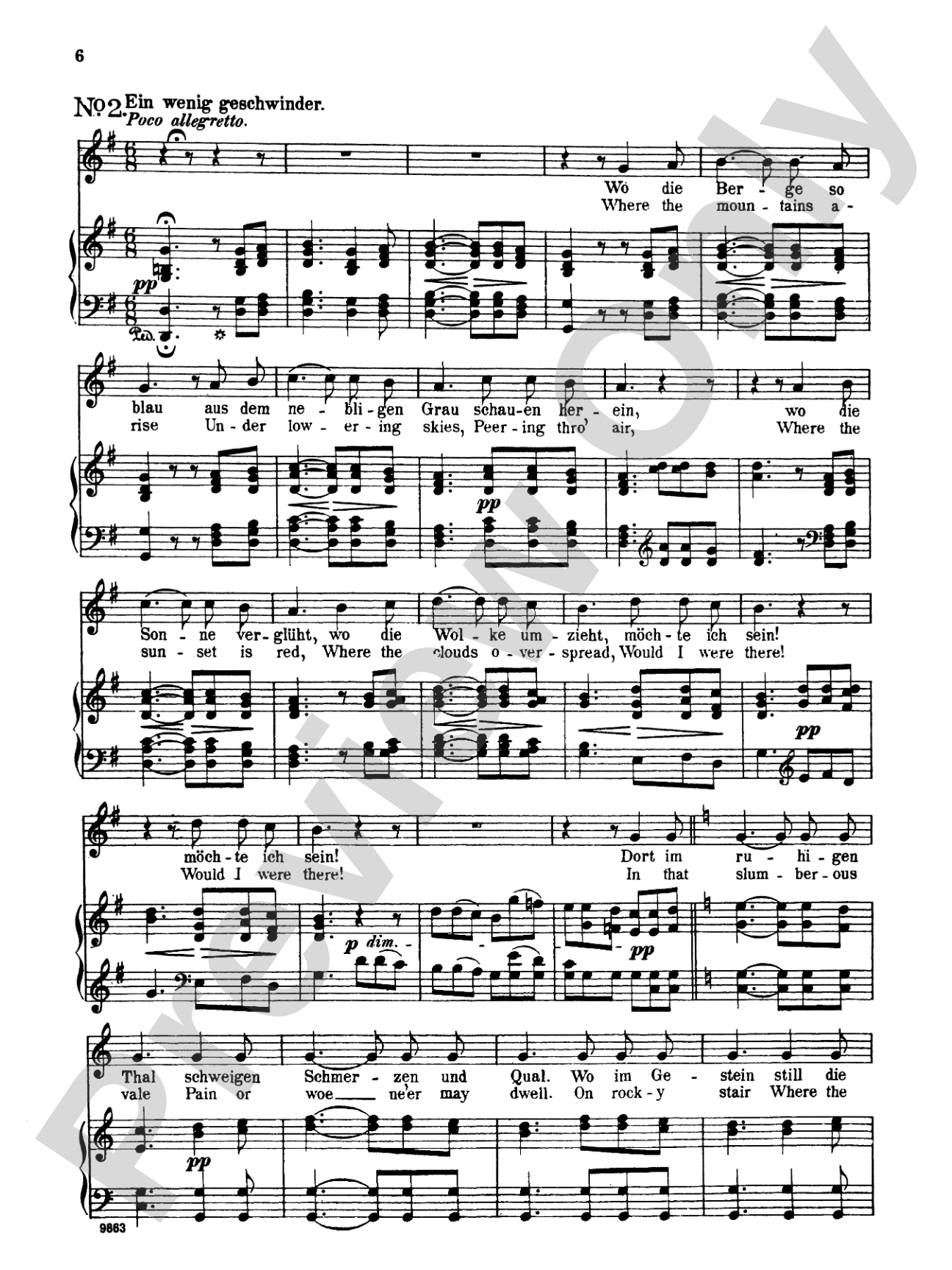
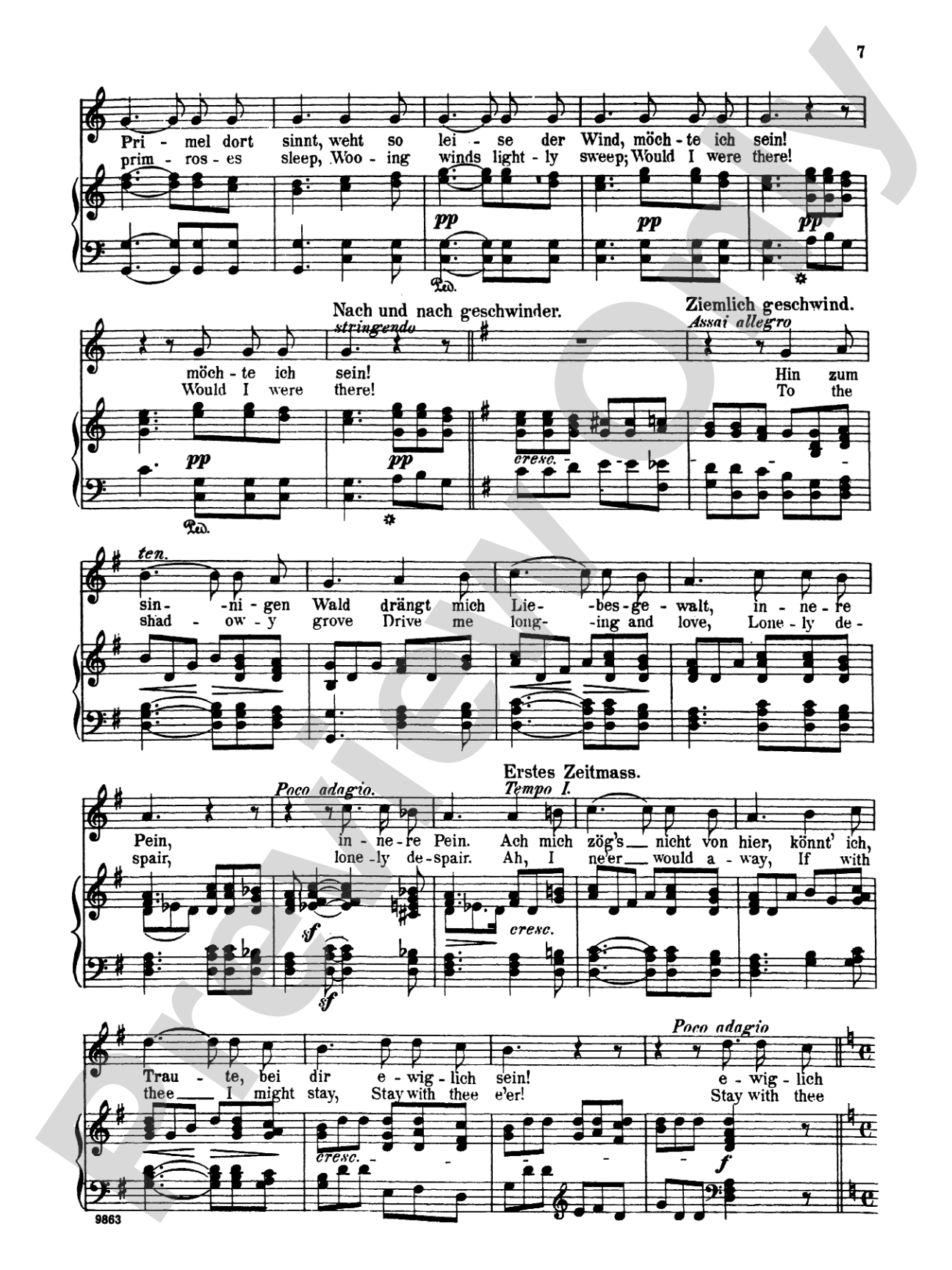
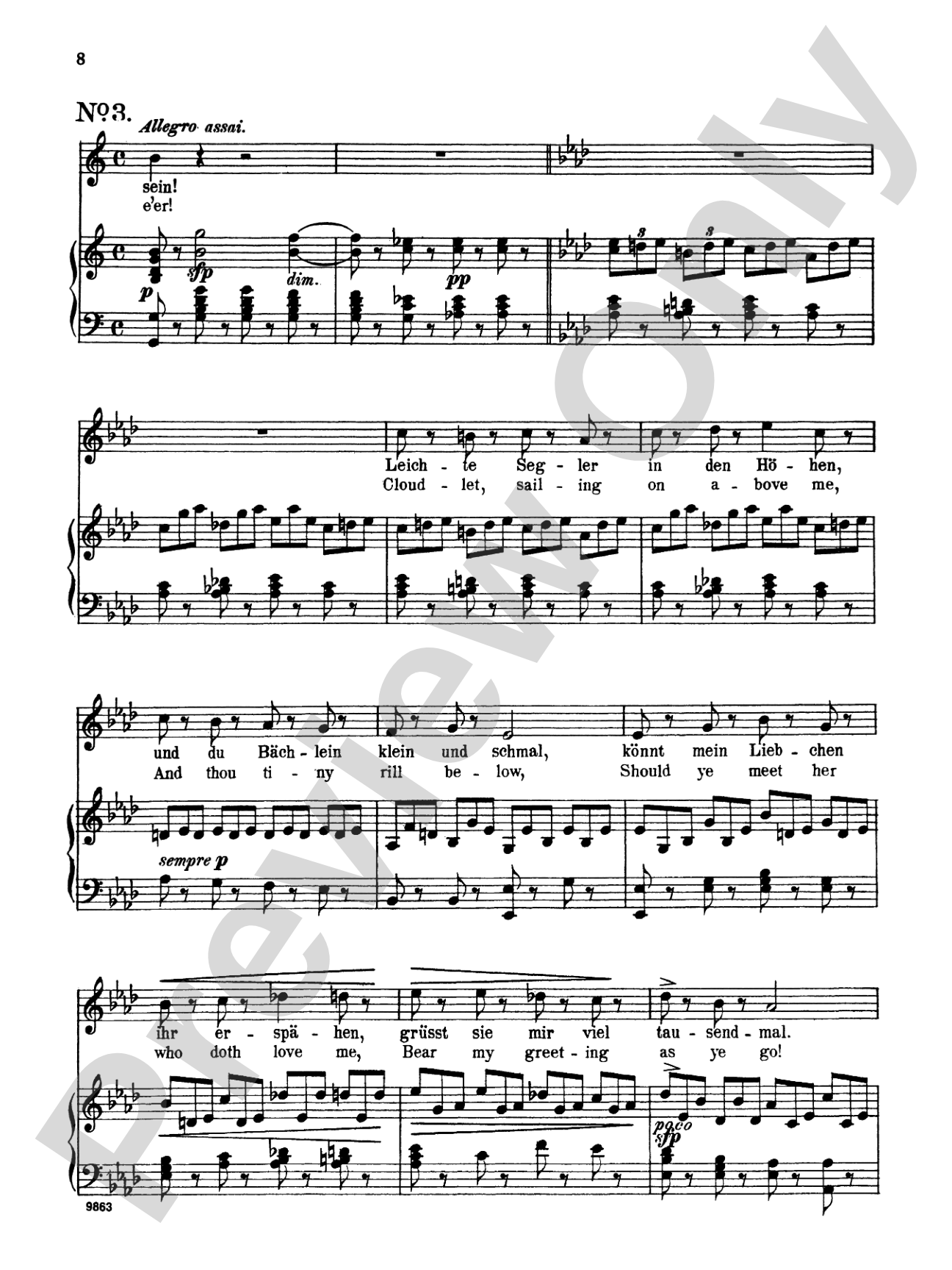
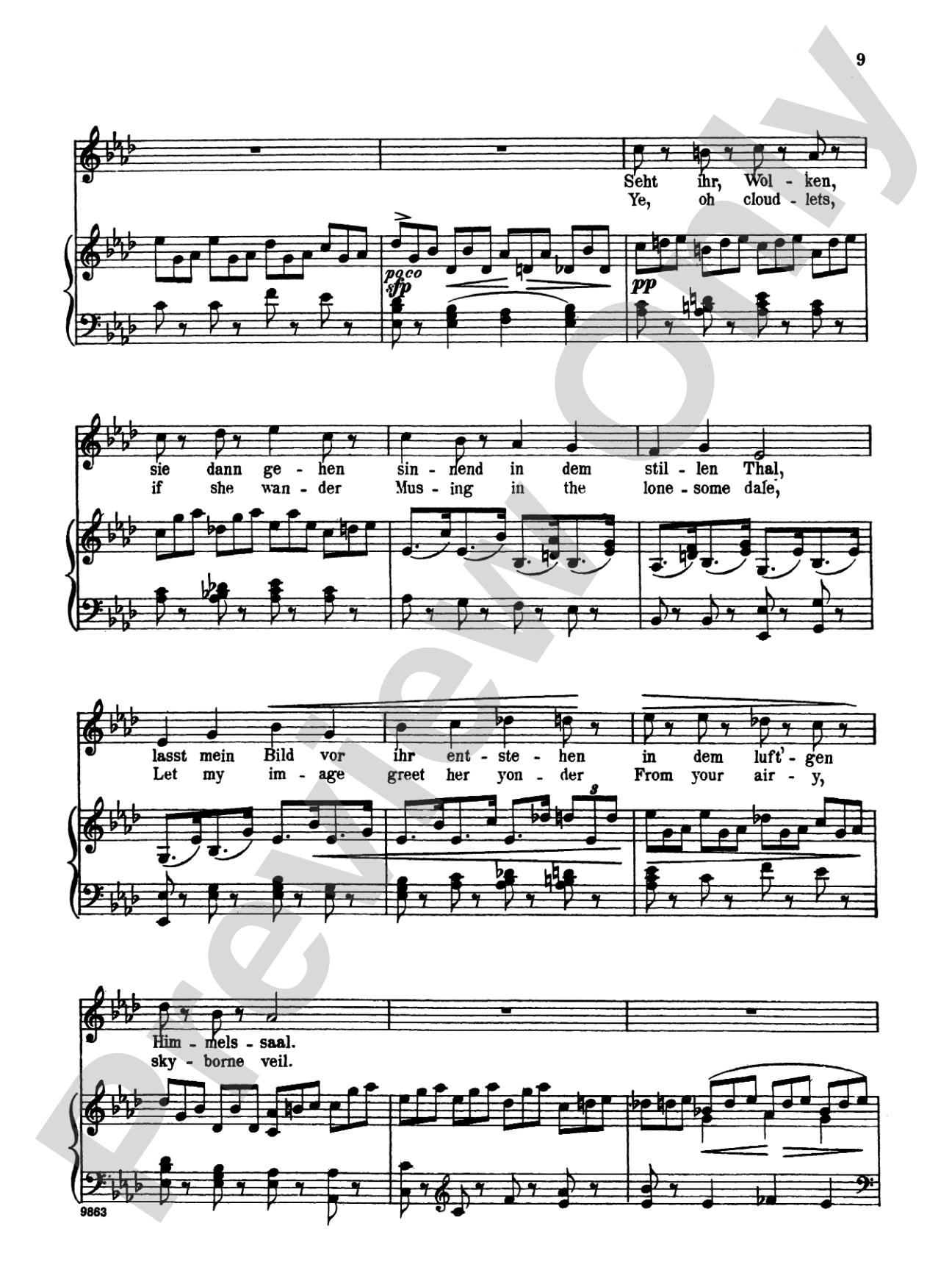
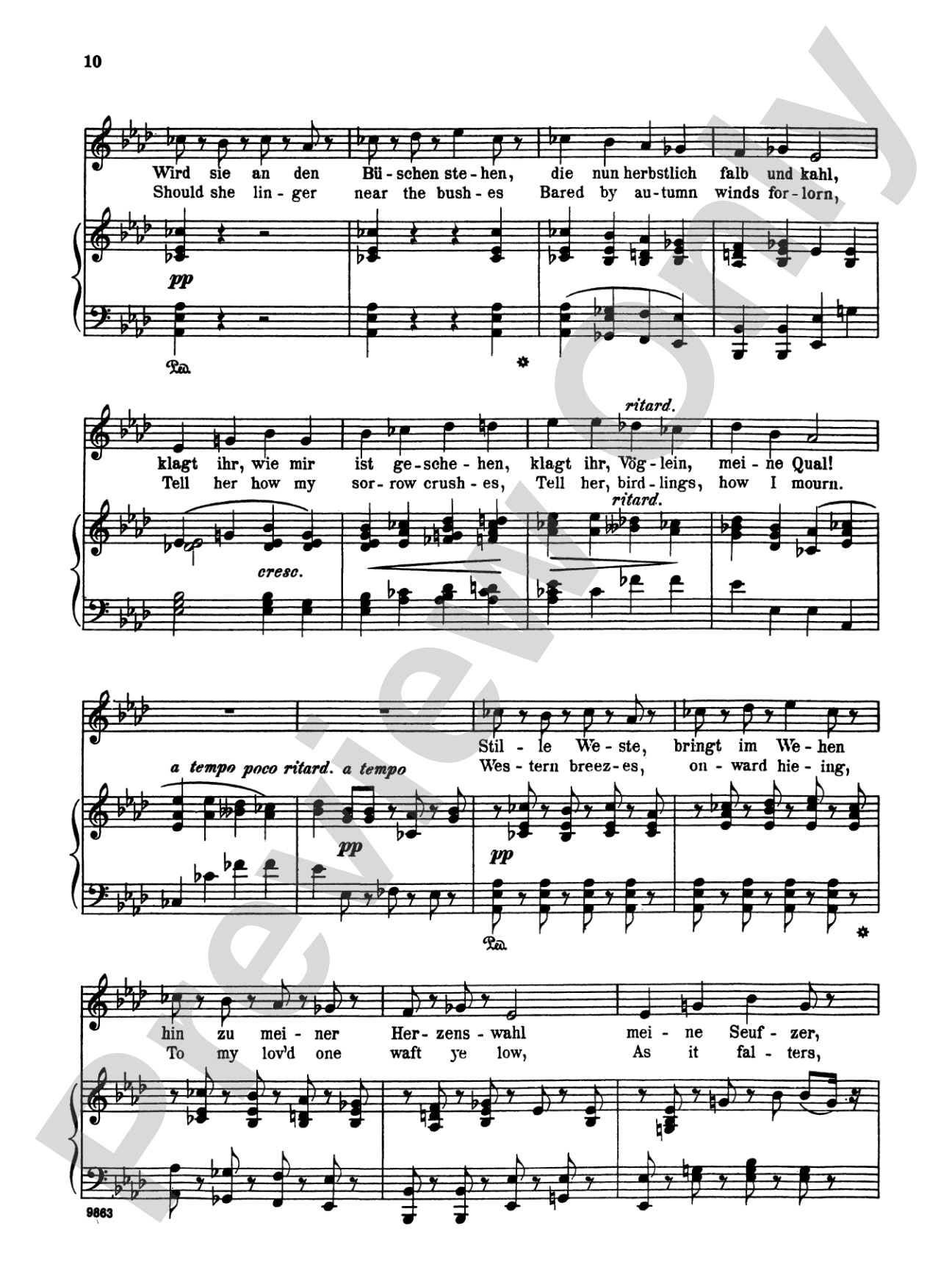
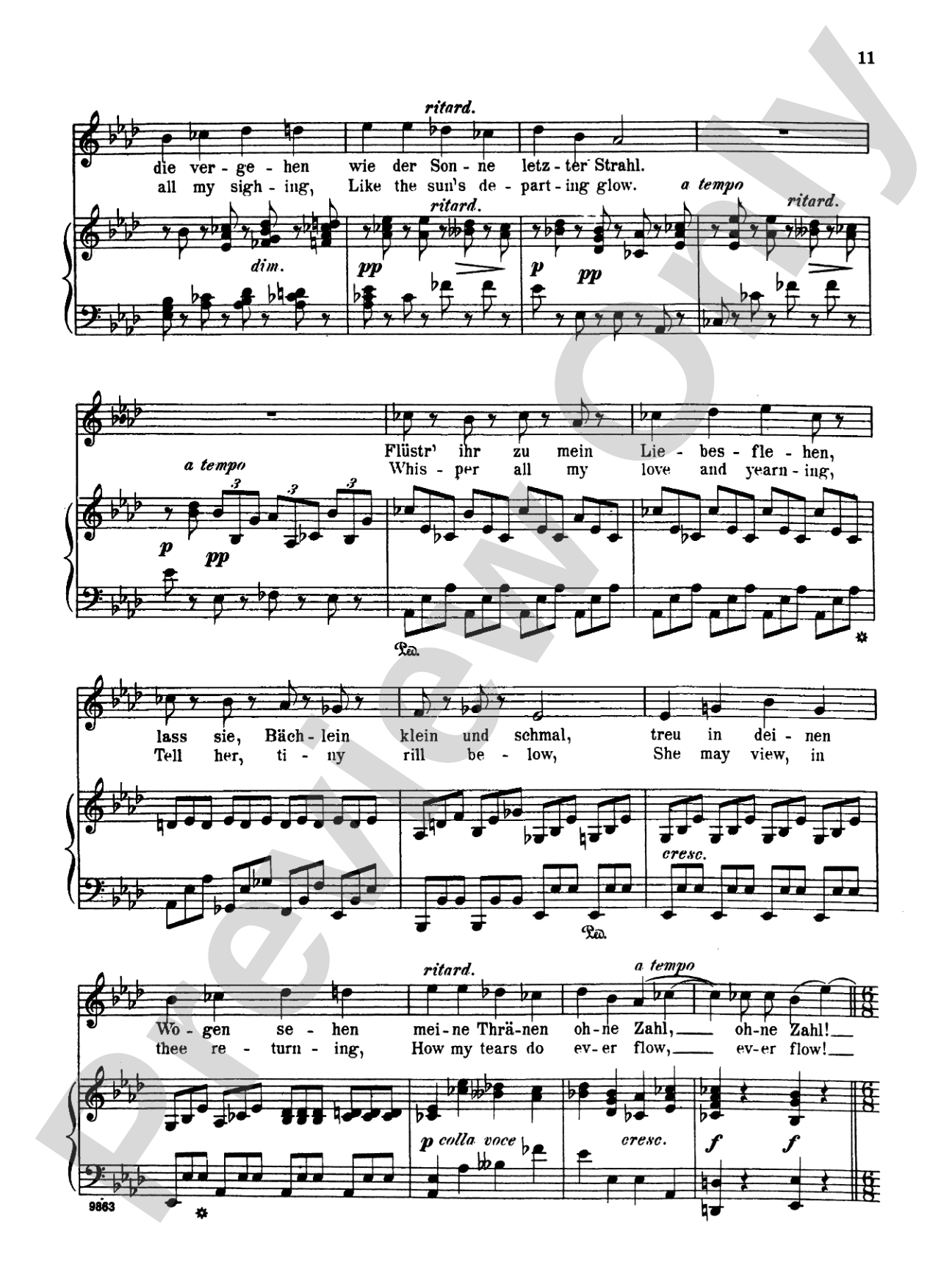
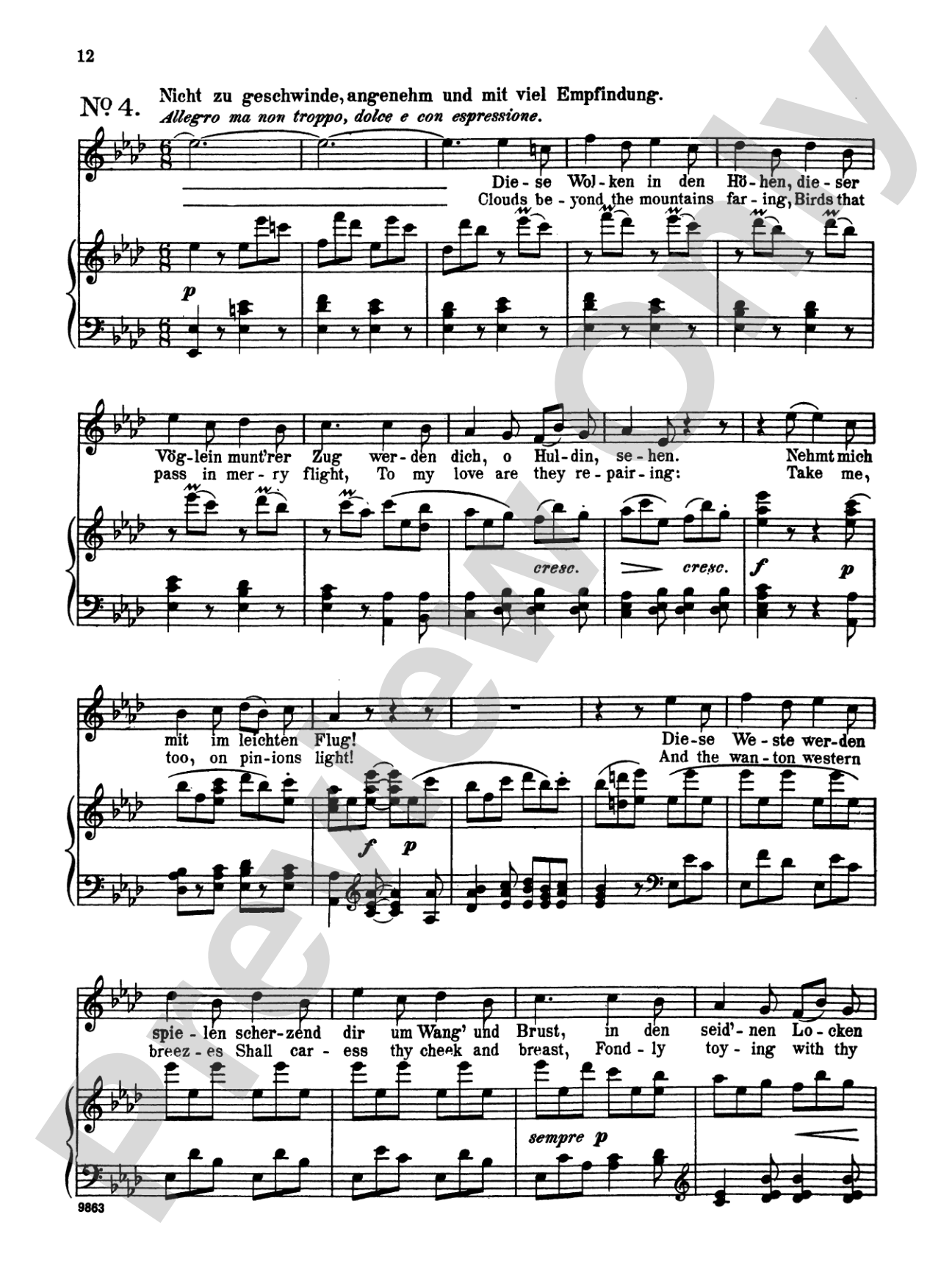
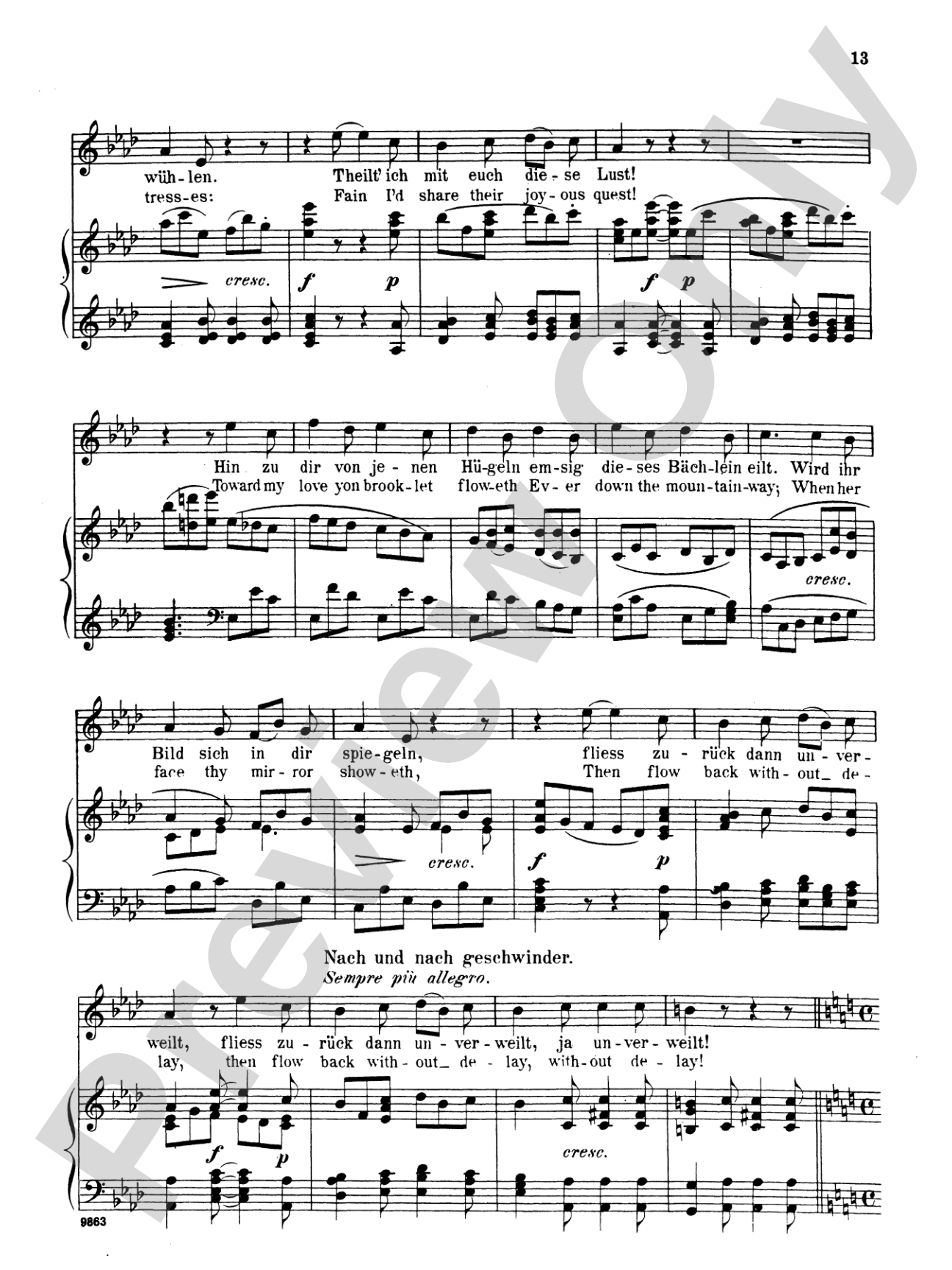
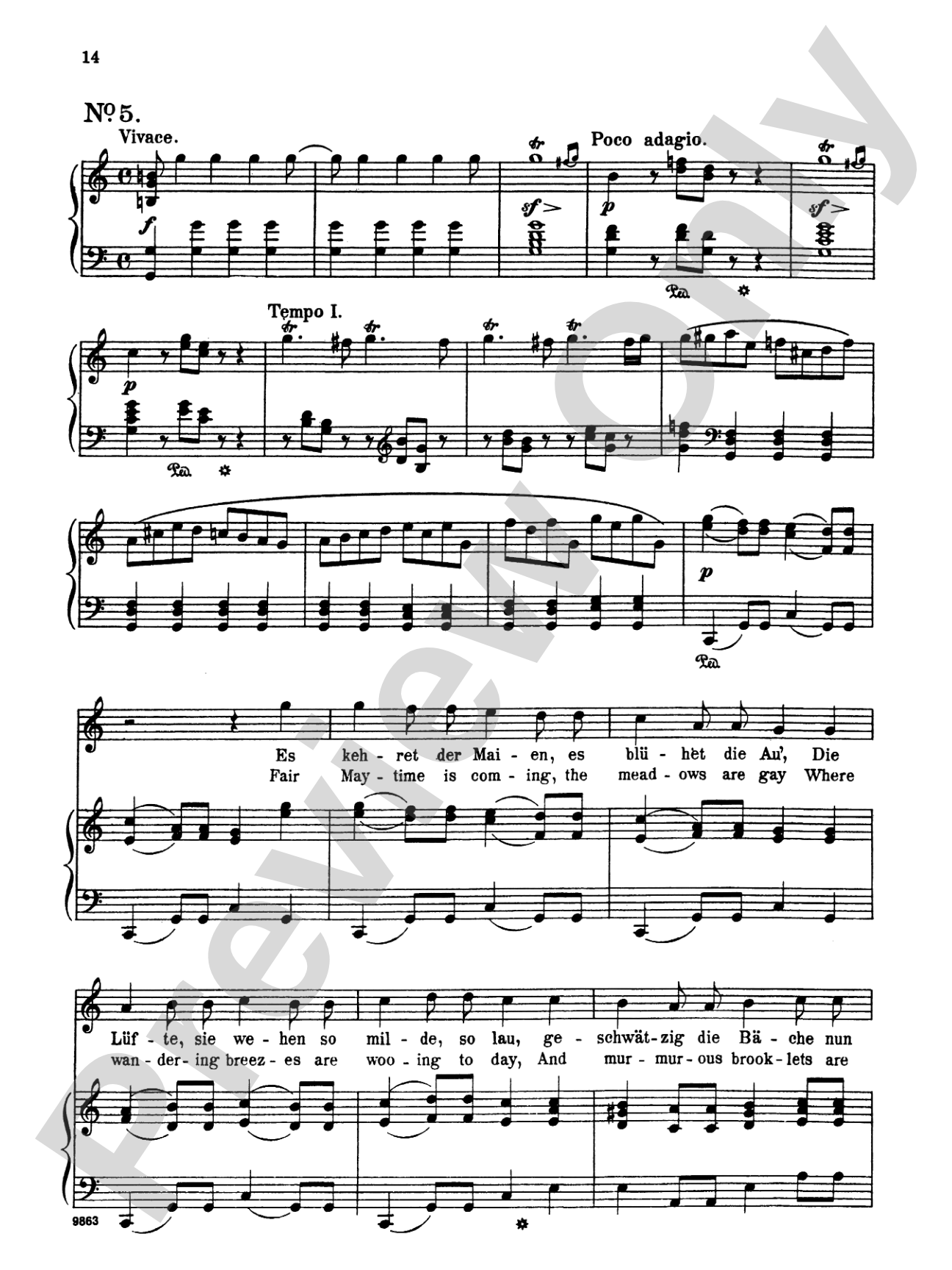
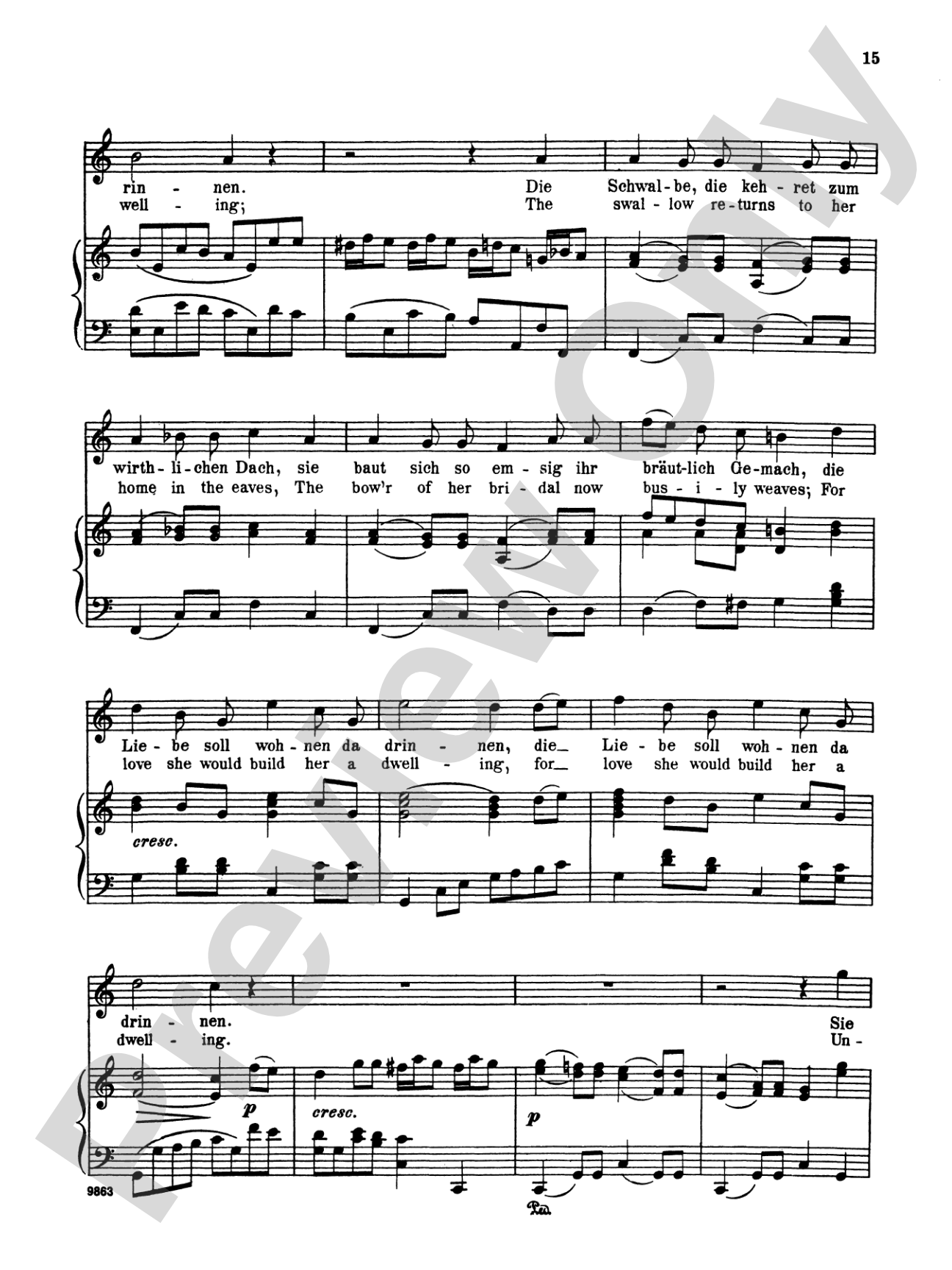
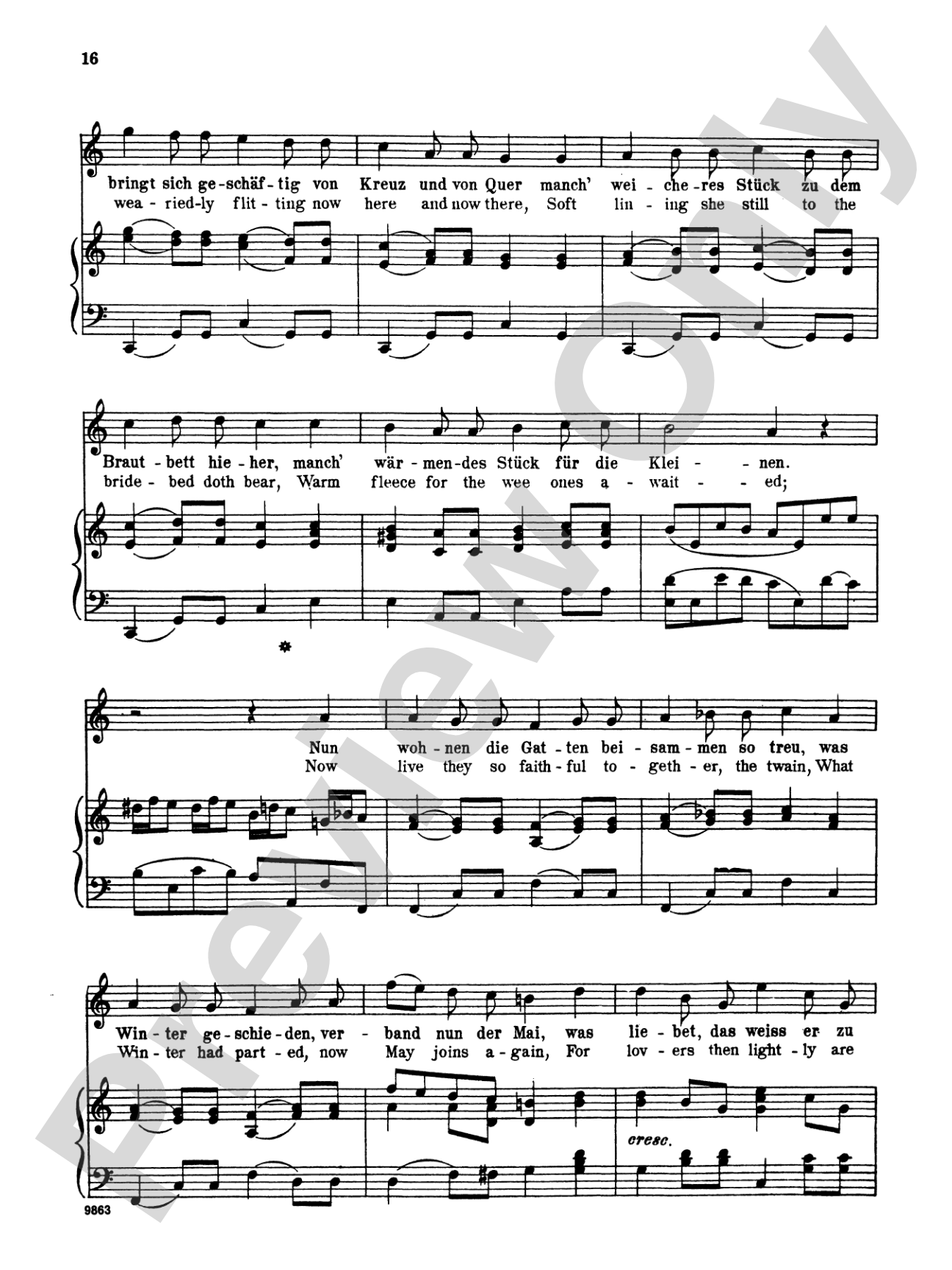
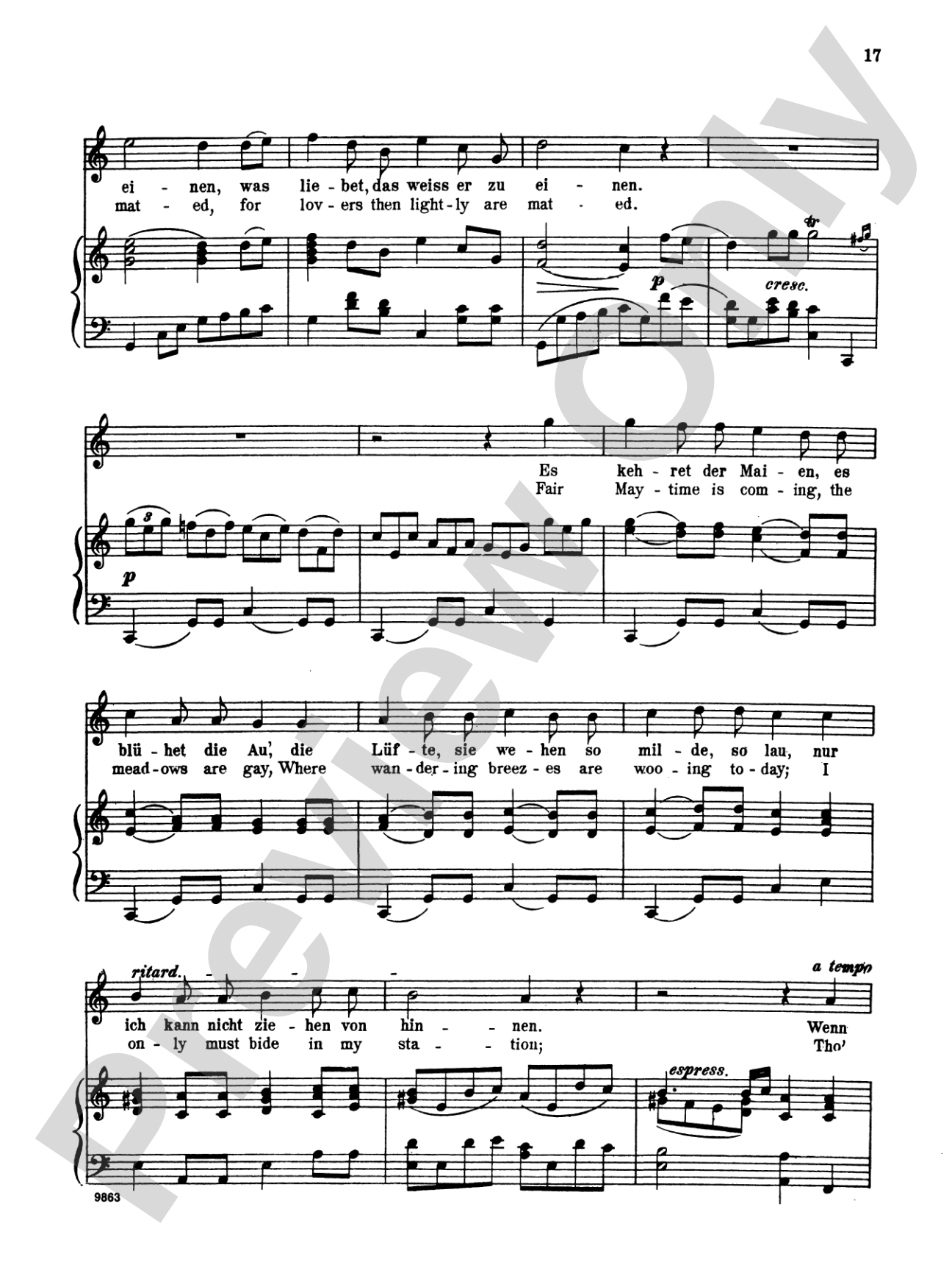
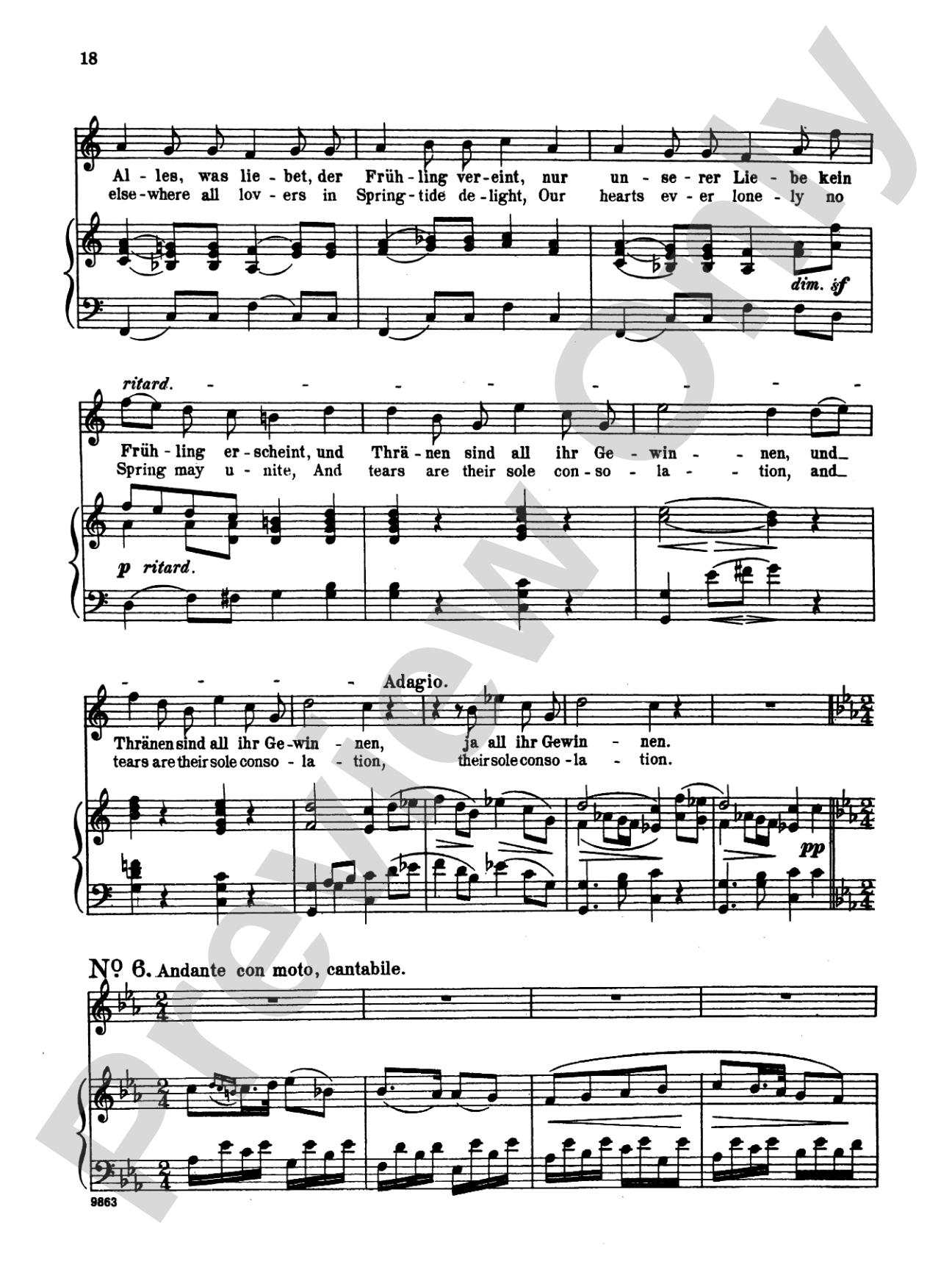
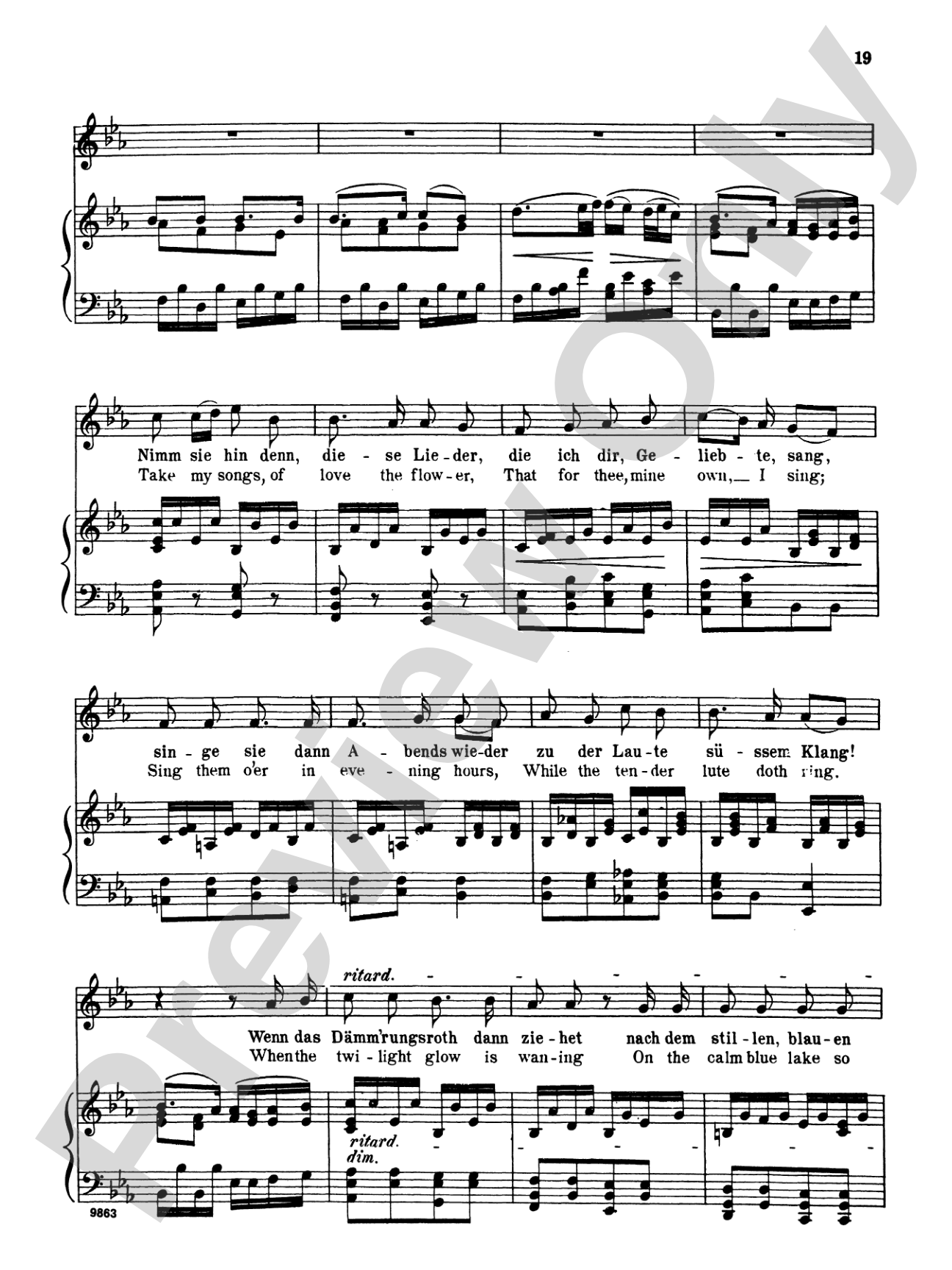
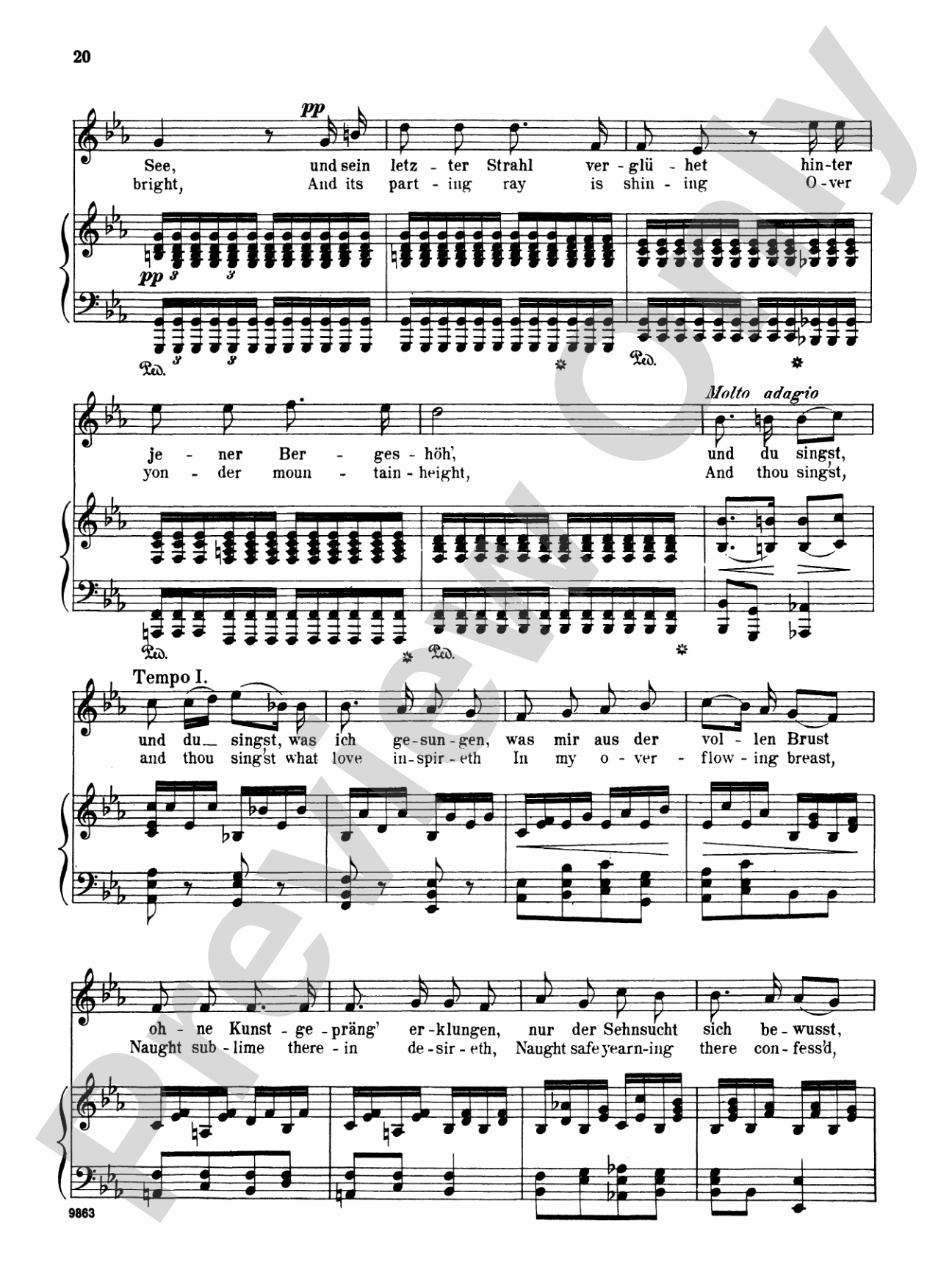
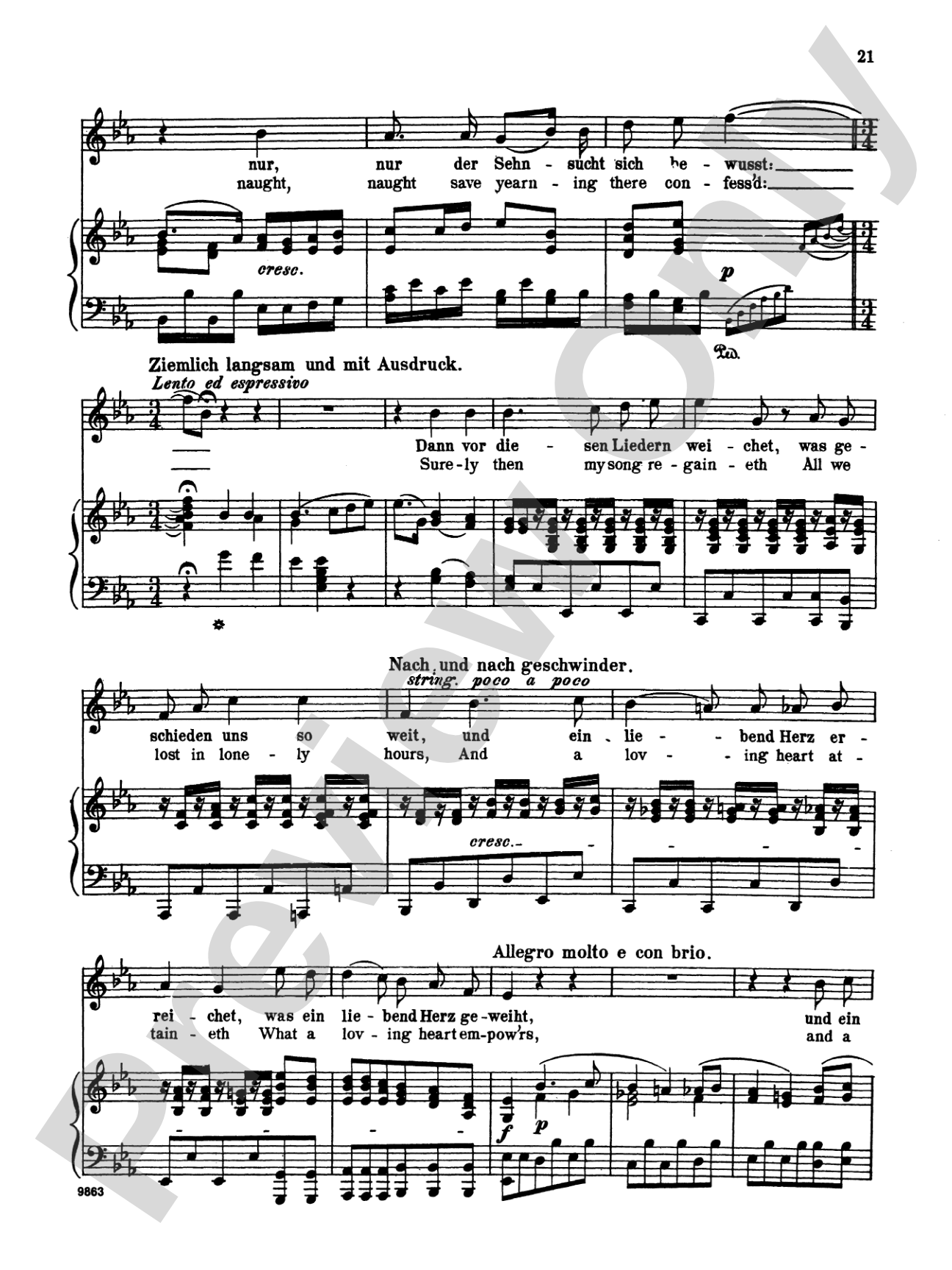
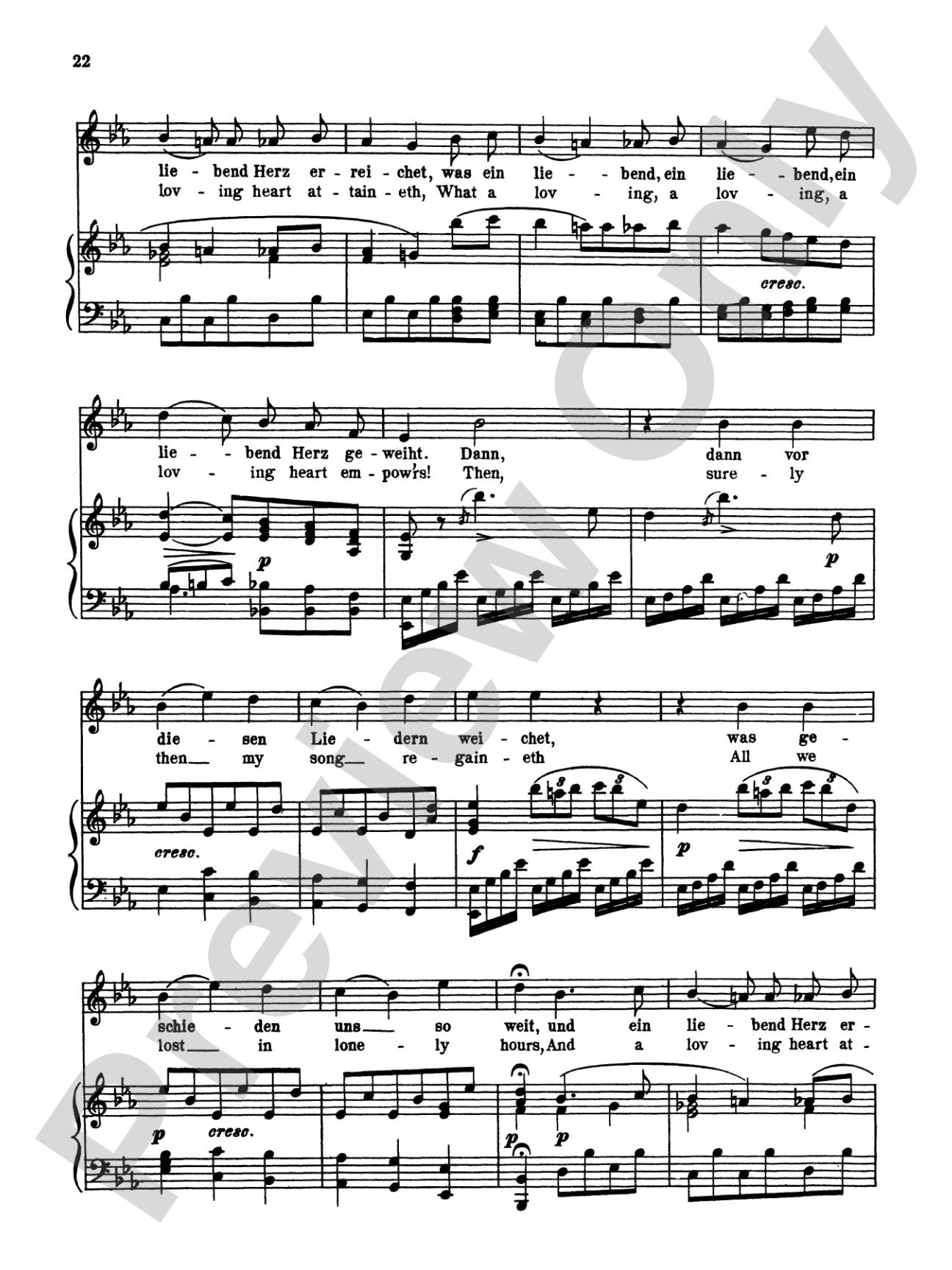
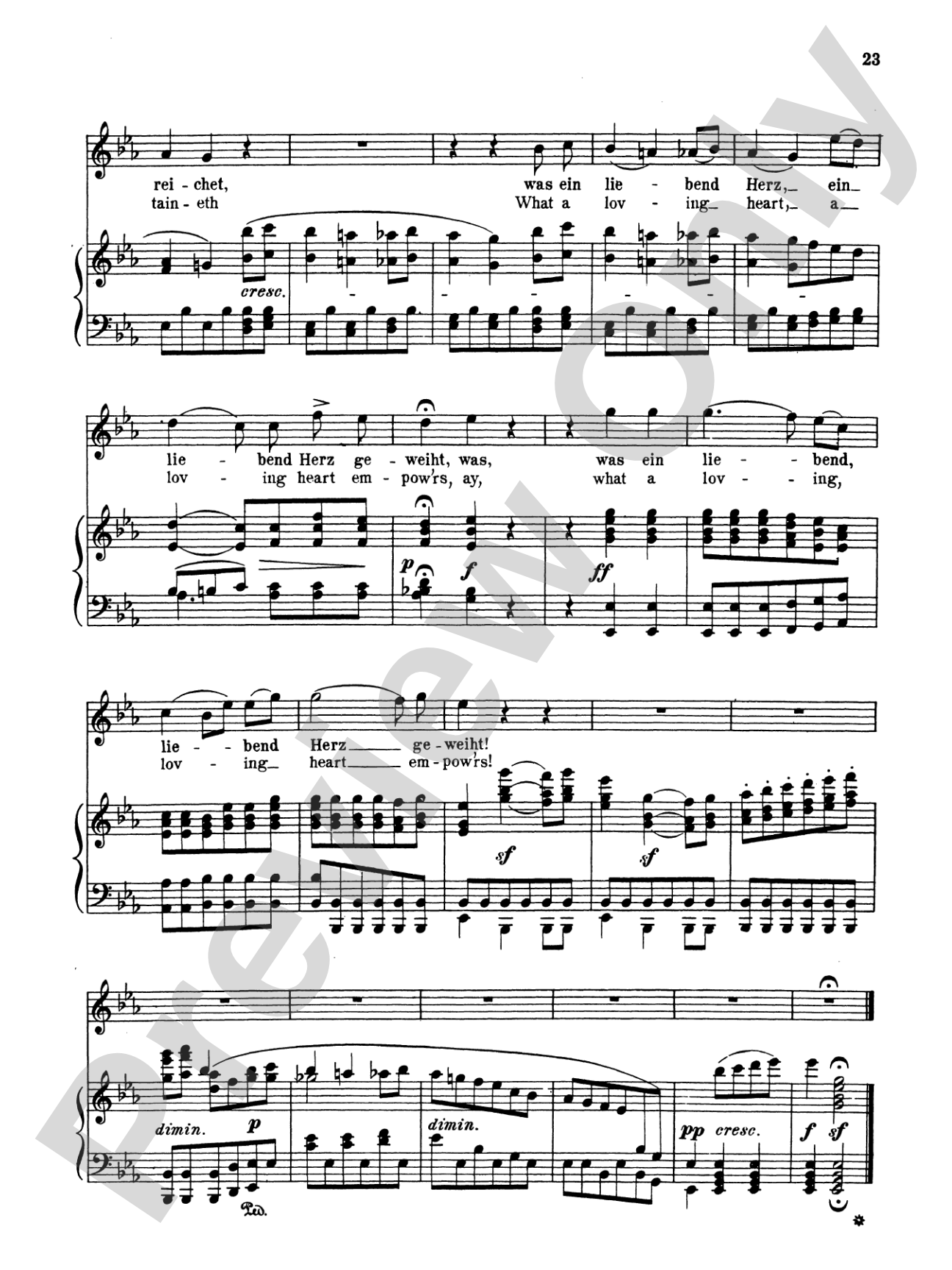


Beethoven: An Die Ferne Geliebte (To the Distant Beloved), Op. 98 (High voice, German/English): High Voice Book
For High Voice
By Ludwig van Beethoven
Item: 00-PK-0003883

$7.99
Pickup currently not available
Buy Extra Parts (Digital PDF Download)
| Product | Price | Quantity |
|---|---|---|
| Beethoven: An Die Ferne Geliebte (To the Distant Beloved), Op. 98 (High voice, German/English) | $5.95 |
Parts Added to Cart!
Related Items
An Die Ferne Geliebte (To the Distant Beloved), Opus 98: High Voice Book |
$7.99
|
View |
Description
A vocal solo for High Voice, by Ludwig van Beethoven.


Don't just read it, hear it, play along with it, and watch your students grow with it. In MakeMusic Cloud, Beethoven: An Die Ferne Geliebte (To the Distant Beloved), Op. 98 (High voice, German/English): High Voice Book comes alive with professional accompaniment, adjustable tempo, and built-in practice tools that turn solo practice into real progress.
Open in the Player
Jump straight in and assign it today.
Start Your Free Trial
Open this title and explore the full library in minutes.
Sample Audio
No sample audio found.
Sample Video
No sample videos found.
Additional Details
Series:
Kalmus Edition
Publisher:
Alfred Music
Page Count:
24
SKU:
00-PK-0003883
More about this title
About the Composer: Ludwig van Beethoven
Ludwig van Beethoven (1770–1827) fundamentally transformed Western music by expanding the expressive and structural possibilities of every genre he touched. Working across the Classical and early Romantic periods, he brought symphonic thinking to the song cycle, chamber music to unprecedented depths, and orchestral power to vocal writing. His late works, including An Die Ferne Geliebte, showcase a composer unafraid to experiment with form and harmonic language in service of profound emotional truth.
Beethoven's significance in music education extends far beyond his fame. His works demand technical facility, interpretive maturity, and an understanding of how musical structure and feeling intertwine. Singers and pianists who engage seriously with his vocal music develop not just vocal prowess but an intuition for Romantic expression rooted in Classical clarity.
Why we love this
An Die Ferne Geliebte stands as the first true art song cycle, and programming it signals to your audience that you take vocal literature seriously. The cycle's arc from yearning to acceptance, unfolding across six connected songs, gives singers a complete dramatic and emotional journey within a single concert slot. This is repertoire that transforms a recital from pleasant to memorable.
What to expect
An Die Ferne Geliebte opens with longing and unfolds through states of yearning, despair, and ultimately quiet acceptance. The harmonic language shifts between Romantic warmth and Classical restraint, creating an intimate conversation between singer and piano that feels confessional. By the cycle's end, distance and loss have been transformed into something approaching peace.
Who it's for
This cycle suits mature high voice singers with solid German language skills and the stamina for sustained expressive singing across 24 pages. It belongs in the repertoire of any serious art song performer, whether preparing for a recital, competition, or master class.
How to get the most out of it
- Treat the six songs as a single narrative arc rather than six separate pieces. Pacing between songs matters; allow breath and silence to create dramatic space without breaking the cycle's emotional thread.
- The piano part is not accompaniment. Study how Beethoven's figuration and harmonic movement mirror and amplify the vocal line. The pianist must shape phrases alongside the singer, not merely support them.
- Pay attention to dynamic nuance in the German text. Beethoven's underlay is precise; respect the prosody and allow word stress to guide your phrasing rather than imposing a predetermined melodic shape.
- The final song represents acceptance and resolution. Resist the temptation to rush or diminish it emotionally; instead, allow the shift in character to emerge naturally from everything that came before.
How to use it
Program this as the centerpiece of a recital exploring Romantic German vocal music, or pair it with later Schubert lieder to show the evolution of the form. It also works as a capstone recital piece for advanced voice students, demanding the technical and interpretive maturity that signals artistic growth.
Skills your students will build
- Sustaining a dramatic arc across multiple connected songs
- Interpreting German text with historical awareness and linguistic precision
- Understanding harmonic language that bridges Classical and Romantic styles
- Collaborative piano-vocal balance in chamber music contexts
- Emotional storytelling that deepens with structural understanding