Beethoven: A First Beethoven Book Sheet Music Preview

Beethoven: A First Beethoven Book

By Ludwig van Beethoven

Item: 00-PC-0005317

Digital Download
$0.99
Description
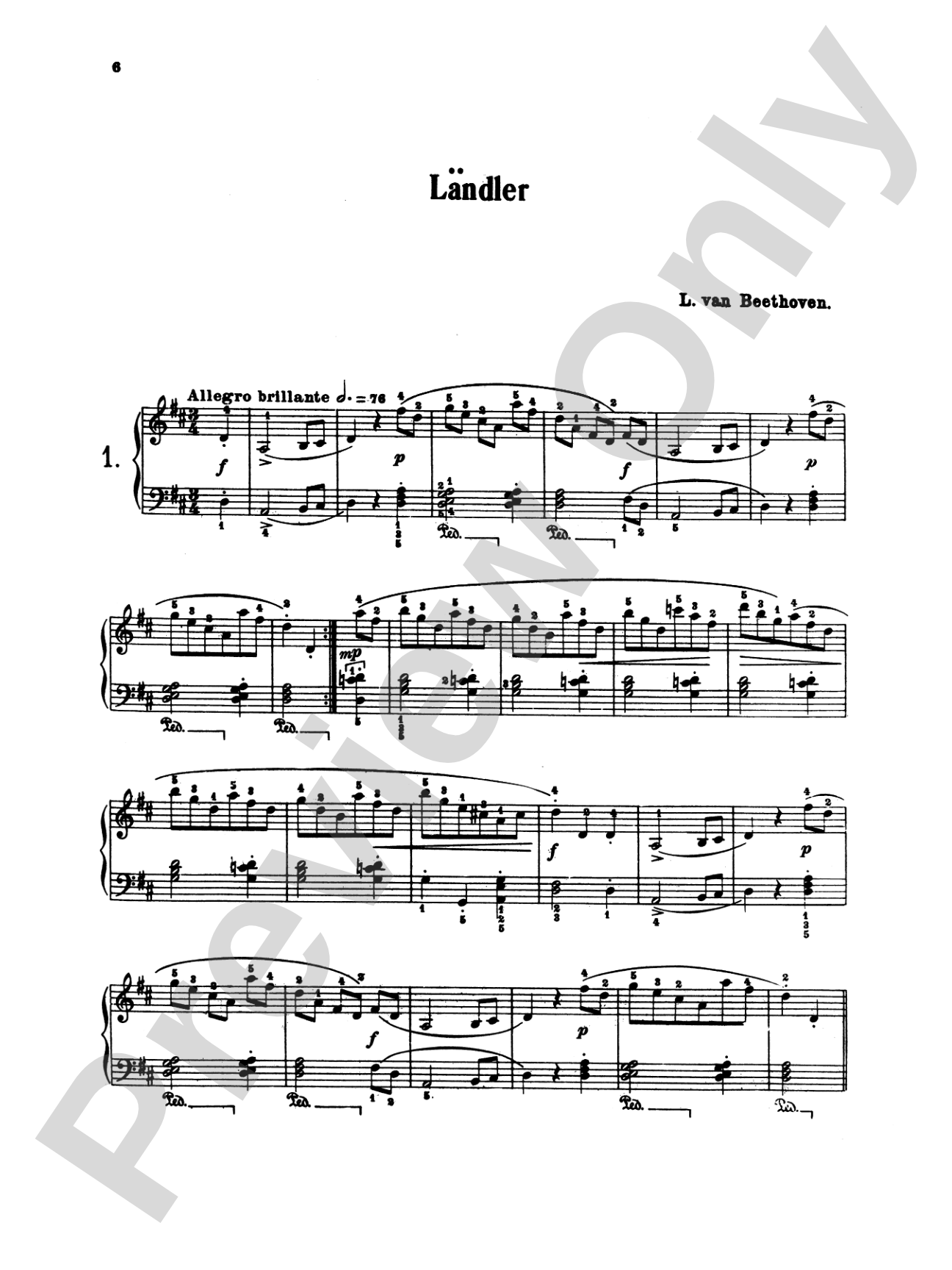
Includes: 2 German Dances * Ecossaise * Allemande * Ländler * Sonatina in G Major * Rondo from Sonatina No. 6 * 6 Easy Variations on a Swiss Song.

Don't just read it, hear it, play along with it, and watch your students grow with it. In MakeMusic Cloud, Beethoven: A First Beethoven Book comes alive with professional accompaniment, adjustable tempo, and built-in practice tools that turn solo practice into real progress.

Sample Audio
No sample audio found.
Sample Video
Additional Details
Series: Kalmus Edition
Publisher: Alfred Music
Page Count: 16
SKU: 00-PC-0005317

More about this title

About the Composer: Ludwig van Beethoven

Ludwig van Beethoven (1770-1827) bridged the Classical and Romantic eras, transforming the symphony, sonata, and string quartet into vehicles for unprecedented emotional and structural innovation. His early works, written while he was establishing himself in Vienna, display the clarity and wit of the Classical tradition while hinting at the revolutionary harmonic language that would define his later compositions.

Why we love this

This collection captures Beethoven in an accessible register without sacrificing compositional substance. The mix of dance forms and variations gives students genuine Beethoven without the technical or interpretive demands of the mature sonatas, making it ideal for building confidence and introducing younger pianists to one of music's greatest minds.

What to expect

These pieces radiate the grace and proportioned elegance of Vienna's Classical salons. The German Dances pulse with gentle warmth, the Ländler invites you to hear the folk melodies beneath Beethoven's refined accompaniment, and the Sonatina unfolds with purity of line and clarity of purpose.

Who it's for

This collection suits intermediate pianists ready to explore Classical forms with substance and personality. It works equally well for students building a recital program, pianists expanding their Beethoven familiarity beyond the famous sonatas, or those preparing for repertoire exams that value canonical works at accessible levels.

How to get the most out of it

  • Shape the phrase endings in the German Dances with clear direction; these brief forms depend on confident articulation and tempo control to avoid sounding rushed.
  • Let the Ecossaise and Ländler breathe as character dances. Honor the stylistic origins through tempo choice and dynamic contrast rather than treating them as abstract studies.
  • In the Sonatina in G Major and Rondo, maintain voice independence in the accompaniment figures; Beethoven's textures reward clarity of touch even at moderate tempos.
  • The Variations on a Swiss Song benefit from character differentiation between each variation. Plan registration and dynamic shaping early so each statement feels distinct.

How to use it

Program the German Dances or Ecossaise as elegant opening numbers that establish Beethoven's lighter voice. The Sonatina in G Major or Rondo works well as a bridge between more contemporary repertoire and the larger canon. These pieces also serve as natural stepping stones for students preparing to tackle the later sonatas.

Skills your students will build

  • Phrasing and voice independence in Classical textures
  • Stylistic understanding of early 19th-century dance forms
  • Variation technique and motivic development
  • Sustaining lyrical lines while maintaining rhythmic clarity
  • Interpretation of Beethoven's harmonic language at an accessible level

You May Also Like