

Beethoven: 13 of His Most Popular Piano Pieces: Piano
By Ludwig van Beethoven / ed. Willard A. Palmer
Level: Late Intermediate / Early Advanced
Item: 00-PB-0000867
$12.99
Pickup currently not available
Related Items
Beethoven: 13 of His Most Popular Piano Pieces: Piano Book |
$12.99
|
View |
Description
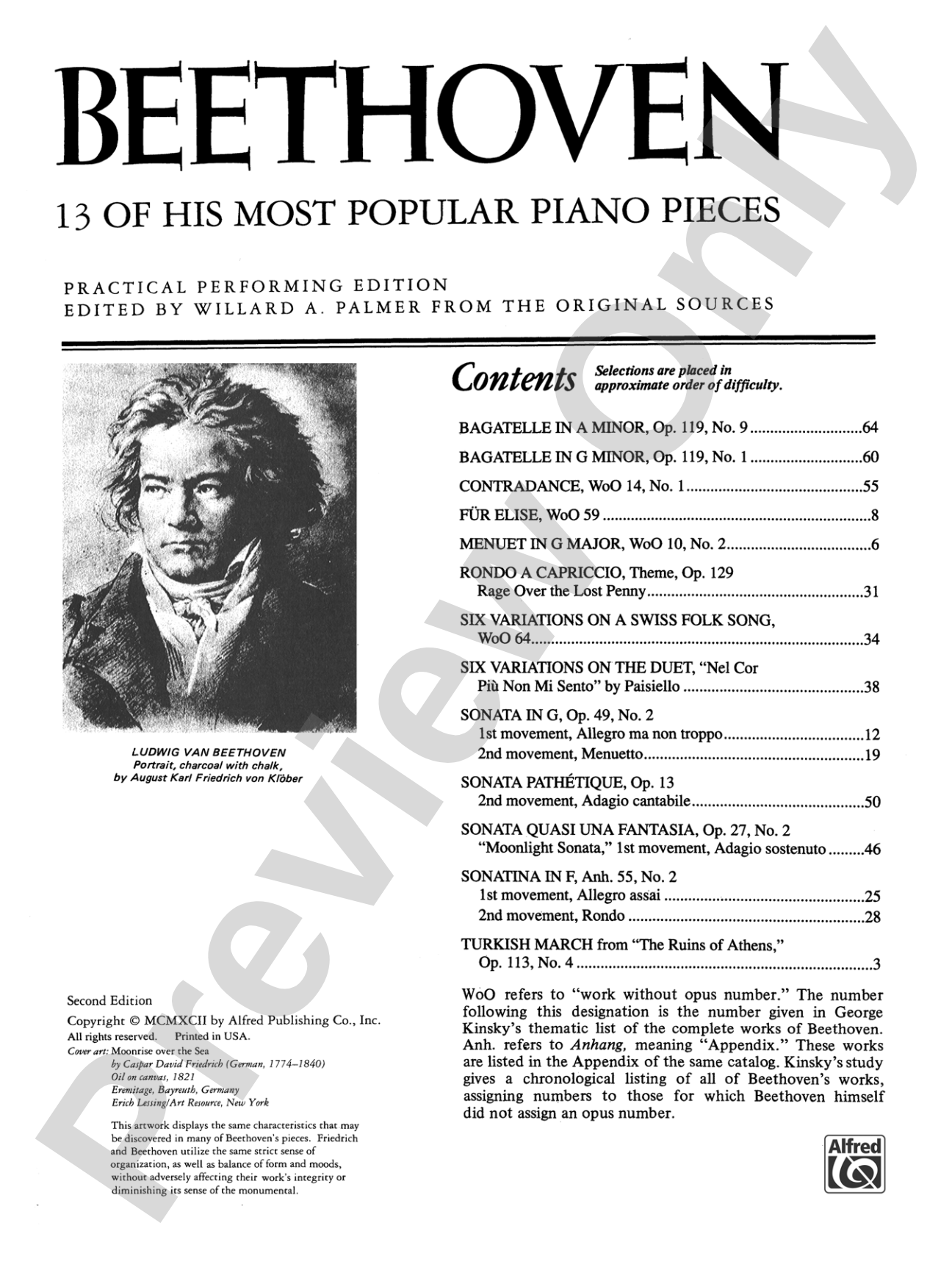
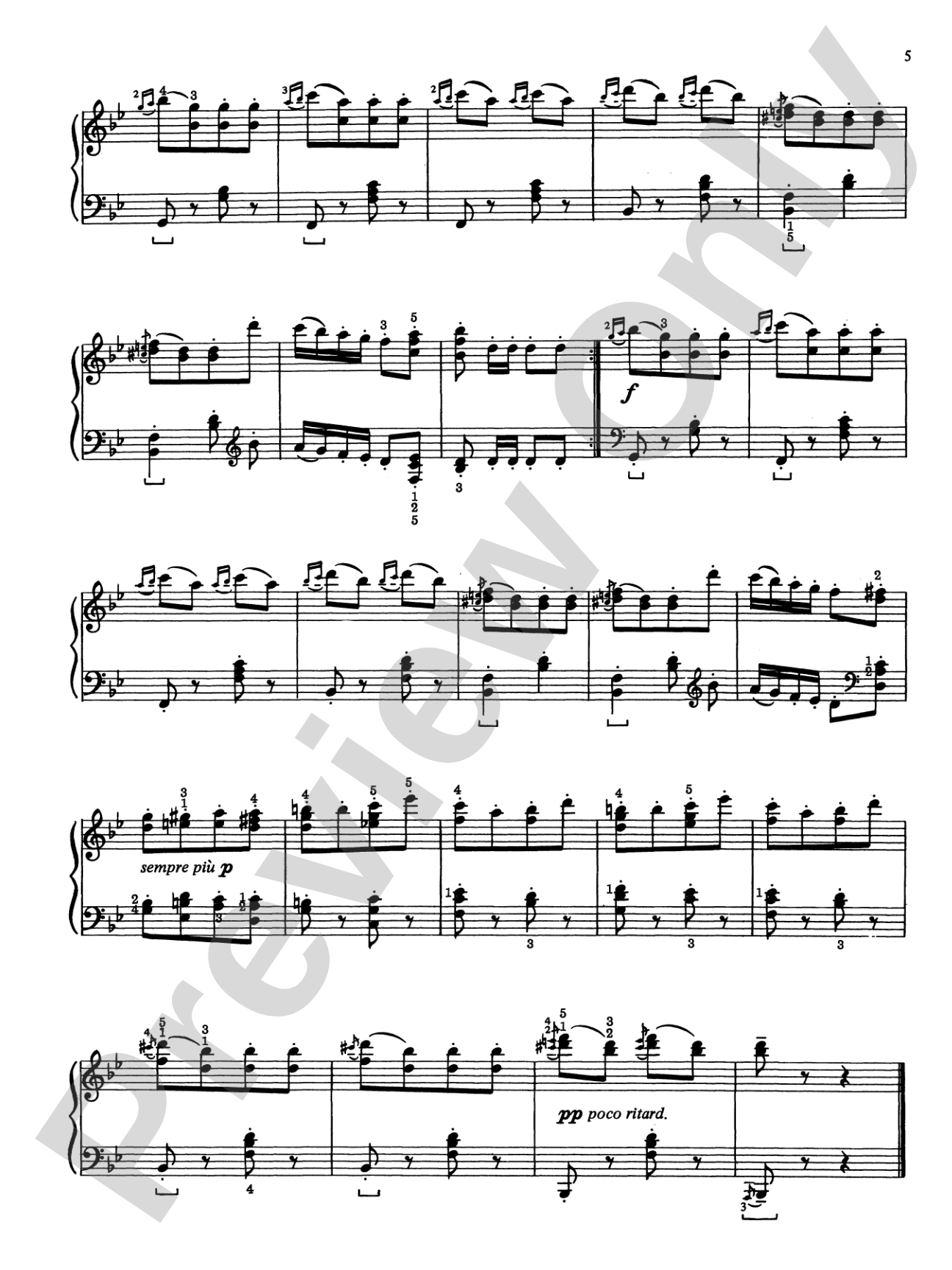
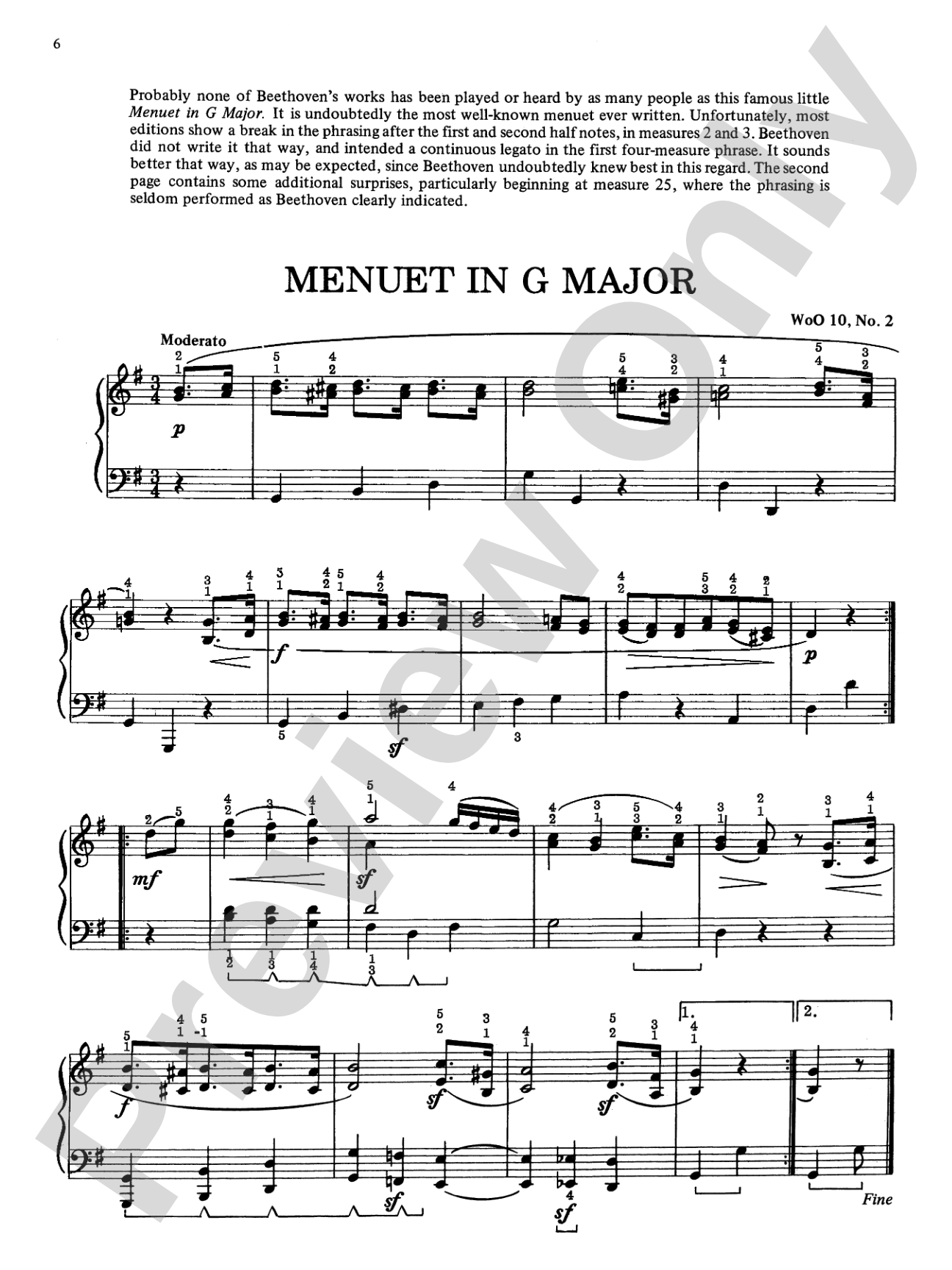
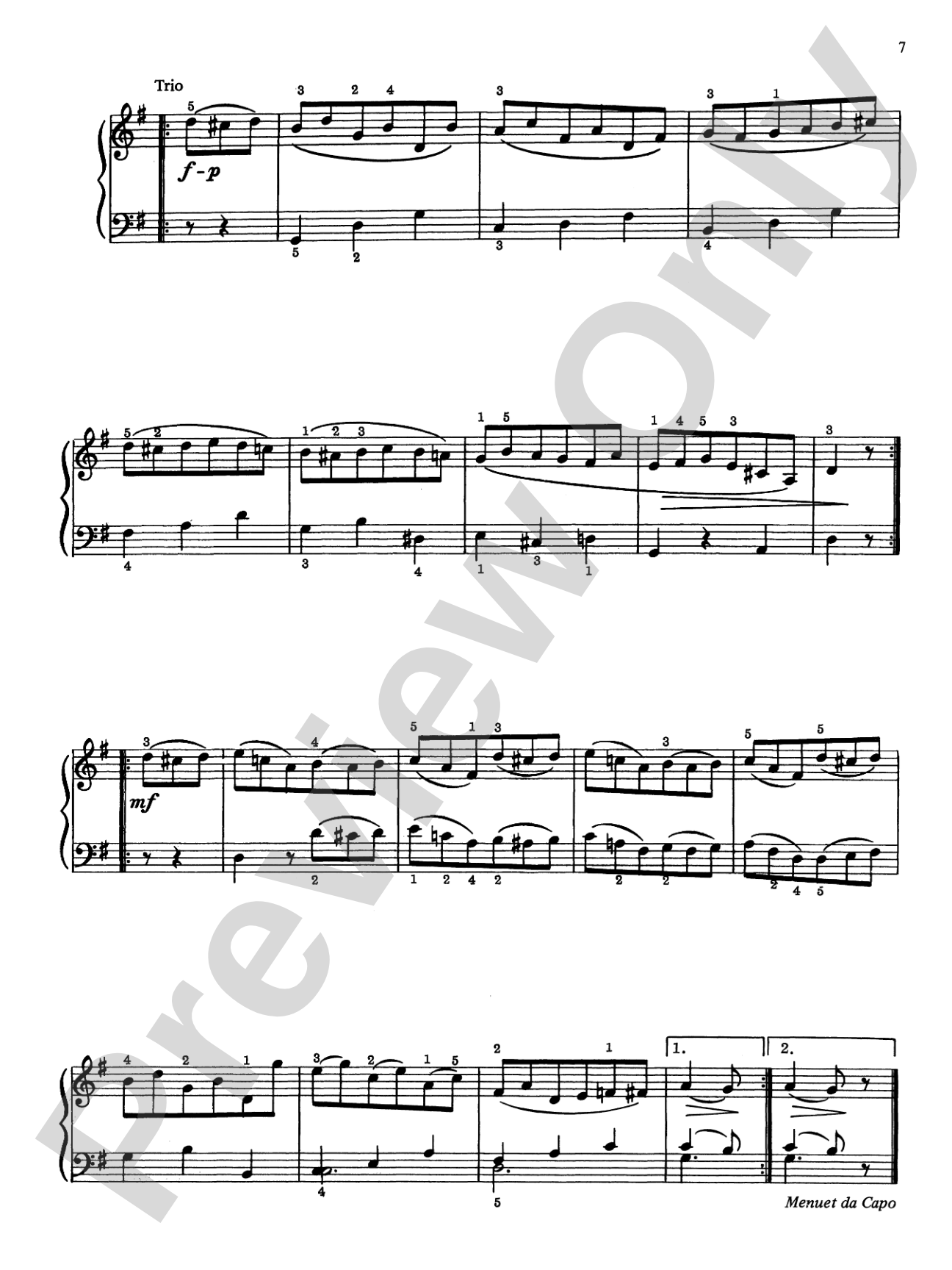
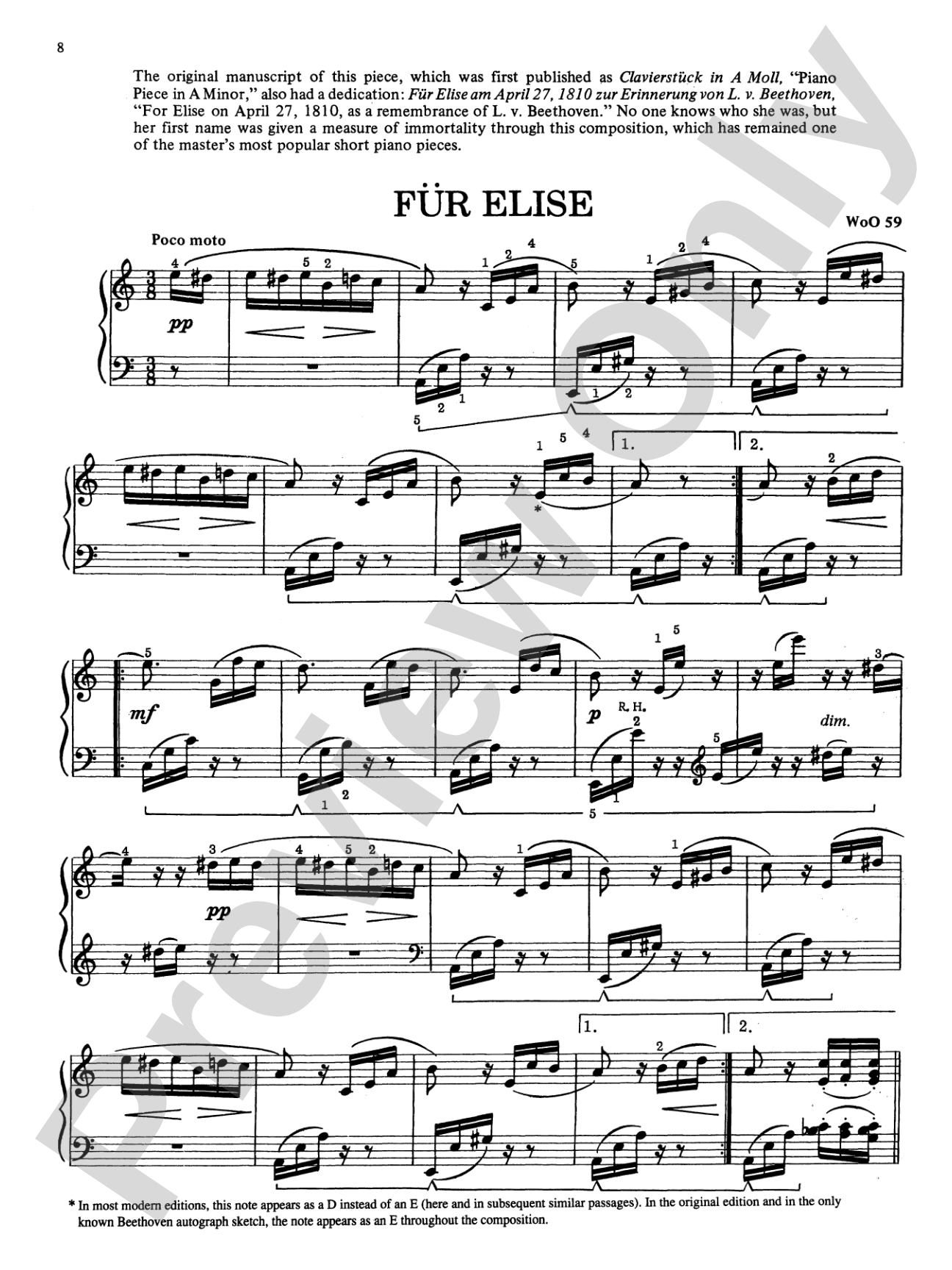
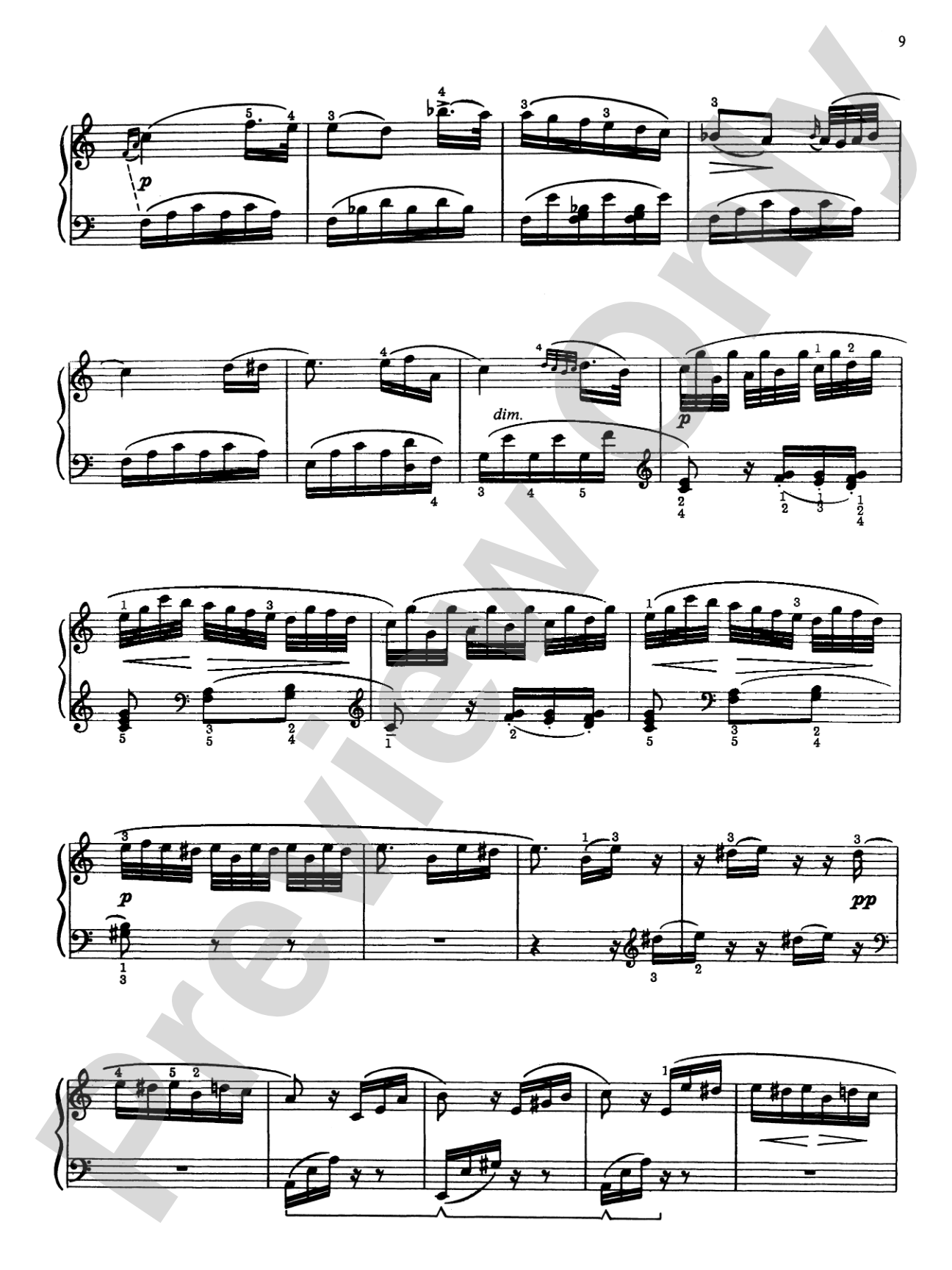
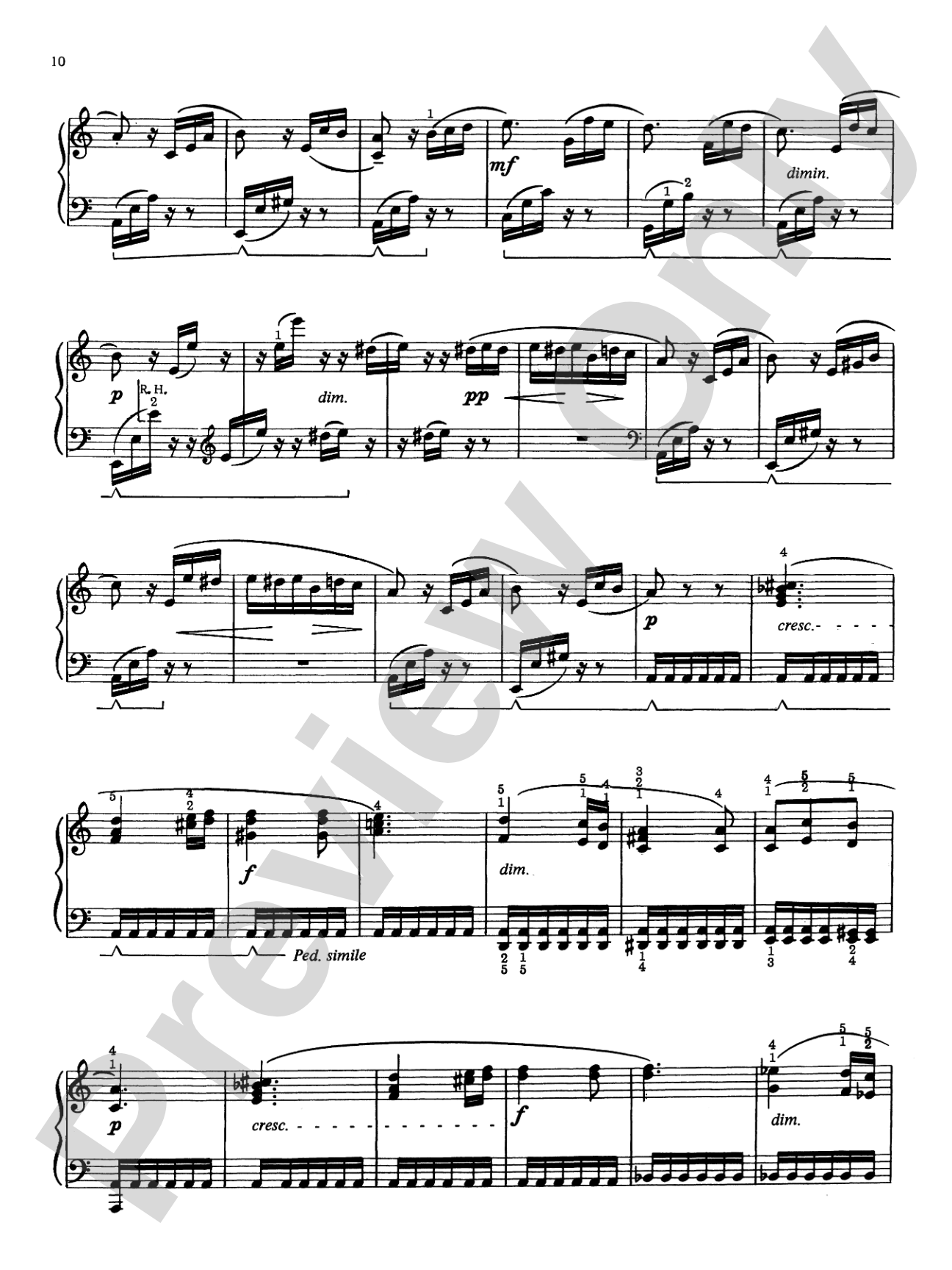
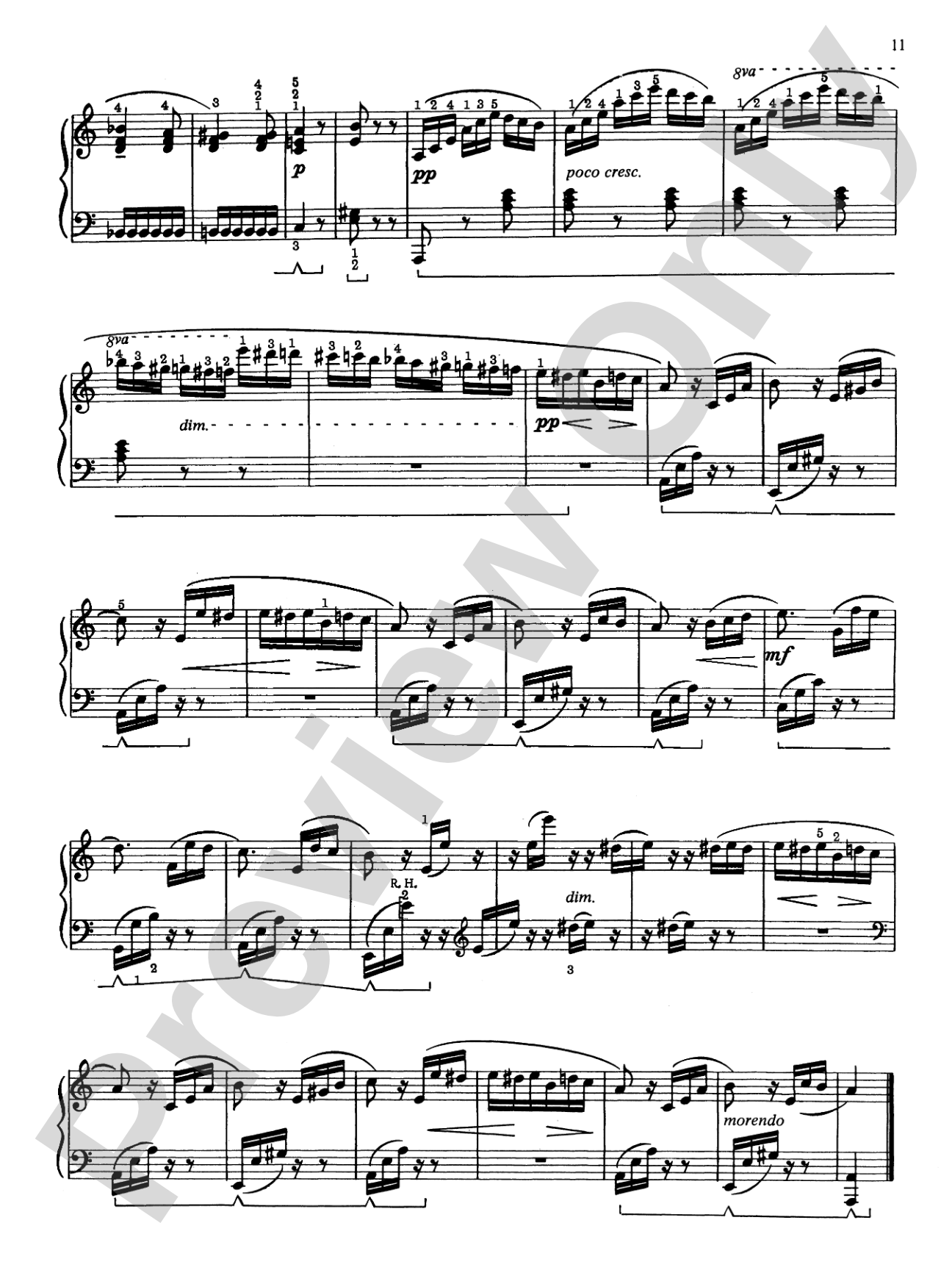
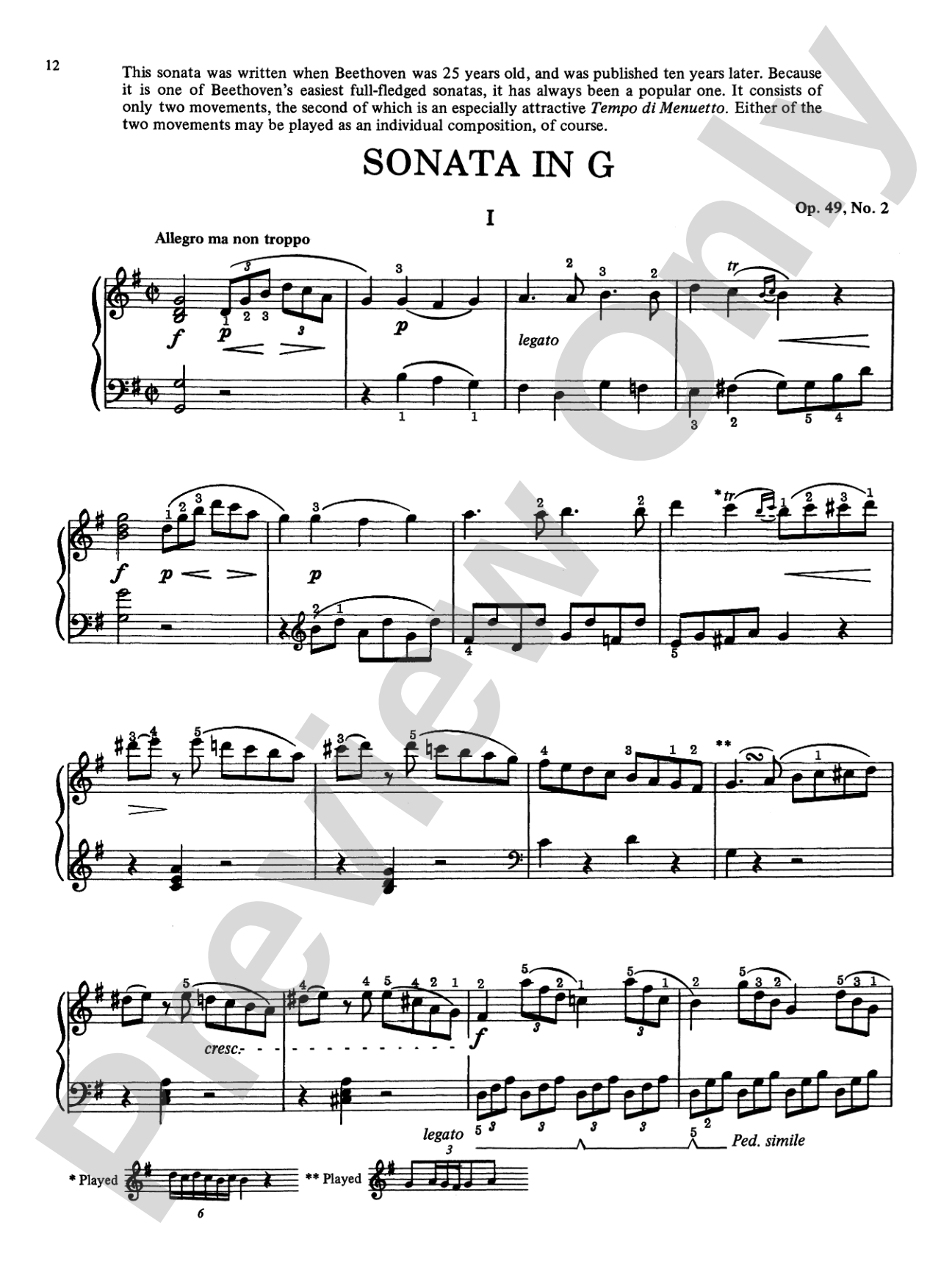
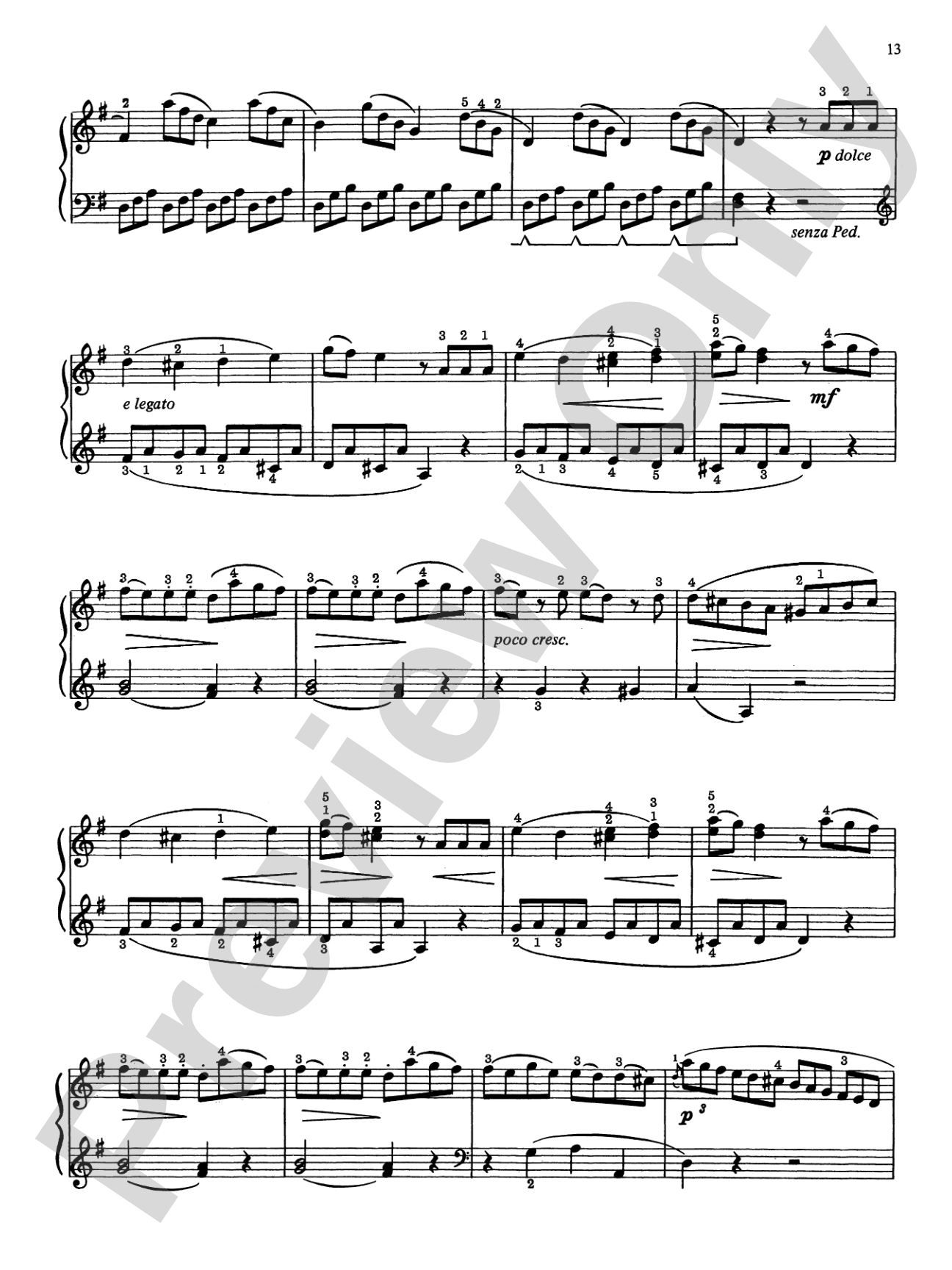
A diverse collection of Beethoven's most familiar keyboard works is contained in this volume, including the "Menuet in G Major," "Für Elise" and the first movement of the "Moonlight Sonata." Other works include bagatelles, variations and easier sonata movements. Arranged in order of difficulty, each piece is prefaced by a short description. A Federation Festivals 2020-2024 selection.


Beethoven: 13 of His Most Popular Piano Pieces: Piano isn't in MakeMusic Cloud just yet...but it could be. Let us know you'd like to see it, and you'll help shape what comes next. In the meantime, start a free trial and dive into thousands of interactive titles your students can play along with today.
Request This Title
Tell us you want it.
Start Your Free Trial
Explore everything that's ready to play right now.
Sample Audio
No sample audio found.
Sample Video
Additional Details
Series:
Alfred Masterwork Edition
Publisher:
Alfred Music
Page Count:
64
SKU:
00-PB-0000867
More about this title
About the Composer: Ludwig van Beethoven
Beethoven stands as the crucial bridge between Classical and Romantic eras, a composer whose innovations in form, harmony, and expressive range fundamentally reshaped what instrumental music could express. His keyboard works span his entire creative life, from early Classical structures to late works of unprecedented harmonic freedom, making him essential study for pianists seeking to understand how the language of music itself evolved.
As a pedagogue, Beethoven matters because his writing demands technical clarity while rewarding musical maturity. His pieces teach students that virtuosity without understanding is hollow, and that even simple-sounding passages like the Menuet in G Major contain layers of intention worth uncovering.
Why we love this
This collection solves a real organizational need: it gathers the Beethoven pieces that students actually want to play and audiences actually want to hear, all in one volume. The progression by difficulty means you're not hunting through multiple sources, and the prefatory notes for each piece give students immediate context without requiring you to spend rehearsal time on background.
What to expect
Moving through these pieces traces a path from elegant eighteenth-century grace to early Romantic introspection. The Moonlight Sonata's opening pulls listeners inward; the bagatelles sparkle with wit and surprise; Für Elise carries a wistful, almost melancholic tenderness beneath its familiar melody.
Who it's for
This collection works for late intermediate and early advanced pianists who've built solid technique and are ready to engage with repertoire that shaped Western music. It's ideal for students preparing for festivals, competitions, or recitals who need reliable, proven pieces at an accessible level.
How to get the most out of it
- The bagatelles reveal Beethoven's ability to pack dramatic gesture into miniature forms; resist the urge to over-pedal, letting the rhythmic structure speak clearly instead.
- In "Für Elise" and the Moonlight Sonata excerpt, maintain independence between hands even when the texture thickens; these pieces depend on clarity of line.
- Treat the variations as studies in character rather than technical display pieces. Each variation explores a different emotional or textural idea, not just faster note values.
How to use it
Pair selections from this book with student composition or improvisation projects that ask them to work within Beethoven's harmonic language. A recital built around these pieces tells a coherent story about how one composer's voice matured, and the range of mood keeps audiences engaged across a full program.
Skills your students will build
- Voicing clarity in pieces with independent right and left hand writing
- Pedal control and restraint in Romantic-era textures
- Structural awareness through variations and multi-movement excerpts
- Tempo flexibility and rubato within Classical and early Romantic idioms
- Interpretive depth in familiar melodies, moving beyond surface simplicity