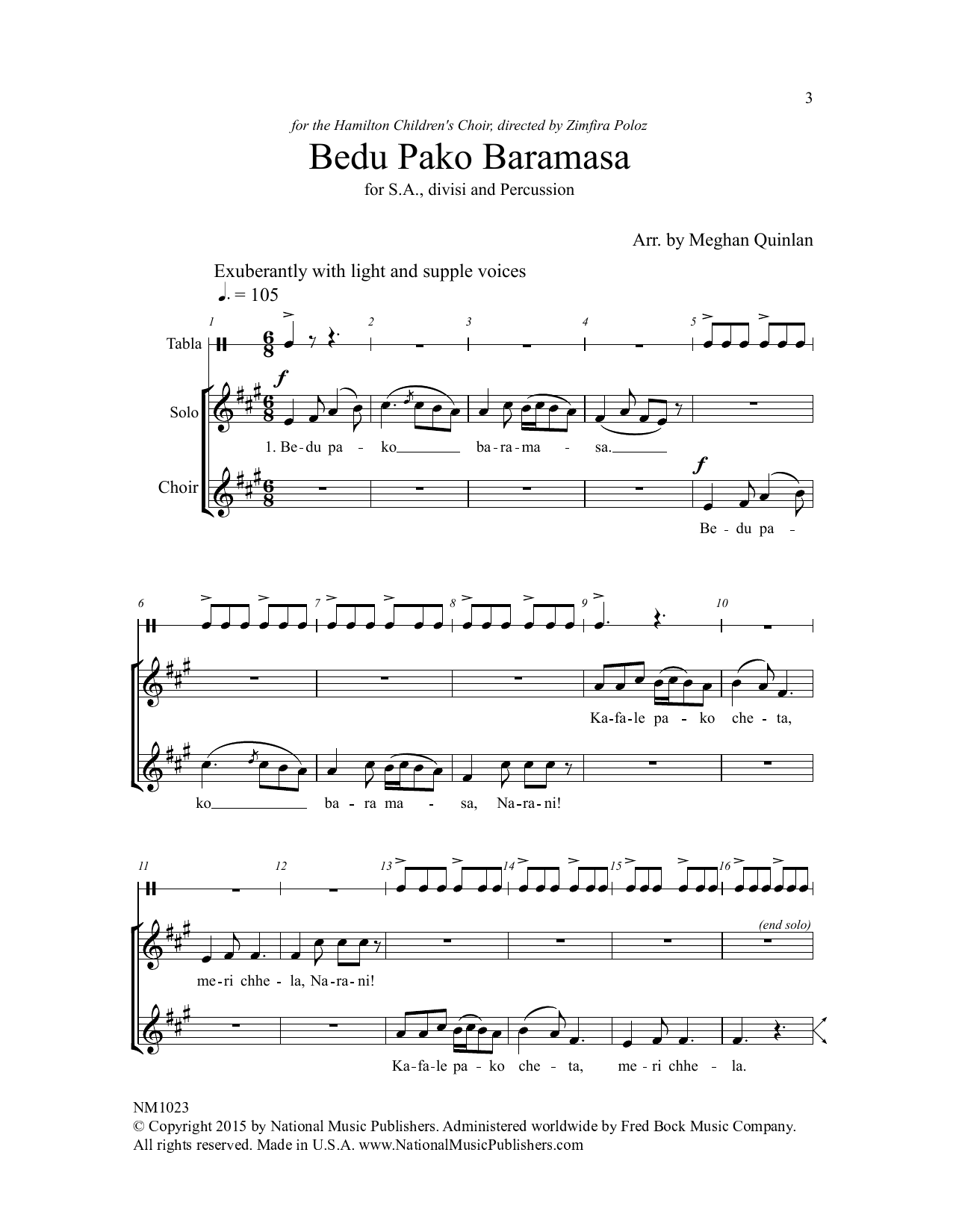
Bedu Pako Baramasa Sheet Music Preview

Bedu Pako Baramasa: 2-Part Choral Octavo

Arranged by Meghan Quinlan

Item: 35-DS00317706

Digital Download
$3.35
Description

Bedu Pako Baramasa: 2-Part Choral Octavo isn't in MakeMusic Cloud just yet...but it could be. Let us know you'd like to see it, and you'll help shape what comes next. In the meantime, start a free trial and dive into thousands of interactive titles your students can play along with today.

Sample Audio
No sample audio found.
Sample Video
Additional Details
Publisher: Hal Leonard
Page Count: 8
SKU: 35-DS00317706

More about this title

Why we love this

Quinlan's arrangement opens the door to a repertoire that most American choirs rarely encounter. The 2-part voicing makes this accessible to developing ensembles without sacrificing the rhythmic vitality and harmonic color that make the original compelling.

What to expect

Energetic and grounded, with the kind of forward momentum that comes from strong rhythmic foundations. The piece carries warmth and authenticity without ever feeling heavy or overly complex.

Who it's for

Choirs working at the middle school through early high school level who want to expand beyond standard Western concert repertoire. This arrangement gives singers a genuine encounter with music from a different cultural tradition without requiring specialized vocal techniques or extensive background knowledge.

How to get the most out of it

  • Establish the rhythmic pulse early in rehearsal by tapping or singing the fundamental beat separately from the melodic line; the two often sit independently.
  • Record a quick section rehearsal where you isolate each part's entrance and rhythm to lock ensemble precision before blending voices.
  • Experiment with different articulation approaches during early rehearsals (legato vs. detached) to find what serves the text and your ensemble's voice production.

How to use it

Pair this with spirituals or folk songs from your own region to create a program section exploring how communities sing together across different cultures. It also works beautifully as a concert opener that immediately engages the audience with something fresh and rhythmically alive.

Skills your students will build

  • Singing rhythmic patterns that don't align with standard metric subdivisions
  • Maintaining melodic independence while supporting another part
  • Phrasing and shaping lines within unfamiliar cultural contexts
  • Ensemble blend and balance in 2-part textures

You May Also Like