
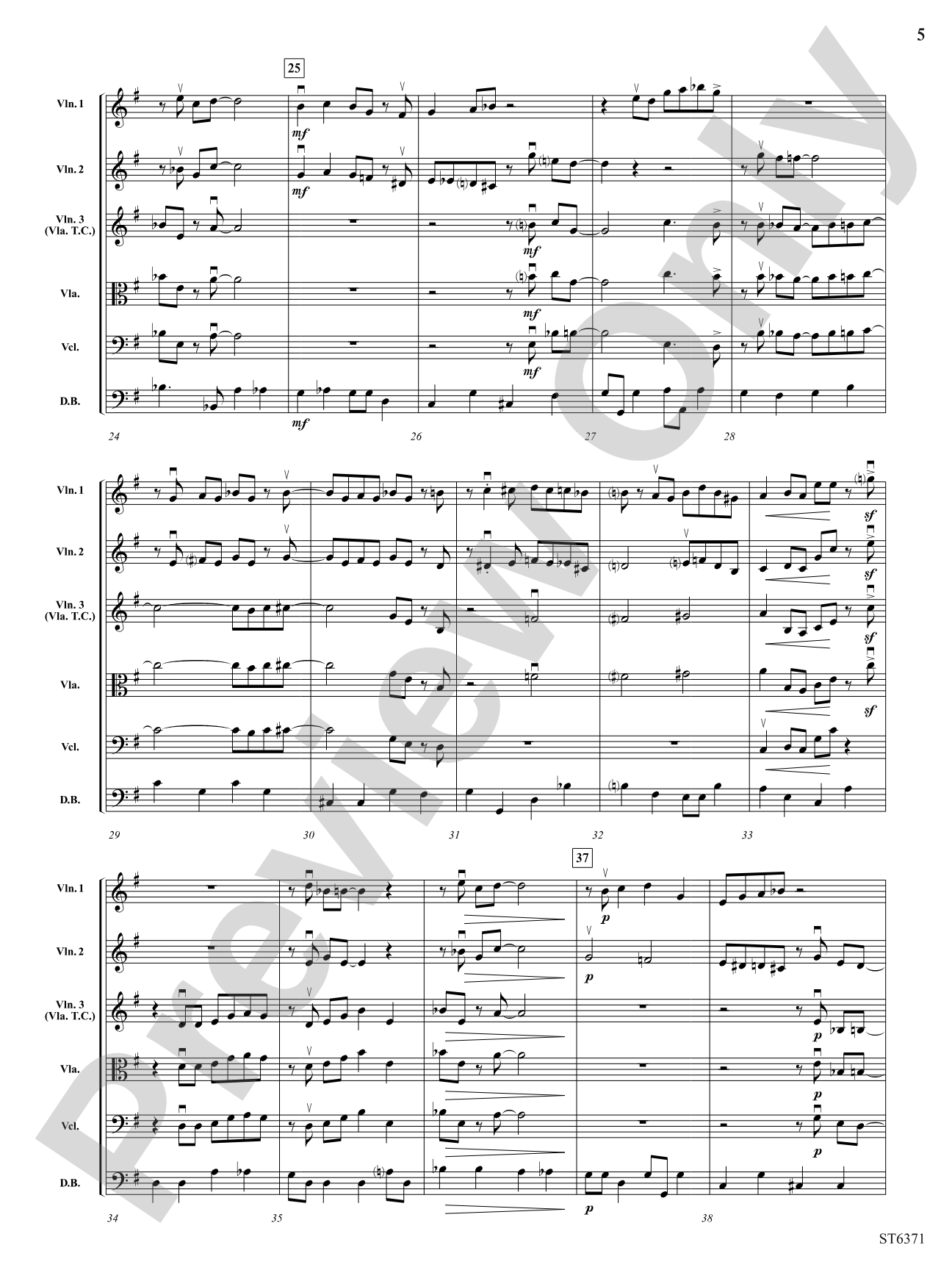
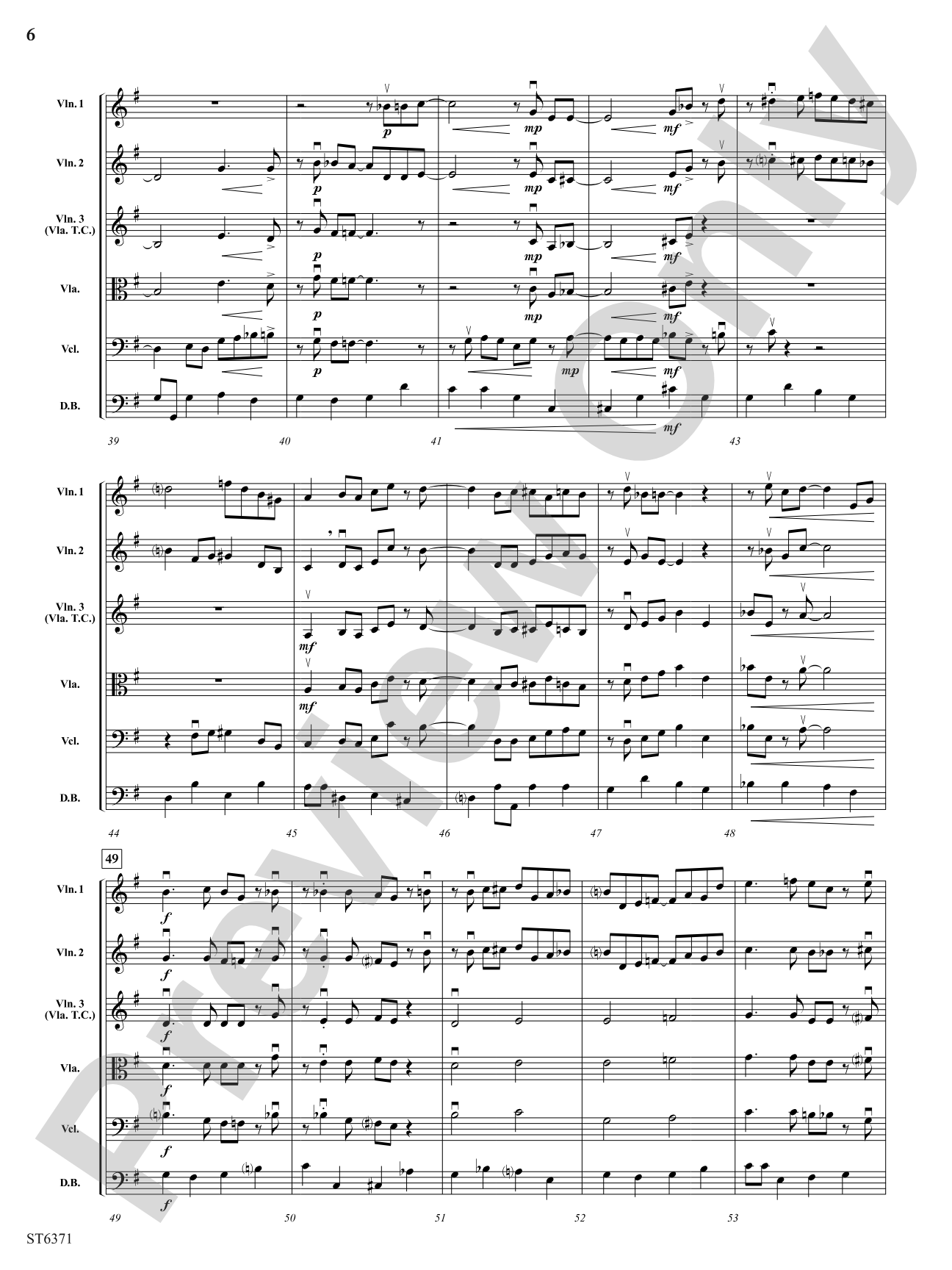
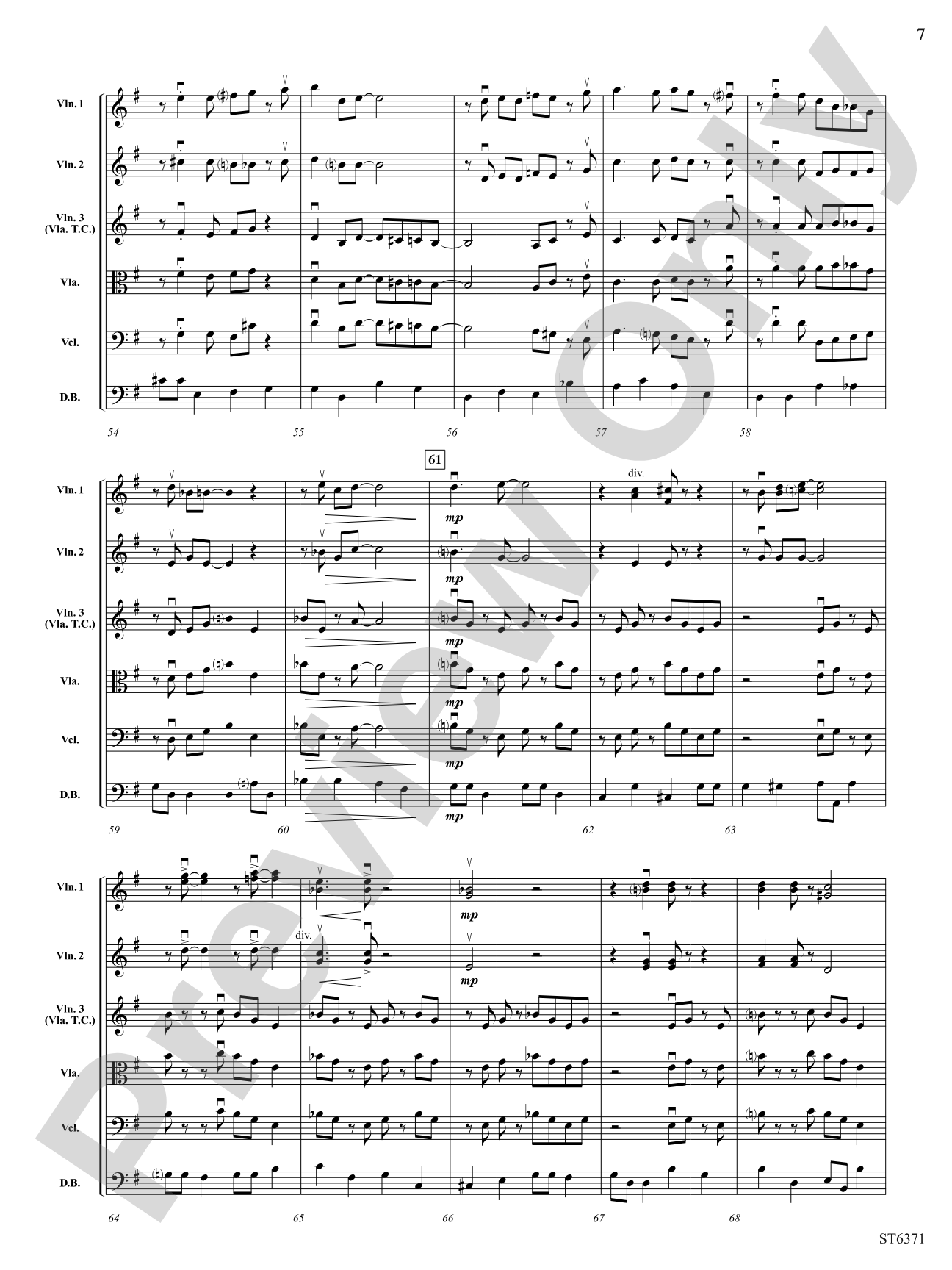
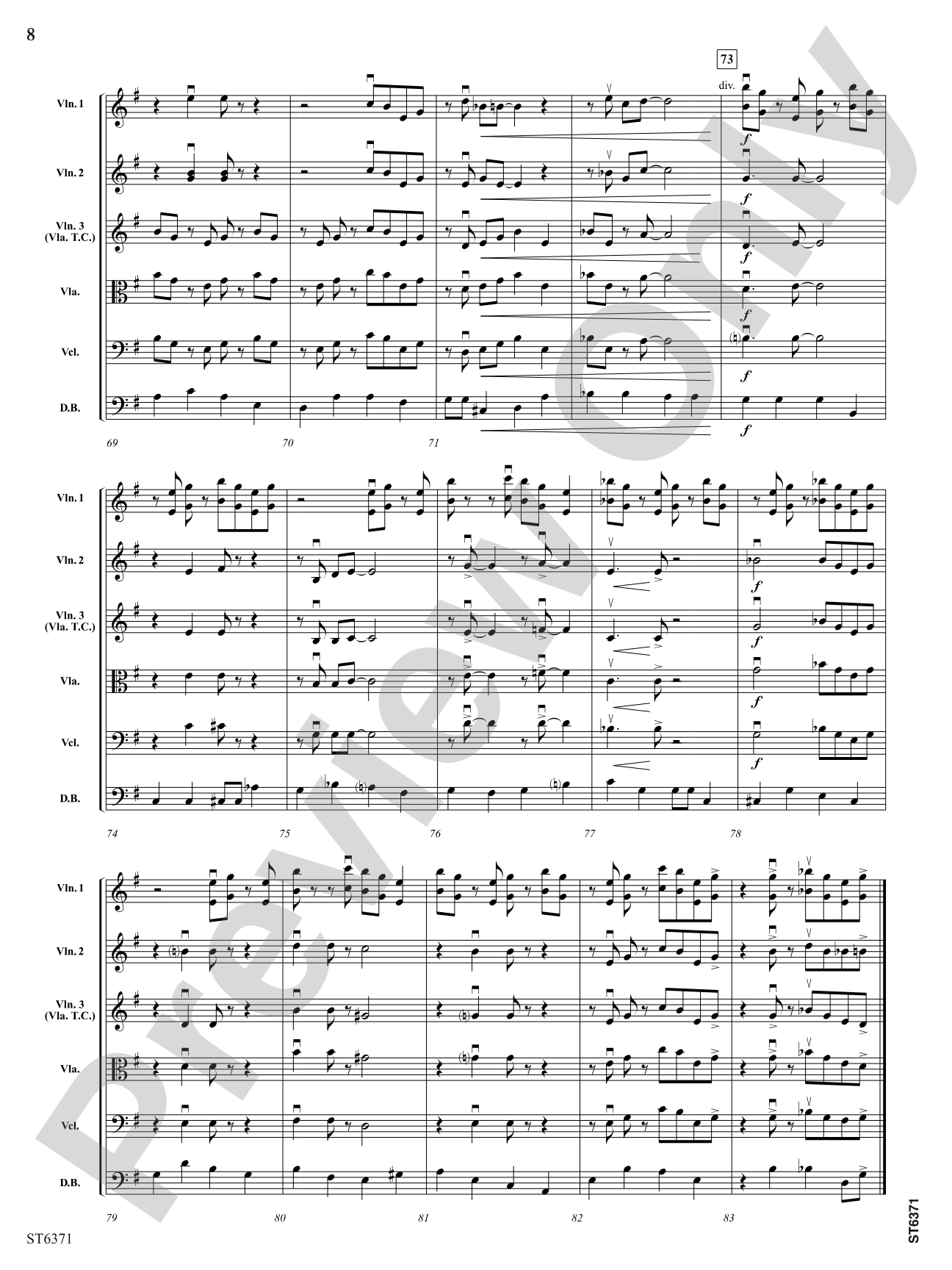

Bebop: String Orchestra Conductor Score & Parts
By Bob Lipton
Grade: 3.5
Item: 98-DST6371
$50.00
Pickup currently not available
Buy Extra Parts (Digital PDF Download)
| Product | Price | Quantity |
|---|---|---|
| Bebop: Score | $5.00 | |
| Bebop: Violin 1 | $7.00 | |
| Bebop: Violin 2 | $7.00 | |
| Bebop: Violin 3 (Viola T.C.) | $7.00 | |
| Bebop: Viola | $7.00 | |
| Bebop: Violoncello | $7.00 | |
| Bebop: Double Bass | $7.00 |
Parts Added to Cart!
Description
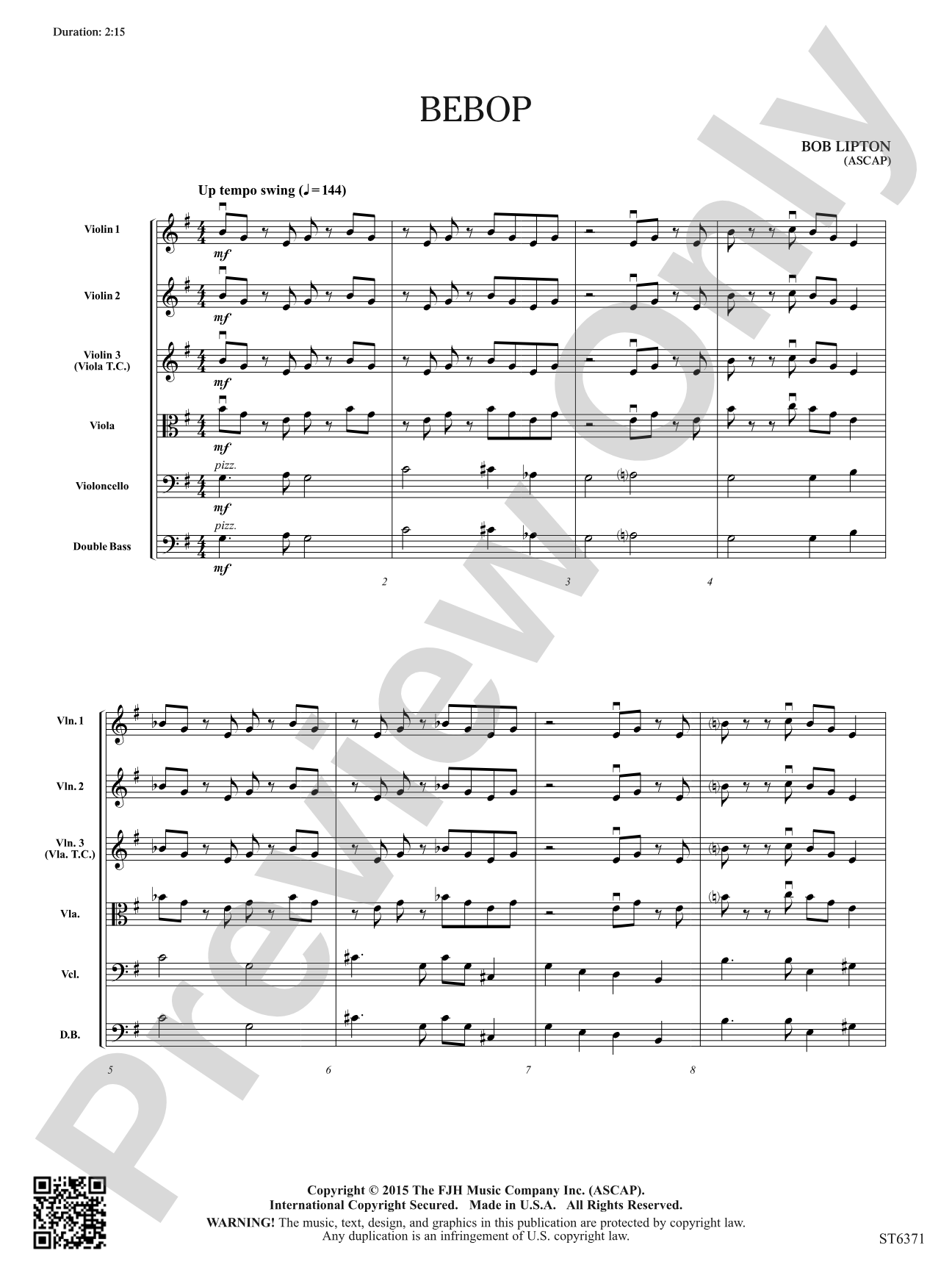
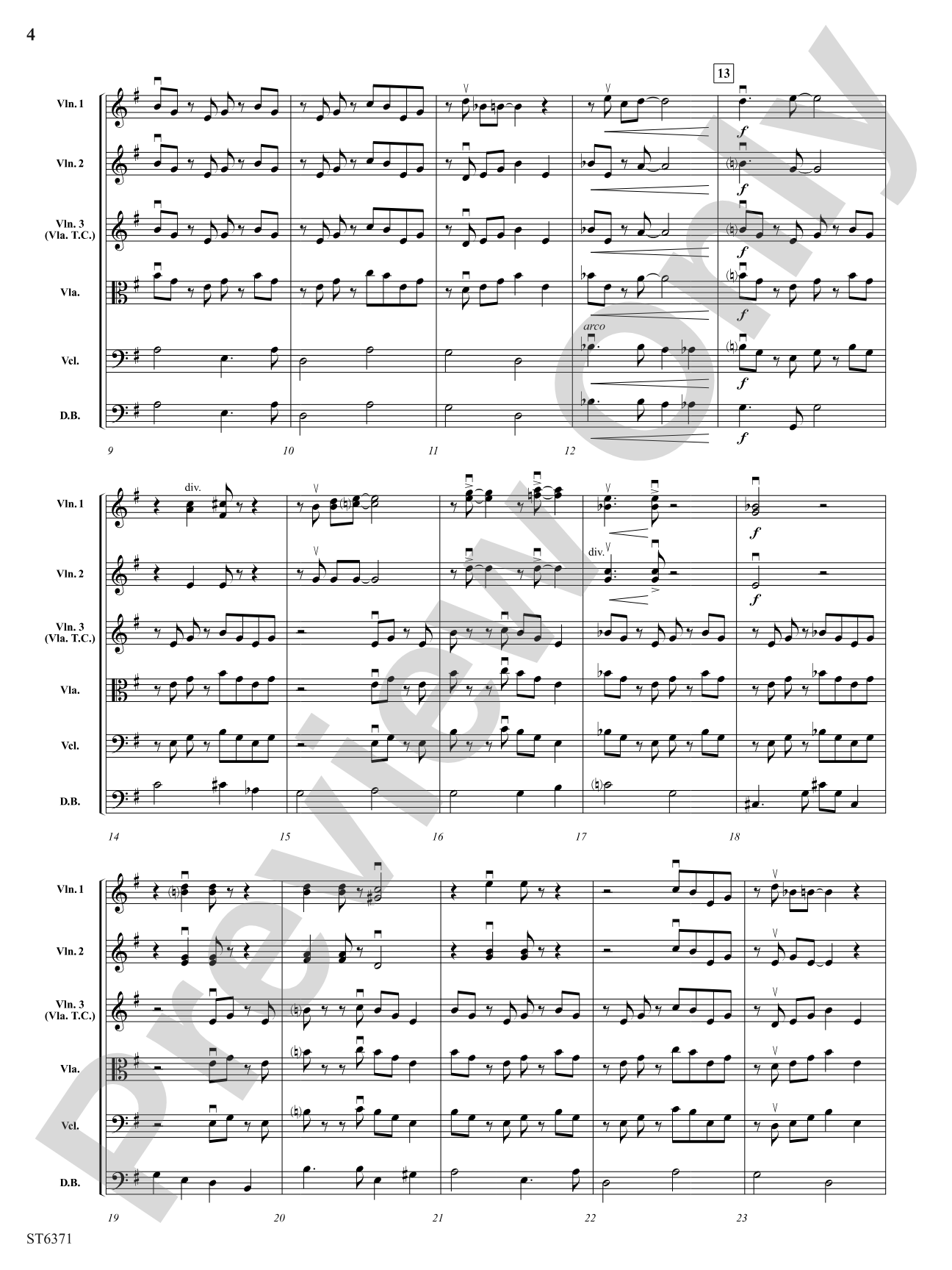
Here's a big band chart for strings without the need for a rhythm section or any improvisation! Basses lay down a walking bass line while each section gets to play melodic and backing figures, learning phrasing and concepts of jazz. Very well written and fun!


Bebop: String Orchestra Conductor Score & Parts isn't in MakeMusic Cloud just yet...but it could be. Let us know you'd like to see it, and you'll help shape what comes next. In the meantime, start a free trial and dive into thousands of interactive titles your students can play along with today.
Request This Title
Tell us you want it.
Start Your Free Trial
Explore everything that's ready to play right now.
Sample Audio
1
Audio File
--:--
0:00
0:00
Sample Video
No sample videos found.
Additional Details
Series:
FJH String Orchestra
Publisher:
The FJH Music Company, Inc.
SKU:
98-DST6371
More about this title
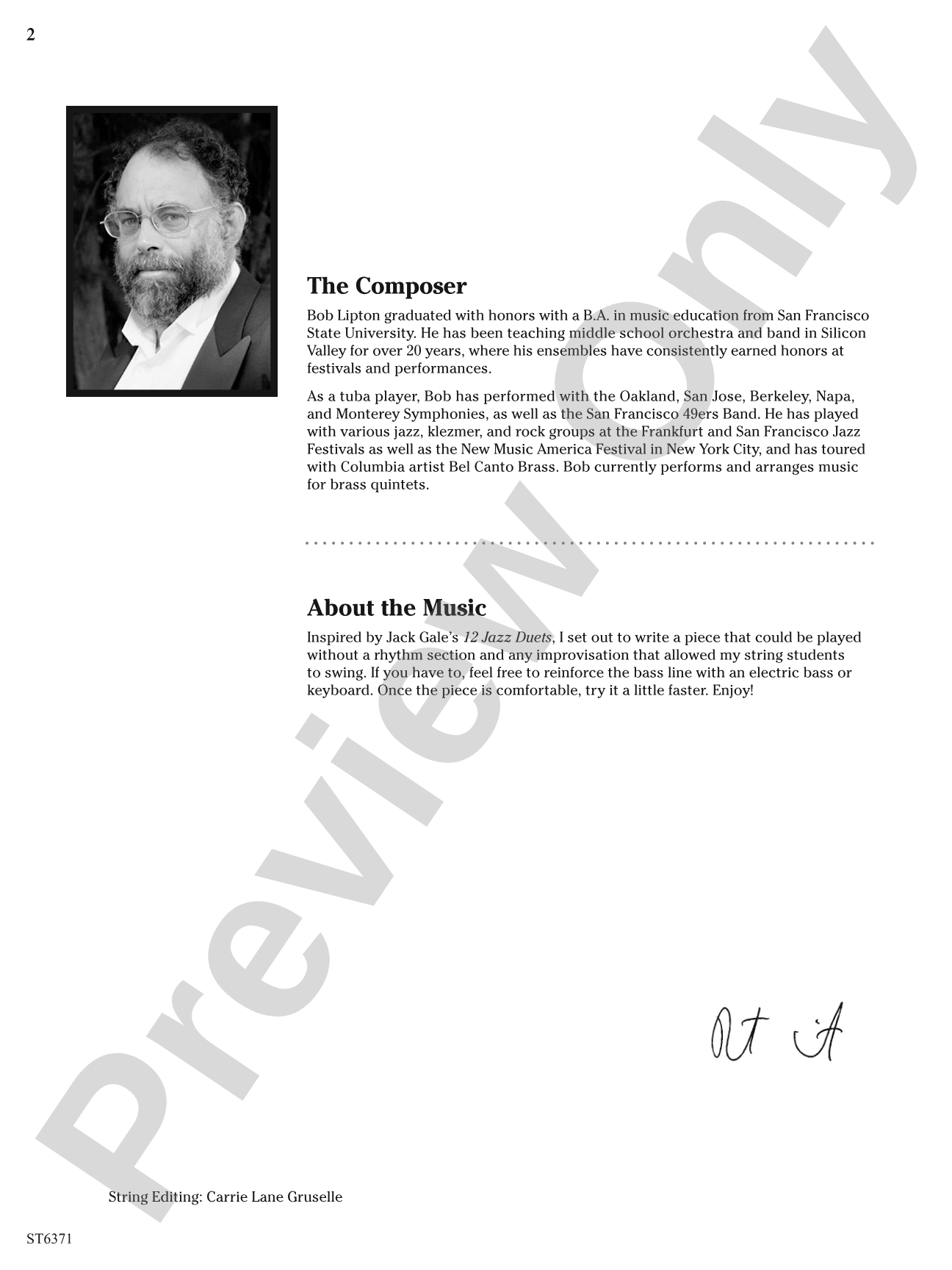
About the Composer: Bob Lipton

Bob Lipton earned his B.M. in music education from San Francisco State University and has spent nearly two decades teaching middle school orchestra and band in Silicon Valley. His performance background spans symphonic and jazz contexts, including work with the San Jose, Oakland, Napa, Monterey, and Berkeley symphonies as a tuba player, alongside festival appearances at San Francisco and Frankfurt Jazz festivals.
Beyond his classroom work, Lipton maintains an active performance and arranging practice focused on brass quintet and school ensembles. His versatility as both educator and musician shapes his compositional approach, grounding his writing in what works on the stand for student players.
Why we love this
Lipton has eliminated the barriers that typically keep student string orchestras away from jazz: no rhythm section requirement, no improvisation, no complicated ensemble dependencies. The walking bass line and divided melodic writing give every section meaningful material to play, making this a rare opportunity for strings to experience big band jazz concepts and authentic phrasing without the coordination headaches.
What to expect
Upbeat and playful, with the relaxed groove of a big band that's having fun rather than showing off. The orchestration bounces between sections trading figures and supporting each other, creating a communal energy that feels accessible and rewarding for young musicians to perform.
Who it's for
String orchestra directors at the middle and early high school levels who want to introduce jazz language and swing phrasing to students without requiring a full rhythm section or asking young players to improvise. It works equally well as a concert piece, festival entry, or classroom exploration of how jazz orchestration differs from classical writing.
How to get the most out of it
- Listen closely to the recorded accompaniment to absorb the swing feel and rhythmic inflection. String players often default to straight eighths, so the accompaniment provides a template for the swing subdivision and articulation style the chart demands.
- Shape the melodic lines with the same attention to phrasing you would give a classical piece. Jazz writing relies on breath points and dynamic contours to convey swing, and strings that phrase musically will unlock the piece's character.
- Balance the walking bass line so it anchors the harmony without overpowering the upper sections. The basses drive the groove, but if they dominate, the ensemble loses the interplay that makes this arrangement fun.
- Rehearse the backing figures separately from the melody to build confidence and clarity. Once each section owns its part independently, layering them together reveals the big band texture Lipton intended.
How to use it
Program this alongside a classical string work and a contemporary piece to show the breadth of string orchestra repertoire. It also serves well as an encore or closer to a concert, leaving the audience smiling. In the classroom, it pairs nicely with a unit on jazz history and style, giving students a kinesthetic way to understand how jazz concepts translate to orchestral instruments.
Skills your students will build
- Jazz phrasing and articulation (swing feel, dynamic shaping)
- Listening and ensemble balance (particularly balancing walking bass and melodic voices)
- Reading and executing backing figures and rhythmic motifs
- Understanding jazz harmony and voice leading through performance